Palais Meran in Graz: A Late Classicist Palace and Music Academy
Site at a Glance
- Popularity
- Medium
- Country
- Austria
- Primary era
- Modern
- Eras represented
- Modern
- Civilizations
- Austria-Hungary, Austrian Empire, German, Habsburg
- Site type
- Domestic
- Remains
- Palace
On this page8 sections
History
Residence and family
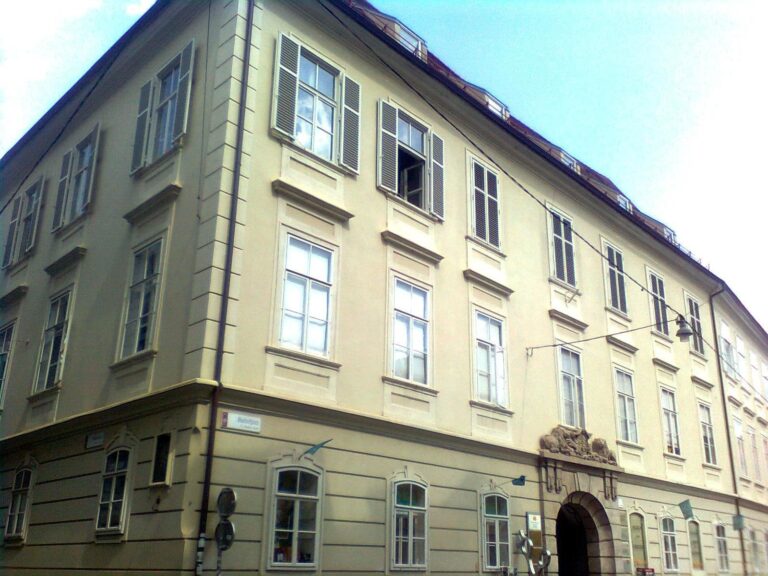
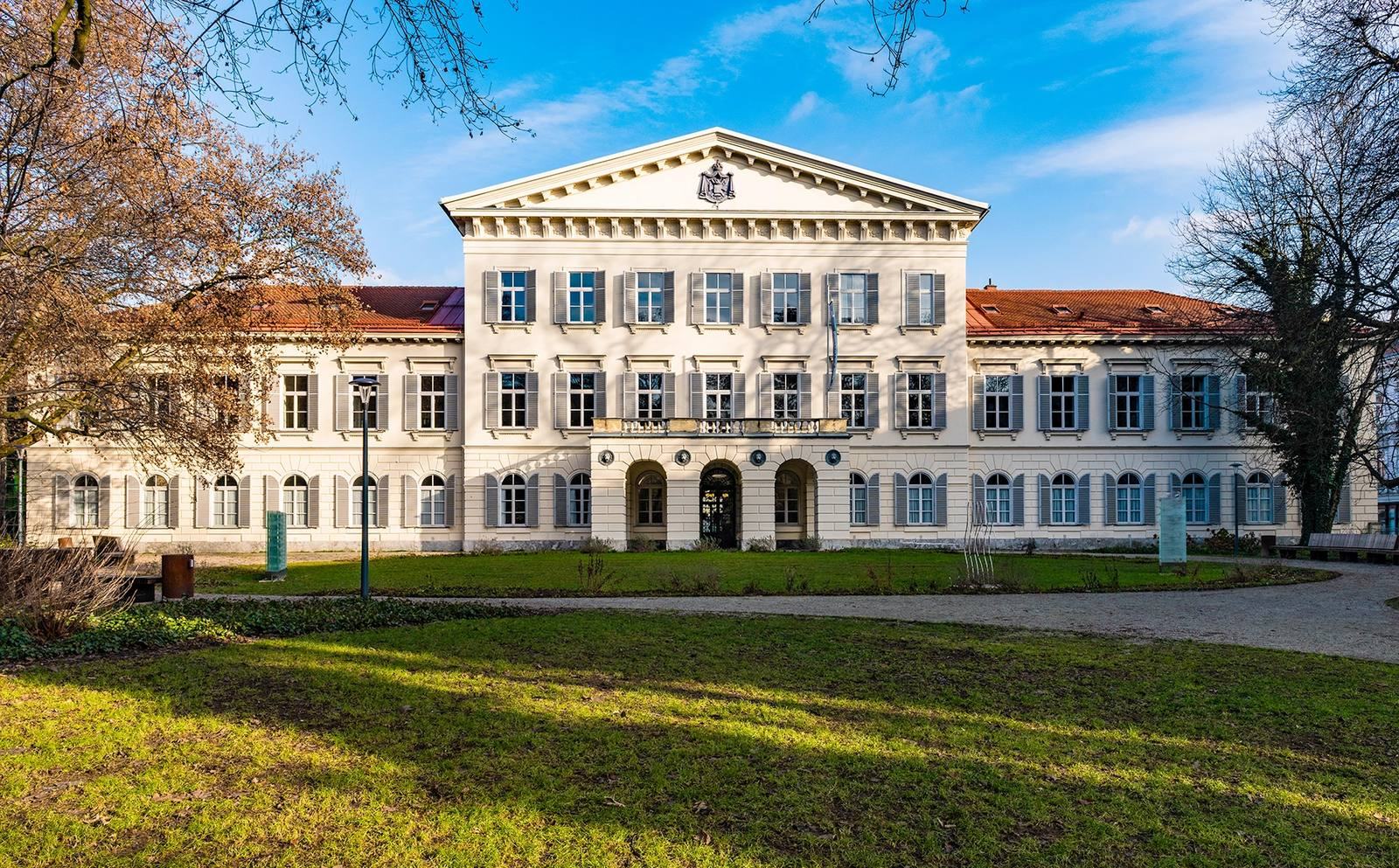
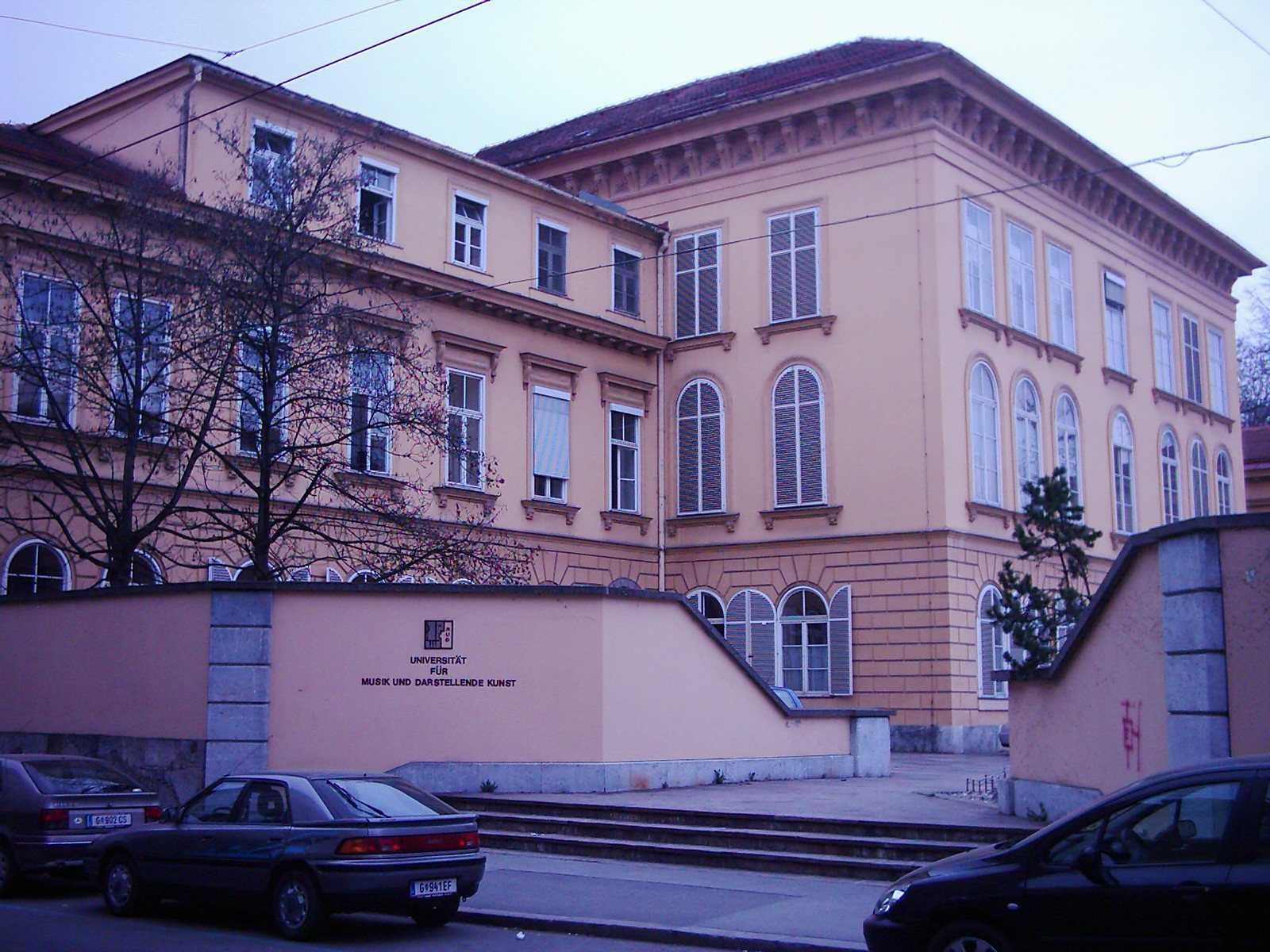
Palais Meran is a Late Classicist palace in Graz, Austria, built from 1841 to 1843 as the residence of Archduke John of Austria, a member of the Habsburg dynasty, the ruling house of the Austrian Empire. Late Classicism is a later phase of Neoclassical architecture rooted in classical design. The palace was built on the site of a former estate farm. In 1834, John had an easement affecting the property removed.
Georg Hauberrisser was the master builder, not the designing architect, while Felix von Stregen had a continuing role in the construction. The suggestion that John designed the façade and interiors remains unverified. John died at the palace on 11 May 1859. The building takes its name from his son Franz, who received the title Count of Meran in 1844.
Academic use and restoration
The family used the palace until 1939. A north wing was added in 1880, and the building was expanded in 1939 and again in 1963. From 1963, the Styrian Academy of Music and Performing Arts, later the University of Music and Performing Arts Graz, used the entire complex.
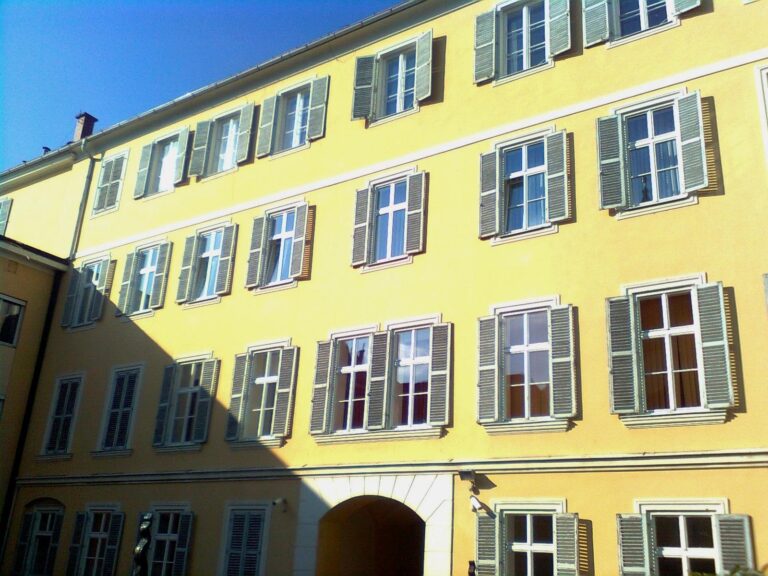
Exterior restoration began in 1976 and was completed in 1979, followed by interior restoration completed in 1985. Work in 2007 and 2008 improved fire safety, made the building accessible without barriers, and restored the façades in a historically appropriate colour scheme. The park opened to the public in 1982 and was restored closer to its historic design in 2019.
Remains
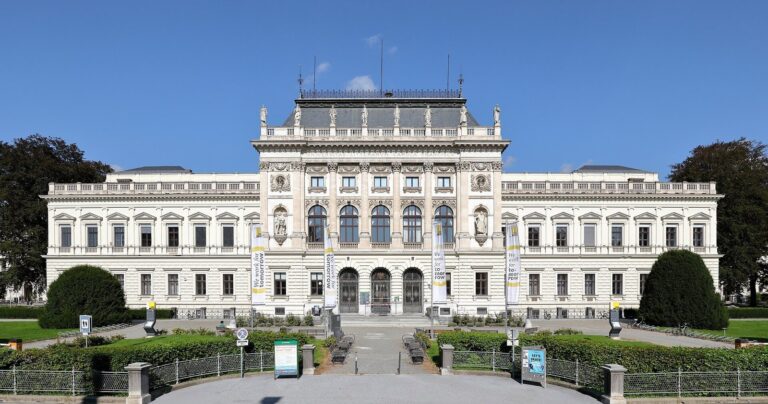
The palace stands on Leonhardstraße in Graz’s St. Leonhard district, within a large park. Its elongated principal façade and Late Classicist design define the main building, while its rooms include ceremonial and performance spaces.
Palace architecture
Principal façade
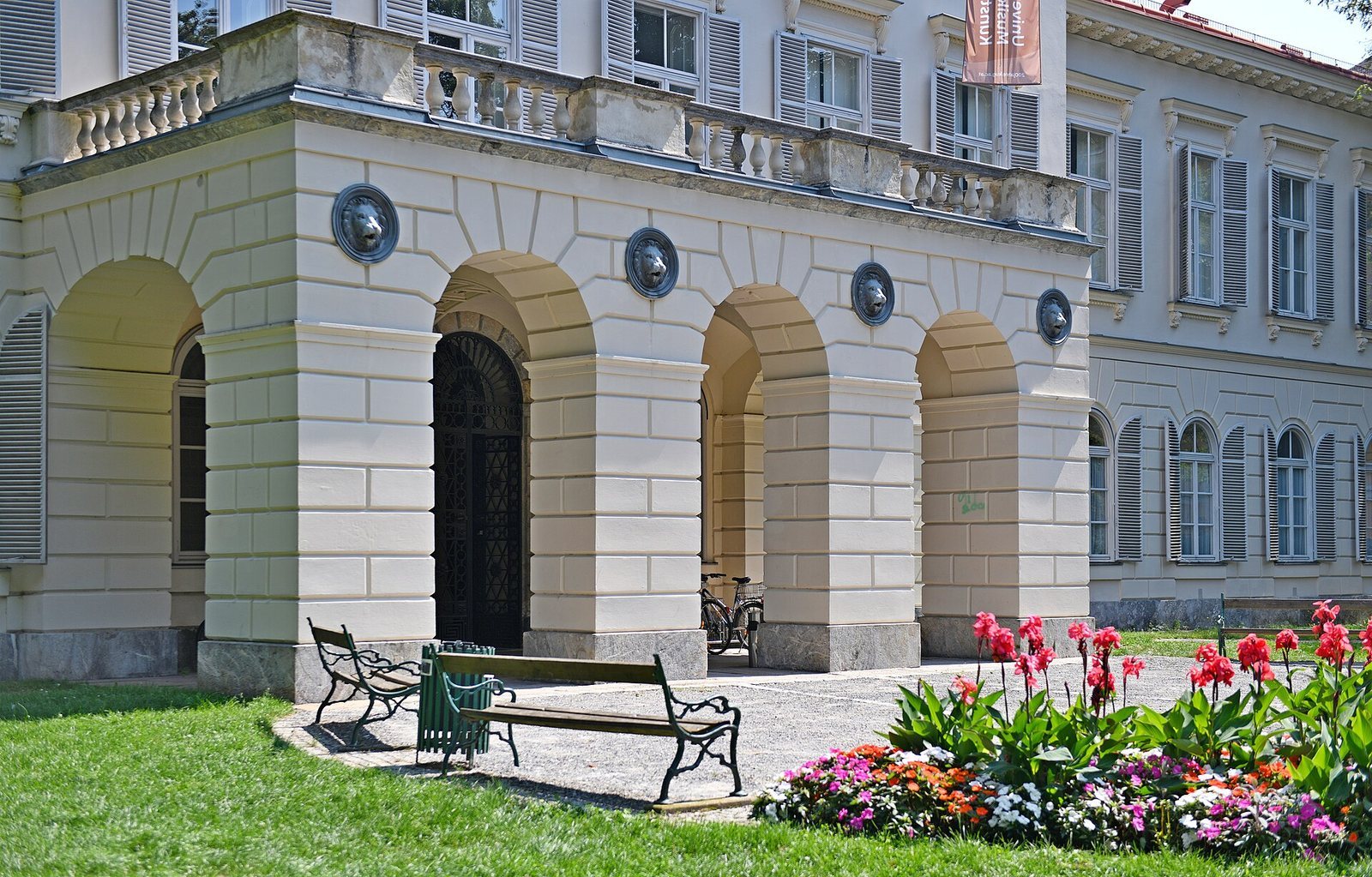
Wrought-iron lattice door leaves dating from the palace’s construction survive at the entrance. Archduke John’s coat of arms appears in the gable above the elongated façade.
Entrance and ceremonial rooms
The three-aisled vestibule is an entrance hall divided into three lengthwise sections. It has three structural compartments and a square vault supported by pillars. On the first floor, the ceremonial hall has decorative plasterwork on its walls, a carved wooden ceiling, and several coats of arms. The Florentinersaal is a concert hall intended especially for chamber music.
Park sculptures
The park contains busts of nineteenth-century composers Anton Bruckner and Franz Liszt, made by Wolfgang Skala and installed in 1986, and a bust of Hugo Wolf by Wilhelm Gösser, installed in 1988. Other sculptures by Katja Cruz relate to works by twentieth-century musical modernists Alban Berg, Arnold Schoenberg, and Anton Webern, including Violin Concerto, Moses und Aron, and Symphony.