La Barre Castle: A Medieval Lord’s Residence in Bugey, France
Site at a Glance
- Popularity
- Medium
- Country
- France
- Primary era
- Medieval
- Eras represented
- Medieval, Early Modern
- Civilizations
- Holy Roman Empire
- Site type
- Military
- Remains
- Castle
On this page5 sections
History
Medieval origins and lordship
La Barre Castle is a medieval lord’s residence on the western slope of Mont de Cordon in Bugey, France. Tradition attributes its foundation in the 12th century to vassals of the counts of Savoy, although its construction date is uncertain. It became the center of the lordship of La Barre, serving as a residence, court of justice, and toll-collection point. Its position above the Rhône allowed it to oversee river traffic, and the toll is said to have given the place its name.
In 1344, Guillaume de Cordon held the fief, land held under a feudal relationship, and on 15 October formally acknowledged his tenure to Louis of Savoy, lord of Vaud. On 19 January 1362, Guillaume’s son Rodolphe received a new grant, including high, middle, and low justice, different levels of judicial authority over the people and fiefs attached to the estate.
The House of Cordon moved to La Barre after the nearby Château de Cordon was destroyed. The lordship remained in Cordon hands until Aynard de Cordon fell into disgrace. In 1435, his wife, Louise de Chambost, sold it to Humbert de Beaumont, lord of Pellafol, as security for her dowry. The Duke of Savoy repaid Humbert and then granted the estate to Pierre Juillet in 1444, Lambert de Lusignan, cardinal of Cyprus, in 1446, and Jacques de Clermont before it passed to Louis Bonivard in 1449. In 1488, it came to the La Forest family through the marriage of Antoine de La Forest and Claire Bonivard.
The La Forest family and the later lordship
During the 16th and 17th centuries, the La Forest family reshaped the castle as a pleasure residence while retaining its feudal appearance. The lordship held particular importance in the 17th century, when its judicial rights extended over several dependent fiefs. La Barre also gave its name to a branch of the La Forest family, which died out in 1745.
The family sold the estate in the 18th century, after which the castle fell largely into ruin. In 1826, Antoine Berthet, a young seminarian from Brangues, was hired as tutor to the Cordon children. Accused of seducing Henriette de Cordon, he was dismissed. Believing that a former mistress, the wife of Brangues’s mayor, had caused his dismissal, Berthet shot her in the church at Brangues. He was arrested, sentenced to death, and executed at Grenoble in 1828. Stendhal is believed to have drawn on the affair for his novel Le Rouge et le Noir (The Red and the Black). The castle was altered in the 20th century.
Remains
The keep and castle grounds
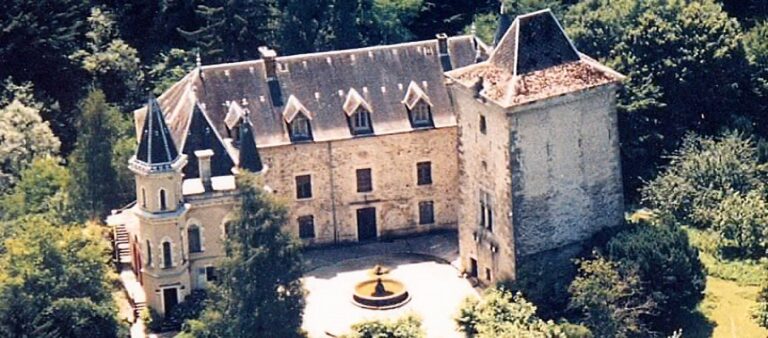
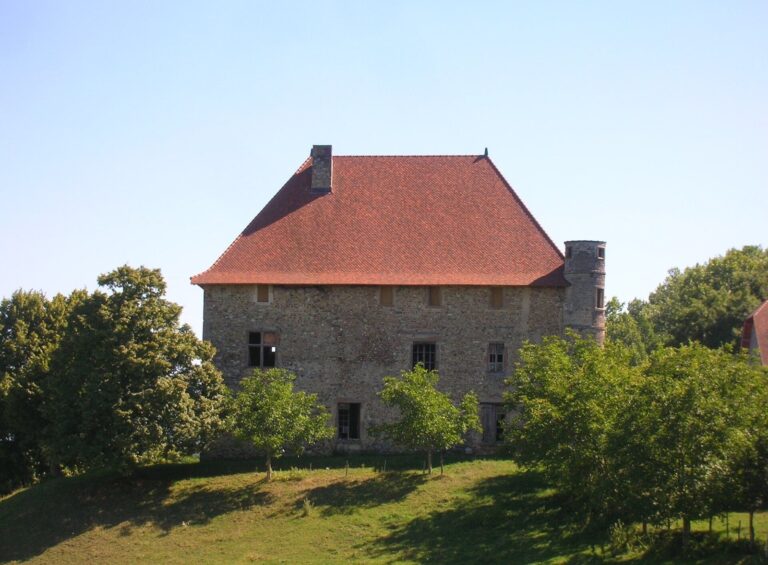
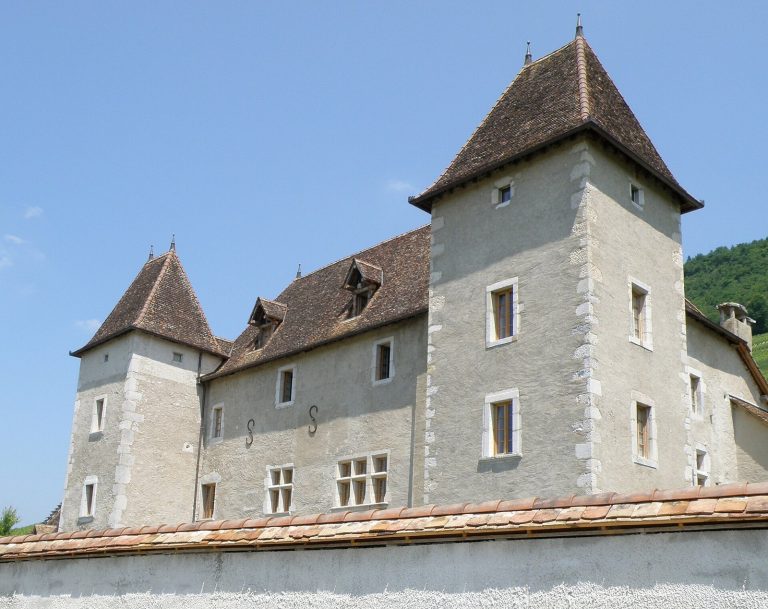
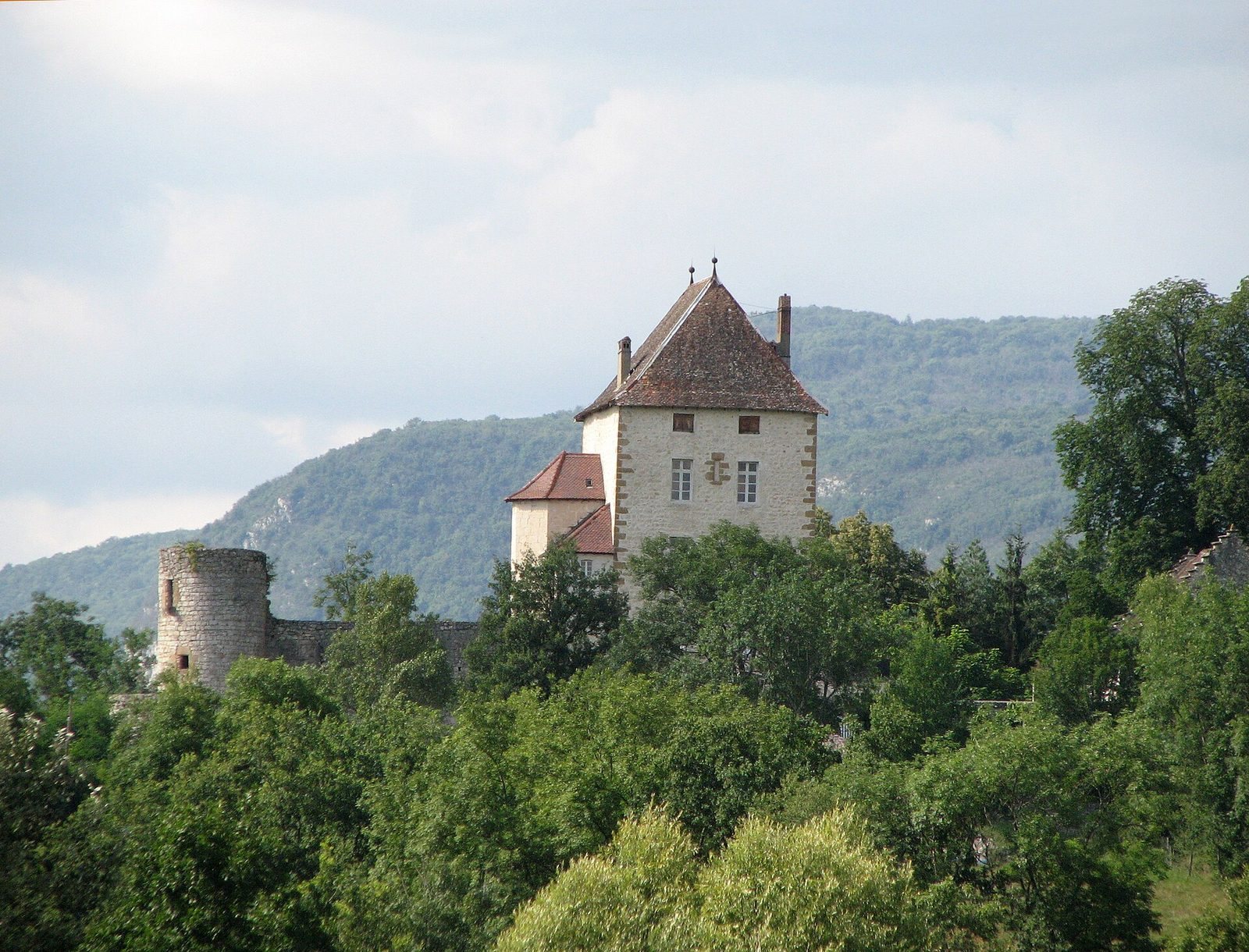
The surviving complex is centered on a square keep within a medieval fortified site that once included surrounding towers. The keep has six levels and rises 32 metres; its construction date is uncertain. The castle is largely ruined, while the keep has remained inhabited. The La Forest family’s transformation of the residence included gardens, though little of the earlier castle complex survives.