Laubach Castle: Residence of the Counts of Solms-Laubach
Site at a Glance
- Popularity
- High
- Country
- Germany
- Primary era
- Early Modern
- Eras represented
- Medieval, Early Modern
- Civilizations
- Holy Roman Empire
- Site type
- Domestic
- Remains
- Castle
On this page4 sections
History
Laubach Castle is a medieval castle in Laubach, Germany, built in the thirteenth century and later developed as the residence of the Counts of Solms-Laubach. Laubach was first recorded in 786 among the possessions of Hersfeld Abbey, a medieval monastic institution. The Lords of Hagen-Münzenberg held its bailiwick, a district administered by a bailiff, as a fief from the abbey.
From fortress to Solms residence
After the thirteenth-century castle was built, the Lords of Hanau succeeded the Münzenbergs in 1255 following an inheritance of their holdings. The Counts of Falkenstein later purchased the castle and began major fortification work in 1341. The fortifications were completed in 1559. In 1418, the castle passed to the Counts of Solms.
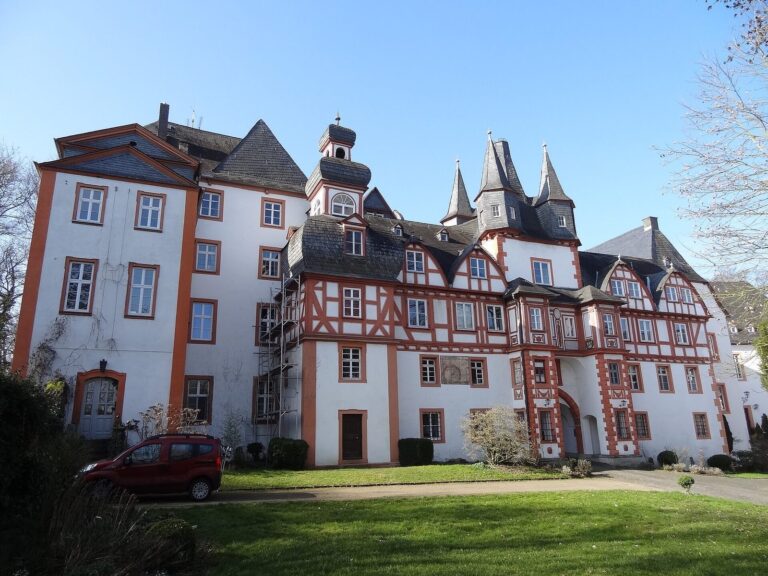
In 1475, Count Kuno of Solms received permission from Holy Roman Emperor Frederick III to strengthen the defenses of both the castle and the town. In 1533, Wolff Werner, a master builder from Lich, altered the castle’s formerly fortified round towers. The Solms-Laubach line emerged as a separate branch of the House of Solms in 1548 and held imperial immediacy, meaning it answered directly to the emperor rather than to another territorial lord.
Friedrich Magnus of Solms-Laubach, the first count of his line to make Laubach his permanent home, oversaw completion of the expanded residence in 1559. The castle was further developed in the sixteenth and eighteenth centuries. The Counts of Solms-Laubach continue to use it as their residence and manage the property.
Remains
Castle layout and defenses
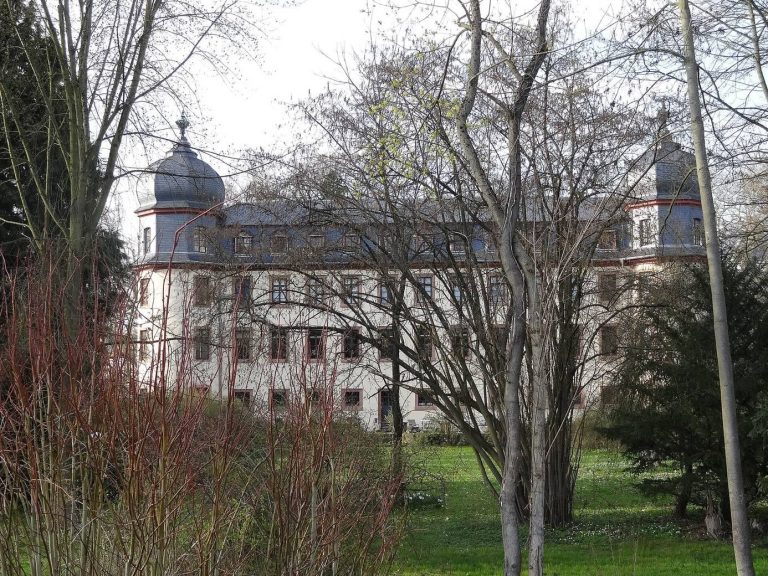
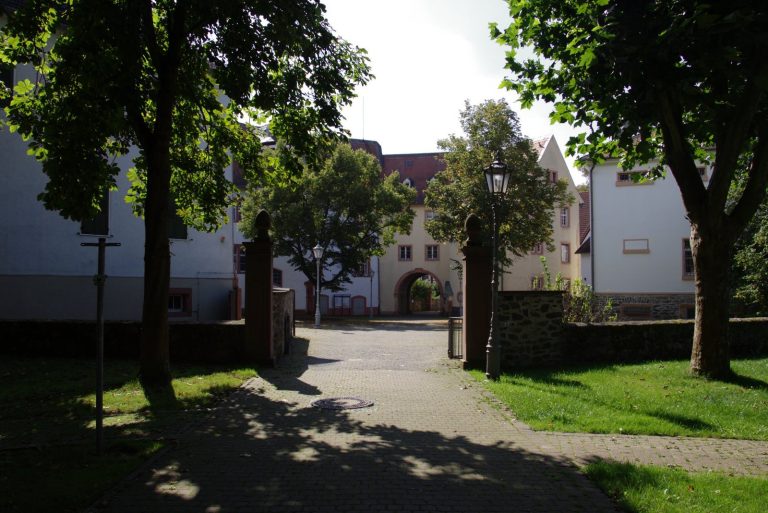
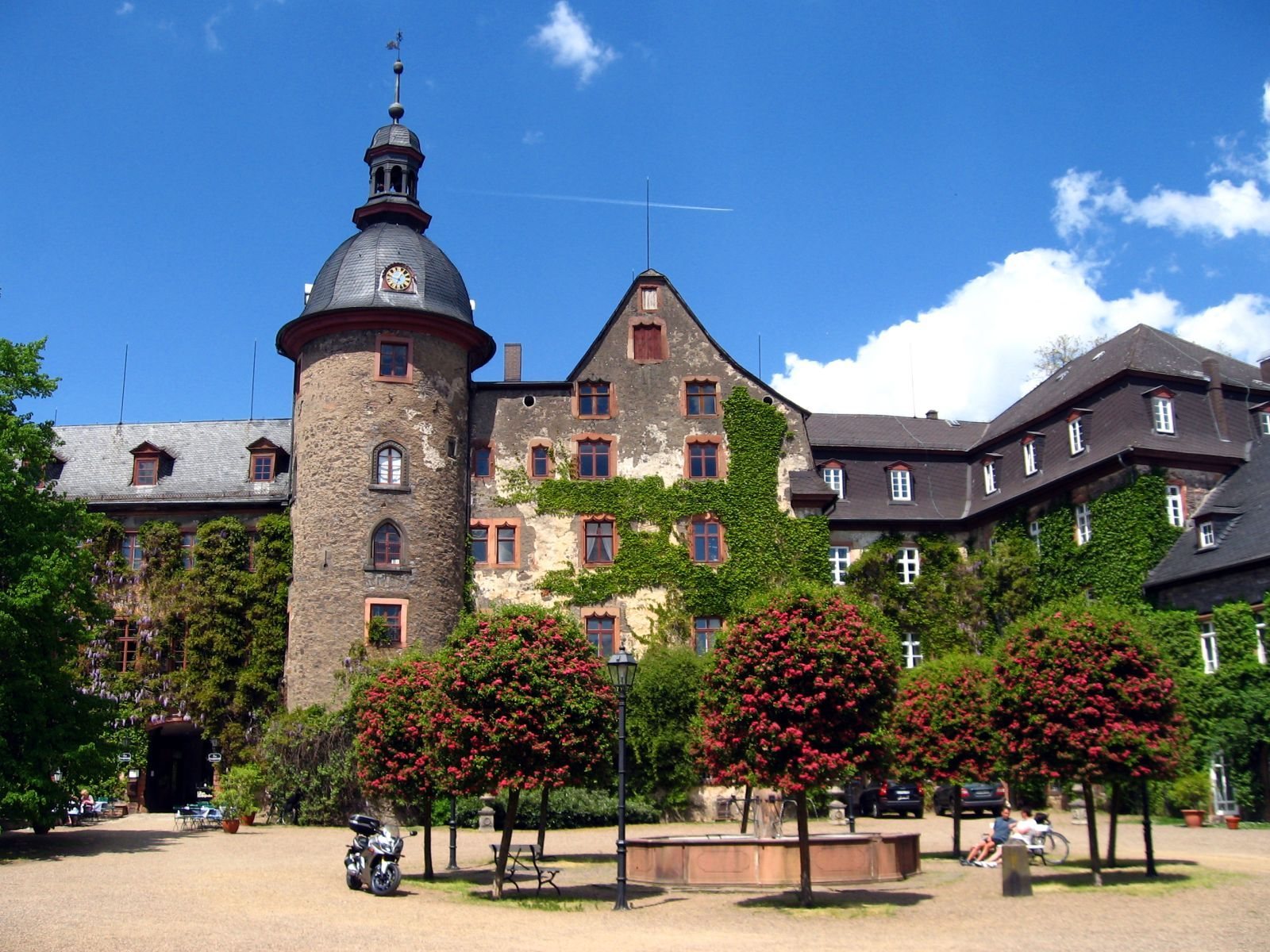
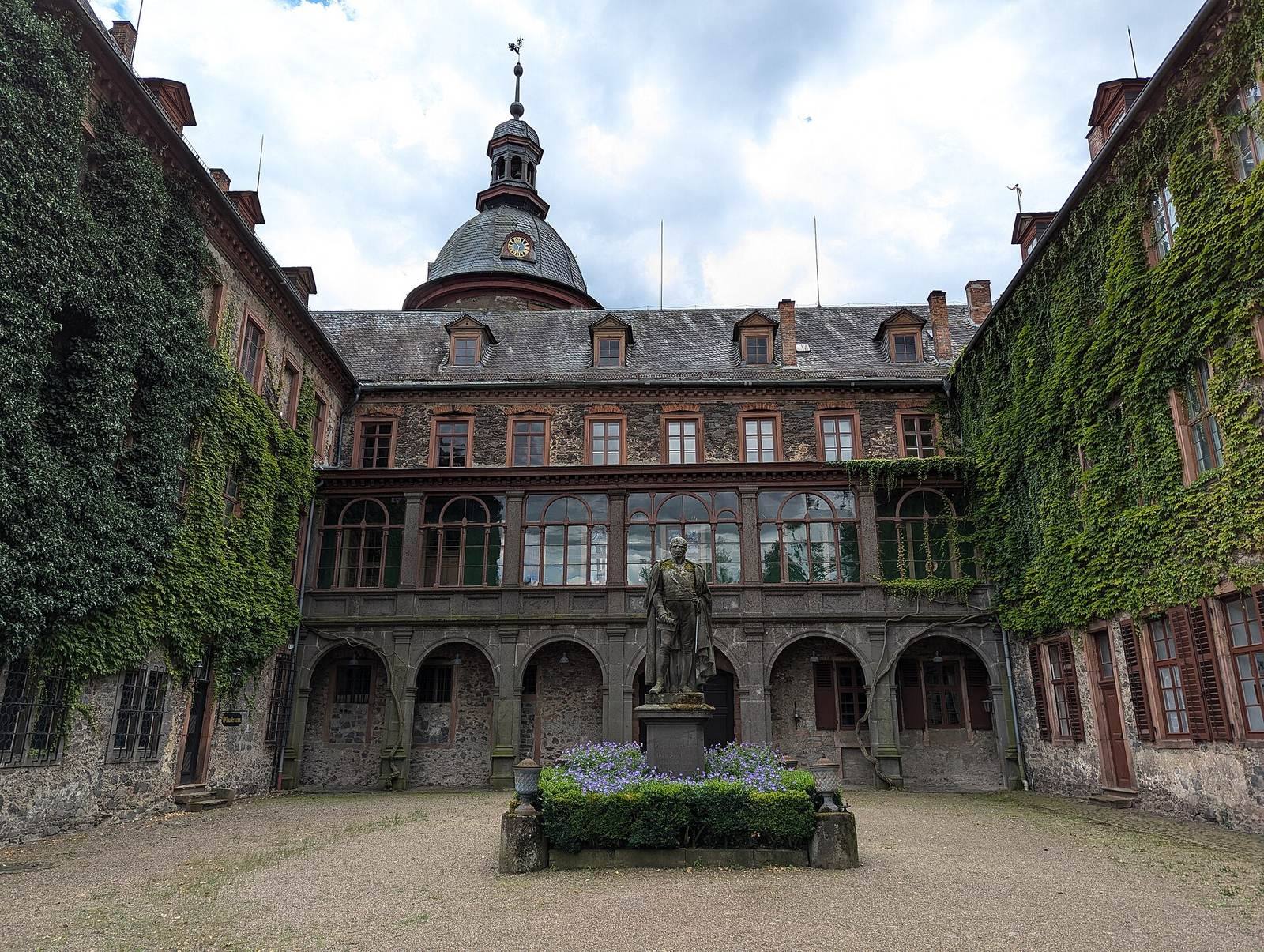
The present complex comprises three interconnected buildings arranged in a horseshoe shape. The thirteenth-century castle formed part of Laubach’s town fortifications. Its round keep served as a gate tower or clock tower. Four round towers were originally fortified, and three survive; Baroque caps were later added to them.