Alès Episcopal Palace: An 18th-Century Episcopal Residence
Site at a Glance
- Rating
- 4.7
- Popularity
- Very Low
- Country
- France
- Primary era
- Early Modern
- Eras represented
- Early Modern
- Civilizations
- French
- Site type
- Religious
- Remains
- Palace
On this page5 sections
History
Foundation and construction
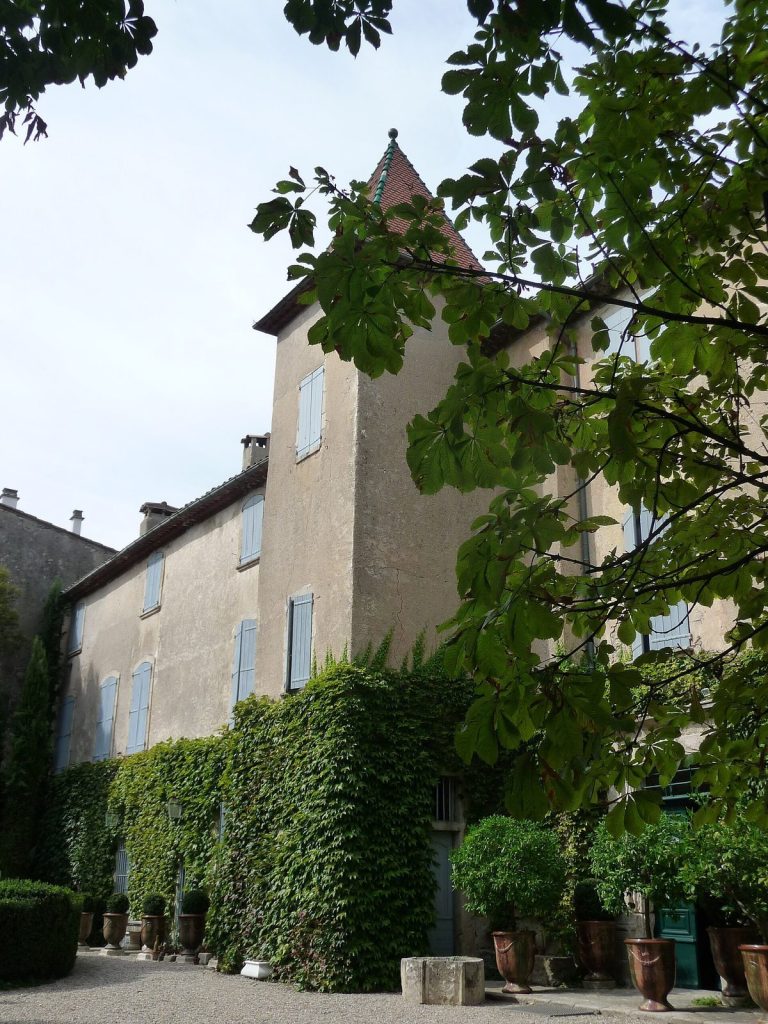
The Alès Episcopal Palace is an 18th-century bishop’s residence in Alès, France, commissioned in 1724 for the Diocese of Alès and completed in 1741. The diocese, a church jurisdiction governed by a bishop, was established on 17 May 1694 by Pope Innocent XII. Its first two bishops, François Chevalier de Saulx and Jean-François-Gabriel de Hénin-Liétard, lived in a house rented on Rue Lafare.
The third bishop, Charles de Bannes d’Avéjan, commissioned the palace on 16 September 1724. A habitable section was ready for him in June 1728, and work was completed on 8 April 1741. D’Avéjan also spent nearly 40,000 livres on its decoration.
Revolution and changing ownership
During the French Revolution, the political upheaval that began in France in 1789, the Diocese of Alès was suppressed and attached to the Diocese of Avignon. The palace first served administrative and penitentiary purposes, then became the headquarters of the Revolutionary Committee.
After the revolutionary state took control of the property, parts of the complex were sold in separate transactions. On 27 February 1792, the kitchen garden and gardener’s pavilion went to Jean-Jacques Sugier, vice-president of the Alès district Directory, a local executive administrative body. In 1796, Nîmes merchants Adam Edouard and Charles Michel fils joined with Jean-Edouard Serres of the National Revenue Administration to buy the episcopal complex, its outbuildings, courtyards, gardens and orangery. Jean-Louis Bonnaud, also from Nîmes, bought the house known as the Bishopric of Alès in 1798.
Civic and financial uses
In 1821, the Diocese of Nîmes was re-established and took over administration of the former dioceses of Alès and Uzès. A portion of the palace gardens was acquired in 1868 for a local Caisse d’Épargne savings-bank branch.
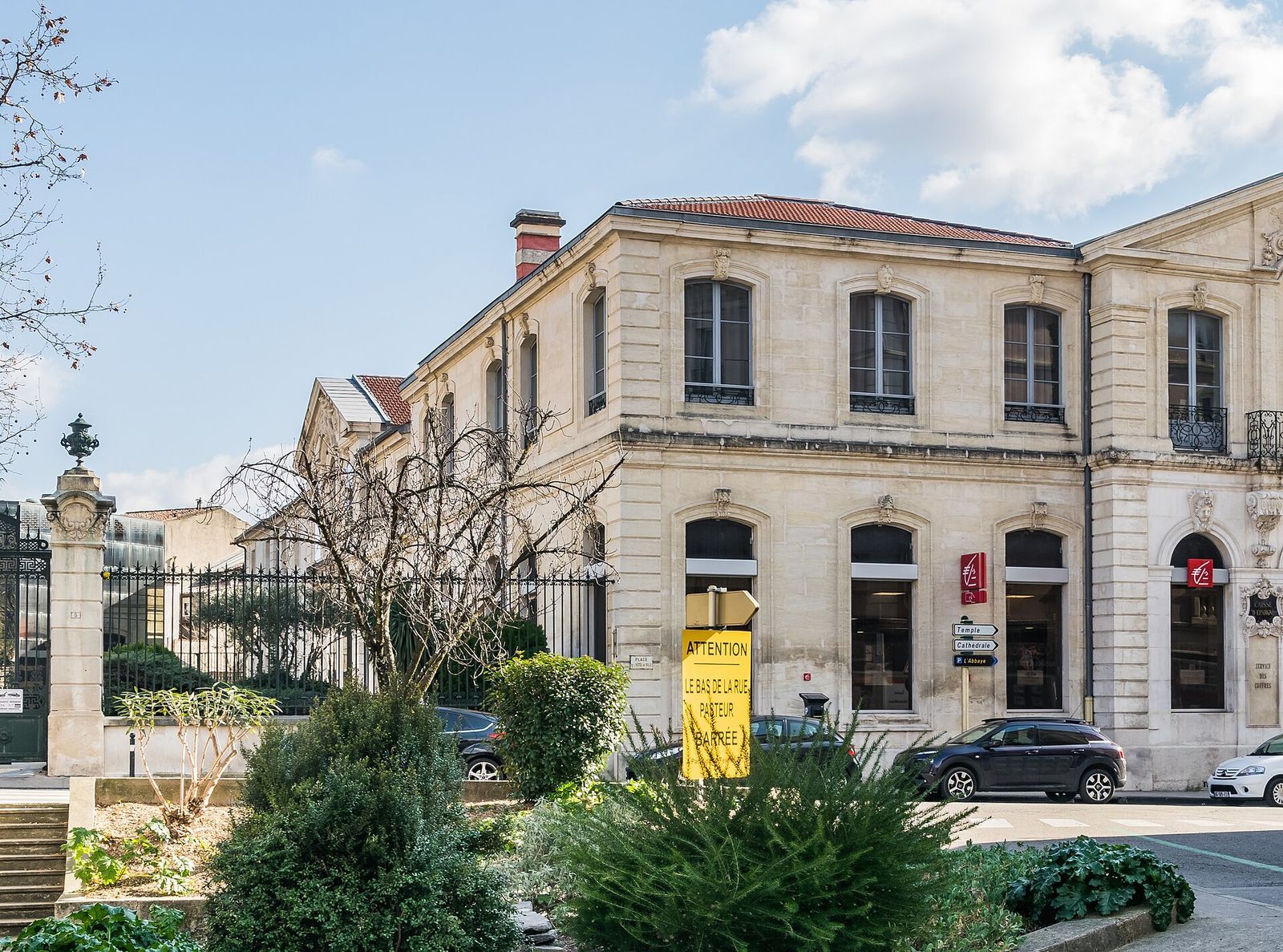
The Alès Chamber of Commerce and Industry, founded in 1909, decided in 1936 to acquire the former episcopal buildings to expand its premises. Ownership transferred on 7 February 1937. The palace was classified as a French historic monument in 1964. In the 1970s, the Chamber moved to a new building and sold the former palace to the Caisse d’Épargne, which adapted it for its use. The palace is now used as a communal public establishment.
Remains
The complex was organized around a formal courtyard, with the principal building on its north side and two wings extending south at right angles. Outbuildings and pavilions continued beyond the wings. The courtyard entrance was later demolished when the access avenue was widened, and adjacent outbuildings were replaced by modern houses, reducing the original alignment of the complex.