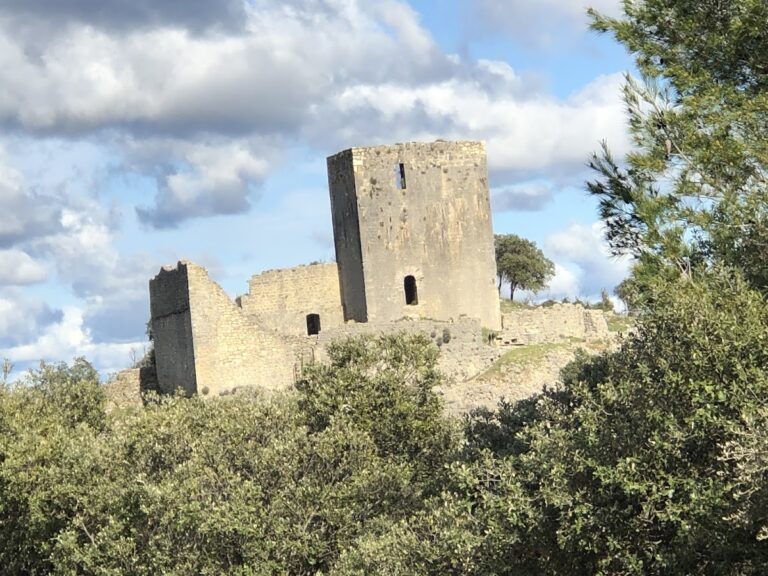
Castle of Saint-Jean-du-Gard: A Historic Seigneurial Residence in France


Site at a Glance
- Rating
- 4.9
- Popularity
- Very Low
- Country
- France
- Primary era
- Early Modern
- External website
- Open
- Eras represented
- Medieval, Early Modern
- Civilizations
- French
- Site type
- Military
- Remains
- Castle
On this page10 sections
History
Medieval origins and the lords of Saint-Jean
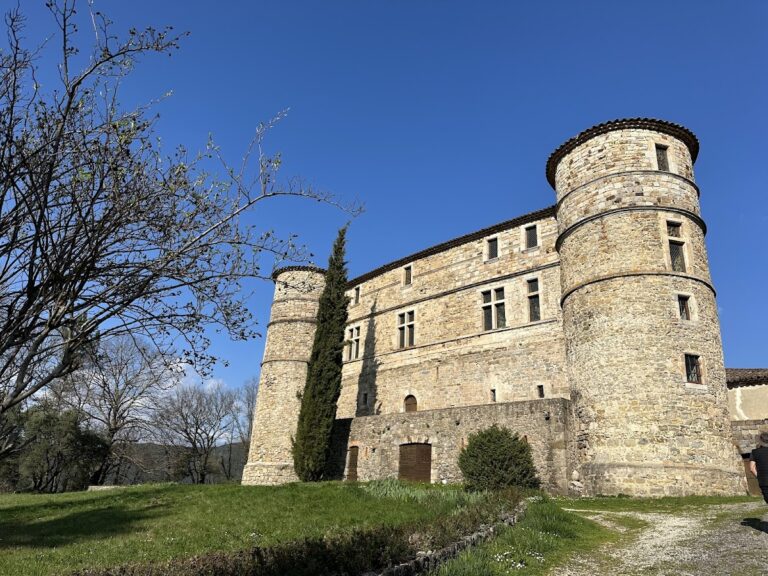
Castle of Saint-Jean-du-Gard is a historic castle in Saint-Jean-du-Gard, France, whose construction is dated to the thirteenth century and whose later fabric is described as Renaissance architecture. It served as the residence of the lords of Saint-Jean and is first mentioned in 1314. In 1397, a compoix, a land and property register used for taxation and administration, ordered its occupant to restore the building.
During the fifteenth century, Jean III de Mirols acquired part of the lands of Saint-Jean and adopted the title of baron of Moissac, Villeneuve, and Saint-Jean. His heirs later sold the barony of Villeneuve-Saint-Jean to Astor de Montbel, who resold it to Antoine de Saint Bonnet. These transfers placed the castle within the changing network of lordships that shaped the political and landed history of the area.
Royal annexation and the Wars of Religion
In 1546, during the reign of François I, Saint-Jean was annexed to the royal domain. The seigneurie, or lordship with defined judicial and administrative rights, was formally established with high, middle, and low justice, referring to different levels of judicial authority. Antoine de Saint Bonnet became its first lord. The Saint Bonnet de Thoiras family was allied with the Caylar family, descendants of the Bermond line. Antoine was the father of Louis, a leader of the Protestants, and of Aymar, whose son later became Marshal of Thoiras.
The castle became involved in the Wars of Religion, a series of sixteenth- and early-seventeenth-century conflicts in France between Catholics and Protestants. In 1560, Honorat de Savoie, lieutenant general in Languedoc, led a punitive expedition against Saint-Jean and burned the castle because the Saint Bonnet family was Protestant, as was much of the Cévennes nobility. The castle was rebuilt during the sixteenth century.
A Protestant temple was built against the castle’s north façade and consecrated in 1569. During the three further Wars of Religion fought from 1620 to 1629, Jean de Saint Bonnet repeatedly received Henri, Duke of Rohan, a leading French Protestant commander and head of the Reformed forces, at the castle.
The Carlot enlargement and Protestant worship
In 1652, Jean de Saint Bonnet’s son Henry, who was heavily indebted, sold the castle to Edouard de Carlot. Carlot enlarged the residence with a new wing extending from the main building. He also obtained permission from the Protestant consistory, the governing body of a Protestant congregation, to open a passage through the shared wall between the castle and the temple. The opening allowed him to attend services from his bedroom when illness prevented him from going to the temple.
The Carlots were a patrician family from Verona involved in commerce, and their social status prevented them from holding a seigneurie as nobles. Edouard de Carlot therefore obtained letters of rehabilitation from Louis XIV. He granted the usufruct, or right to use and benefit from property, to his sister Alix de Peyremale and his brother Pierre, the husband of Marie de Toulouse-Lautrec. The property was ultimately designated for the male child born from the marriage of their daughter Isabeau de Carlot and Antoine de Vignolles Montvaillant.
Jacques de Vignolles inherited the castle and married Yolande de Clauzel de Fontfroide. Because they had only daughters, ownership passed into the Hostalier family, whose members were counsellors at the Court of Accounts, Aids, and Finances of Montpellier.
Royal garrison and the Camisard War
In 1685, the temple was demolished after the lord had allowed clandestine Protestant assemblies to take place at the castle. That same year, Louis XIV revoked the Edict of Nantes, the 1598 measure that had granted French Protestants limited legal protections and rights of worship. The castle was then requisitioned as a royal garrison, and its prisons were heavily used, including during the escape of the pastor Roman.
The castle also played a role during the Camisard War, an early-eighteenth-century Protestant revolt in the Cévennes that followed the suppression of Protestant worship and the revocation of the Edict of Nantes. Prominent royal representatives sent to pacify the region were accommodated there, including Lamoignon de Basville, the royal administrative official known as intendant of Languedoc, the Count of Broglie, the Duke of Noailles, Marshal Montrevel, and Marshal Villars.
Later ownership
The Hostalier family retained the castle until selling it on 20 December 1816 to Louis Dupuy de Montbrun d’Aubignac, a former captain in the Burgundy Regiment. The property remained in that family until December 1995, when descendants of Girard de Coehorn sold it to Marie Françoise and Bernard André. Its history remains closely associated with the religious and political conflicts that affected the Cévennes from the sixteenth through the eighteenth centuries.
Remains
Residential complex and Renaissance fabric
The castle combines a thirteenth-century foundation with fabric rebuilt and enlarged during later periods. It is described as a Renaissance architectural complex. Edouard de Carlot extended the main residential building with an additional wing, creating a principal south façade measuring 40 metres. This enlargement gives the surviving residence its recorded relationship between the earlier main building and the later extension.
North façade and former Protestant temple
The castle’s north side was connected to a Protestant temple that stood directly against the façade. The shared wall was later pierced by an opening made for Edouard de Carlot, linking his bedroom with the place of worship so that he could attend services while ill. The temple remained beside the castle until it was demolished in 1685 after clandestine Protestant assemblies had been held at the residence.
Prisons and royal garrison
Prisons formed part of the castle complex when the building served as a royal garrison in the late seventeenth century. They were heavily used during this period, including in connection with the escape of the pastor Roman, adding a penal and military function to the castle’s earlier roles as a seigneurial residence and a place associated with Protestant worship.
Nearby sites