Palais Buquoy: A Late-Baroque Palace and French Embassy in Prague


Site at a Glance
- Rating
- 4.4
- Popularity
- Very Low
- Country
- Czechia
- Primary era
- Early Modern
- Eras represented
- Early Modern, Modern
- Civilizations
- Habsburg, Holy Roman Empire, Kingdom of Bohemia
- Site type
- Domestic
- Remains
- Palace
On this page8 sections
History
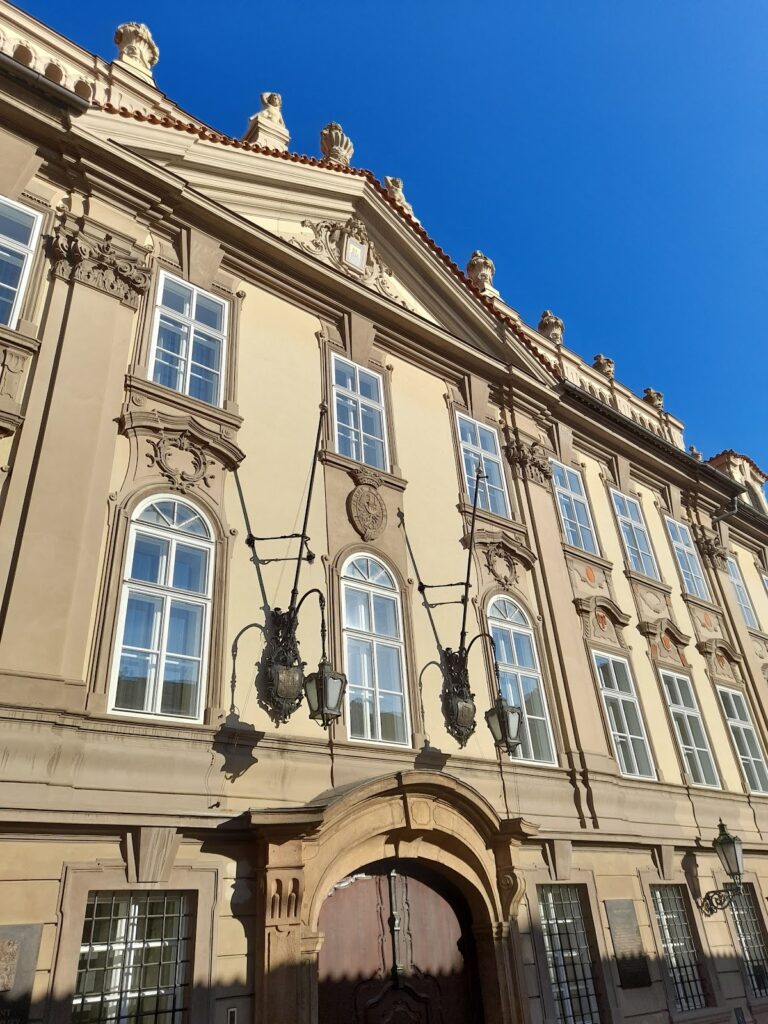
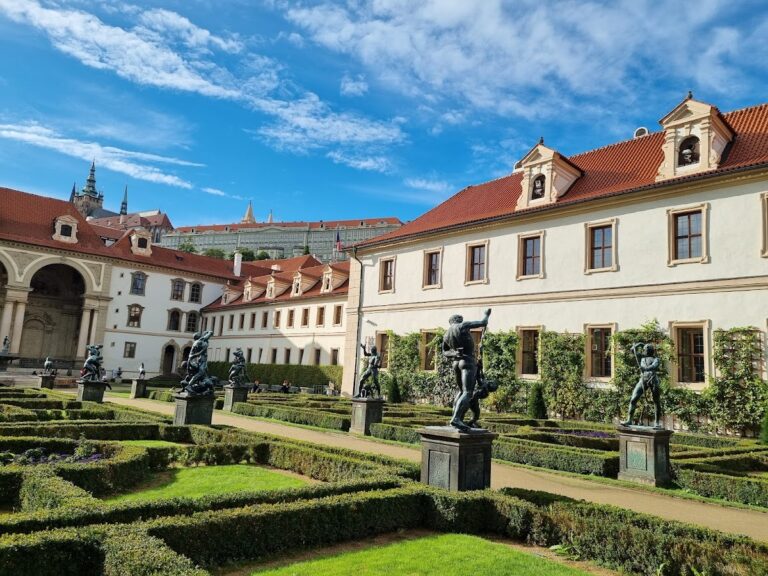
Palais Buquoy is a late-Baroque palace in Prague, Czechia, located in the Malá Strana district on Velkopřevorské Square. Its first major palace was designed by Jean-Baptiste Mathey and built in 1667 for Count Johann Friedrich von Wallenstein, Archbishop of Prague, a senior Christian bishop who governed a major ecclesiastical district. The complex later expanded through several phases, producing the Baroque appearance associated with the site today.
Early palace and Baroque transformation
A smaller Buquoy Palace had already been erected in 1598 by Melchior Gniesen. The main palace was remodeled and enlarged in 1719 by František Maximilian Kaňka for Countess Marie-Josepha of Thun. Kaňka was a prominent Czech Baroque architect. Further alterations commissioned by Countess Hzan of Harras continued until 1738 and shaped the palace’s present form. The larger building is also dated to 1718 and was remodeled in the Baroque style in 1738.
Ownership changed several times during the eighteenth century. The palace was sold in 1732 to a Fürstenberg princess born Wallenstein, resold in 1735 to Countess Hzan of Harras, and sold again in 1748 to the Longueval-Buquoy family. The adjoining smaller palace became part of the family’s representative residence in Prague.
The Buquoy family and later use
Charles-Bonaventure de Longueval, Count of Bucquoy, was a marshal in the army of Emperor Ferdinand II and a general of the Catholic League, a Catholic military and political alliance in the early seventeenth-century Holy Roman Empire. With Maximilian I, Elector of Bavaria, he led the Imperial forces to victory over the Bohemian armies at the Battle of White Mountain on 8 November 1620. Ferdinand II was the Habsburg emperor whose forces won that battle, while Maximilian supported the Imperial side as Bavaria’s elector.
The reception rooms were remodeled around 1860 in the Neo-Baroque style, a nineteenth-century revival of Baroque forms, and the interiors were substantially refashioned in 1896 by Josef Schulz. Their furnishings include objects inherited from the Buquoy family and additions from the French National Furniture collection, the French state institution responsible for national furnishings and movable decorative heritage.
French diplomatic period
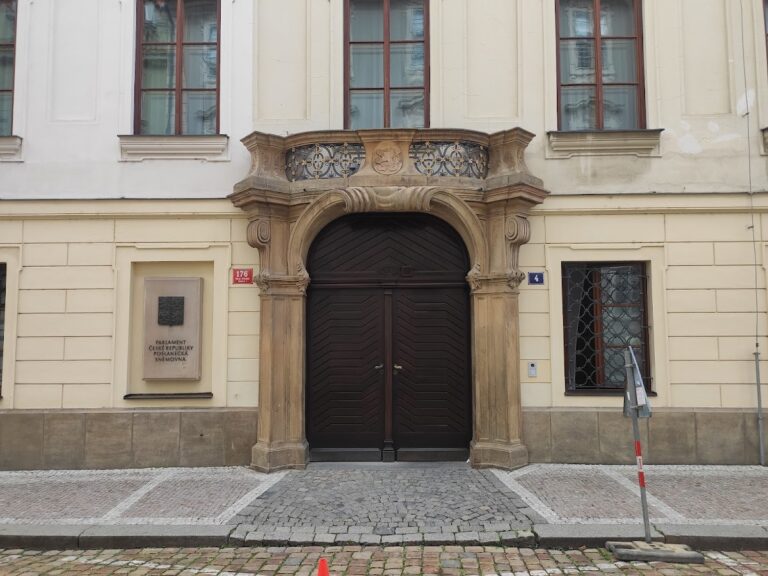
France leased the palace from 1919, and it has served as the seat of the French Embassy in the Czech Republic since that year. The French state purchased the property in 1930 from Charles-Georges de Longueval-Bucquoy, a descendant of the family. Palais Buquoy is protected as a cultural monument of the Czech Republic.
The palace’s later history includes cultural and political events. Mozart and Maurice Ravel played in its music salon. On 9 December 1988, French President François Mitterrand received Václav Havel and seven other Czechoslovak dissidents at a breakfast in the grand dining room. Miloš Forman’s film Amadeus also used the palace as a filming location, including its decorated rooms for a Baroque ball and the Charles X salon for another scene.
Remains
Palais Buquoy combines late-Baroque and Renaissance architectural features in a complex formed by a large palace and an adjoining smaller building. The site stands on Velkopřevorské Square in Malá Strana, opposite the John Lennon Wall and near Kampa Island and the Vltava River. The complex is associated with land formerly belonging to the Sovereign Order of Malta.
Palace buildings
Large Buquoy Palace
The large palace is dated to 1718 and received a Baroque remodeling in 1738. Its principal design is attributed to Jean-Baptiste Mathey, while the later enlargement and remodeling are attributed to František Maximilian Kaňka. Alterations completed by 1738 established the building’s present appearance. The interiors were substantially refashioned in 1896 by Josef Schulz, while richly furnished reception rooms include the music salon, grand dining room, and Charles X salon.
Small Buquoy Palace
The adjoining small palace was erected in 1598 by Melchior Gniesen and later given a Baroque treatment in 1780. It formed part of the Buquoy family’s representative Prague residence alongside the larger palace, contributing to the complex’s layered combination of Renaissance and Baroque features.
Nearby sites