Schloss Eringerfeld: A Baroque Palace in Geseke, Germany
Site at a Glance
- Rating
- 3.6
- Popularity
- Very Low
- Country
- Germany
- Primary era
- Early Modern
- External website
- Open
- Eras represented
- Early Modern, Modern
- Civilizations
- German, Holy Roman Empire
- Site type
- Domestic
- Remains
- Palace
On this page8 sections
History
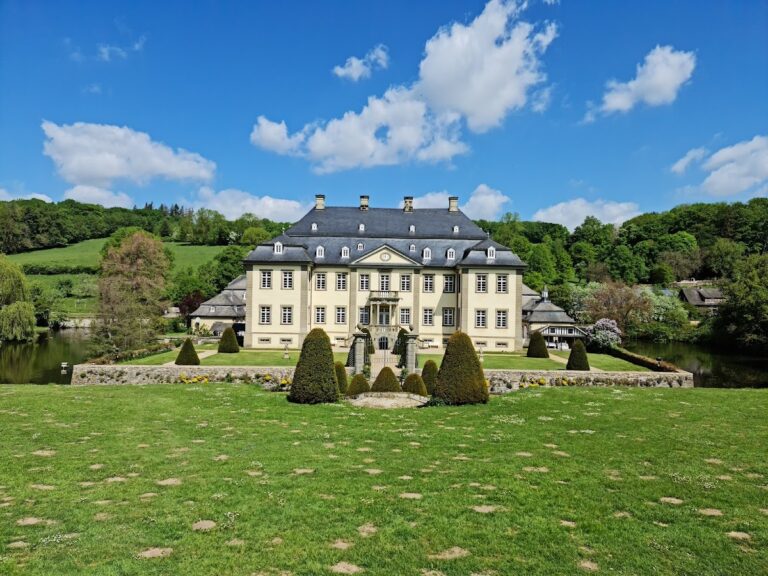
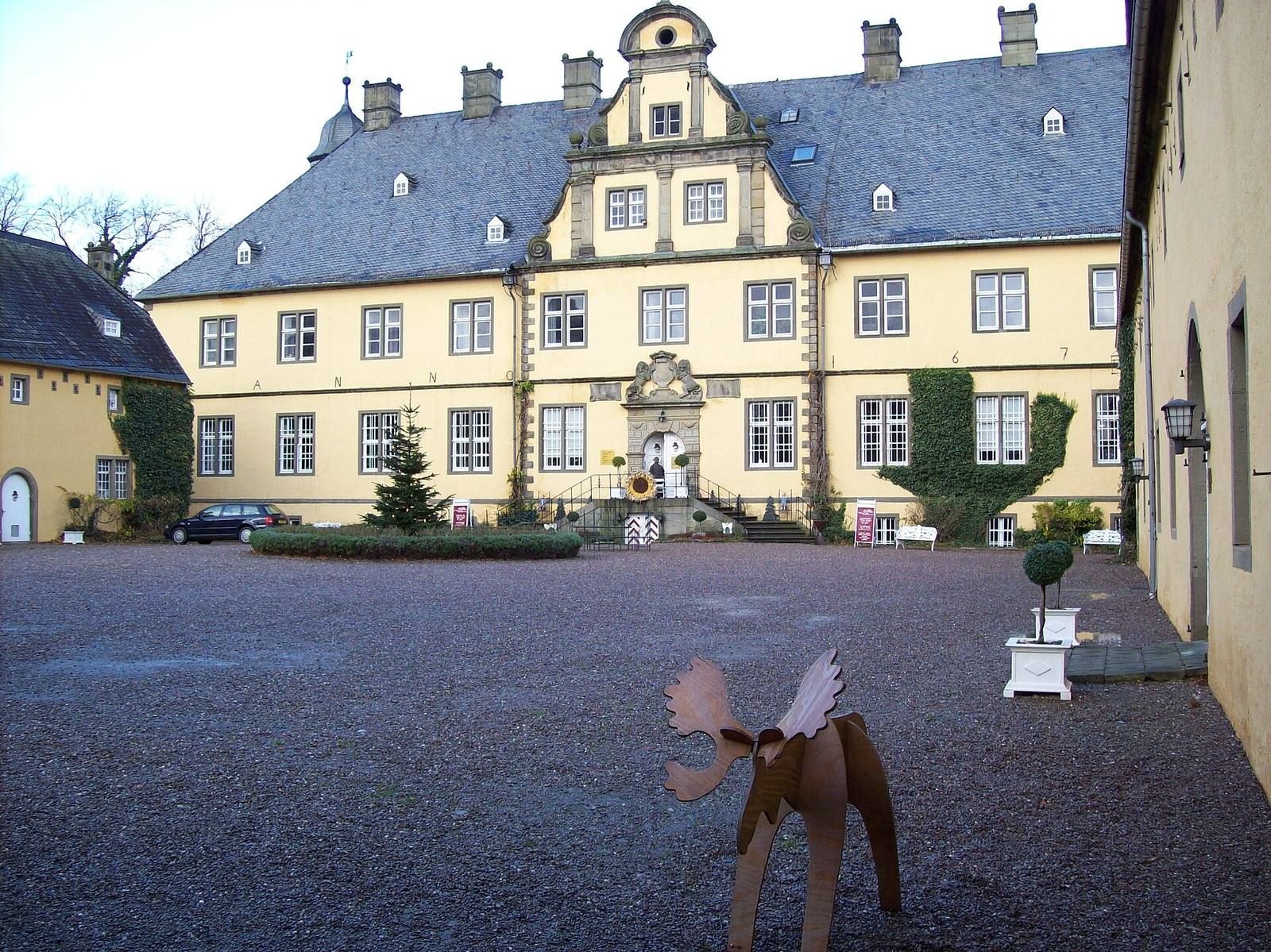
Schloss Eringerfeld is a Baroque palace in Germany, located in Eringerfeld, a locality belonging to the city of Geseke. Built for the Westphalian noble family von Hörde between 1676 and 1699, it replaced parts of an earlier castle or estate complex damaged by fire and became the family’s principal residence.
Construction for the von Hörde family
A fire in 1660 destroyed sections of the earlier complex. Friedrich Ferdinand von Hörde and his wife, Felizitas Elisabeth von der Horst, subsequently commissioned a new palace. The cathedral canons Johann Gottfried and Rhabanus Christoph von Hörde financed the project. Construction of the Baroque building, an elaborate European style known for formal planning and richly developed decoration, took place under the architect Ambrosius von Oelde and the master builder Jobst Scheck of Störmede.
The palace was completed in 1699. After Freiherr Franz Lodolf Joseph von Hörde died in 1781, ownership passed to the Decken and Ketteler families. Friedrich Clemens von Ketteler, a politician, lived at Schloss Eringerfeld, as did his grandson Wilhelm Freiherr von Ketteler, who was murdered by the Nazis, the National Socialist dictatorship that ruled Germany from 1933 to 1945.
War, religious use, and educational transformation
During the Nazi period, Dutch missionaries were forcibly quartered in the palace. From 1945 onward, the estate stood empty and deteriorated. The Jesuits, members of a Catholic religious order associated with education and religious training, operated a novitiate there from 1950 to 1964. A novitiate is a place where candidates undergo their initial formation for religious life.
Wilfried and Berna Kirchner bought Schloss Eringerfeld in 1964 and began extensive renovation after finding the property in serious need of repair. From 1965 to 1987, the palace and newly built surrounding structures housed Gymnasium Eringerfeld. In Germany, a Gymnasium is a secondary school traditionally focused on advanced academic education and preparation for university. After the boarding school closed, the palace underwent extensive renovation again, and the garden was restored to its original state. The site then operated as a hotel.
A school for gifted students occupied rooms formerly used by the boarding school from 2000 to 2005. An investor from China acquired the palace in 2013. Later plans to combine hotel and restaurant operations with an international boarding school for 200 to 300 students were abandoned. Since 2020, Schloss Eringerfeld has been offered for sale, with the asking price changing from 4.9 million euros to 2.8 million euros in 2024.
Remains
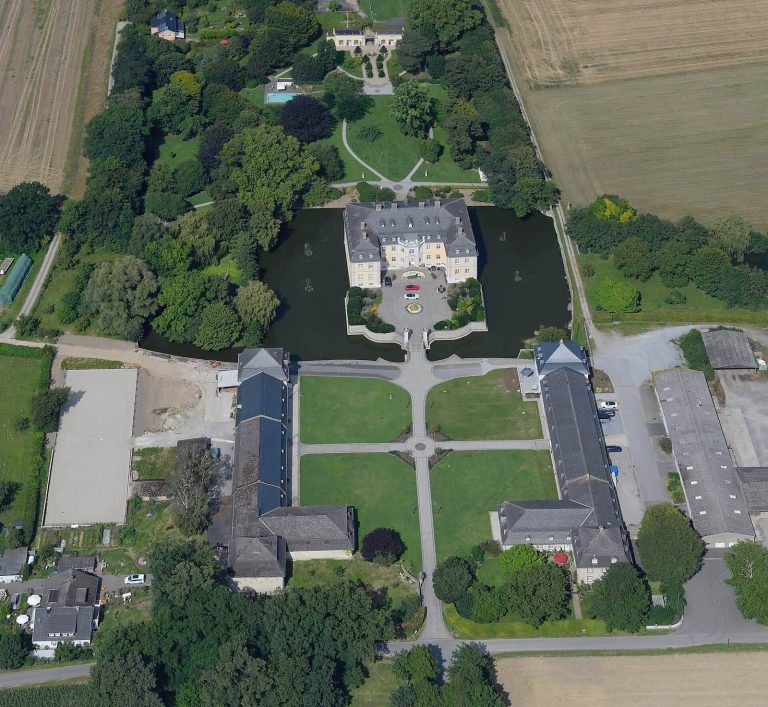
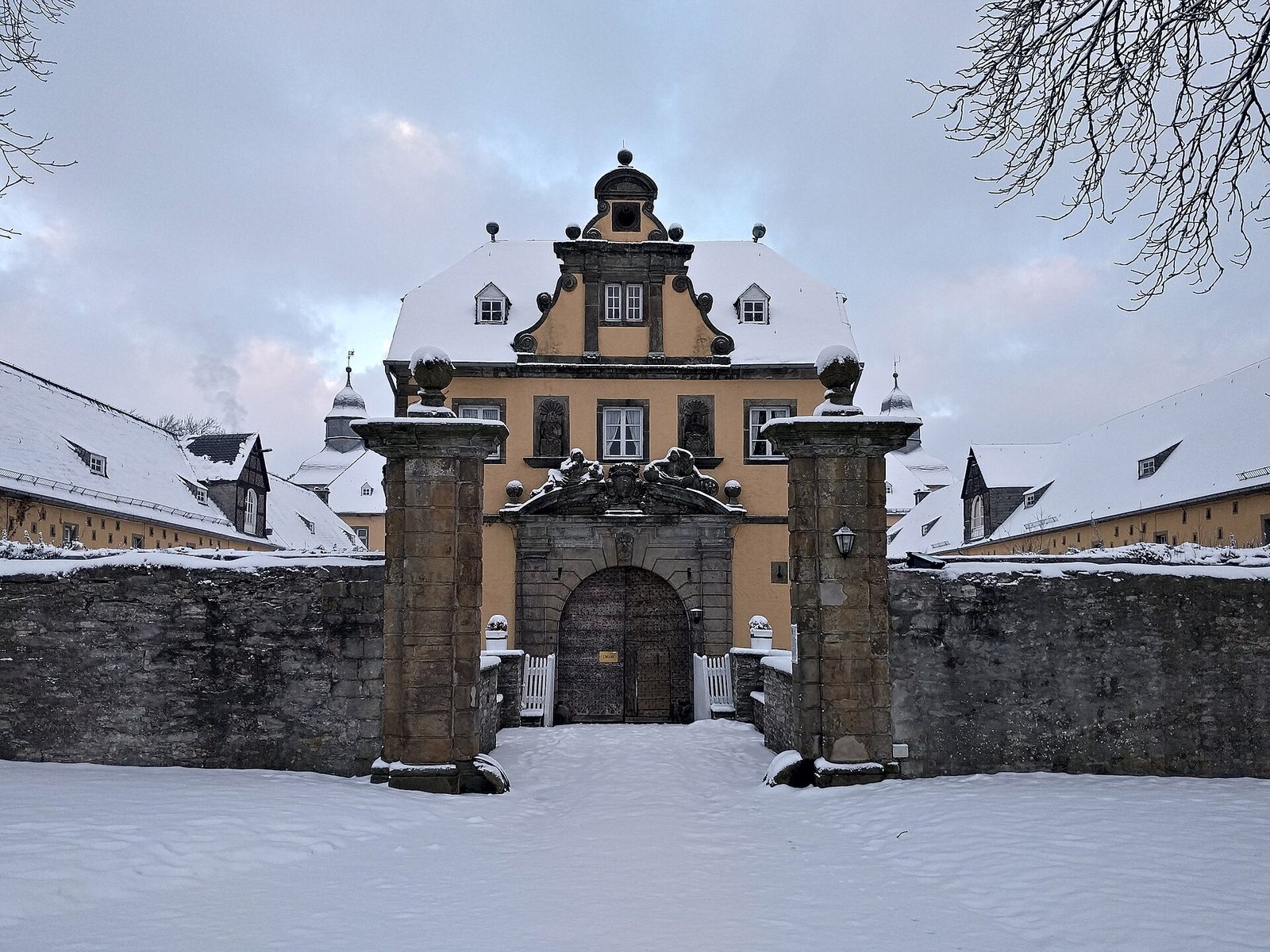
Schloss Eringerfeld survives as a Baroque palace with thick stone walls, retained furnishings, a restored garden, and later buildings around the main structure. Its physical form reflects both its original role as an aristocratic residence and the successive educational, religious, hospitality, and commercial uses that altered the estate.
Palace and grounds
Baroque palace
The principal building is the Baroque palace completed in 1699. Its thick stone walls remain, while some furnishings also survived because they were too heavy to remove. When the Kirchners acquired the property in 1964, these furnishings were considered worth preserving. Their survival contributes to the material evidence of the palace’s residential interior.
Garden and surrounding buildings
The garden was restored to its original state after the boarding school closed. Buildings constructed around the palace during the operation of Gymnasium Eringerfeld remain part of the estate and represent the site’s twentieth-century educational phase.
Adapted uses
The palace has been adapted repeatedly for different purposes. Its documented uses include an aristocratic residence, a Jesuit novitiate, a boarding school, a school for gifted students, a hotel, and a restaurant. These changes form part of the surviving character of the estate, alongside the historic palace, its furnishings, garden, and surrounding school buildings.