Palace in Jelcz-Laskowice: A Historic Family Residence
Site at a Glance
- Popularity
- Medium
- Country
- Poland
- Primary era
- Modern
- Eras represented
- Early Modern, Modern
- Civilizations
- German, Habsburg, Habsburg Austria, Holy Roman Empire, Kingdom of Bohemia, Kingdom of Prussia
- Site type
- Domestic
- Remains
- Manor House
On this page7 sections
History
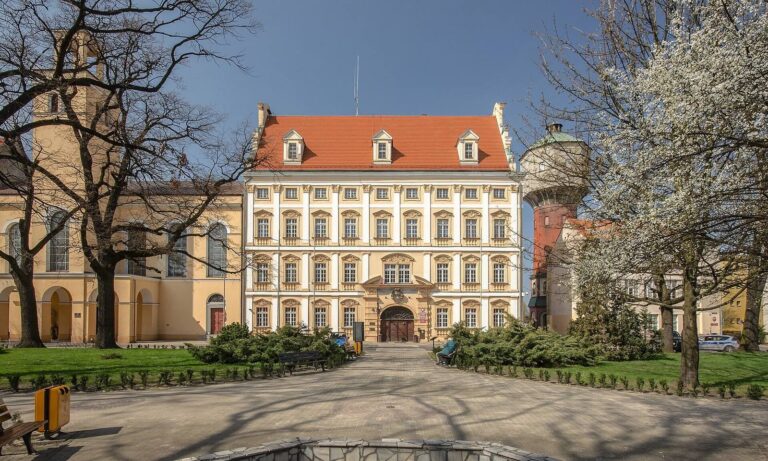
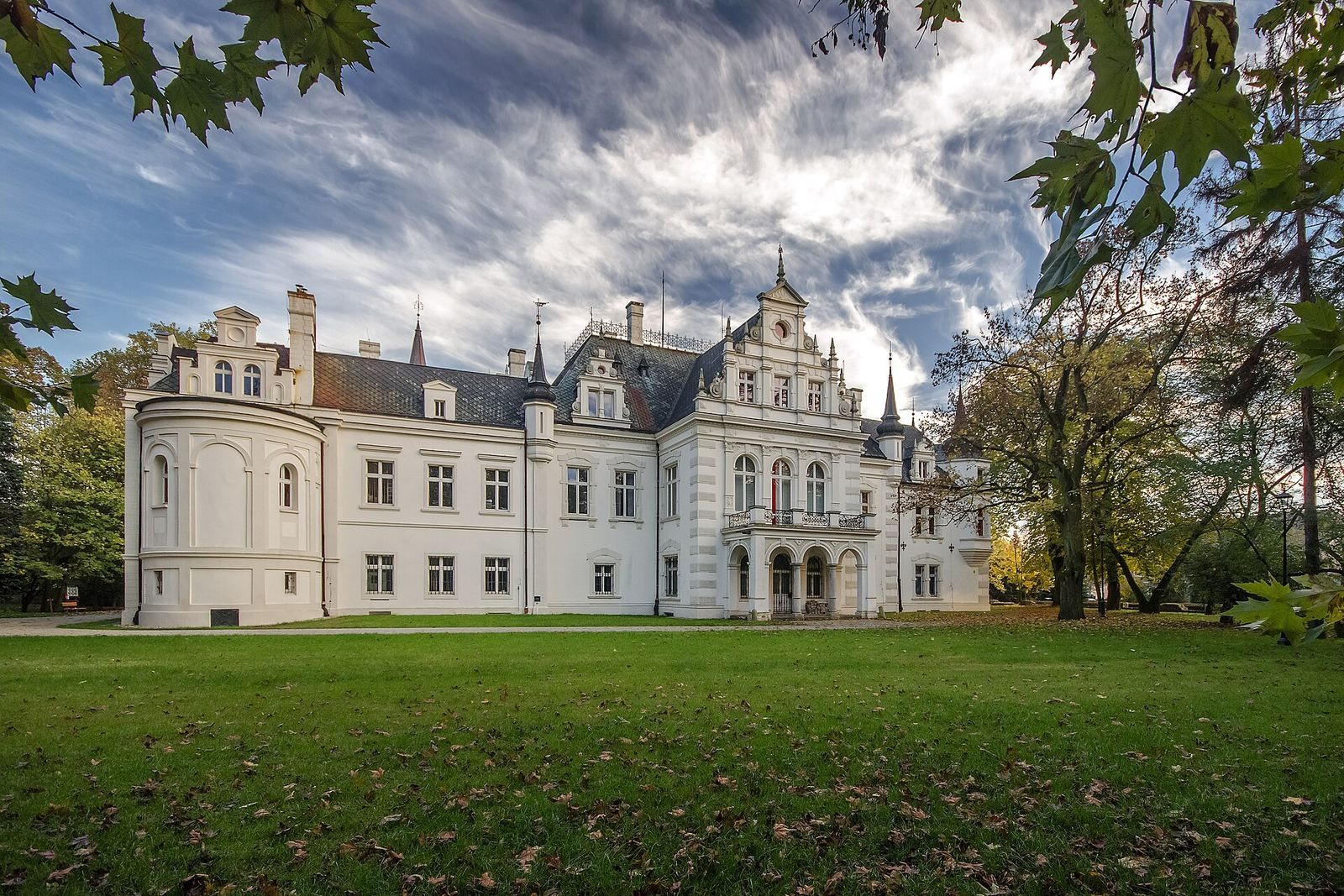
The Palace in Jelcz-Laskowice is a historic residence in Poland, first built as a fortified manor in 1558 under the nobleman Johann von Prittwitz. Its present appearance was completed in 1886 in the Dutch Neo-Renaissance style, a revival drawing on Renaissance architecture of the Low Countries. The estate later became a residence of the Saurma family’s Laskowitz branch.
Fortified manor and early rebuilding
In 1650, the village and castle passed to Wolf Albrecht von Saurma. He established the estate, together with nearby farms, as a family entail, an inheritance arrangement that kept property within a family. A fire destroyed the manor house in 1656, after which it was rebuilt. In 1779, Baron Johann Franz von Saurma-Jeltsch enlarged the early Baroque building in the Classical style.
The Saurma estate and palace reconstruction
After a later fire, rebuilding between 1869 and 1886 gave the palace complex its present appearance; the work was completed in 1886. The Counts of Saurma, a Silesian noble family, formed a distinct Laskowitz branch. Moritz Count Saurma (1802-1876), a Prussian royal chamberlain, meaning a court official serving a ruler’s household, and his wife, Baroness Pauline von Saurma-Jeltsch, passed the estate to their son Johannes (1832-1891). Johannes also served as a chamberlain and was an honorary knight of the Sovereign Order of Malta, a Catholic religious order with historic hospitaller origins. He married Antonie, Countess of Dohna-Schlobitten. His successor was his namesake son Johannes (1857-1937), who married Marie von Radowitz.
The estate in the twentieth century
By 1937, the estate covered 1,750 hectares, and the village had been renamed Markstädt. Hans-Leuthold Count Saurma took over the family entail in 1938 and was missing from 1941 onward. The last formal owner was his younger brother, Franz-Joseph Count Saurma, born at Laskowitz in 1906, who later became a senior government building official in North Rhine-Westphalia. The palace remained standing through both world wars.
In 1945, the palace passed to Poland along with most of Silesia. After the war, it served as a branch of the Institute of Soil Science and Plant Cultivation in Puławy. Following restoration, it became the home of the administration of the town and municipality of Jelcz-Laskowice.
Remains
Palace
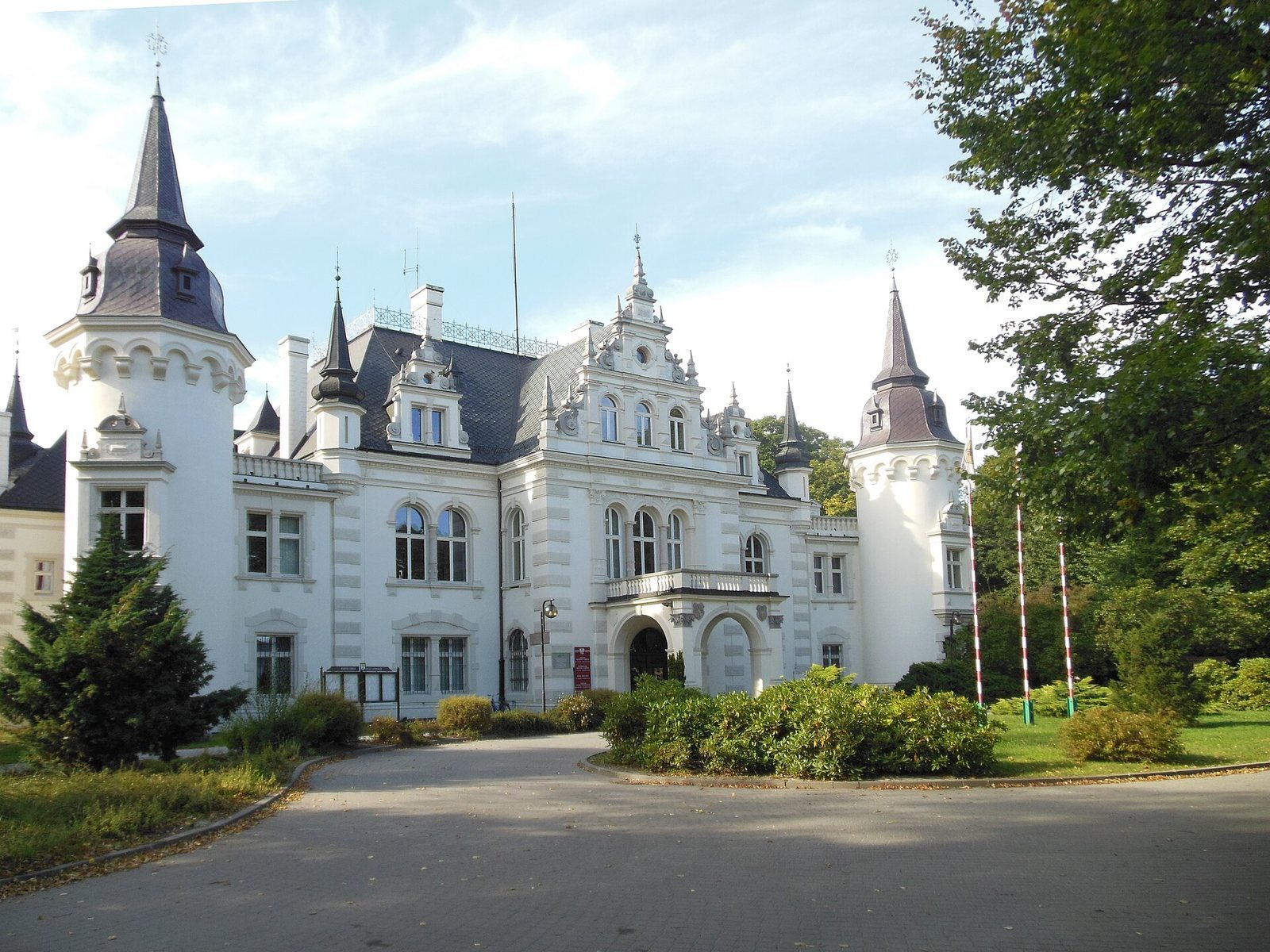
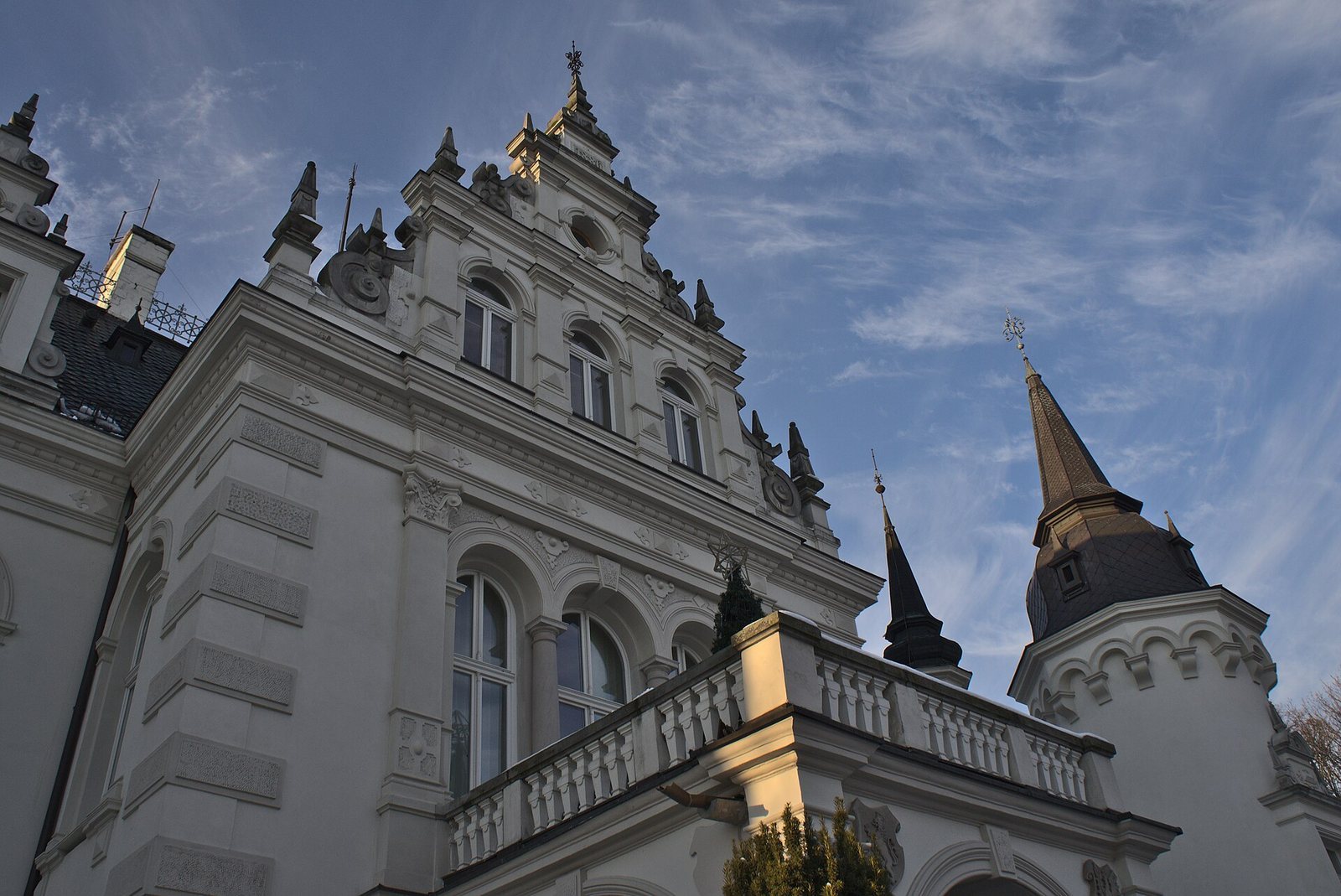
The palace has a four-sided plan, with a projecting section of the facade around the main entrance. The entrance is set in a columned porch that supports a balcony. The earlier building was fronted by an Ionic portico, a columned porch using the Ionic classical order, with a pediment containing a central inset field and colossal pilasters, flattened column-like features extending across more than one story. Two connecting structures linked the portico to the residential wing. A coat of arms above a side entrance bears the date 1869.
Park and manor estate
A six-hectare park surrounds the palace. Its landscape includes a hornbeam avenue and a substantial group of trees several centuries old, though the park is poorly maintained. The manor estate opposite the palace is neglected.