Sulisław Palace: A Historic Residence in Poland
Site at a Glance
- Popularity
- Medium
- Country
- Poland
- Primary era
- Modern
- Eras represented
- Modern
- Civilizations
- German, Kingdom of Prussia
- Site type
- Domestic
- Remains
- Castle
On this page5 sections
History
Medieval origins and estate ownership
A medieval castle and knightly estate at Sulisław in Poland are associated with the Knights Templar, a medieval religious and military order. The palace’s history is traced to 1688, while the present building dates to the early nineteenth century. Among the estate’s medieval owners were members of the Zedlitz family. The von Buchta family held it from the second half of the sixteenth century, and Heinrich von Buchta served on the council of the episcopal principality of Neisse. The estate later belonged to the bishops of Breslau before passing into Prussian state ownership during secularization, the transfer of church property to secular control.
Nineteenth-century changes
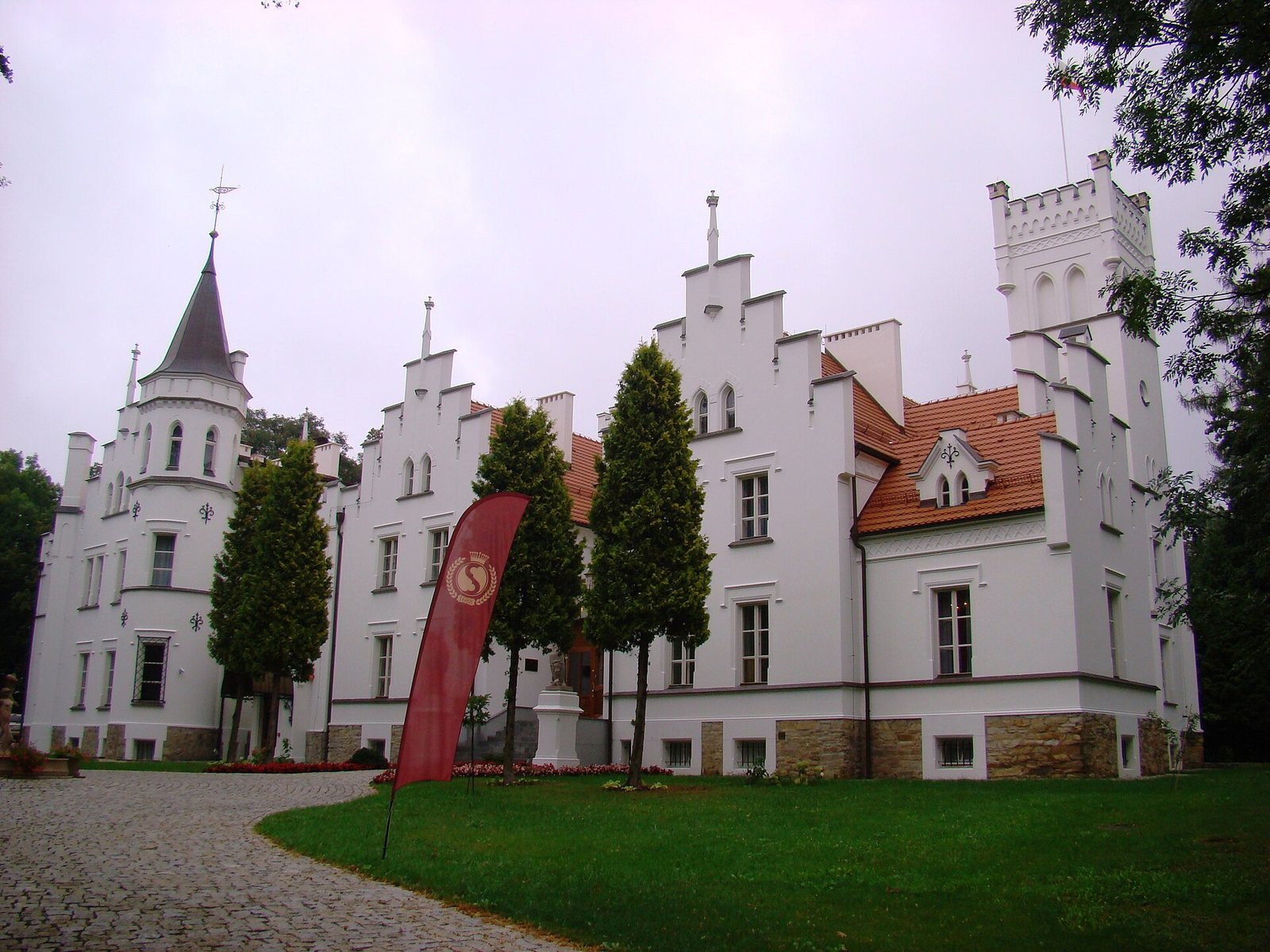
In 1814, King Frederick William III of Prussia gave the estate to the general Ludwig Yorck von Wartenburg, who made Klein Oels his principal residence. Sulisław was offered for sale and may have been leased for a time to the Hoffmann family. William I was also among the palace’s prominent owners. The Großer family held the estate until 1888, when the Schaffgotsch family acquired it for Hans Karl Gotthard von Schaffgotsch. From 1889, he enlarged the manor and remodelled it in the Neo-Gothic style, which revived forms associated with medieval Gothic buildings.
Twentieth century and restoration
From 1909, the palace was leased to Henry, also known as Harry, who was born in 1854. Count Johannes von Francken-Sierstorpff, Hans Karl’s successor, bought it in 1915. In connection with the July 20, 1944 attempt to assassinate Adolf Hitler, the Nazi regime imprisoned Johannes. He died during the evacuation of prisoners toward western Germany.
After the Second World War, state authorities took over the palace. Repeated changes of management caused substantial damage, and the building stood abandoned from 1966. Renovation in the 1970s preceded its use as a hospital for the local police. The Ministry of Internal Affairs took it over in 1978. The unused palace began deteriorating again from 2000. In 2006, BTA Investment Company bought the palace, manor farm, and park, and restored the palace and farm. Jerzy Bar is the owner.
Remains
The palace has an irregular quadrangular plan, with a tower marking its southeast corner. Its architecture is eclectic, combining features drawn from different styles, and its nineteenth-century remodelling gave it a Neo-Gothic character.
Two framed coats of arms stand above the entrance. The left one bears the arms of the von Francken-Sierstorpff family. The wider complex also includes a park and a manor farm, the agricultural buildings and land of the estate.