Our Lady Church in Oława: A Roman Catholic Parish Church in Poland
Site at a Glance
- Popularity
- Low
- Country
- Poland
- Primary era
- Early Modern
- Eras represented
- Medieval, Early Modern, Modern
- Civilizations
- German, Holy Roman Empire, Kingdom of Bohemia, Kingdom of Prussia
- Site type
- Religious
- Remains
- Church
On this page9 sections
History
Our Lady Church in Oława, Poland, is the principal church of the Roman Catholic parish of Our Lady of Consolation, a devotional title for the Virgin Mary. Its earliest known mention dates to 1201, and its architectural history includes Gothic and Neo-Gothic phases.
Medieval church and early construction
The church was originally dedicated to St Blaise, an early Christian bishop and martyr, and St Andrew Świerad, a medieval hermit and monk.
Its Gothic choir, the part near the altar used by clergy and singers, was completed around 1300. The three-aisled nave was built from 1587 to 1589, with a central space higher than the side aisles but without an upper level of windows.
Confessional change and rebuilding
The church became Protestant in 1534 and remained so until 1699. Protestant use resumed in 1707, when it became the parish church of St Blaise and St Speratus, an early Christian martyr. It kept that role until 1945.
During the Thirty Years’ War, a major European conflict fought from 1618 to 1648, the church suffered severe damage in 1634. It was rebuilt in 1691–1692.
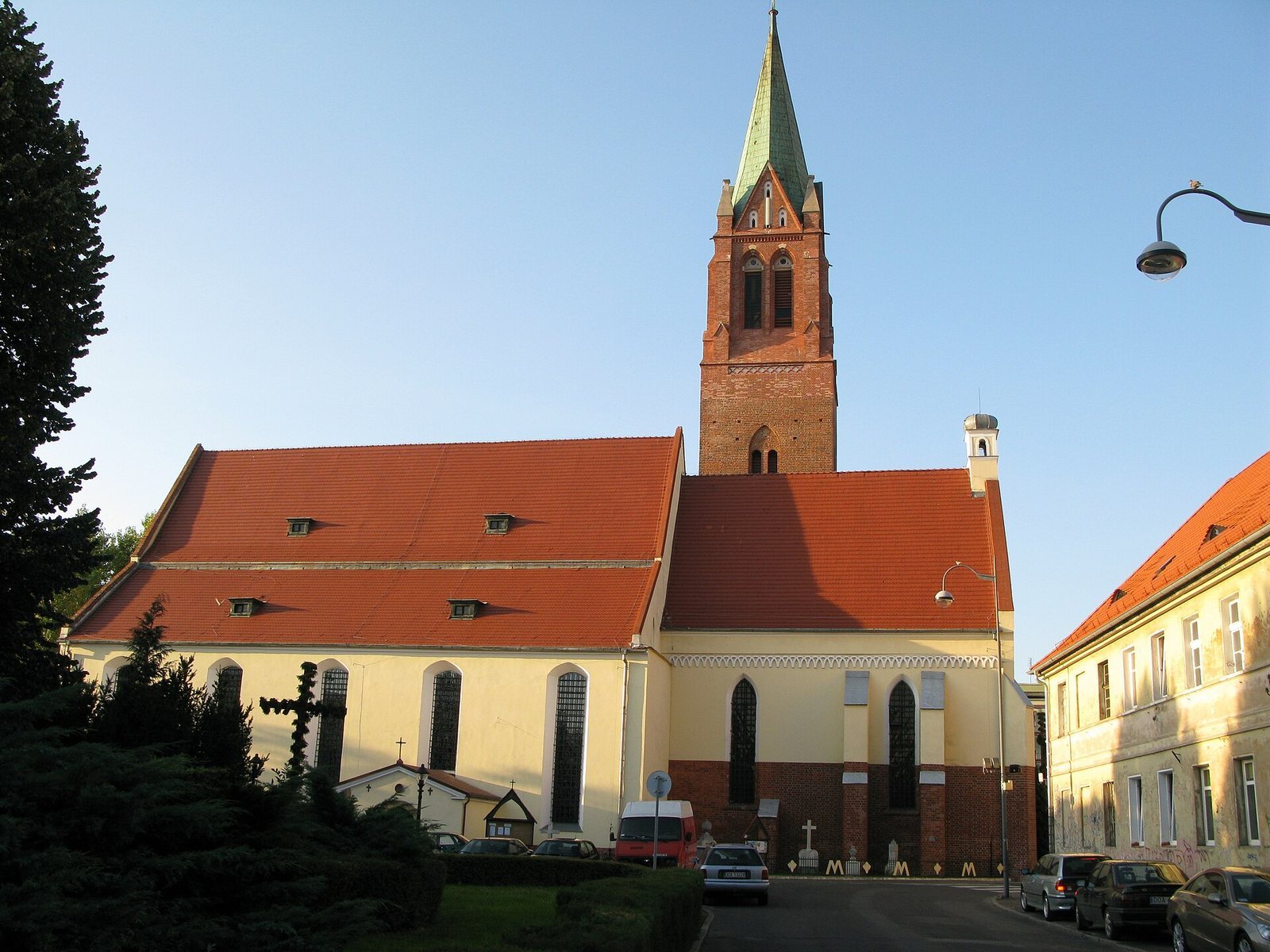
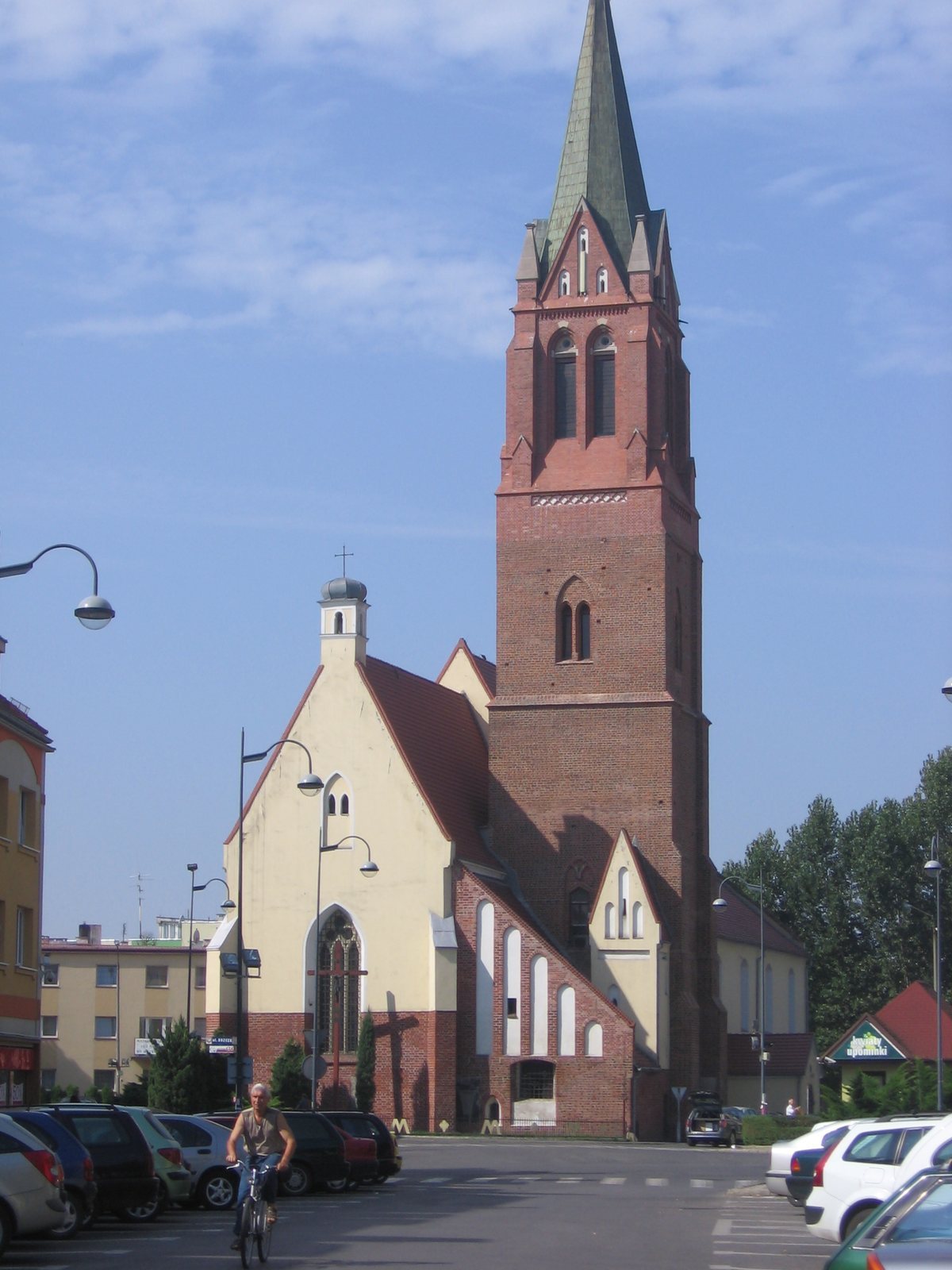
A storm destroyed the Baroque tower spire in 1881. In 1886, the church was remodelled in the Neo-Gothic style, and the tower received a Neo-Gothic upper section and pointed spire.
Roman Catholic use and modern history
The church returned to Roman Catholic use in 1945. Its technical systems were modernized from 1970 to 1972. After the Second World War, the organ was altered, including changes to its specification and the use of Polish for its stop names.
The Lamentation, a painting of mourners grieving over Christ after the Crucifixion, came from the Church of the Assumption of the Virgin Mary in Buczacz, named for the Catholic belief that Mary was taken into heaven body and soul. The painting was conserved at the Academy of Fine Arts in Kraków in 1984–1985 and stolen in 1990. A decree dated 21 November 2000 designated the church a Catholic sanctuary, a church set apart as a focus of religious devotion.
Remains
The church is organized around a five-bay nave, divided into five structural sections, and a lower choir with two sections. The nave’s central space rises above the side aisles but has no upper window level. The building measures 50 m long and 30 m wide. A single bell tower has a square ground plan and reaches 62 m, including its Neo-Gothic upper section and pointed spire.
Interior and furnishings
Memorials and church furnishings
The interior contains Renaissance epitaphs, memorial inscriptions or monuments, and a Renaissance pulpit. A Neo-Gothic main altar stands in the church, while galleries with round-arched openings run along the north aisle.
Organ
The Baroque organ was built by Schlag & Söhne in 1888 as opus 297. It has 30 stops, which control sets of pipes, two manuals, or hand keyboards, and a pedal played with the feet.
Paintings
Two paintings in the church depict St Thaddeus, venerated as an apostle, and St Nicholas, a bishop of Myra.
The choir’s star-patterned vault dates to the fifteenth century.