Żmigród Palace: A Historic Residence in Poland
Site at a Glance
- Popularity
- Medium
- Country
- Poland
- Primary era
- Early Modern
- Eras represented
- Medieval, Early Modern
- Civilizations
- Habsburg, Habsburg Austria, Holy Roman Empire, Kingdom of Prussia
- Site type
- Domestic
- Remains
- Elite Residence
On this page7 sections
History
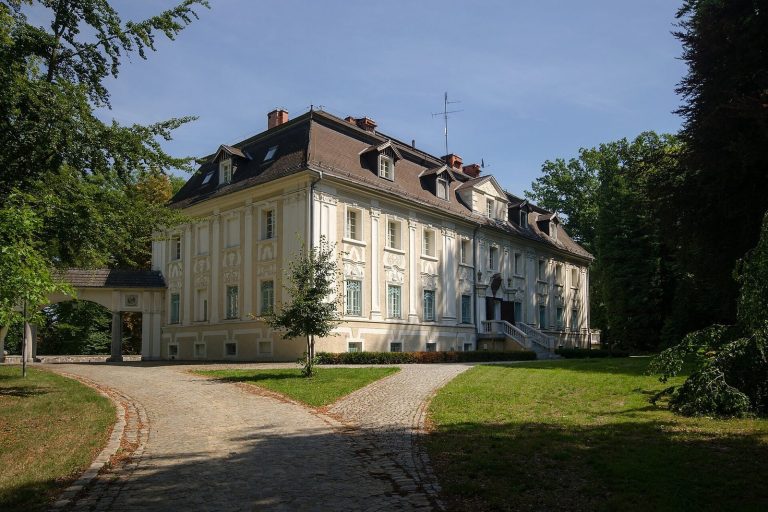
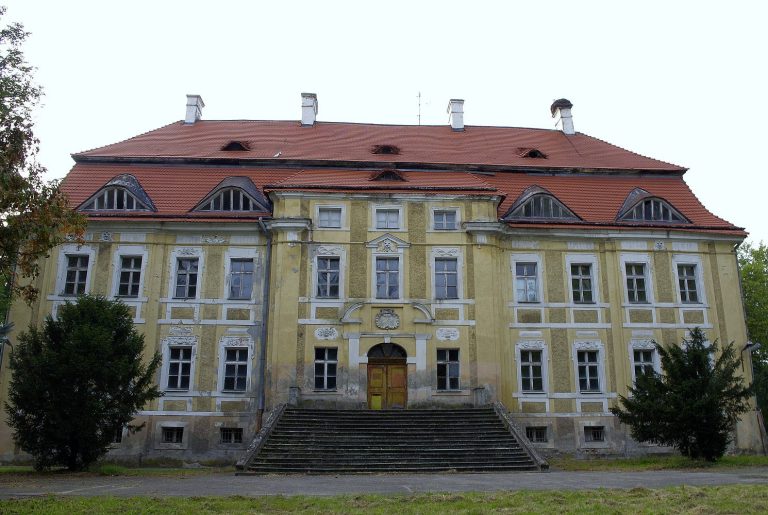
Żmigród Palace is a historic residence in Żmigród, Poland, built for the Hatzfeld family in 1656–1658. It replaced earlier fortified and masonry structures on the site.
Early fortifications and ownership
A fortified settlement stood here in the 13th century, followed by a masonry building in the mid-14th century. By 1492, the castle at Żmigród belonged to the von Kurzbach family. A brick residential tower was built in 1560.
Construction of the palace
In 1641, Ferdinand III, a Habsburg monarch and Holy Roman Emperor, granted the Żmigród estates to Melchior von Hatzfeld. Melchior’s heir, Herman Hatzfeld, had the palace built between 1656 and 1658.
Enlargement, alteration, and fire
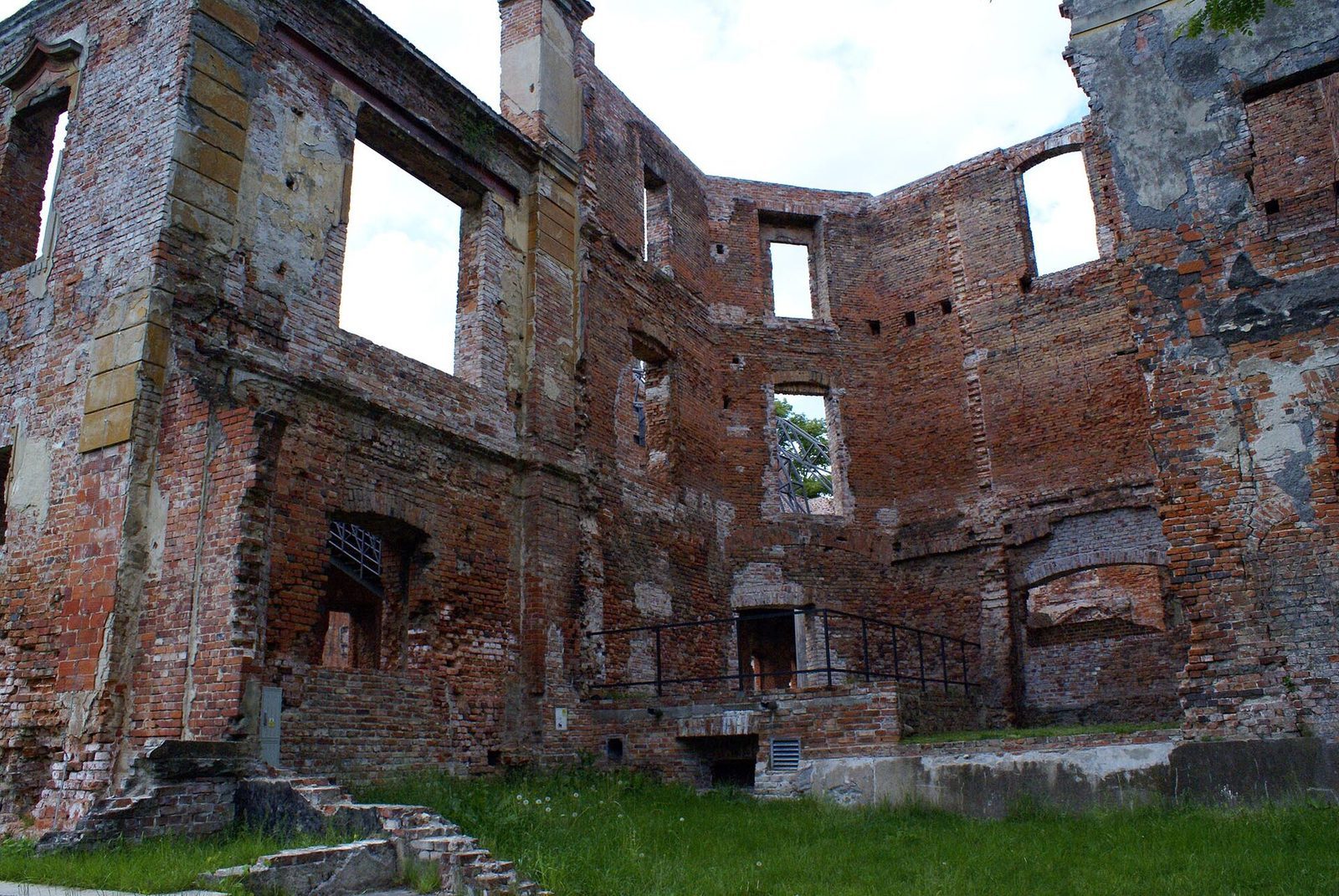
Franz Adrian Hatzfeld commissioned an enlargement in 1706–1708, carried out by Christoph Hackner, an architect active in Silesia. In 1762–1765, Carl Gotthard Langhans remodelled and enlarged the palace, extending its south wing westward in keeping with Hackner’s design. Further major changes followed in the 19th century. A fire destroyed the palace in 1945, and its ruins were later revitalized.
Remains
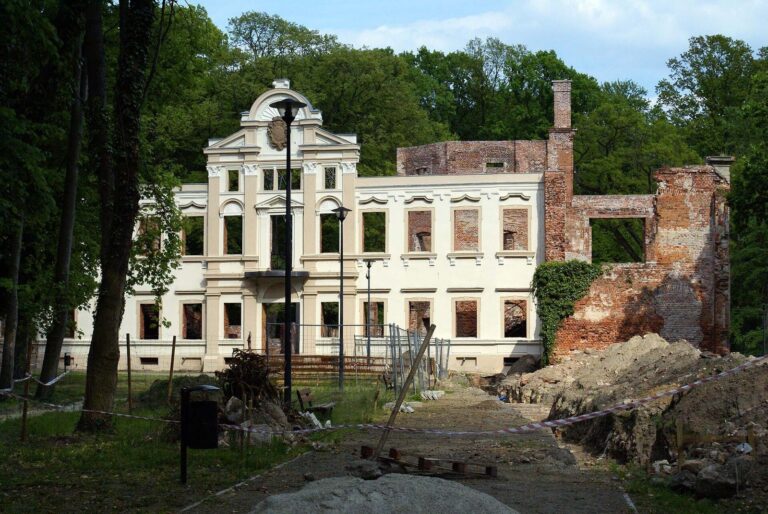
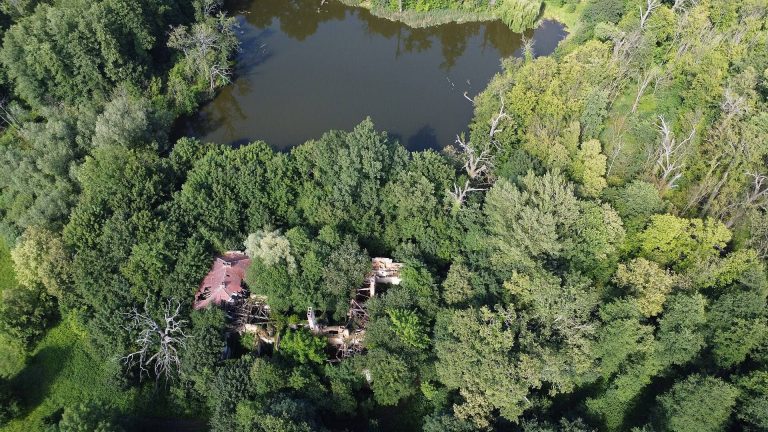
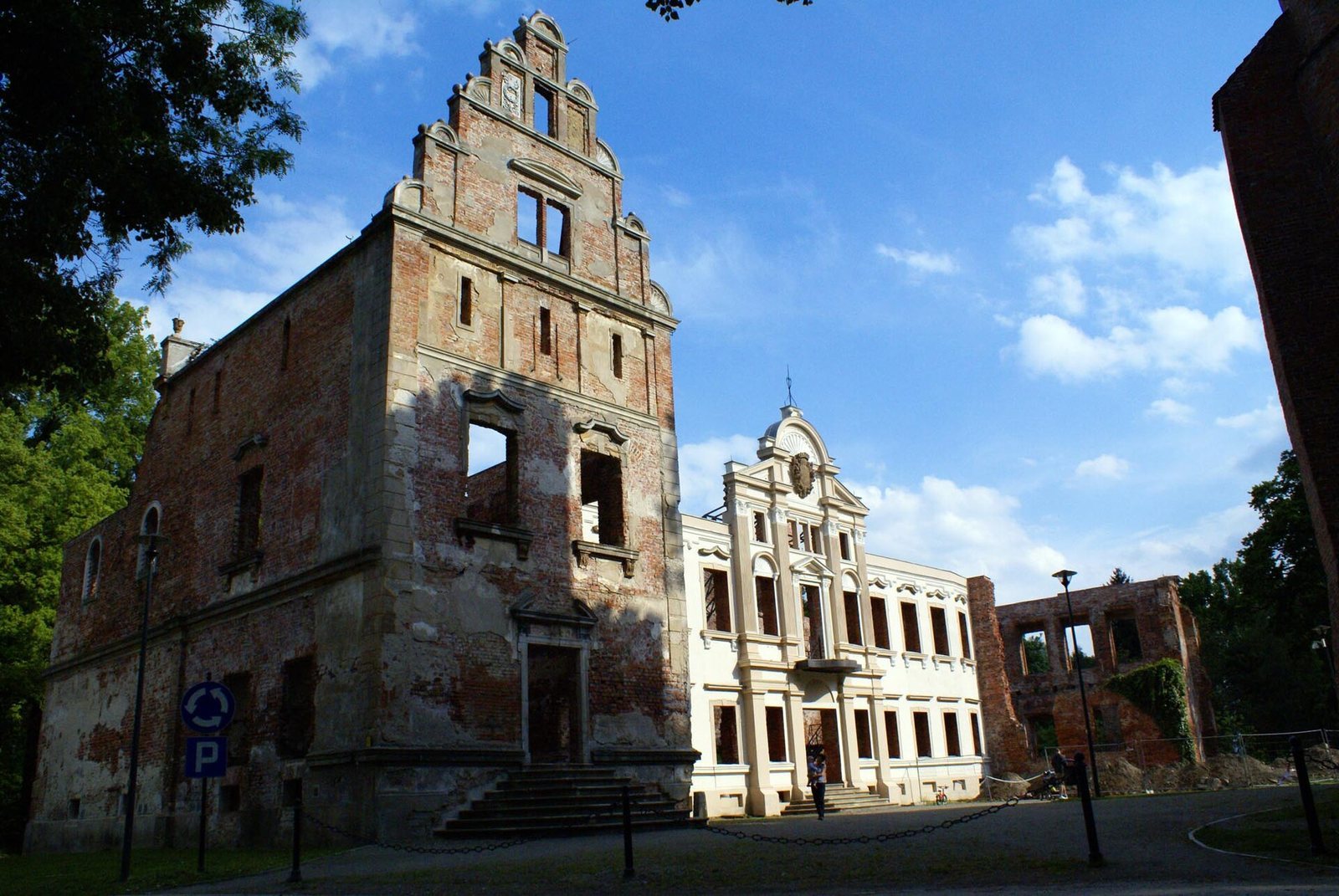
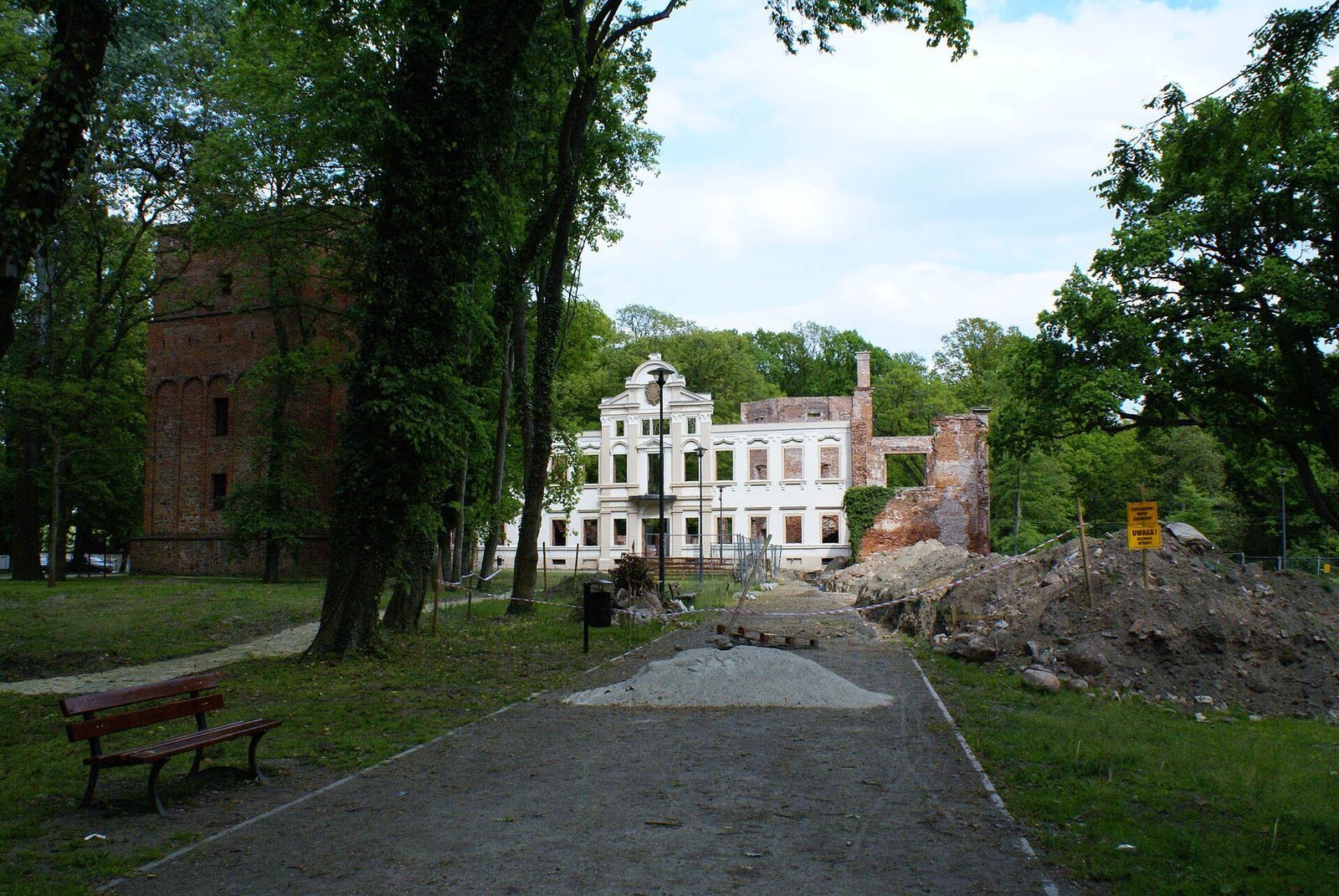
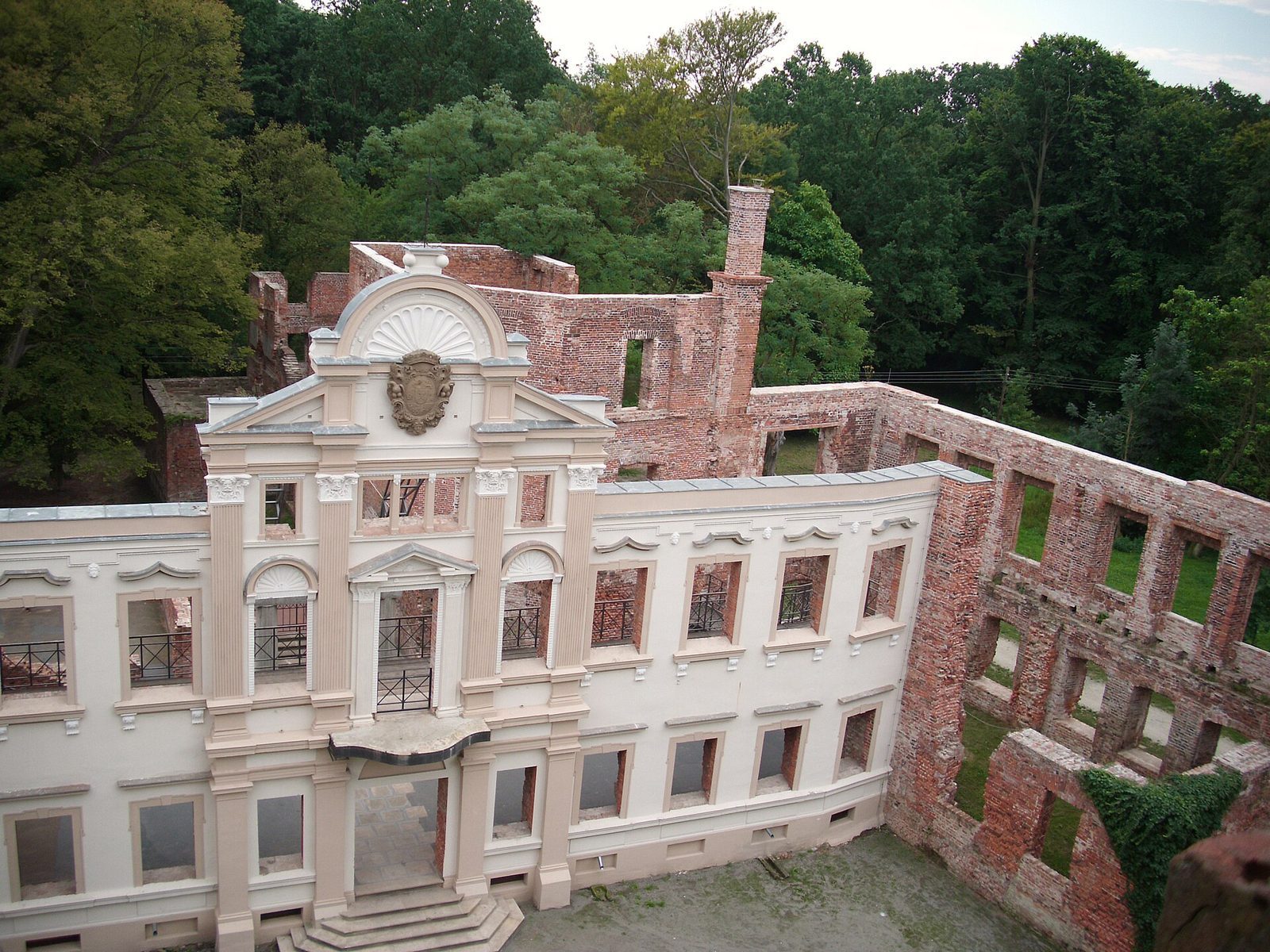
The palace forms part of a complex that includes a park. Żmigród lies by the Barycz and Sąsiecznica rivers. The palace remains in ruins, with features including its decorated front and a brick residential tower.
Palace facade
The palace front had a projecting section crowned by a semicircular pediment. Beneath it, a decorative cartouche displayed the von Hatzfeldt coat of arms, a shield divided into seven fields around a central heart shield. The heart shield showed a black double wall anchor on gold. The surrounding fields depicted a crowned black double-headed eagle, a crowned lion, a Silesian eagle, three roses, a rose, and a checkerboard. The seven fields represented the family’s estates.
Residential tower
The brick residential tower dates to 1560. A panel above its entrance bears the coats of arms of the von Kurzbach and Maltzahn families, a motto, and the year of construction.