Pagoda Forest at Shaolin Temple: A Buddhist Monastic Cemetery
Site at a Glance
- Rating
- 4.1
- Popularity
- Medium
- Country
- China
- Primary era
- Early Modern
- Eras represented
- Medieval, Early Modern, Modern
- Civilizations
- Chinese, Jurchen Jin, Ming, Qing, Song, Tang, Yuan
- Site type
- Religious
- Remains
- Tomb
On this page13 sections
History
A cemetery for Shaolin monks
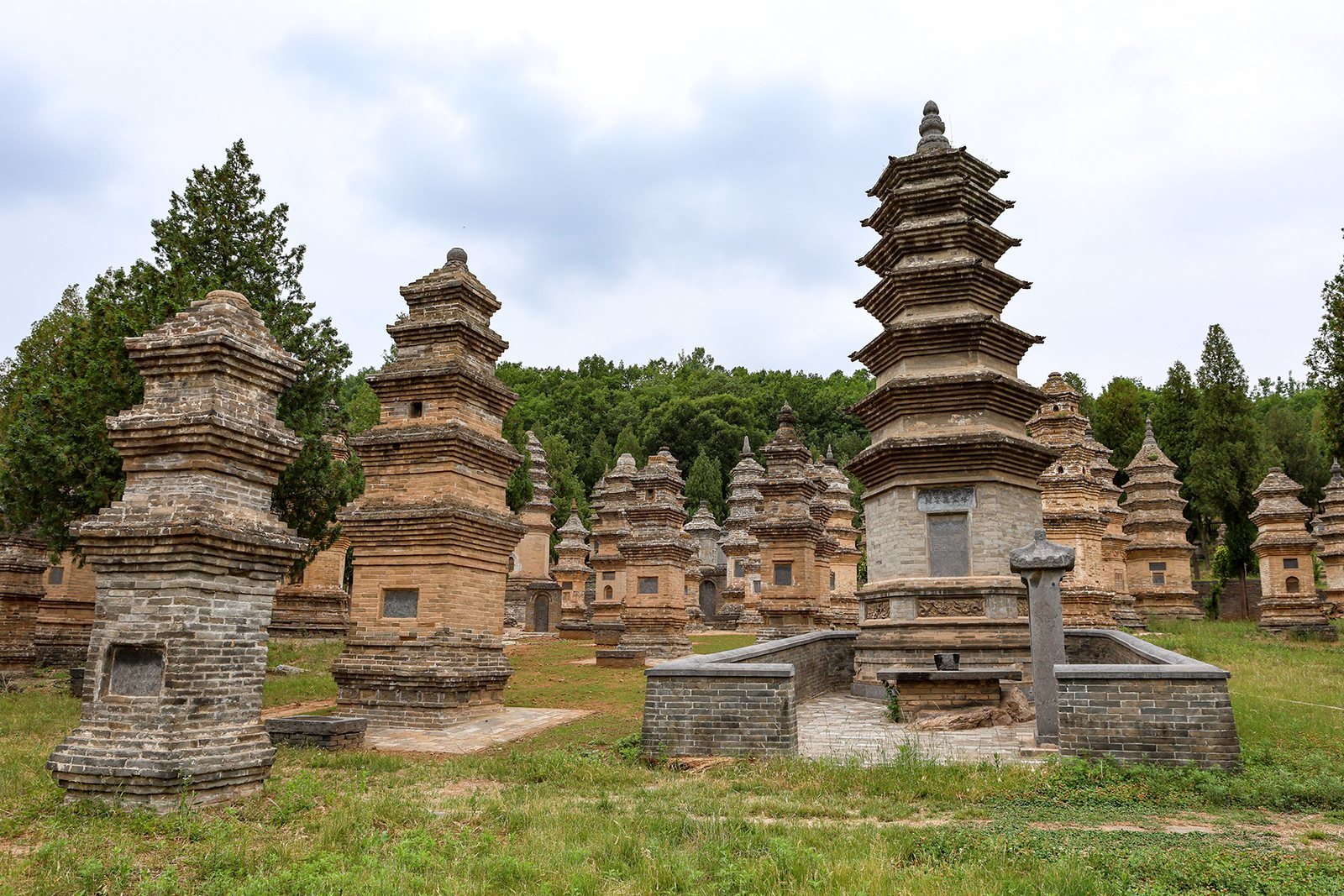
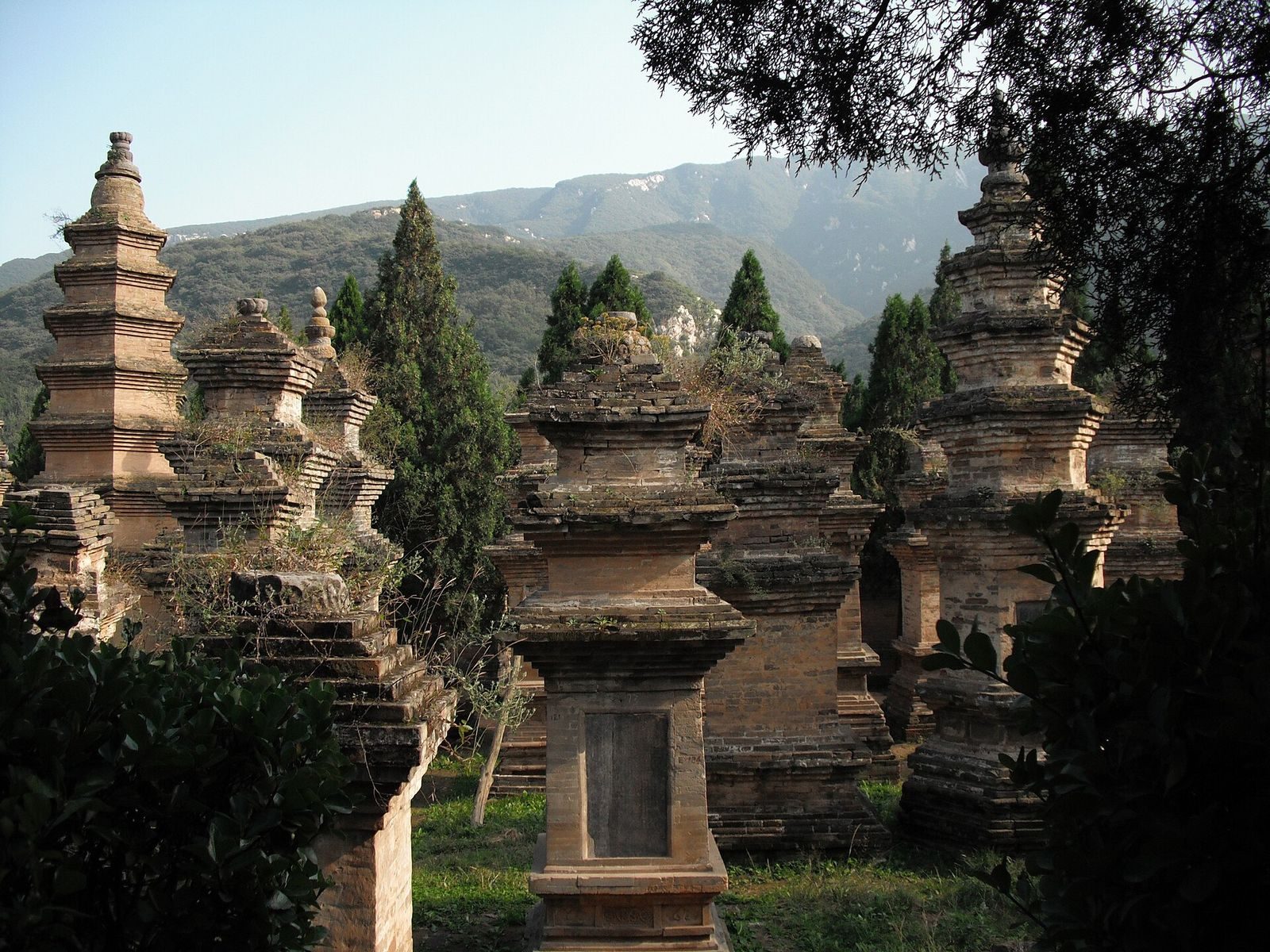
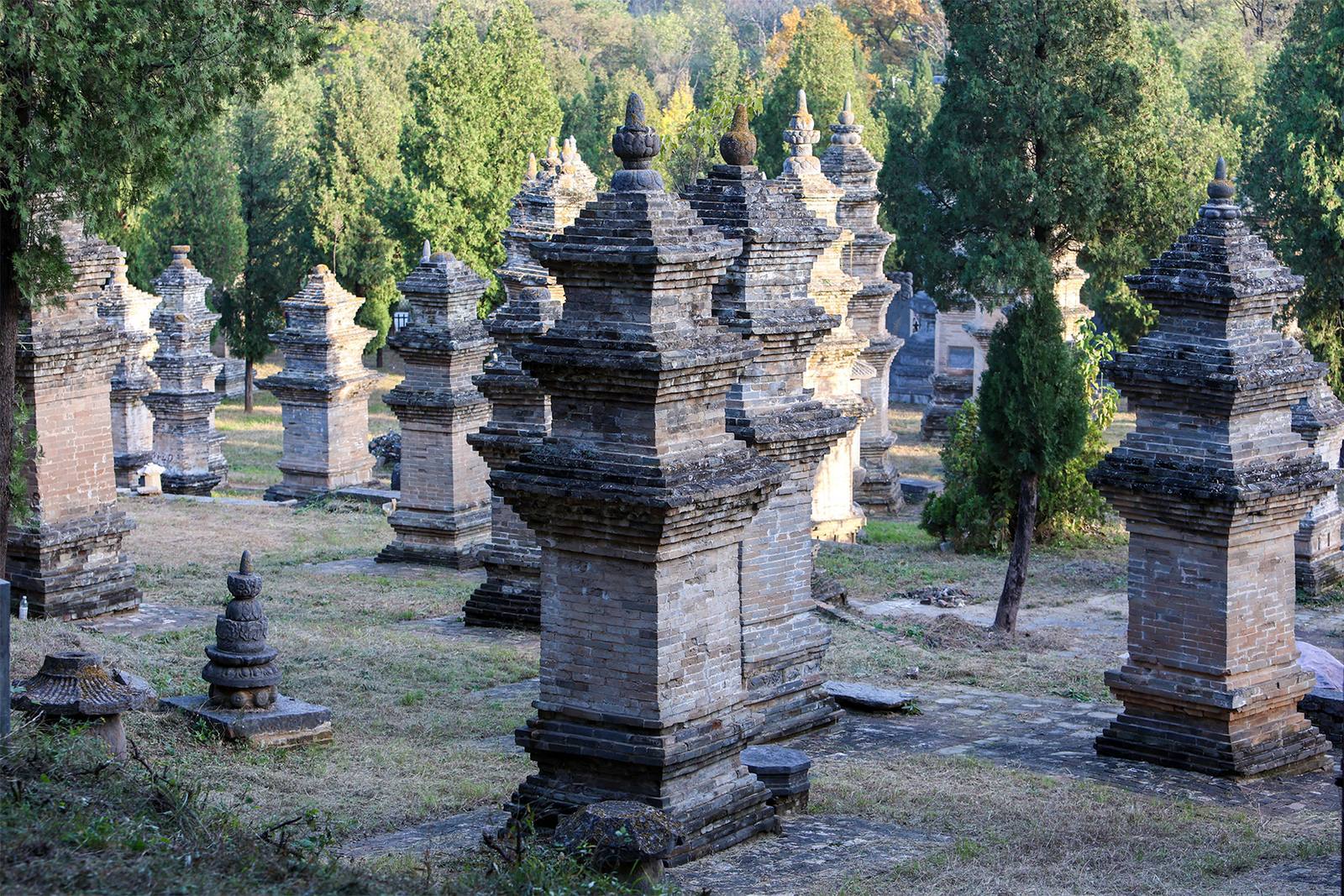
The Pagoda Forest at Shaolin Temple is the monastery’s principal cemetery for Buddhist monks, at the foot of Shaoshi Mountain in China, about 300 metres west of Shaolin Temple. It has served this purpose for more than 1,200 years, reflecting the monks’ tradition of honoring their masters.
Burial within the forest was generally reserved for distinguished monks. Monks who had not held leadership positions were buried elsewhere, while two pagodas commemorate groups of monks rather than individuals. The cemetery developed without fixed historical boundaries. Monks chose ground overlooking a stream to the west for the burial of masters, and the burial area grew over time.
The pagodas span successive Chinese dynastic periods, from the Tang and Five Dynasties through the Song, Jin, Yuan, Ming and Qing, as well as modern times. Most were built during the Ming and Qing periods. Nearly all date from 791 to 1803, although another pagoda was erected near the entrance in the early twenty-first century.
Counts vary according to the area and method used. The officially defined cemetery contains 248 markers, mostly pagodas. Other tallies count 246 pagodas or 230 in city records; the latter count includes 195 pagodas from the Ming and Qing periods.
Damage and protection
In 1928, the Chinese military commander Shi Yousan destroyed nearly 90 percent of Shaolin Temple’s original buildings. The cemetery’s pagodas, which contain the monks’ ashes, remained intact.
In the early 2000s, damage caused by visitors, including broken pagodas and graffiti, led authorities to fence off most of the cemetery to protect it. The cemetery came under state control on November 20, 1996, and was named a National Scenic Spot, a protected scenic-area classification in China, that year. It received national major-site designation in 1998. In 2010, the Pagoda Forest and Shaolin Monastery were inscribed together on UNESCO’s World Heritage List as part of the Historic Monuments of Dengfeng.
Remains
Cemetery layout and construction
Extent and arrangement
The wooded cemetery lies at the foot of Shaoshi Mountain, part of Mount Song. Its overall area is about 21,000 square metres, while its officially defined area is 14,000 square metres. The pagodas form a dense central group with surrounding zones where they are less concentrated. Eighteen other pagodas are associated with nearby locations beyond the forest, including two on the western side of the temple grounds.
Form and materials
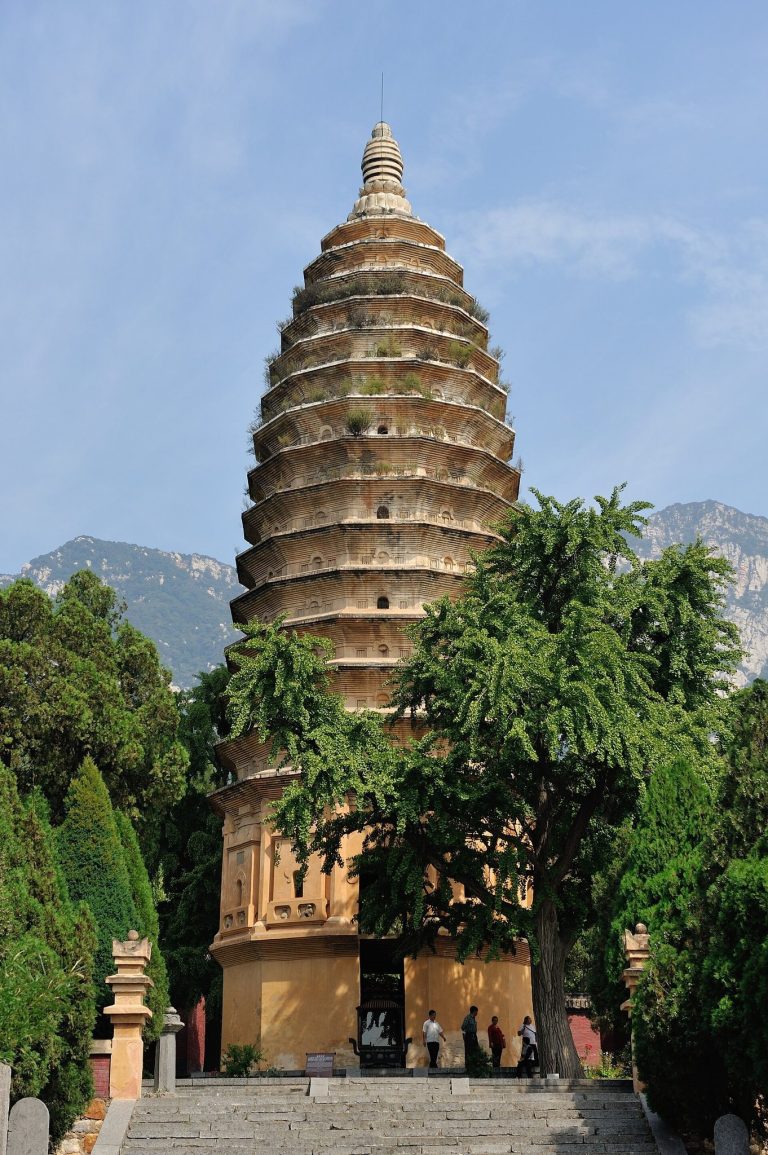
The memorial pagodas are symbolic tower forms, not buildings intended for habitation. They are made of stone, brick, or both, and most have one to seven roofed levels, averaging nearly 15 metres in height. They are shorter than pagodas built to contain Buddha relics. Their forms include polygonal, cylindrical, octagonal, single-piece and vase-shaped examples. The number of levels was required to be odd and no greater than seven. A pagoda’s form and arrangement reflected the monk’s rank, reputation and contributions, as well as the monastery’s financial means when it was built.
Memorial pagodas
Fawan Pagoda
The Fawan Pagoda, the cemetery’s earliest, dates to 791 and stands eight metres high.
Yugong and other Yuan-period pagodas
At the centre of the cemetery, the Yugong Pagoda marks the tomb of Fuyu, Shaolin Temple’s best-known Yuan-period abbot. An abbot is the head of a monastery. Built in 1287, the pagoda is made of brick and has seven levels with a hexagonal plan. Fuyu was the only abbot in the temple’s history to receive an imperial honor after his death. Rufeng Pagoda is another noted example from the Yuan period.
Pilgrim and Indian monk memorials
In the eastern part of the forest, a pagoda dated to 1339 bears an epitaph written by a Japanese monk while on pilgrimage. A pagoda in the western part, built in 1564, honors an Indian monk.
Modern entrance pagoda
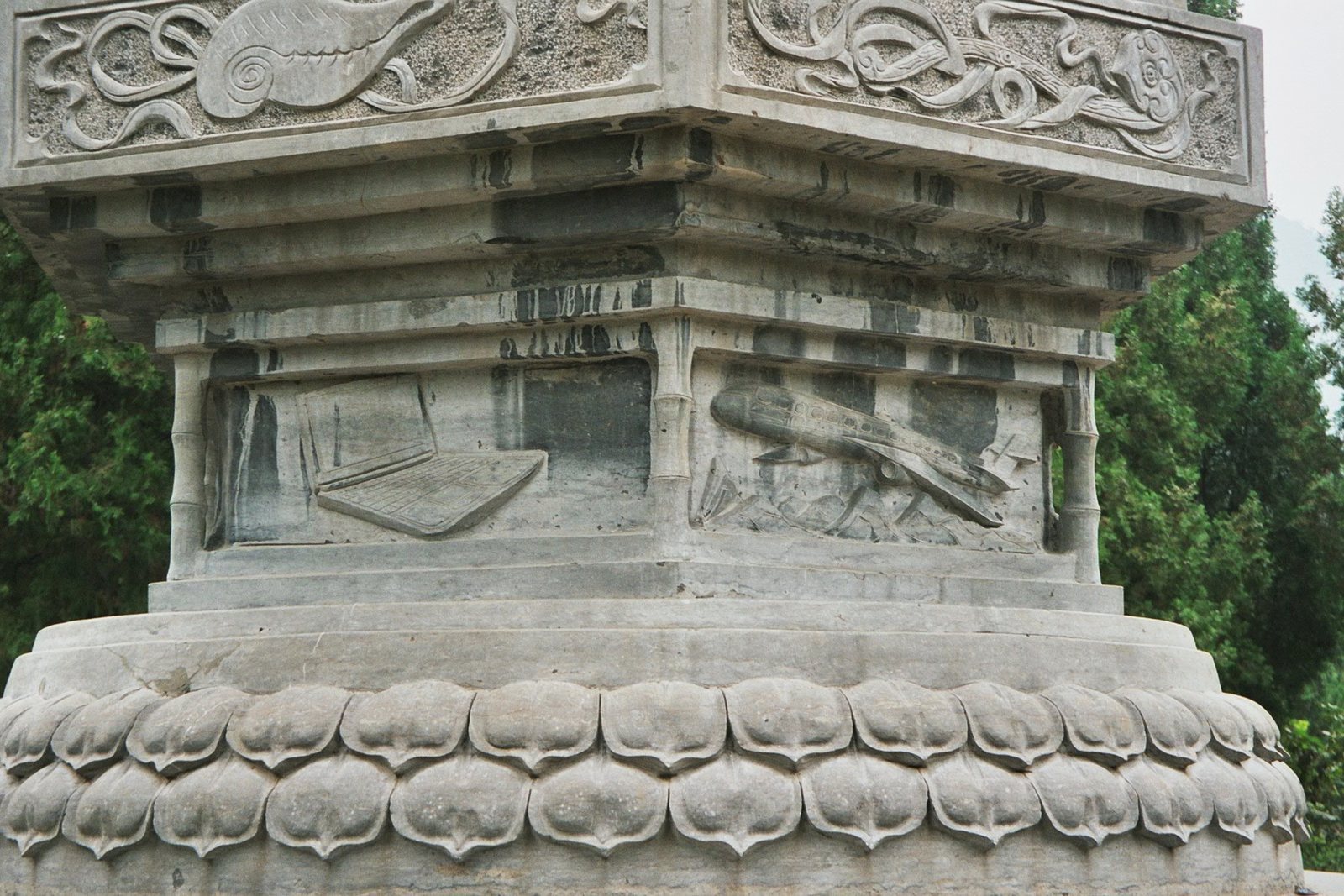
A more recent pagoda near the entrance is carved with images of modern objects, including a car, an airplane, a train and a laptop computer.
Inscriptions and associated monuments
Inscriptions on the pagodas and engraved plaques give names and dates. Their calligraphy reflects the period in which they were made, while size, shape, brick materials, cement composition and ornament can also help establish a pagoda’s date. Some plaques have been broken or removed, apparently in attempts to reach inner chambers. Inscribed stone monuments, known as steles, stand at various places in and around the cemetery; historical figures may also be commemorated with statues or large wall paintings. The tombs are generally well maintained in this protected area, and some pagodas have been partly restored.