Pařez Castle: A Medieval Fortress in the Czech Republic
Visitor Information
Google Rating: 4.6
Popularity: Low
Official Website: www.kudyznudy.cz
Country: Czechia
Civilization: Medieval European
Site type: Military
Remains: Castle
History
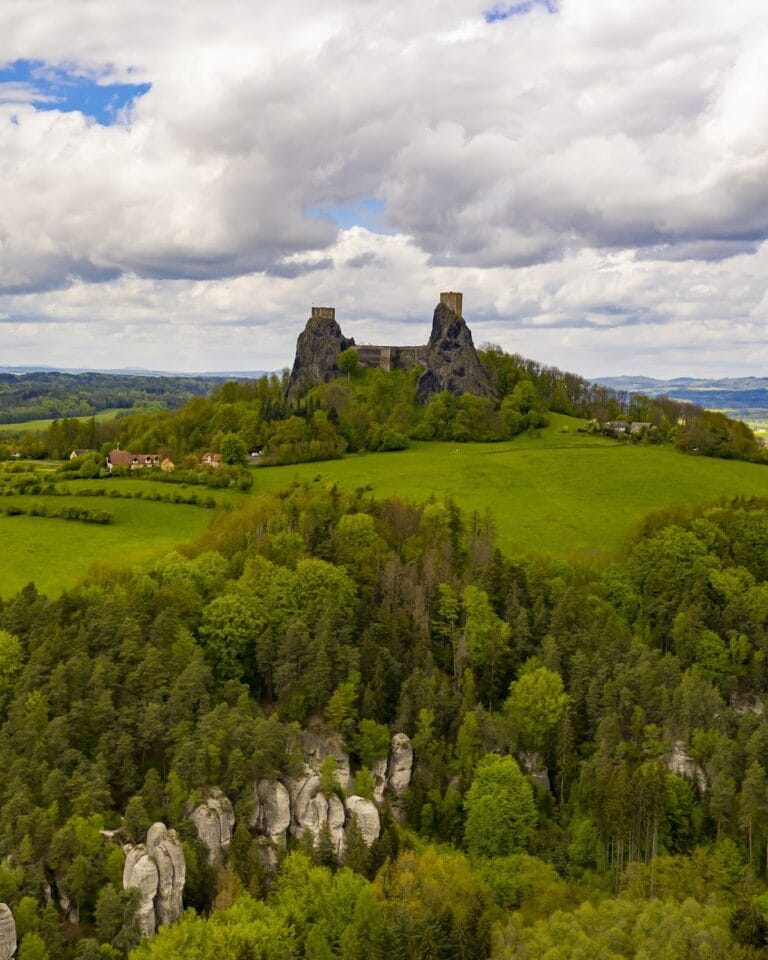
Pařez Castle is located near the village of Pařezská Lhota in the Czech Republic. The fortress was erected by medieval Bohemians during the late 14th century, reflecting the era’s trend toward building strongholds on naturally defensible terrain.
The earliest written mention of the castle comes from 1403, when Jan of Pařez was recorded as its owner. It is believed that the castle’s founder may have been Petr of Pařez, who appears in records from 1372, suggesting noble origins for both the site and its ruling family. The Lords of Pařez maintained the castle until the early 15th century, using it primarily as a residence and local power center.
By about 1424, during the tumultuous period of the Hussite Wars—a series of religious and civil conflicts in Bohemia—the castle was violently destroyed. The discovery of a stone cannonball at the site supports the conclusion that it fell to military assault. By 1430, historical accounts already describe Pařez Castle as a ruin. After its downfall, the remaining structures reportedly served as a refuge for robbers and later provided shelter for impoverished people.
Archaeological investigations carried out in 1972 uncovered ceramics dating from the castle’s active years, alongside iron artifacts and earlier items such as artifacts from the La Tène cultural period. There is also a local legend of a lost hoard of Prague groschen, silver coins minted during the reign of King Wenceslaus IV, said to have been hidden in the castle’s tower.
Remains
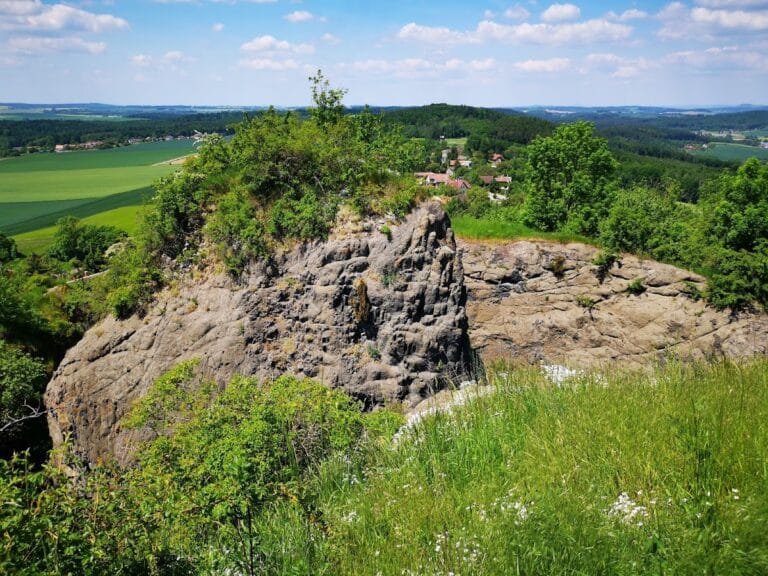
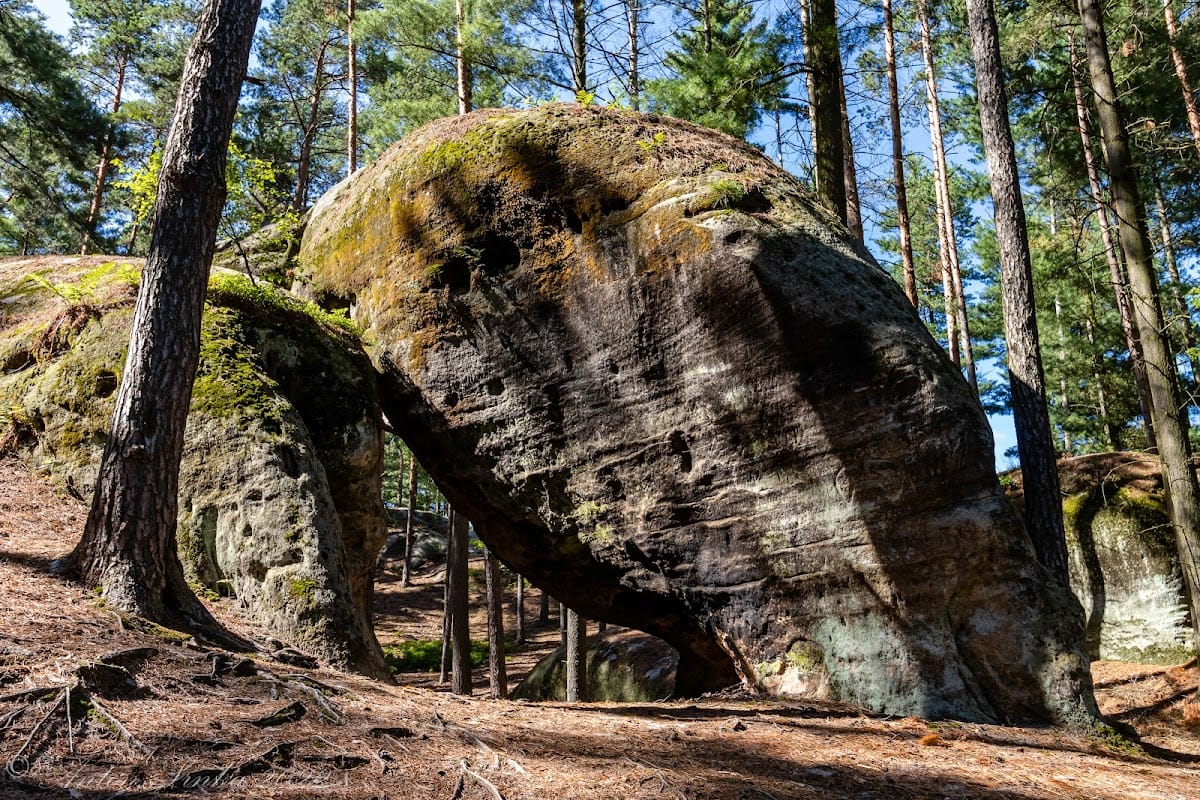
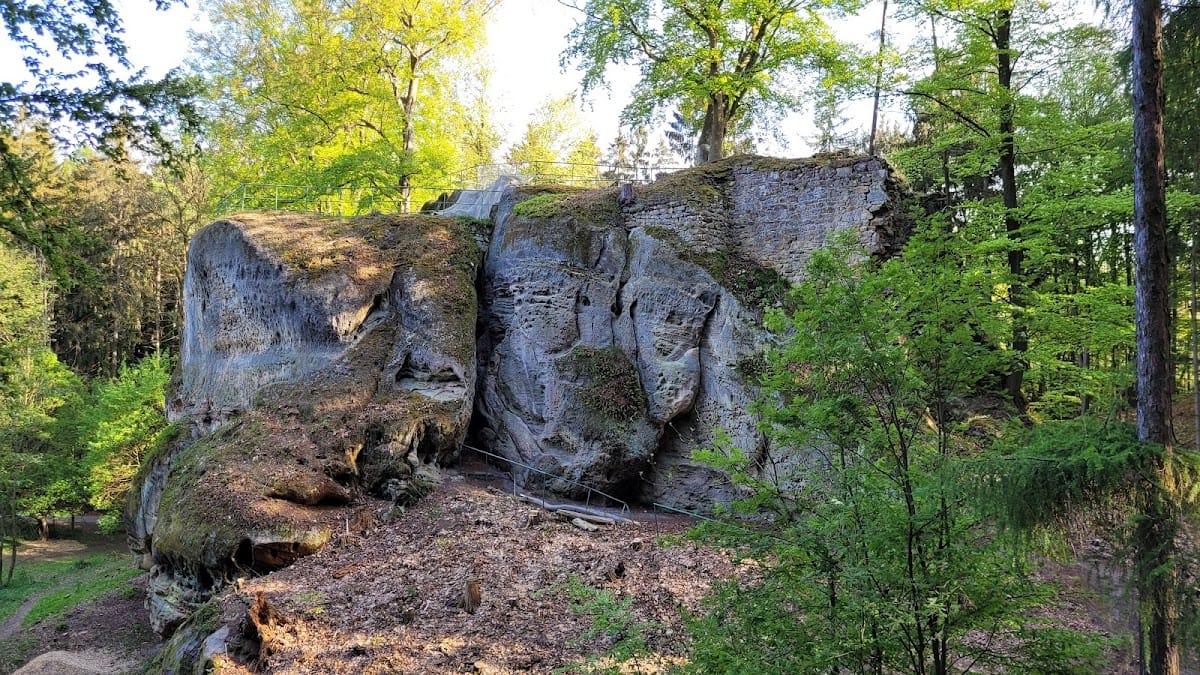
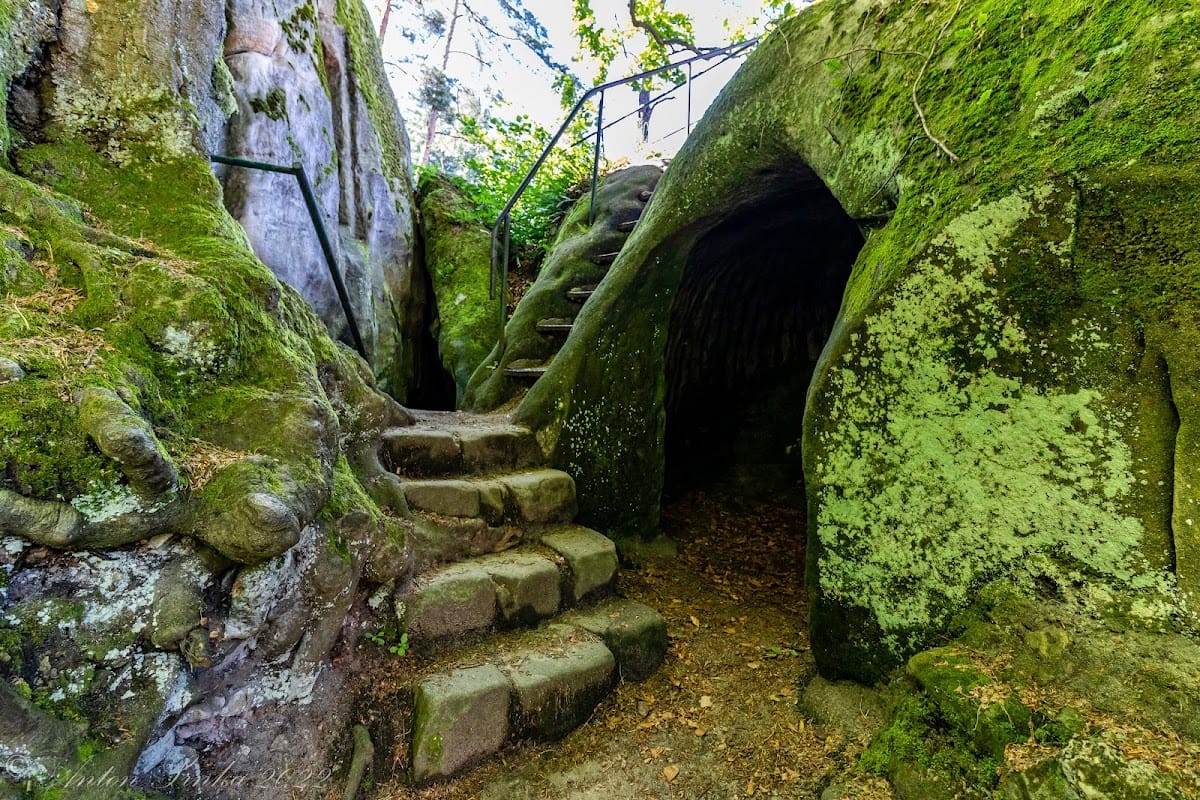
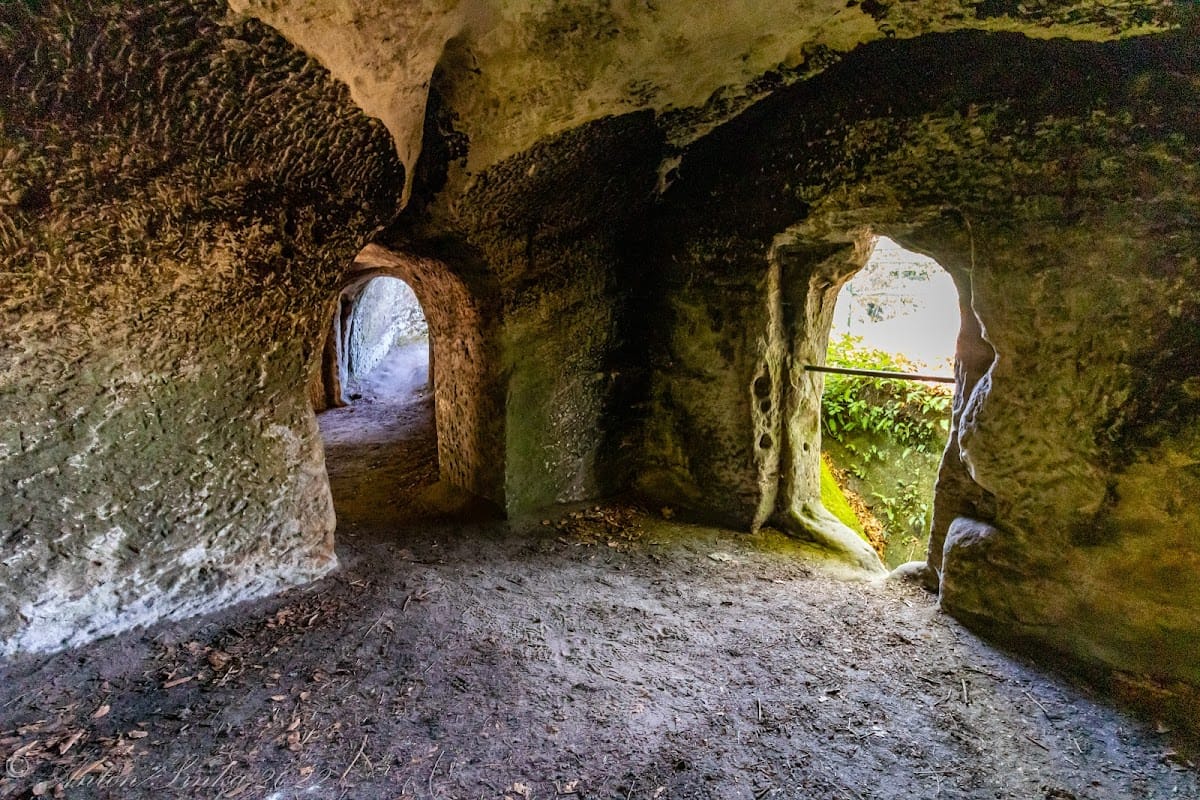
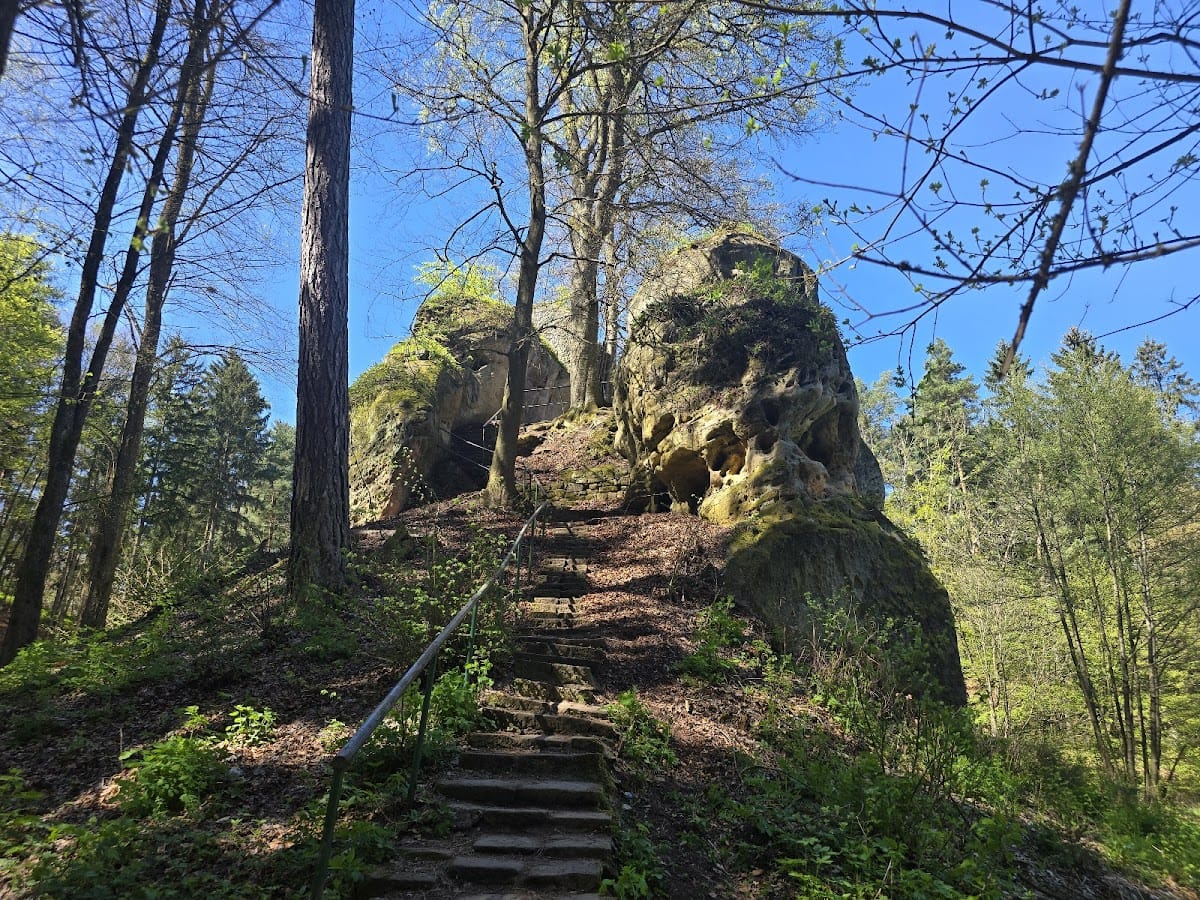
Pařez Castle was constructed upon a solitary sandstone rock close to the Prachov Rocks, utilizing the natural steepness of the formation to enhance its defense. Its planners supplemented this natural protection with dams that could flood the area around the rock, creating a defensive moat-like barrier. The castle’s core was essentially the rock itself, extensively carved to create small chambers, some shaped with vaulted ceilings imitated in stone.
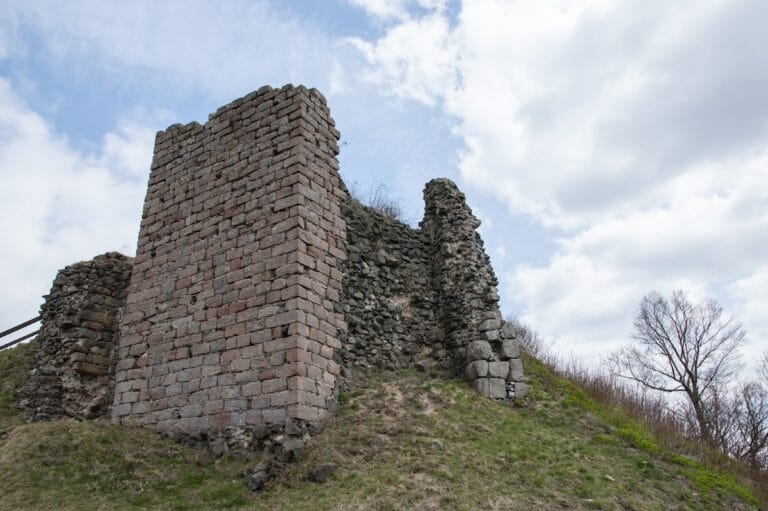
On the top plateau of the sandstone outcrop stood a palace, once enclosed by a stone wall. Archaeological traces show foundation grooves with remnants of masonry and mortar, indicating the palace likely had half-timbered walls common to the period, though no wooden elements survive. Westward adjacent to the rock is a partially preserved square tower. Although designed to include a pedestrian drawbridge for access, the tower’s entrance would have required significant earthworks or complex building solutions, suggesting it might never have been fully functional as originally planned.
To the east, across a nearby valley, there lies an area possibly associated with a siege camp. This site, bordered by a ditch and an outer rampart, shows signs of disturbance caused by later recreational activity. The exact connection of this area to the castle’s history remains uncertain.
Excavations have recovered a variety of artifacts that offer insight into life at Pařez Castle. Ceramic shards include fragments of vessels and an ornamental rattle, as well as a uniquely shaped ceramic lid with four lobes. Among metal finds was an iron chain link and a lead disc, which may have served as a gaming piece. A bone disc decorated with a swirling rosette motif, likely used as decorative inlay for wooden furniture, was also found, alongside a stone weight that may have functioned as part of a door locking mechanism.
Together, these remains illustrate the castle’s adaptation to its rocky setting and provide evidence of both its defensive features and everyday activities during its brief period of occupation.
Nearby sites