Minezuka Kofun: A Final Kofun-Period Burial Mound in Japan
Site at a Glance
- Rating
- 4.2
- Popularity
- Very Low
- Country
- Japan
- Primary era
- Medieval
- External website
- Open
- Eras represented
- Medieval
- Civilizations
- Yamato
- Site type
- Burial
- Remains
- Burial Mound
On this page6 sections
History
Minezuka Kofun is a Japanese burial mound in Tenri, Japan, built during the first half to middle of the seventh century in the final phase of the Kofun period. It forms part of the Somanouchi Kofun Group and is also known by the name “Tomb Mountain.” The Kofun period was an era from the third to seventh centuries when burial mounds were generally constructed for members of ruling and elite classes. Minezuka is regarded as one of Nara Prefecture’s representative final-period kofun, particularly because its stone chamber has a scale normally associated with royal burials.
The final Kofun period
Minezuka Kofun was built after the nearby Tsukaanayama Kofun, an earlier large burial mound from the final Kofun period. Its chamber belongs to the Iwaya-yama style, an archaeological classification for carefully constructed stone chambers sharing the formal characteristics of Iwaya-yama Kofun. The chamber is also closely comparable in form and scale to that of Iwaya-yama Kofun, which may be the tomb of Emperor Saimei, the seventh-century empress regnant who ruled from 655 to 661.
The relationship between these monuments has led to an interpretation connecting Minezuka with a person active during Saimei’s reign. Its mound facing uses cut Tenri sandstone, a material also found at the Asuka-period Sakafuneishi Site. This association, however, remains interpretive rather than certain. The nearby Somanouchi Cremation Burial, from the Nara period, contained an elaborate mirror decorated with sea beasts and grapes. Some scholars have connected the burial sites in this area with leaders of the Mononobe, a powerful ancient Japanese clan traditionally associated with military affairs and older religious practices.
Survey and interpretation
The Tenri University Historical Research Society surveyed Minezuka Kofun in 1969. The tomb had been robbed at an early date, so its burial goods are unknown, and no excavation investigation has been carried out. The nearly identical chamber designs of Minezuka Kofun and Kotani Kofun have also prompted the view that, by the final Kofun period, stoneworkers may have come under court control rather than remaining under the direction of individual clans. This possibility contrasts with an earlier period when similar chambers were less often built for powerful clans in different regions.
Remains
The stepped mound
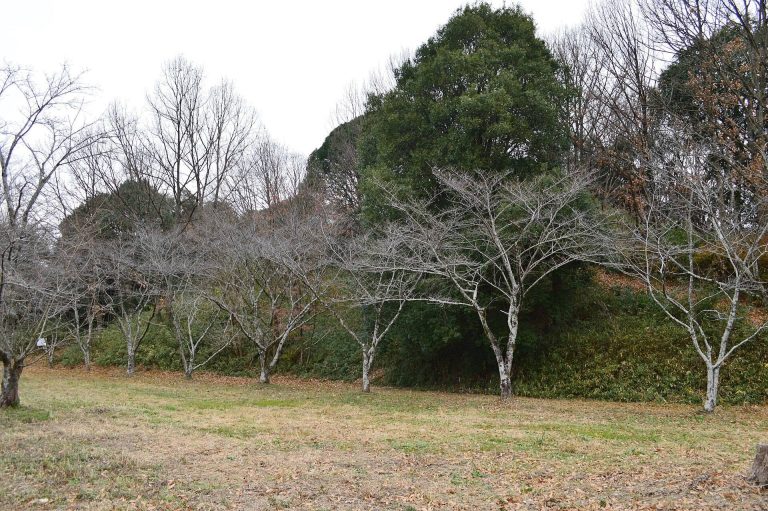
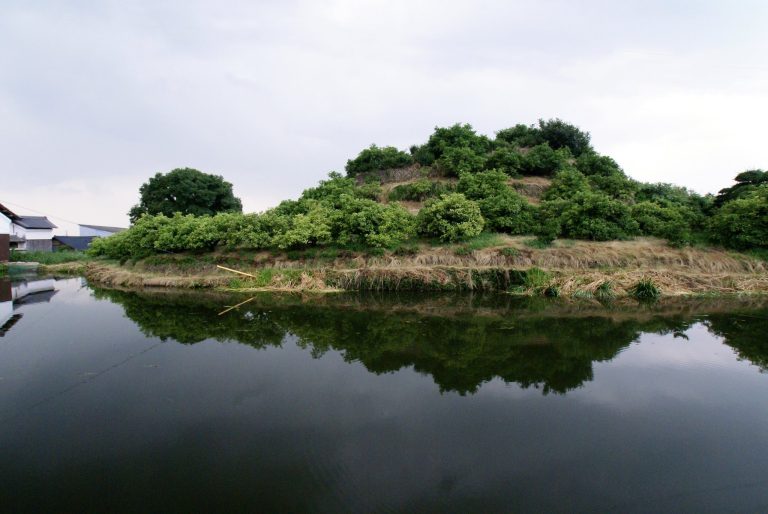
Minezuka Kofun is a large circular mound at the southern foot of a low ridge extending eastward along the eastern edge of the Nara Basin. It was constructed in three tiers. The foot of the first tier measures 35.5 metres in diameter, the second tier 28.4 metres, and the third tier 17.6 metres. The mound rises approximately 5 metres high. Rectangular cut blocks of tuffaceous Tenri sandstone form a brick-like facing across its outer surface. A surrounding moat has been suggested, although its existence is uncertain.
The granite stone chamber
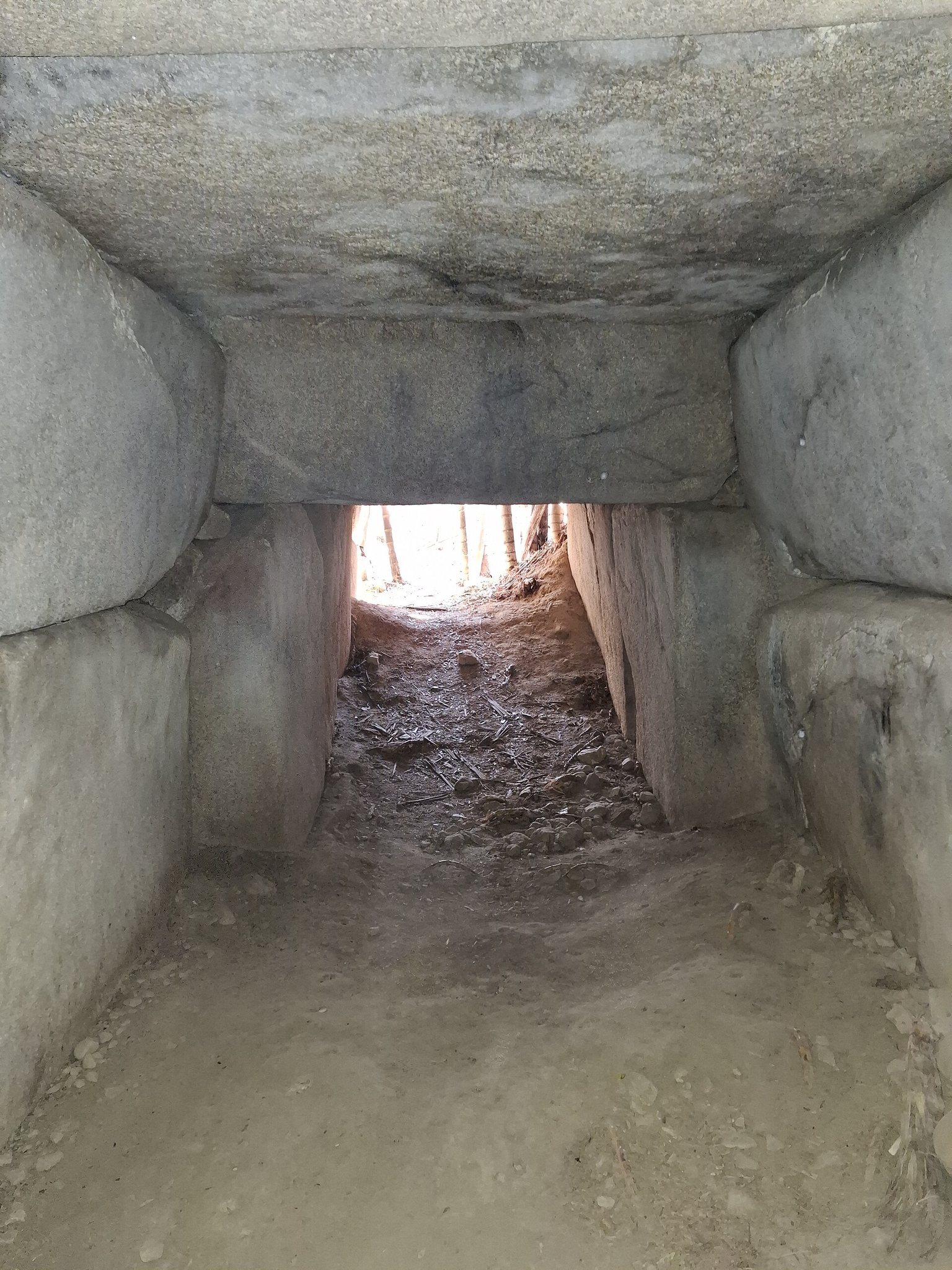
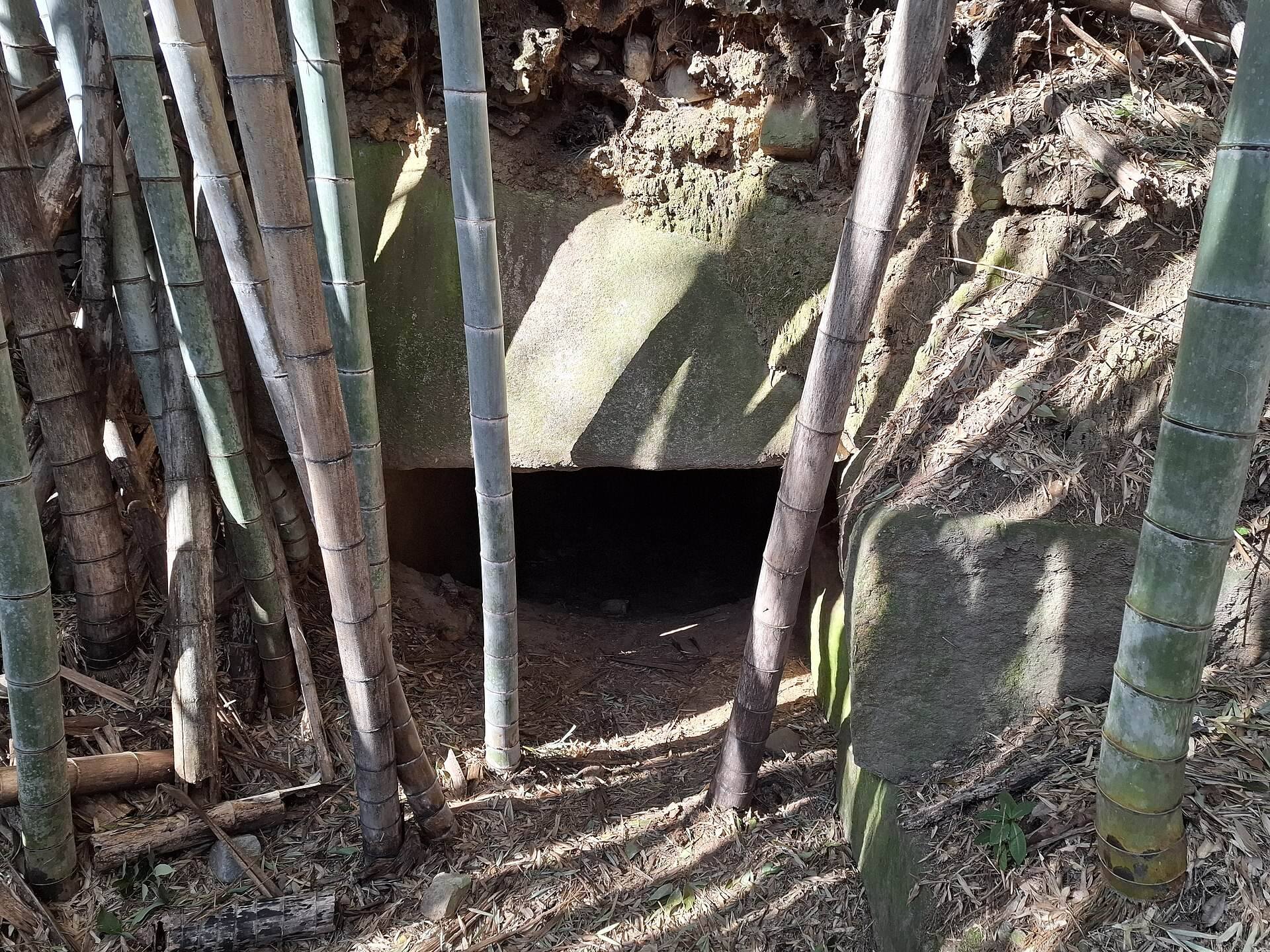
The burial facility is a large, carefully finished, south-opening horizontal-entry stone chamber. This type of tomb is reached through a passage cut into the side of the mound, while the double-sleeved form has lateral extensions on both sides where the passage meets the burial chamber. Minezuka’s chamber is built from cut granite megaliths and follows the Iwaya-yama style. It measures 11.11 metres in total length.
The burial chamber is 4.46 metres long, 2.58 metres wide at the rear wall, 2.60 metres wide at the entrance, and 2.4 metres high. Its entrance passage measures 6.65 metres long, 2.28 metres wide, and 1.70 metres high. The rear and side walls of the burial chamber each consist of two courses of stone, with plaster applied to the joints, while the ceiling is formed by three stones. Some granite blocks reach 4.5 metres in width and 1.2 metres in height. The chamber is almost identical in design to that of Kotani Kofun, although Minezuka’s entrance passage is shorter than the one at Iwaya-yama Kofun.