Kii Kokubun-ji Temple: A Provincial Buddhist Monastery in Japan
Site at a Glance
- Rating
- 3.9
- Popularity
- Very Low
- Country
- Japan
- Primary era
- Medieval
- External website
- Open
- Eras represented
- Medieval
- Civilizations
- Tokugawa
- Site type
- Religious
- Remains
- Monastery
On this page9 sections
History
Kii Kokubun-ji Temple in Kinokawa, Japan, is the successor institution of an eighth-century provincial Buddhist monastery established in Kii Province under Emperor Shōmu’s Nara-period program. The Kokubunji were state-supported provincial monasteries where clerics performed Buddhist prayers for the protection of the country, while also helping strengthen imperial political unity. Kii Kokubun-ji is traditionally linked to an order from Emperor Shōmu, although no surviving record confirms its foundation or original construction.
Foundation and early history
The temple’s existence is established by an entry in the Shoku Nihongi, which records the distribution of Buddhist ritual implements to 26 provincial temples, including Kii, in 756. In a later record of a destructive fire, the institution is called Kii Kinkomyo-ji. The Nihon Sandai Jitsuroku states that the temple burned on February 22, 879.
After the fire, the temple was rebuilt, including its Main Hall and monks’ quarters. It continued to appear in records through the later Heian period, but its history became obscure as the institution declined during the medieval period. A Main Hall was reconstructed on the foundations of the original Lecture Hall in the early fourteenth century, reflecting the continuing use of the precinct after its earlier buildings had been damaged or altered.
Medieval destruction and early modern administration
The temple was destroyed again in 1585 during Toyotomi Hideyoshi’s conquest of Kii Province. It later received the patronage of the Kishū Domain during the Edo period, when the present Main Hall was reconstructed. Institutional records state that Kii Kokubun-ji changed from a temple without a head temple to a subsidiary of Negoro-ji in 1628. In 1751, it came under the direct authority of the domain magistrate responsible for temples and shrines. Its land allotment was 4 koku 5 to under the Asano administration and 3 koku 2 to under the Tokugawa administration.
Modern preservation and religious continuity
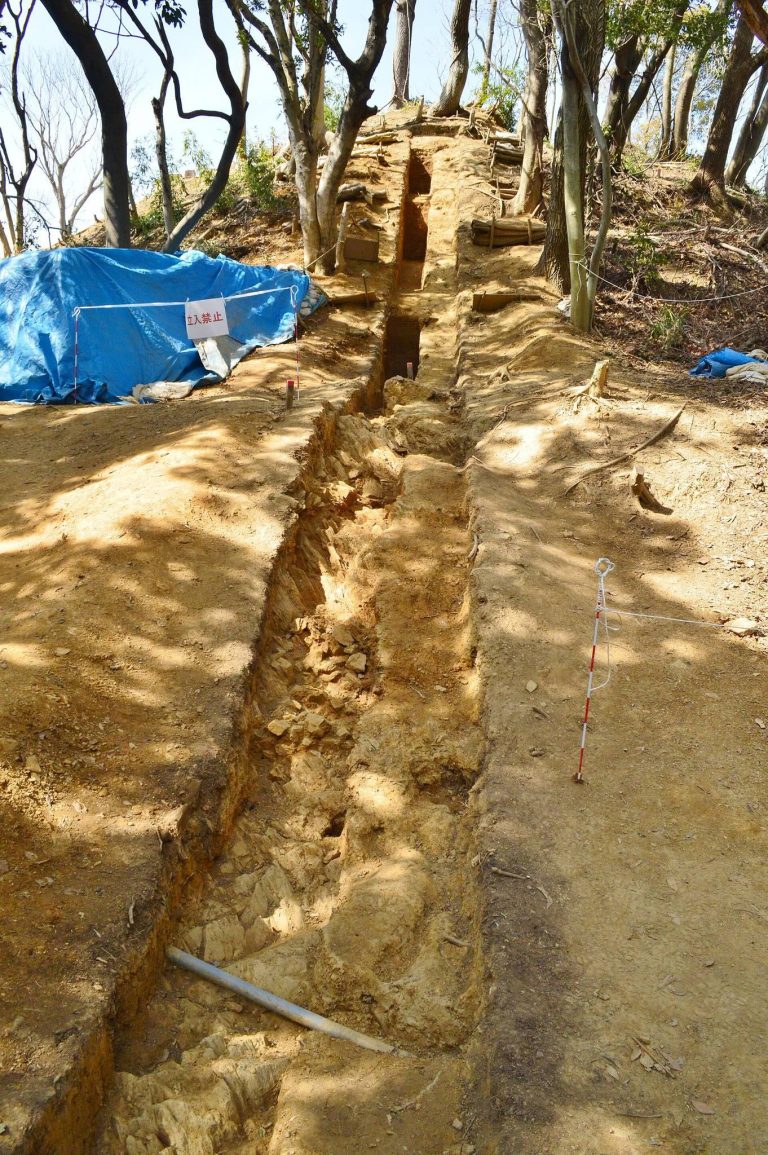
Excavations begun in 1973 clarified the extent and arrangement of the original temple precinct. The ruins were designated a National Historic Site in 1928, and the protected area received an additional designation in 1985. The original precinct is maintained as the Kii Kokubun-ji Ruins Historical Park beside the Kinokawa City History and Folklore Museum.
The present institution remains a functioning Buddhist temple of the Shingi Shingon tradition, a branch of esoteric Buddhism centered on ritual practice, sacred teachings, and devotion to buddhas and bodhisattvas. Its principal image is Yakushi Nyōrai, the Buddha of healing and medicine, traditionally associated with protection from illness and relief from suffering.
The associated provincial nunnery, or kokunniji, has not been located with certainty. One interpretation identifies the Nishi Kokubu Temple Ruins, about 800 meters west of the monastery, as its site. Under this interpretation, an earlier Hakuho-period temple was converted into a nunnery during the Tenpyo period.
Remains
Kii Kokubun-ji stands on a river terrace beside the Kinokawa River. The original precinct formed a square measuring approximately 218 meters on each side, equivalent to two traditional chō. Its principal buildings followed a south-to-north axis, while a cloister connected the central structures and enclosed the main religious and administrative spaces.
Original precinct layout
The central sequence ran from the South Gate through the Middle Gate to the Main Hall, Lecture Hall, covered corridor, and monks’ quarters. A pagoda stood east of and in front of the Main Hall, while a pond and garden occupied the corresponding western area. A cloister extended from both sides of the Middle Gate to the Lecture Hall, enclosing the Main Hall, pagoda, Bell Tower, and Sutra Repository. Ancillary buildings occupied the eastern part of the precinct.
Pagoda foundation
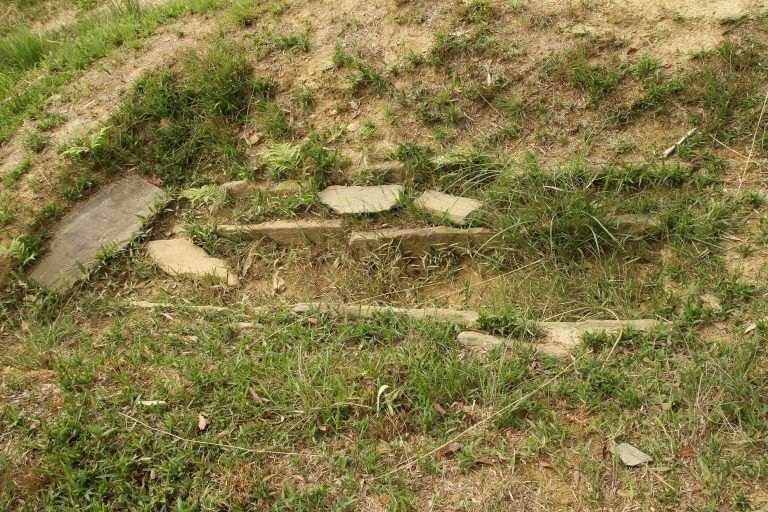
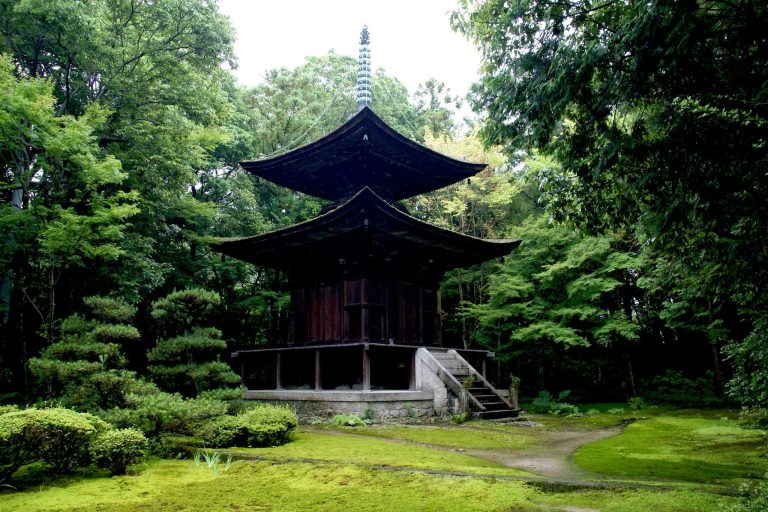
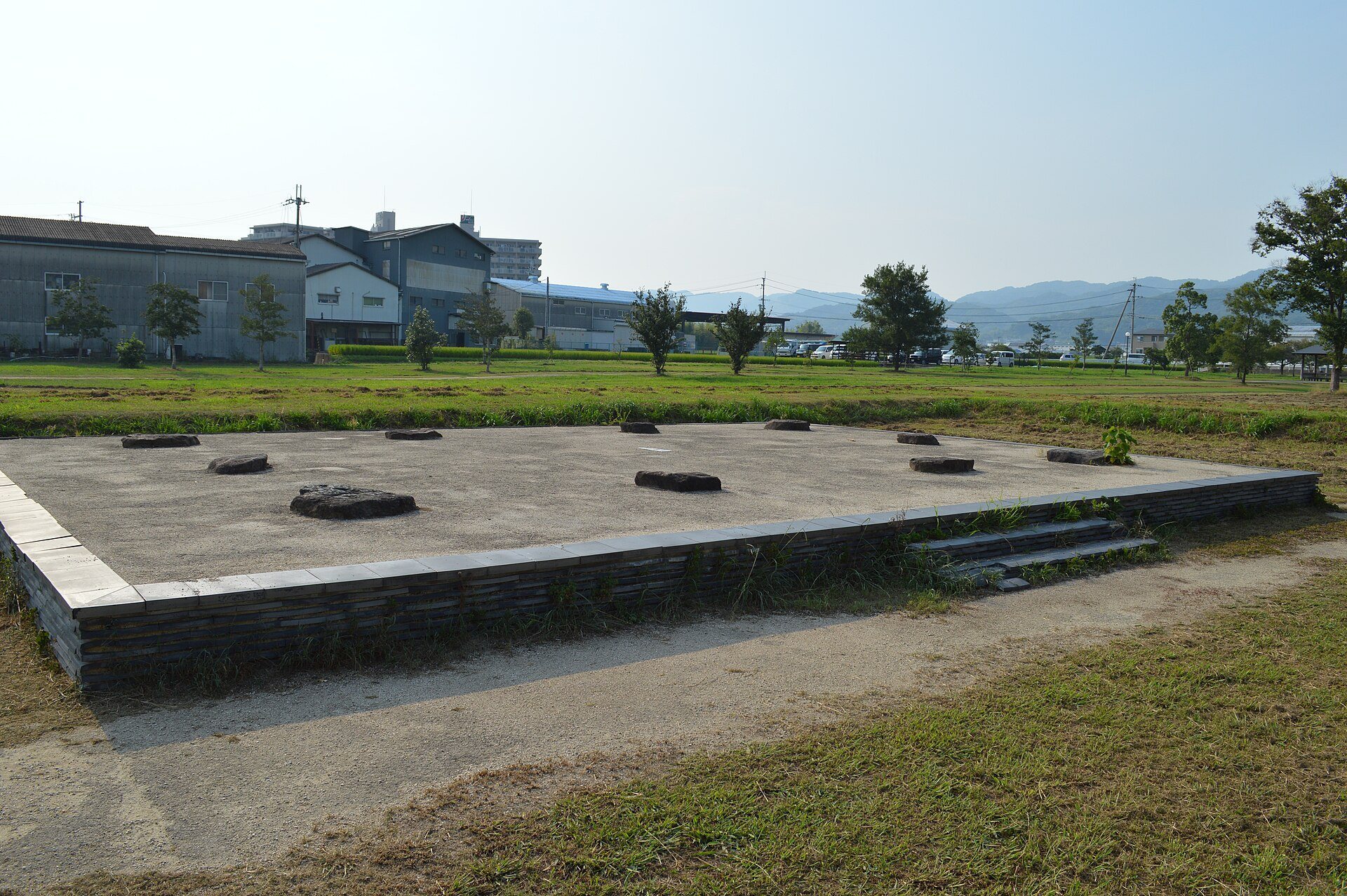
The original pagoda is estimated to have risen seven stories. Its foundation measures 16.4 meters on each side and contains a central foundation stone made of chlorite schist. The foundation stones retain their original arrangement, and numerous roof-tile fragments have been recovered nearby.
Main Hall platform
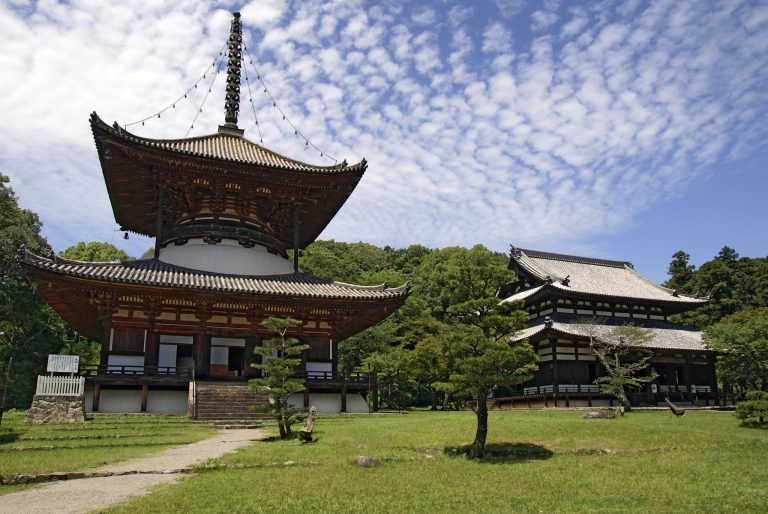
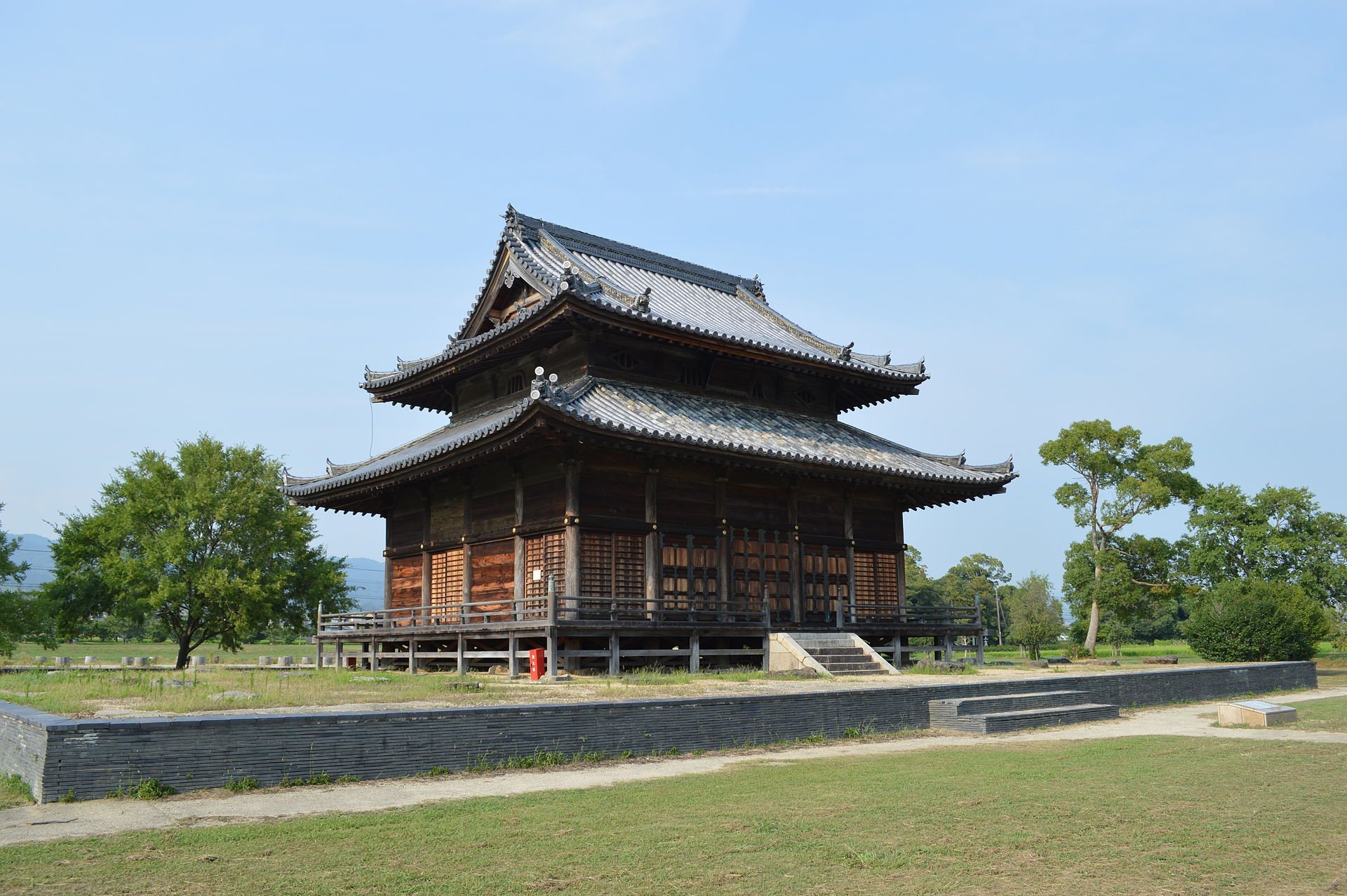
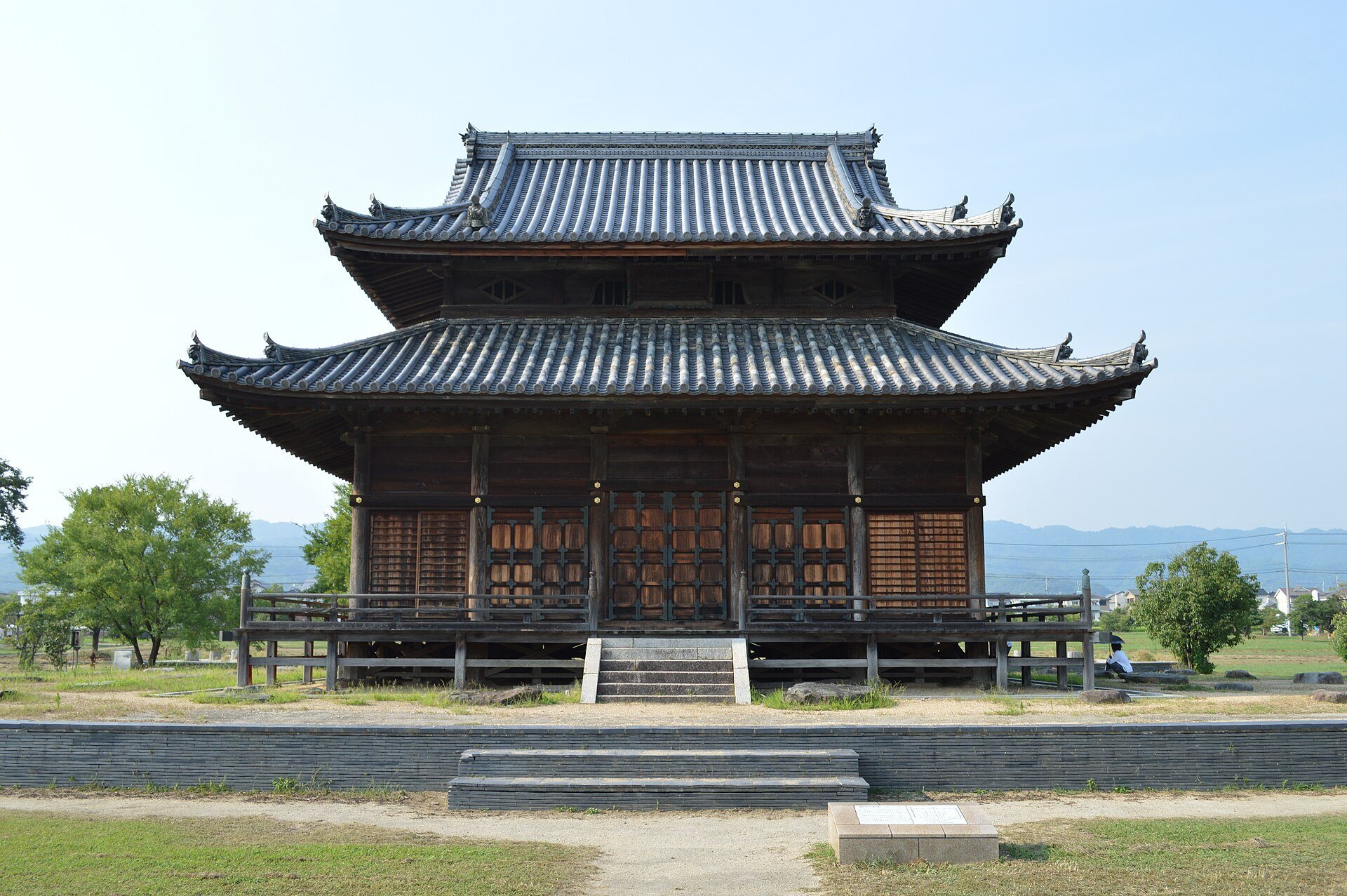
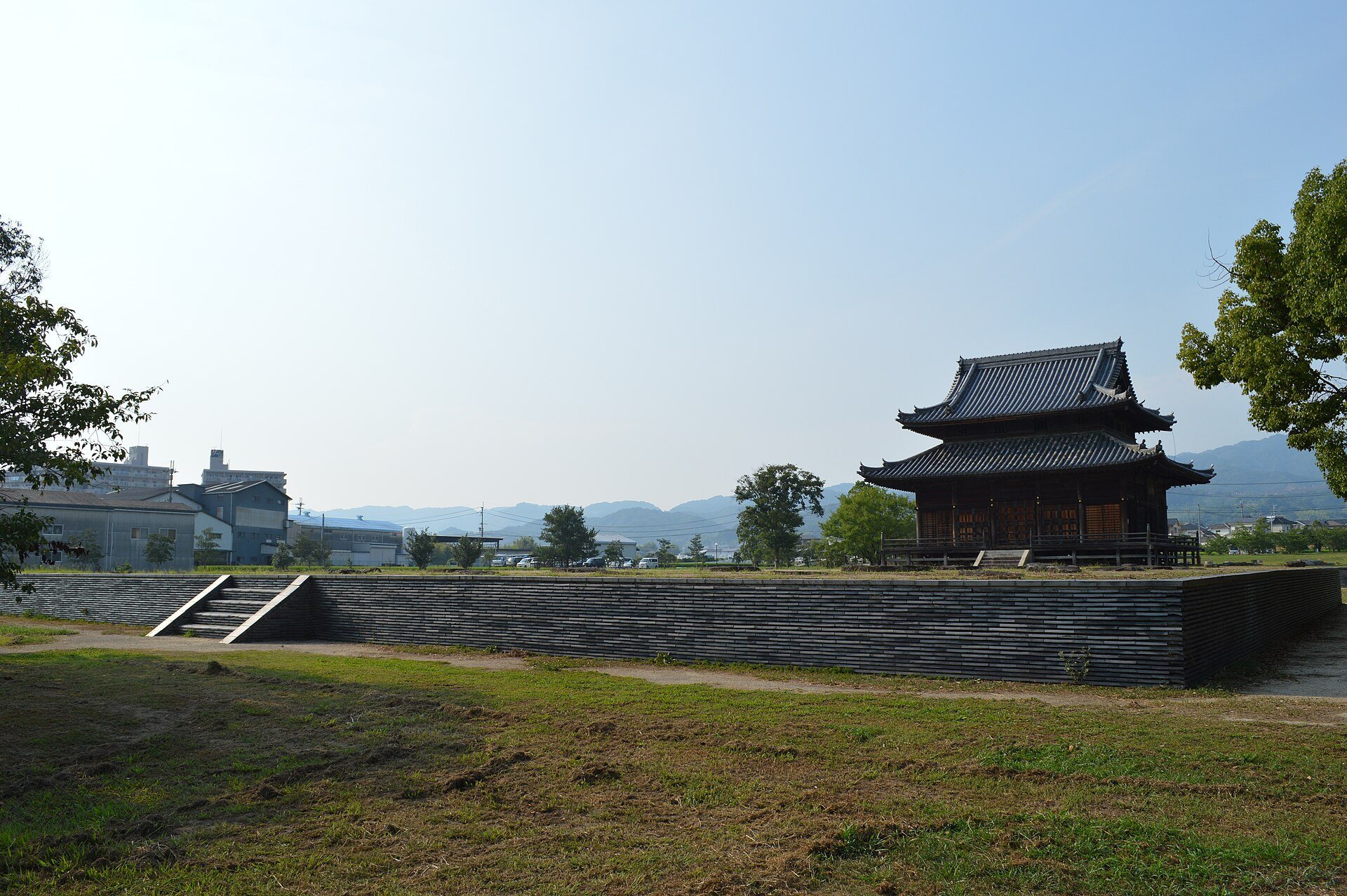
The present Main Hall occupies the center of the platform associated with the original Lecture Hall. In 1992, the building was relocated to this position. It is a five-bay-by-four-bay structure, meaning that its front and side elevations are organized by five and four spaces between structural columns. The hall has an approximately 11.7-meter ridge height, a tiled hip-and-gable roof, and a double-layered roof. Its exterior resembles a two-story building, while its interior is arranged as a single story. Kinokawa City designates the building as a tangible cultural property.
Nishi Kokubu Temple Ruins
The Nishi Kokubu Temple Ruins preserve a pagoda’s central foundation stone. Archaeological work established the scale of the pagoda and identified the remains as those of a temple dating from the Hakuho period to the Nara period. Their location approximately 800 meters west of Kii Kokubun-ji has led to the interpretation that they may represent the associated provincial nunnery, although the nunnery’s identification and history remain uncertain.