Okō Castle: A Medieval Chōsokabe Stronghold in Japan


Site at a Glance
- Rating
- 4
- Popularity
- Low
- Country
- Japan
- Primary era
- Medieval
- External website
- Open
- Eras represented
- Medieval
- Civilizations
- Unclassified
- Site type
- Military
- Remains
- Castle
On this page9 sections
History
Okō Castle is a medieval mountain stronghold in Nankoku, Japan, built during the thirteenth or fourteenth century and traditionally associated with the Kamakura period, the era of Japan’s first shogunate, conventionally dated from 1185 to 1333. It became the successive seat of the Chōsokabe clan, which rose from a local lineage to dominate Tosa Province and later rule most of Shikoku.
Origins of the Chōsokabe seat
Tradition traces the Chōsokabe lineage to Chōsokabe Yoshitoshi, who moved from Shinano to Tosa in the early Kamakura period. The family settled in the area now called Okō and adopted the name Chōsokabe to distinguish itself from the separate Kōsokabe lineage in neighboring Kami District. Archaeological investigation places the construction of the castle in the thirteenth or fourteenth century, although its precise founding date remains unknown.
During the Muromachi period, Hosokawa authority in Tosa weakened after the Ōnin War and the 1507 assassination of Hosokawa Masamoto, the head of the Hosokawa clan and the shogun’s senior deputy. Several local families then emerged as the province’s Seven Great Powers, including the Chōsokabe, Motoyama, Yamada, Kira, Aki, Ōhira, and Tsuno clans.
Conflict and restoration of Chōsokabe rule
In 1508, a coalition led by the Motoyama, Yamada, and Kira clans captured Okō Castle. The traditional story holds that the Chōsokabe lord Kanetsugu killed himself and that his son Kunichika fled to the Ichijō family in western Tosa. More recent interpretation places Kanetsugu in exile rather than dead. It holds that he made peace with the Motoyama and Yamada clans, returned as lord of Okō Castle in 1511, and transferred authority to Kunichika around 1518.
Using Okō Castle as his base, Chōsokabe Kunichika became one of the leading powers in Tosa. Control of the province was divided among the Ichijō, Motoyama, and Aki families as well as the Chōsokabe, until Kunichika’s successor, Chōsokabe Motochika, expanded the clan’s authority.
Conquest, relocation, and abandonment
Motochika expelled Ichijō Kanesada to Bungo in 1574 and unified Tosa. From Okō Castle, he completed the conquest of Shikoku by 1585. That same year, Hashiba Hideyoshi invaded, forcing Motochika to submit and restricting Chōsokabe rule to Tosa.
The Chōsokabe moved their headquarters to Ōtakayama Castle, on the site of present-day Kōchi Castle, in 1588. Poor flood-control conditions at the new base led them back to Okō. After Urato Castle was renovated and became the headquarters in 1591, Okō Castle was abandoned, ending its long role as the Chōsokabe seat.
Modern treatment and protection
In 1894, after all twenty men sent from Okō Village to the First Sino-Japanese War returned safely, the village purchased the enclosure traditionally identified as the stable site and made it a park. A victory monument, whose text was composed by Sakazaki Shiran, was erected there in 1895. After local deaths during the Russo-Japanese War in 1904, a conflict between Japan and Russia, the monument was removed and the area became a cemetery. The cemetery was abolished in 1944.
Okō Castle became a Kōchi Prefecture Historic Site in 1955. The western hill containing the presumed stable compound received separate municipal historic-site designation in 1970. Six excavation and site-improvement campaigns took place from 1985 to 1990. The castle ruins became a National Historic Site of Japan, a legally protected place recognized for national historical importance, in 2008. Okō Castle was selected for the Continued Top 100 Japanese Castles in 2017. A temporary turret stood on the upper platform of the main enclosure from 2017 to 2019 before its intended dismantling because it occupied the designated historic site.
Remains
Mountain layout and defensive features
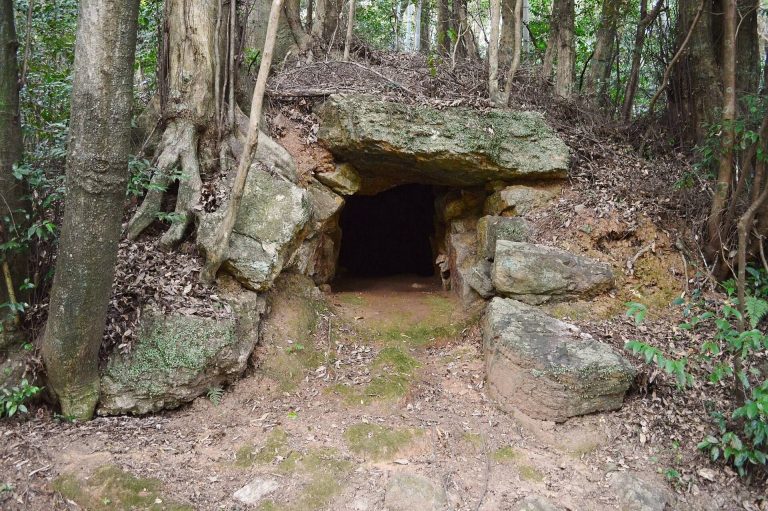
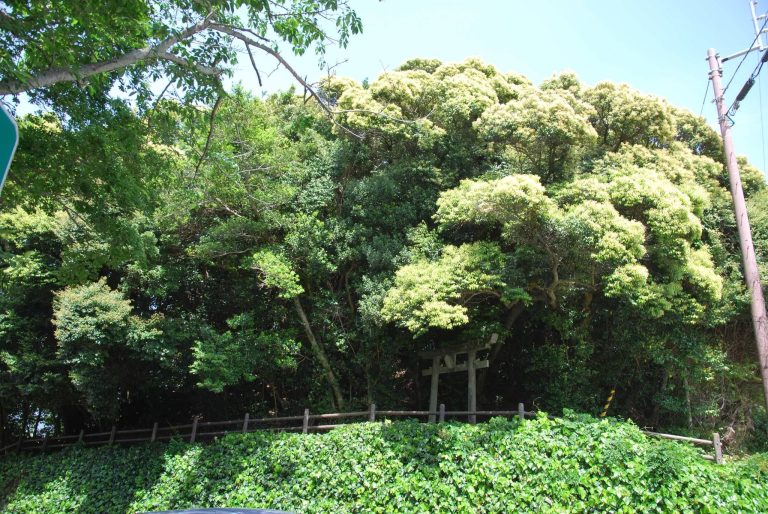
Okō Castle occupied Mount Okō, a 97-meter-high hill at the northwestern edge of the Kachō Plain in present-day Nankoku. It stood west of National Route 32 beside the Kokubu River, near the historic center of Tosa and the route toward Awa. This position enabled the castle to control movement through southern Shikoku. The site formed a linked group of mountain enclosures. The highest point held the main enclosure, known as the Tsume, with the lower Tsume and Nino-dan enclosures to the east. The Sanno-dan and Yono-dan extended southward and westward, while the western hill held the enclosure traditionally identified as the stable compound.
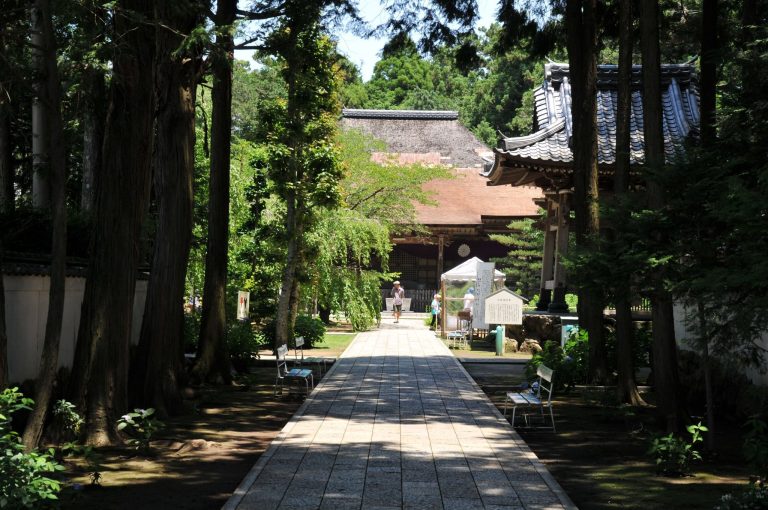
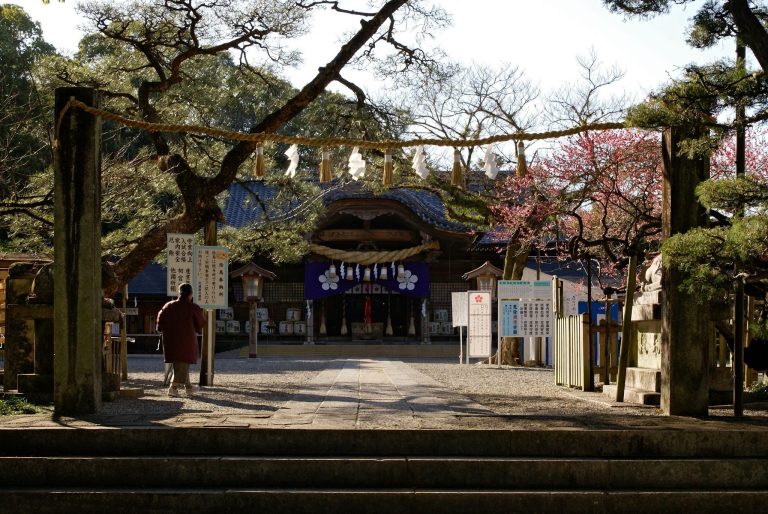
Surviving physical features include low stone walls, earthen ramparts, dry moats, vertical and horizontal moats, enclosure platforms, entrances, and wells. Okō Hachiman Shrine occupies the northeastern part of the castle. A Hachiman shrine is a Shinto shrine dedicated to Hachiman, a deity especially associated with warriors. The Kōchi Prefectural Museum of History and Folklore was built within part of the former Sanno-dan enclosure, and excavated castle materials are displayed there.
Excavated materials
The first excavation recovered Haji earthenware, Bizen ware, Seto Tenmoku tea bowls, celadon and white porcelain, an inkstone, a tea mill, imported coins, and iron slag. These materials represent the range of objects associated with activity at the castle and provide evidence for its connections with regional and overseas production.
Names of the castle
The Edo-period historical compilation Nanroshi calls the castle Toyooka Castle. The date when the present name, Okō Castle, became standard is unknown.