Anraku-ji Temple: A Buddhist Temple and Inner Temple of Shikoku


Site at a Glance
- Rating
- 4
- Popularity
- Very Low
- Country
- Japan
- Primary era
- Unclassified
- Eras represented
- Unclassified
- Civilizations
- Unclassified
- Site type
- Religious
On this page14 sections
History
Anraku-ji Temple is a Buddhist temple in Kochi, Japan, belonging to the Buzan branch of Shingon Buddhism, a Japanese esoteric tradition associated with ritual practice and the teachings of Kobo Daishi. Its principal object of worship is Amida Buddha, and its formal name is Myoshikizan Kinsho-in Anraku-ji.
Traditional foundation and early relocations
Tradition places the temple’s foundation in the Engi era, from 901 to 923, when Sugawara no Takami, the eldest son of the court scholar and statesman Sugawara no Michizane, was living in exile in Tosa Province, the historical province corresponding broadly to present-day Kochi Prefecture. After learning of Michizane’s death, Takami is said to have founded Anraku-ji and a Tenmangu shrine at Shioe. The temple took its name from Michizane’s memorial temple in Tsukushi. Michizane was later venerated as Tenjin, a deity especially associated with scholarship.
Anraku-ji was first established at Shioe, then moved to Masugata and later relocated to Kuma, all within present-day Kochi. At Kuma, it developed into a large complex containing twelve subtemples. A document from Kongofukuji dated 1590 calls it “Kuma Anraku-ji,” confirming that the temple stood at Kuma at that time.
Destruction and Edo-period revival
The temple was burned during the Onin War, a period of civil warfare in Japan that lasted from 1467 to 1477. Anraku-ji subsequently declined and was eventually abandoned. During the Edo period, Eishun, a Buddhist master of Kobo-ji, now known as Mitani-ji in Mitani, Kochi, revived the temple. This restoration took place during the Kanbun era, from 1661 to 1673, when the temple adopted the name Kinsho-in.
Anraku-ji became defunct again during the anti-Buddhist movement of the early Meiji period. Joho re-established it in 1875 on the former site of a temple that had served as the Chosokabe clan’s mortuary temple. The Chosokabe were a warrior clan that ruled much of Shikoku during the sixteenth century.
Pilgrimage role and principal image
Following its re-establishment, Anraku-ji temporarily served as the 30th temple on the Shikoku 88-temple pilgrimage, a Buddhist route traditionally associated with Kobo Daishi and extending across Shikoku. It replaced Jingu-ji, the former temple attached to the 30th station, and its affiliated temple Zenraku-ji. After Zenraku-ji was revived, both temples retained the designation of the 30th station until 1993.
From 1 January 1994, Zenraku-ji became the 30th pilgrimage temple, while Anraku-ji became its inner temple, a secondary sacred site associated with a numbered pilgrimage station. This arrangement ended the existence of two competing 30th stations. Anraku-ji had also formerly shared its mountain name with Zenraku-ji.
Anraku-ji’s principal image was designated an Important Cultural Property of Japan on 17 April 1911. The image had originally been the principal image of Jingu-ji, the Buddhist temple attached to and overseeing Tosa Ichinomiya, the chief-ranking Shinto shrine of the historical province of Tosa. It represented the Buddhist manifestation associated with that shrine. When Jingu-ji became defunct in the early Meiji period, the image was entrusted to Tosa Kokubun-ji before later becoming the principal image of Anraku-ji.
Remains
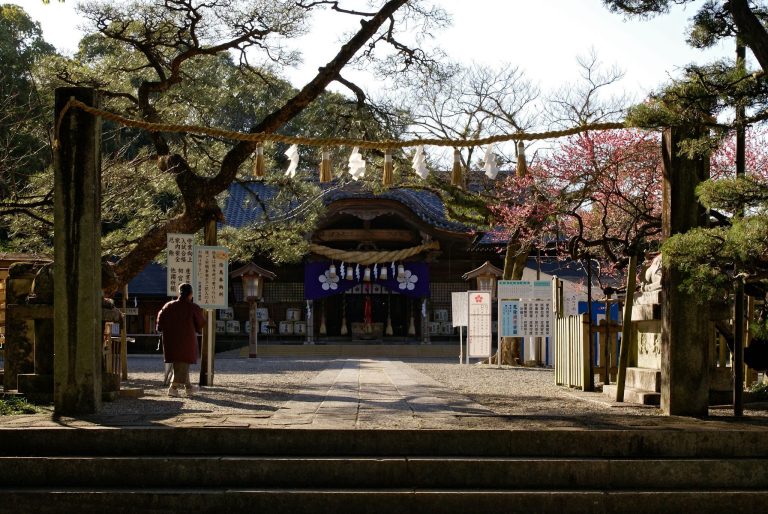
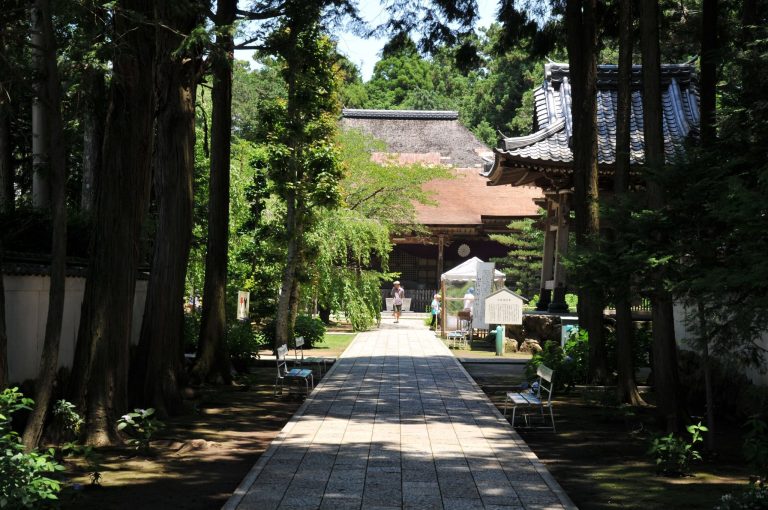
The temple precinct contains a Niomon gate, a main hall, a Daishi hall, a Goma hall, a tahoto pagoda, and the main temple residence. A tahoto is a Japanese two-story pagoda with a square lower section and a rounded upper section. The precinct also includes the Sea Bass Reef Archaeological Site and the grave area of a former subtemple connected with the Chosokabe clan.
Temple buildings
Niomon gate
The Niomon gate forms part of the temple precinct. Its presence marks one of the principal architectural elements through which the temple complex is entered and organized.
Main hall
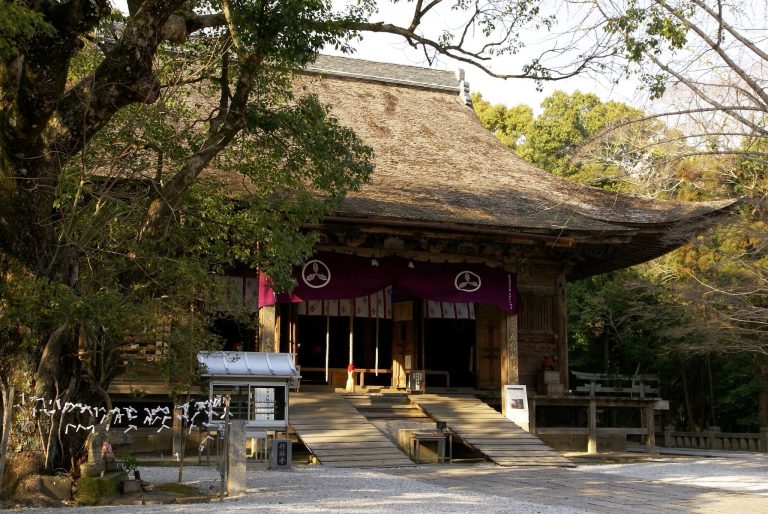
The main hall is the building associated with worship of the temple’s principal image. Worshippers can view the front image placed before the principal image. A plaque in the hall bears the inscription “Hall for Enshrining the National Treasure.”
Daishi hall
The Daishi hall contains an image of Kobo Daishi that visitors can view. Kobo Daishi, also known as Kukai, is the figure traditionally associated with the Shikoku pilgrimage and with the teachings of Shingon Buddhism.
Goma hall
The precinct’s Goma hall is used for goma, an esoteric Buddhist fire ritual in which offerings are burned before a sacred altar. The building stands among the principal structures of the temple complex.
Principal image
The principal image is a wooden seated figure of Amida Buddha, the Buddha of the Pure Land tradition. It dates to approximately the thirteenth century and is 68.5 centimetres high. The sculpture was made from joined cypress blocks, using multiple pieces fitted together, and has separately inserted crystal eyes. Its surface is finished with lacquer and gold leaf.
Archaeological and funerary remains
Sea Bass Reef Archaeological Site
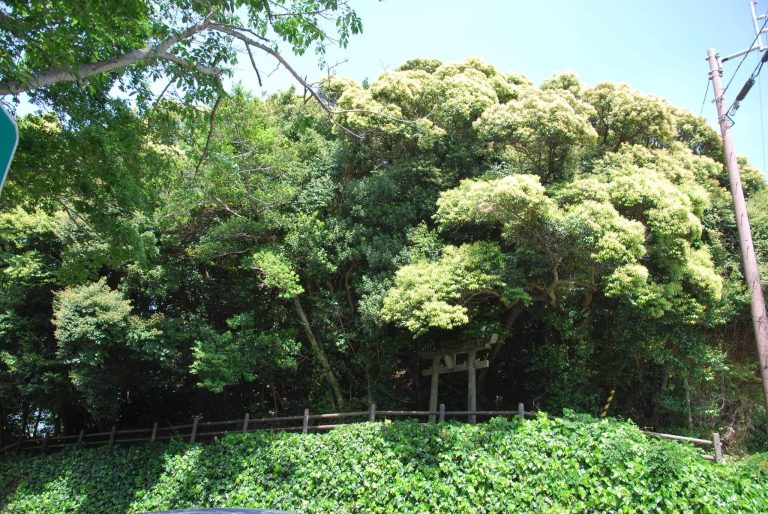
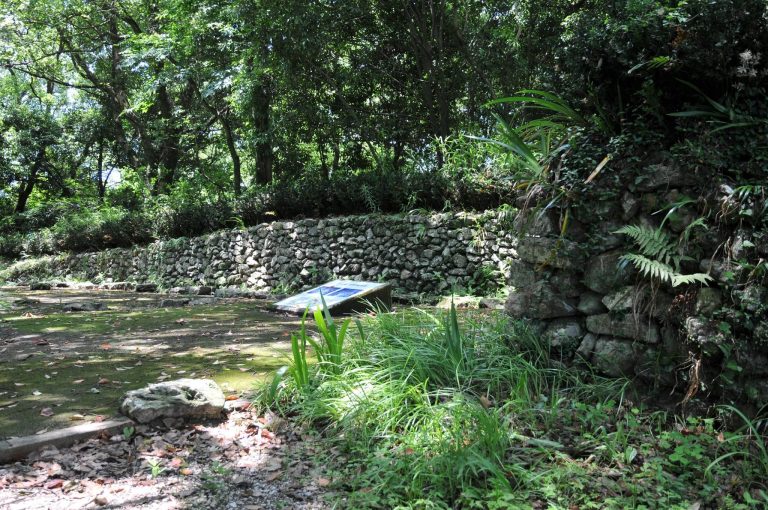
The Sea Bass Reef Archaeological Site lies within the temple precinct and forms part of the archaeological remains associated with Anraku-ji.
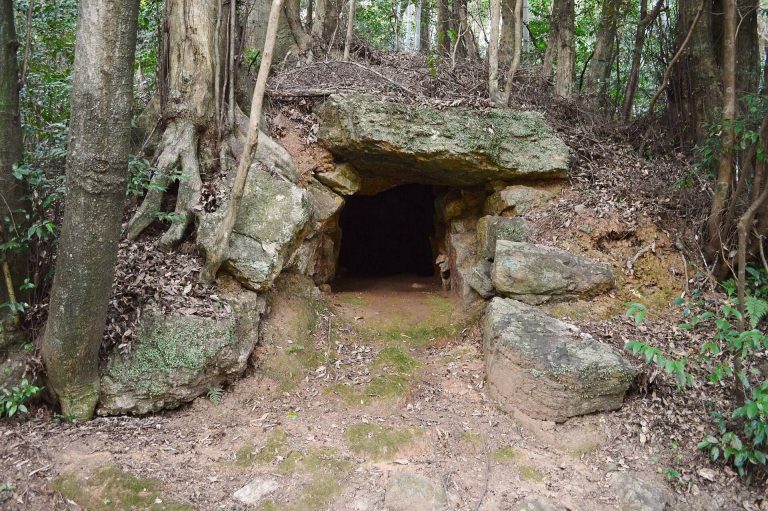
Former subtemple grave area
The grave area of a former subtemple connected with the Chosokabe clan contains the graves of members of the Inui family, including Masayuki Inui and his wife. They were ancestors of Itagaki Taisuke.