Ōjiyama Kofun: A Kofun-Period Burial-Mound Complex in Japan
Site at a Glance
- Rating
- 3.6
- Popularity
- Very Low
- Country
- Japan
- Primary era
- Classical
- External website
- Open
- Eras represented
- Classical
- Civilizations
- Unclassified
- Site type
- Burial
- Remains
- Burial Mound
On this page7 sections
History
Ōjiyama Kofun is a Kofun-period burial-mound complex in Otsu, Japan, built during an era of monumental tomb construction that lasted roughly from the third to the sixth centuries. Located on the west side of Lake Biwa, it consists of the main No. 1 Mound and the smaller No. 2 Mound. Additional mounds from the later Kofun period may once have occupied the surrounding area.
Early Mounds and Regional Power
No. 2 Mound probably dates to around the end of the third century, making it earlier than the main mound. No. 1 Mound was probably built in the latter half of the fourth century. It is among the earliest kofun in the Shiga region and represents an uncommon local form composed of two joined rectangular sections rather than the rounded rear section associated with the better-known keyhole-shaped mound.
The identity of the person buried in No. 1 Mound remains unknown. A possible connection has been proposed with the Wani clan, a powerful regional lineage associated with the Ōmi area during the Kofun period. The later establishment of Ōmi Palace at the Nishikori archaeological site southeast of the complex may also give the mound’s proximity to that palace historical significance. Ōmi Palace was a late Asuka-period imperial palace established in the Ōmi region.
Investigation and Preservation
Ōjiyama Kofun was excavated in 1964 and 1970. Four burial facilities were identified in the rear section of No. 1 Mound, while another in the front section is thought to have been a chamber lined with clay. The burial arrangements were only partially examined, so their precise form remains unclear.
The two mounds were designated together as the National Historic Site “Ōjiyama Kofun” on December 16, 1974. Between 1981 and 1985, the complex was developed as an archaeological park, and No. 1 Mound was restored. The site is now preserved as a public park.
Remains
Mounds and Setting
The complex occupies Ōjiyama, an independent hill in the southern part of Lake Biwa’s western shore. The hill rises to approximately 164 metres, with No. 1 Mound positioned at its highest point. The two mounds occupy different parts of the slope, creating a physical arrangement in which the principal tomb stands above the smaller mound to the northeast.
No. 1 Mound
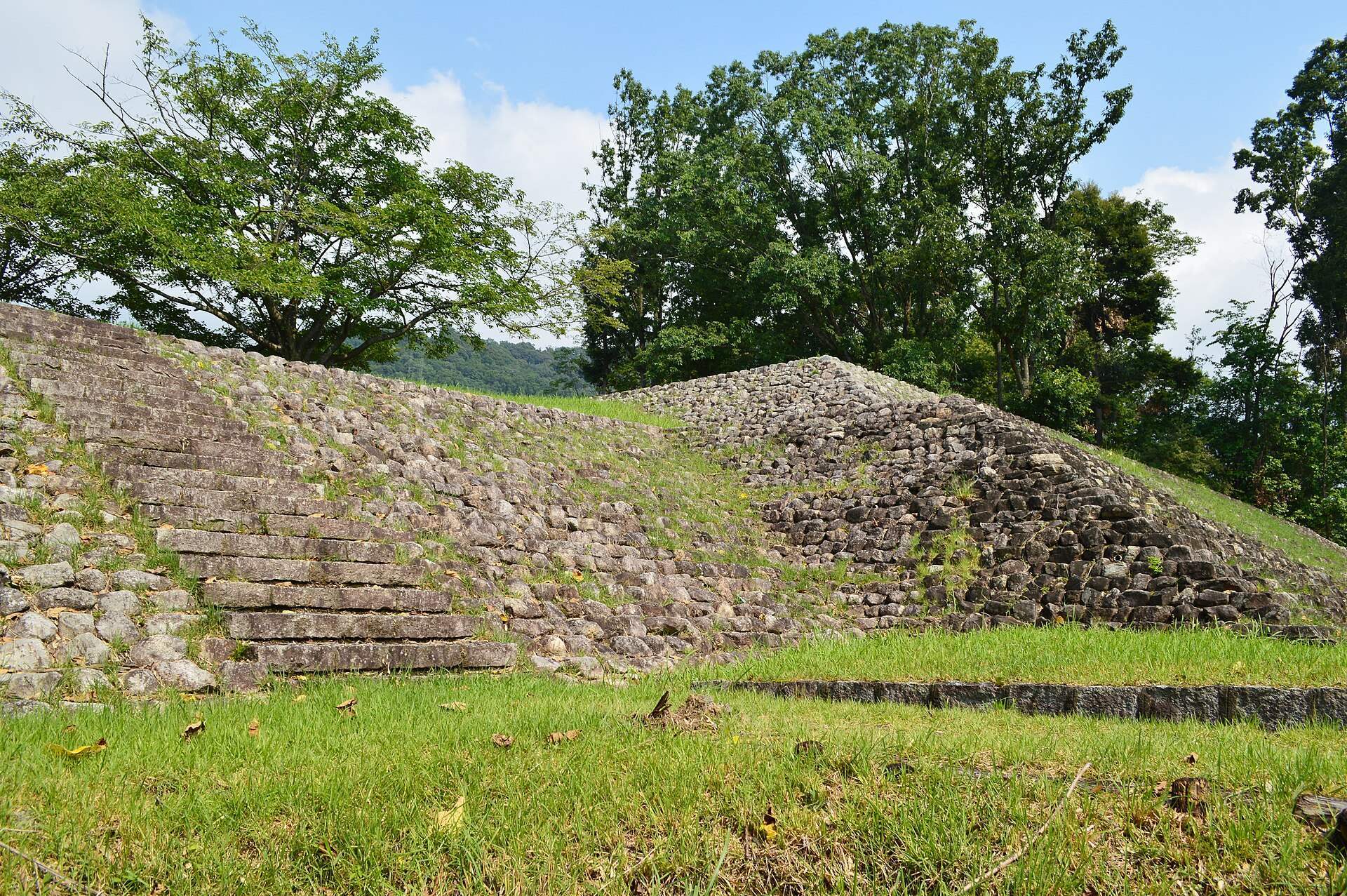
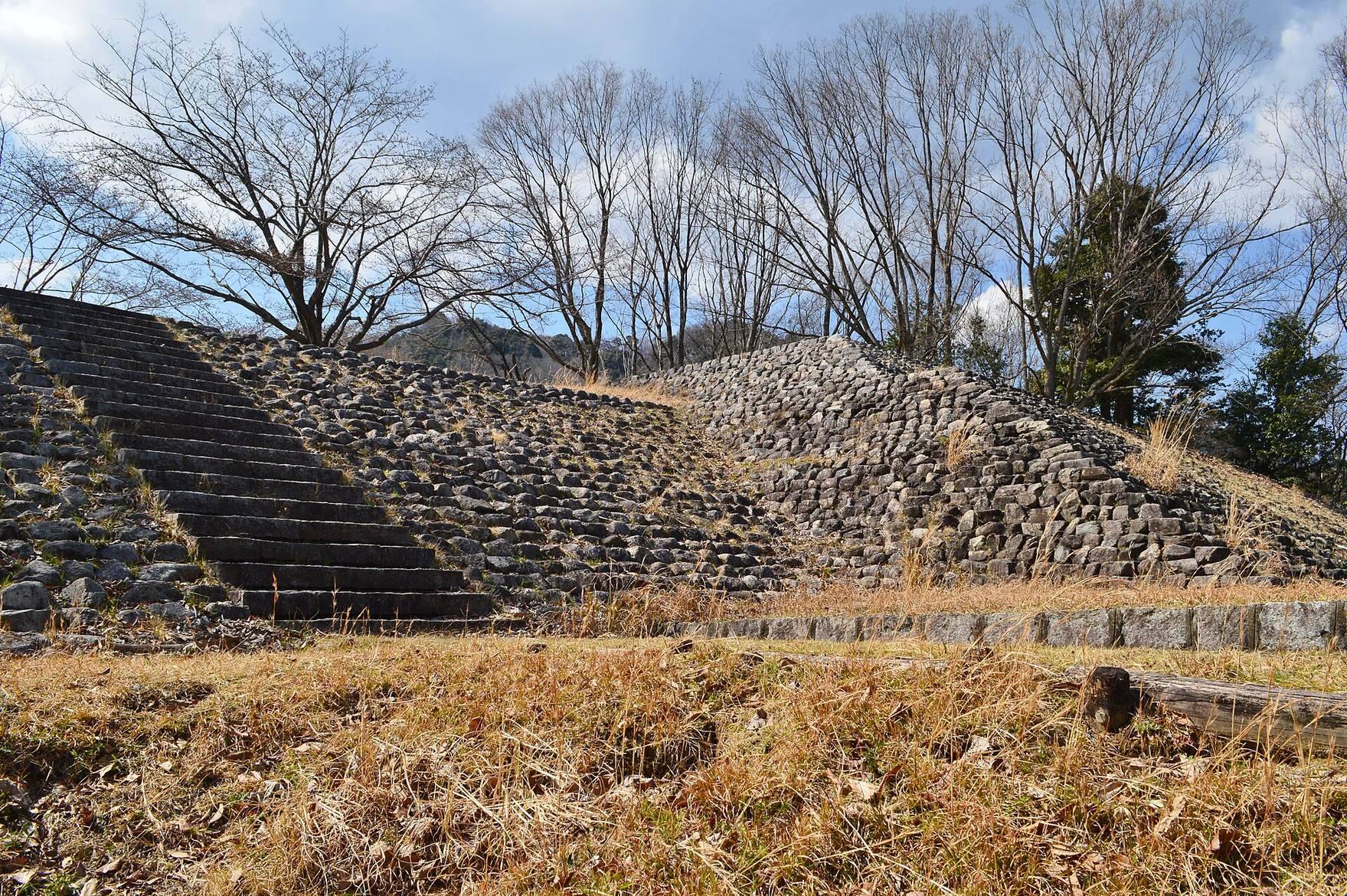
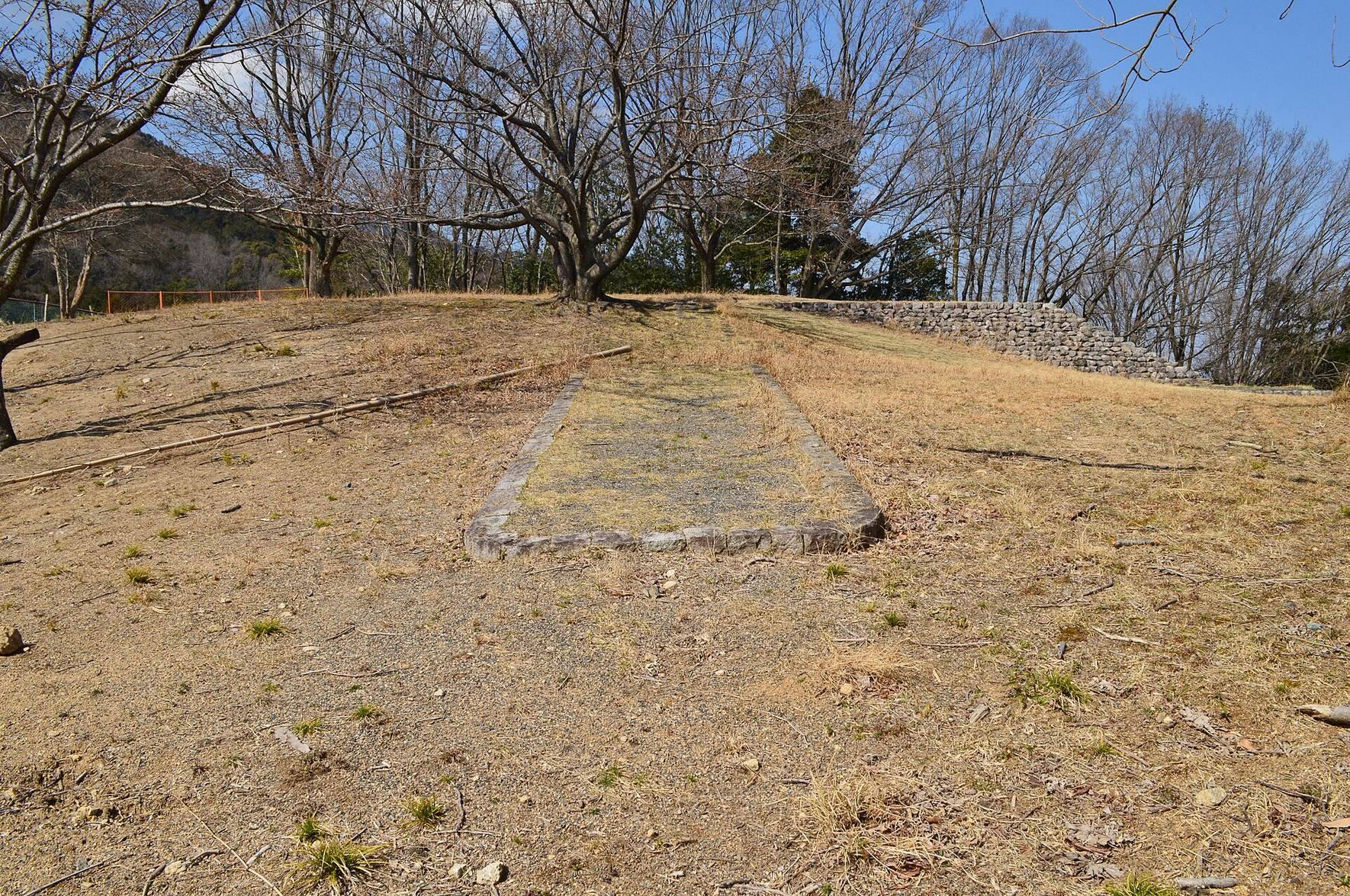
No. 1 Mound is a zenpō-kōhō-fun, a burial mound formed by a front rectangular section joined to a rear rectangular section. Its principal axis runs north to south, with the front section facing south, and the mound measures approximately 60 metres in length. Stones called fukiishi covered its exterior. These stones protected the earthwork and gave the mound a finished surface, although those visible today are reconstructed.
The eastern side, facing Lake Biwa, broadens markedly and received more careful surfacing than the western side. This difference suggests that the mound was designed to be viewed from the lake. Four burial facilities were identified in the rear section, and a further facility in the front section is thought to have been clay-lined. The mound’s reconstructed stone covering now forms a central part of the archaeological park’s appearance.
No. 2 Mound
No. 2 Mound lies northeast of No. 1 Mound on the hillside. It is circular and measures approximately 20 metres in diameter. Excavation identified a ditch around its foot and three pits on the mound surface, which may have served as burial facilities. Its position and form preserve a separate stage in the development of the complex, since the mound probably predates No. 1 Mound by several decades.