Enman-in Temple: A Tendai Monzeki Temple in Ōtsu, Japan


Site at a Glance
- Rating
- 4.2
- Popularity
- Low
- Country
- Japan
- Primary era
- Early Modern
- External website
- Open
- Eras represented
- Early Modern
- Civilizations
- Tokugawa
- Site type
- Religious
- Remains
- Monastery
On this page12 sections
History
Enman-in Temple is an independent Tendai Buddhist temple in Ōtsu, Japan, whose traditional foundation is placed in 987 during the Heian period. The temple was associated with imperial and princely entrants as a monzeki institution, a Buddhist temple historically headed by a member of the imperial family or another aristocratic entrant. Its principal image is Fudō Myōō, a Buddhist Wisdom King associated with immovable resolve and the destruction of spiritual obstacles.
Foundation and the Byōdō-in tradition
Tradition holds that Imperial Prince Goen, a son of Emperor Murakami, founded the temple at Okazaki in Kyoto in 987 under the name Byōdō-in. A different account appears in the diary Shunki, which states that Myōson, a senior priest of Onjōji, established a new temple at Okazaki in 1040 with the support of Emperor Go-Suzaku and named it Enman-in. Goen’s son, Eien, became the institution’s first head.
In 1052, Fujiwara Yorimichi converted Uji-dono, the former villa of his father Fujiwara Michinaga, into a temple and appointed Myōson of Byōdō-in as its founding priest. The name Byōdō-in was then transferred to the new temple at Uji, while Myōson gave the earlier institution at Okazaki the name Enman-in.
Imperial association and relocation
After Goen entered the temple, Enman-in prospered as an imperial monzeki institution. It became one of the three monzeki temples of the Tendai Jimon school, the branch of Tendai Buddhism historically centered on the Onjōji tradition. Until the late Muromachi period, the temple was also called Mii-dera Byōdō-in and Sakurai-no-miya.
Enman-in moved to its present location in the early Edo period. In 1647, Emperor Meishō granted the temple its shinden, a ceremonial residential hall.
Government use and modern status
In January 1869, the Ōtsu Prefectural Government was installed in the temple’s shinden. It remained there until June 1888, when the government moved to a newly constructed prefectural office. Enman-in became independent from the Tendai Jimon school in 1947.
In May 2009, nine buildings, including the important cultural property shinden, and approximately 14,000 square meters of land incorporating the garden were placed under judicial auction by the Ōtsu District Court. A religious corporation in Kōka, Shiga, acquired them for approximately 1.067 billion yen, and ownership was legally transferred on 20 August 2009. The Agency for Cultural Affairs described the situation as exceptional. The shinden is an Important Cultural Property, while the garden is designated both a National Historic Site and a Place of Scenic Beauty.
Fudō worship
Enman-in holds Fudō goma rites before its principal image. A goma is a fire ritual in which offerings and written prayers are burned before a sacred image. Participants write their prayers and names on prepared firewood, which is burned on a ritual altar as a symbolic act of removing spiritual confusion and worldly passions. The rite takes place on the second Sunday of each month and on the 28th, days devoted to Fudō at the temple, and is open to everyone.
Remains
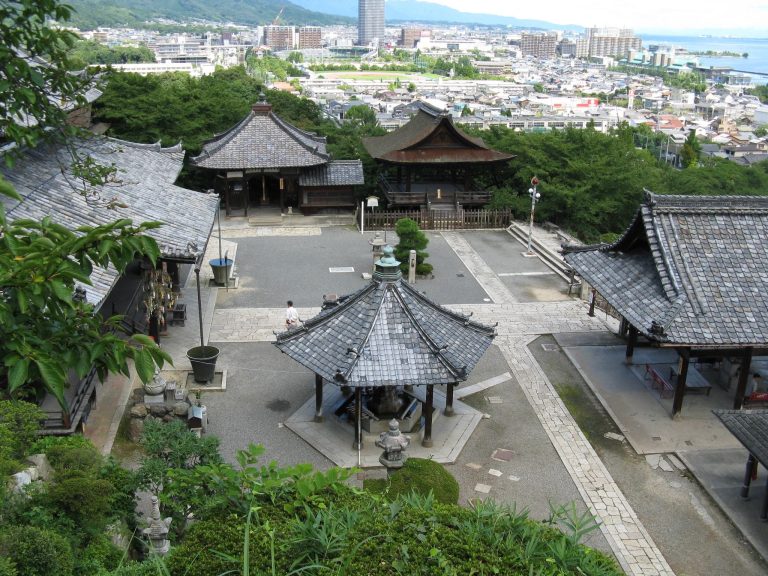
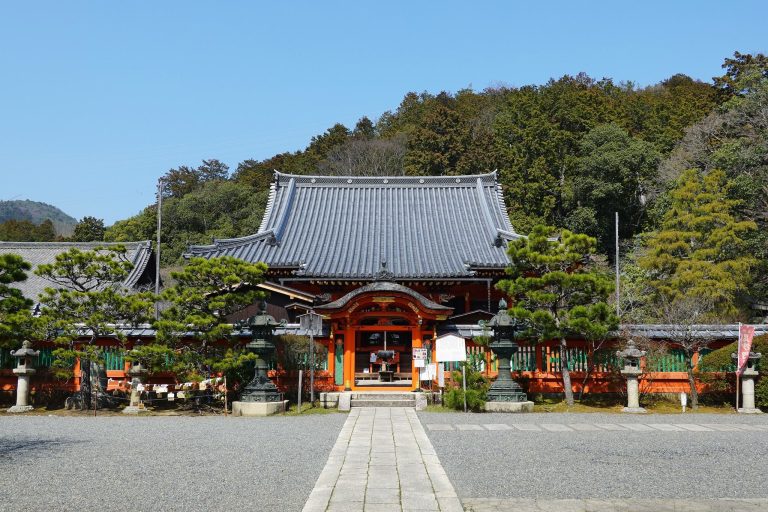
The temple complex includes a main hall, the shinden, the lodging facility Sanmitsuden, and the Ōtsu-e Museum. Its garden forms part of the protected historic landscape, while paintings and a historical map formerly associated with the temple preserve evidence of its furnishings and earlier precinct organization.
Principal buildings
Main hall and associated facilities
The surviving complex includes the main hall, Sanmitsuden, a lodging facility, and the Ōtsu-e Museum. Together with the shinden, these buildings constitute the principal named elements of Enman-in’s present temple grounds.
Shinden
The shinden was transferred to Enman-in by Emperor Meishō in 1647. It later served as the seat of the Ōtsu Prefectural Government from January 1869 until June 1888. The building is designated an Important Cultural Property, and its former furnishings included gold-ground paintings attached to sliding doors, an alcove, and the wall beside staggered shelves.
Garden and former temple holdings
Garden
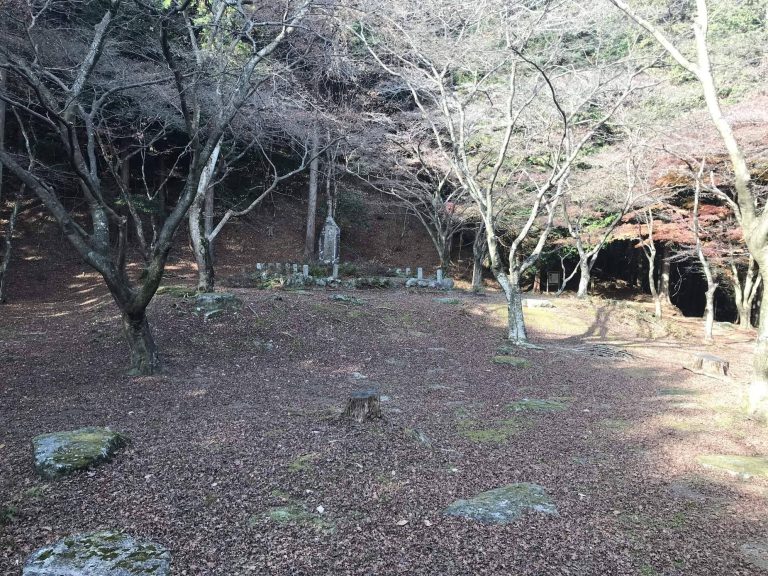
The garden is designated both a National Historic Site and a Place of Scenic Beauty. It forms part of the approximately 14,000-square-meter area associated with the temple buildings and grounds.
Paintings and historical map
Four gold-ground panels depicting genre scenes were originally attached to the sliding doors of the shinden’s fifth room. Six further gold-ground panels showed the precincts of Sumiyoshi Shrine and were originally fitted to the alcove and the wall beside the staggered shelves in the first room. These paintings are now held by the Kyoto National Museum. Former barrier paintings from the shinden were later consolidated into a cultural-property group comprising 54 panels and 11 additional sheets, with another 44 panels and 11 sheets added in a later designation.
A twelve-sheet historical map of the grounds of Onjōji, formerly held by Enman-in, is also preserved by the Kyoto National Museum. The map records the earlier arrangement of the associated temple precincts. Enman-in is additionally associated with a city-designated tangible cultural property, a one-scroll ink painting draft depicting summer coolness along the Shijō Riverbank.