Andelo Archaeological Site: A Roman City in Navarra

Site at a Glance
- Rating
- 4.4
- Popularity
- Low
- Country
- Spain
- Primary era
- Classical
- External website
- Open
- Eras represented
- Iron Age, Classical, Medieval, Modern
- Civilizations
- Kingdom of Navarre, Roman, Spanish
- Site type
- City
On this page9 sections
History
Andelo Archaeological Site preserves the remains of an ancient Roman city in Spain, at Muruzábal de Andión within the municipality of Mendigorría, Navarra. Built in the territory of the Vascones, it belonged to the province of Tarraconensis and the Caesaraugustanus administrative district. The city became an important commercial and transport center in northern Hispania, with a territory extending along the middle course of the Arga River.
From Iron Age settlement to Roman city
Before the Roman city developed, the site held a small Iron Age settlement dating from the fourth and third centuries BC. This earlier community was an oppidum, a fortified or substantial indigenous settlement. During the Roman conquest and its aftermath, inhabitants were relocated from the earlier settlement to the larger Roman city.
Roman influence reached the area from the beginning of the second century BC, along the route leading into the Ebro valley. By the first century BC, Andelo had houses arranged in Roman fashion. Its main period of development came during the first and second centuries AD, while some of its streets received additional paving in the third century.
Andelo in the Roman provincial system
Classical writers identified the inhabitants as the Andelonenses. Pliny the Elder described them as a stipendary community among the Vasconian cities of the Caesaraugustanus district. A stipendary city, or civitas stipendiaria, was required to pay tribute within the Roman provincial system. Claudius Ptolemy recorded the city using the Greek-form name Andelos. The modern preference for Andelo follows the form of the recorded ethnic name, although both forms remain in use.
In AD 74, Emperor Vespasian granted civic status to communities in Hispania. This measure affected the legal development of Iberian urban centers, and Andelo is described in this setting as a civitas, an organized urban community recognized within the Roman administrative order.
Medieval settlement and abandonment
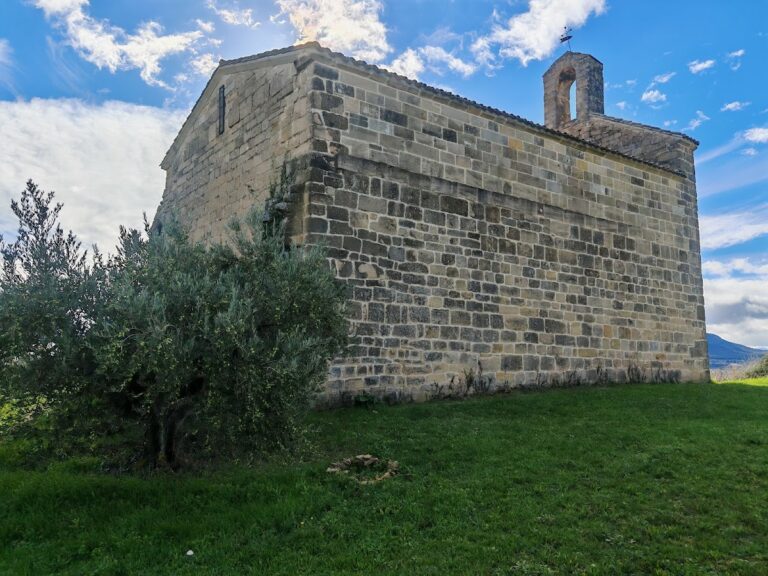
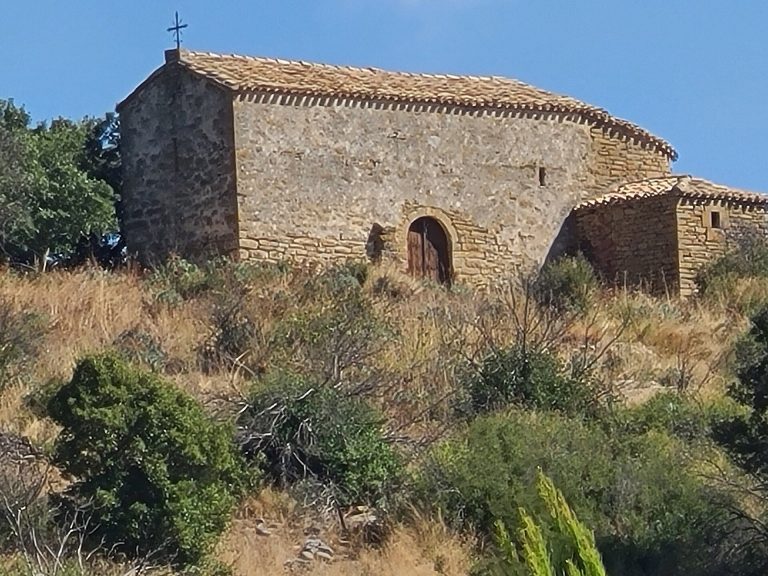
Andelo continued to exist after the Roman period and remained occupied during the Middle Ages. An eleventh-century church dependent on Santa Maria of Pamplona was built there. The settlement was abandoned around the middle of the fourteenth century, probably in connection with the plague of 1348.
Identification and archaeological investigation
The remains were identified in the seventeenth century by the Jesuit scholar José Moret y Mendi. The first excavations took place in 1940 under Saturnino Rivera Manescau, director of the Archaeological Museum of Valladolid. Blas Taracena Aguirre, director of the National Archaeological Museum, continued the work in 1943 and 1944, prepared plans of the discoveries, and then re-covered the excavated ground. The area continued to be used for cereal cultivation, while objects from these campaigns were kept in the Museum of Navarra.
Systematic archaeological work began in the 1980s and continued under the direction of María Ángeles Mezquíriz Irujo until 2000. These investigations exposed numerous remains and greatly expanded knowledge of the city. Four perinatal burials discovered in 2025 date to the period of the city’s formation, in the second and first centuries BC. Their archaeological context places them between the end of the second century and the first half of the first century BC, during the Roman conquest of central Navarra. They are especially informative because cremation was then the predominant funerary practice, while infants were sometimes buried inside houses.
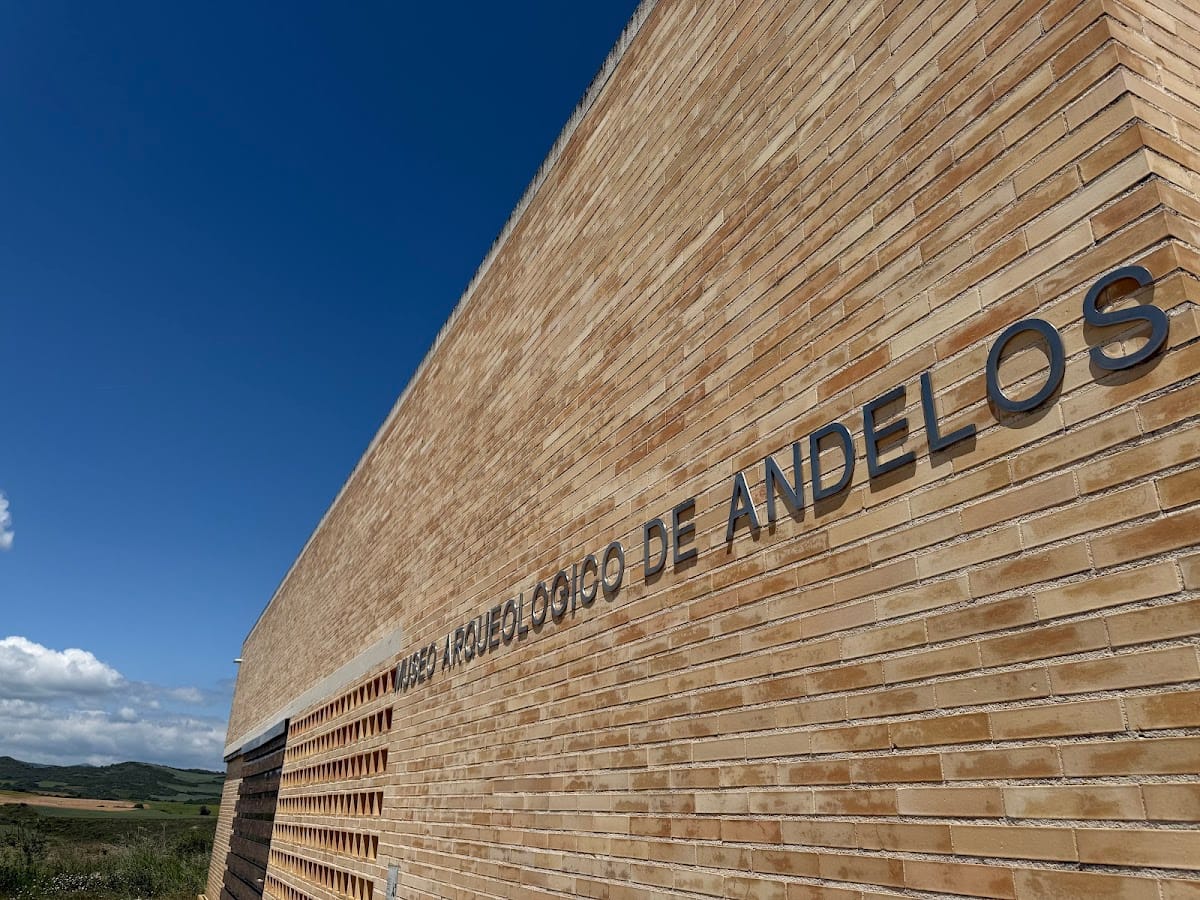
The archaeological site became a Spanish Property of Cultural Interest in 1995. The quantity of excavated remains led to the creation of the Andelo Archaeological Museum within the complex. The purpose-built museum was undertaken at the initiative of the Government of Navarra’s Príncipe de Viana Institution and designed by José Luis Franchez Apezetxea in 1999 and 2000.
Remains
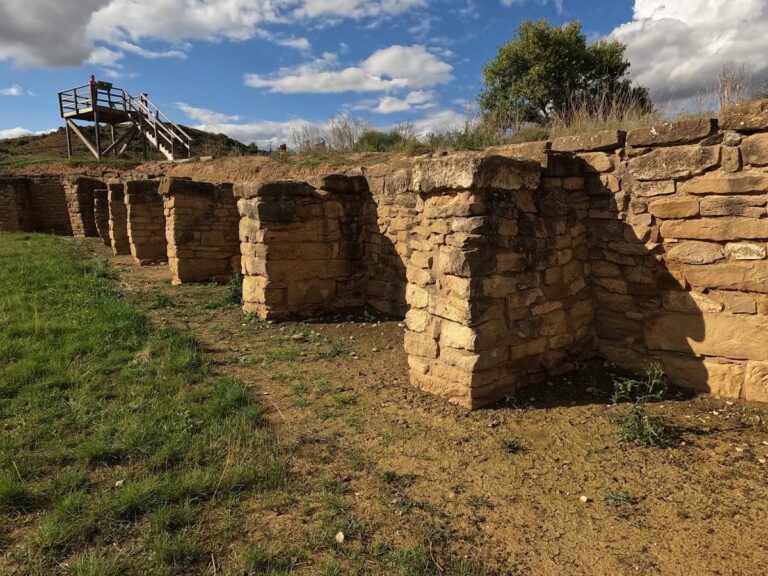
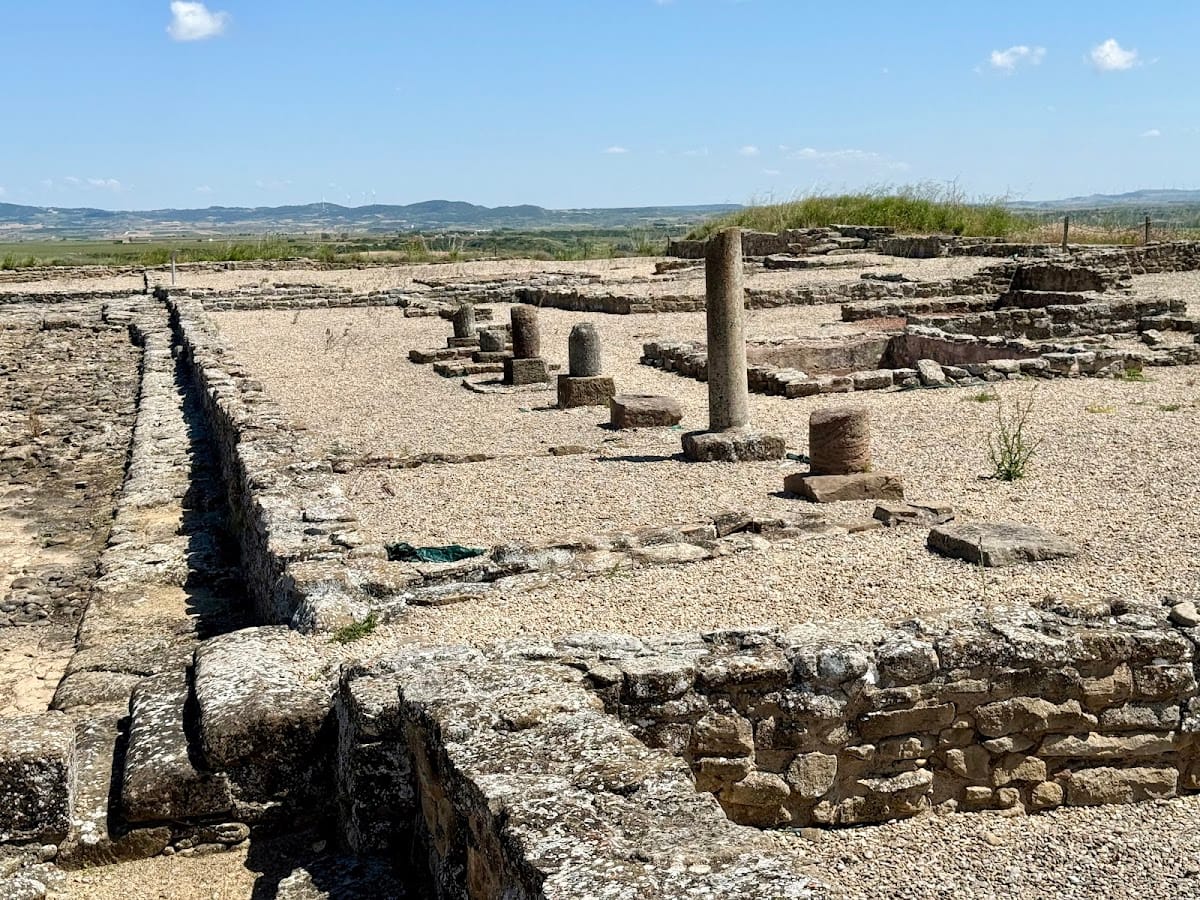
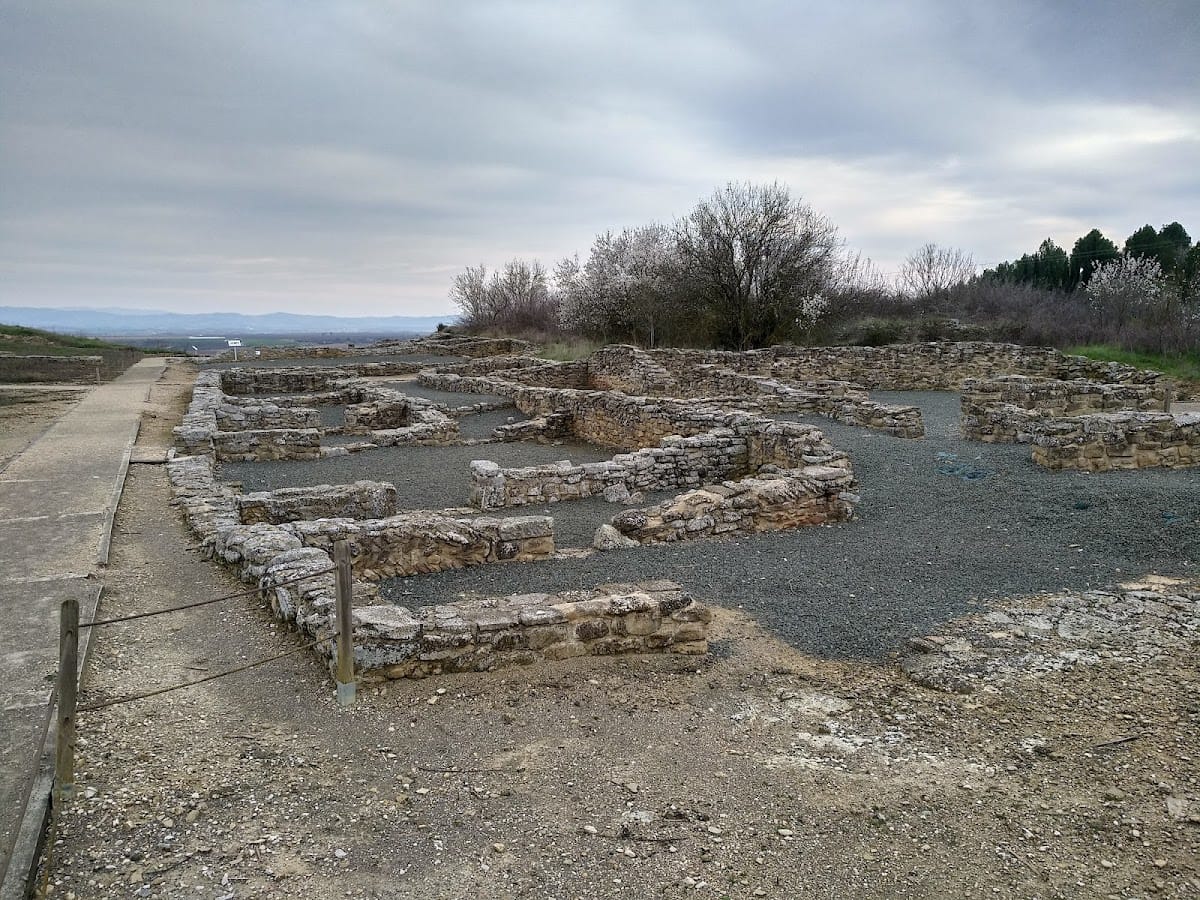
The city occupied a plateau of approximately 18 hectares. The ground fell sharply along the northeastern side and descended more gradually toward the west in two terraces. Fortification and retaining walls served both defensive and structural purposes, while two external defensive towers stood to the northwest and southeast. The excavated plan includes two decumani, streets aligned with the principal east-west axis, and three cardines, streets generally running north-south. Together, they formed rectangular urban blocks.
Residential and working quarters
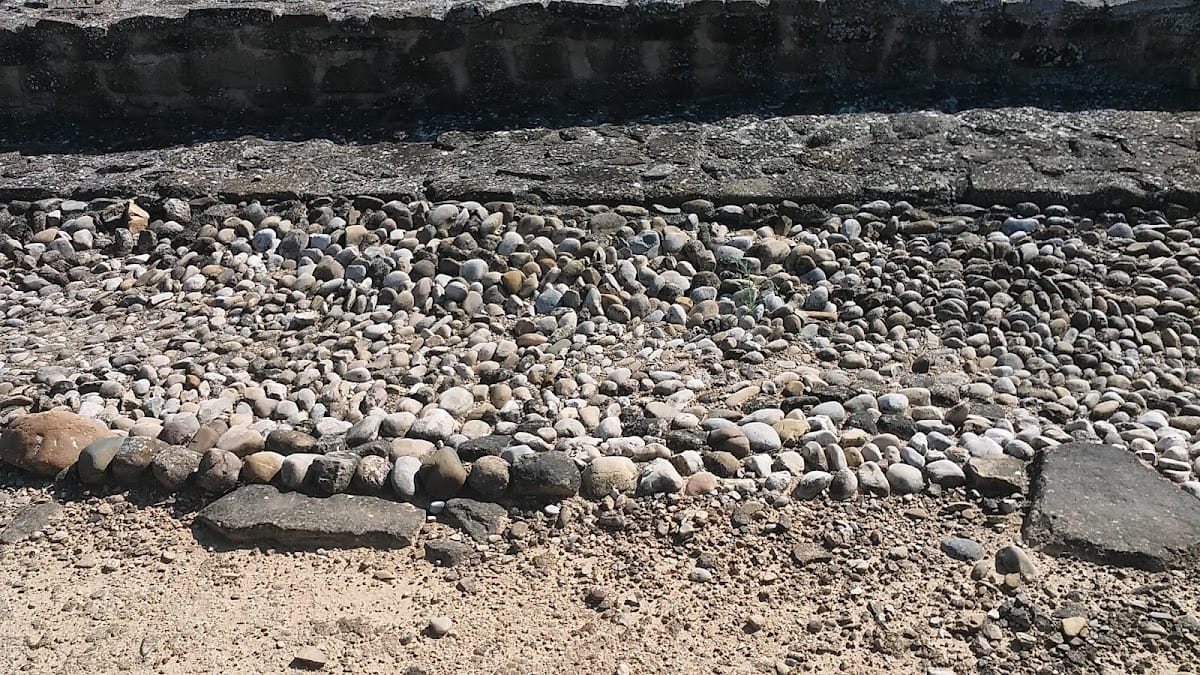
The upper terrace contained the residential sector, including large houses and public buildings such as baths and tabernae. Houses dating from the first century BC used Roman-style room arrangements and opus signinum floors, a Roman flooring material made from mortar mixed with crushed ceramic or similar aggregate. Some houses of the first and second centuries AD received decoration influenced by contemporary Italian fashions.
A craft district occupied the southwest sector. It contained storerooms and a fullonica, a workshop used for washing and finishing cloth. These spaces formed part of the city’s organized urban and productive landscape.
Water-supply complex
Andelo’s water-supply system included two reservoirs or dams at Iturránduz, discovered in 1980 and 1983, together with a channel, a siphon aqueduct, and a castellum aquae. This was a distribution tank in a Roman water system, where incoming water was regulated and directed toward different outlets. Metallurgical remains suggest that the hydraulic system may also have been connected with industrial activity.
Water was captured at Puente del Diablo, where retaining works survive. It then passed into a reservoir cut into the ground, measuring approximately 85 by 37 metres and holding about 7,000 cubic metres. From there, an aqueduct made of a stone channel and lead pipes carried the water toward the city. A siphon system maintained pressure along the route.
The castellum aquae stood on a rectangular podium. Its thick walls were built from blocks and coated internally with three layers of waterproof plaster. The reservoir was originally covered by a vault. A series of openings on the eastern side may indicate the presence of a public fountain.
Mosaics, inscriptions, and museum
The site has produced the mosaic known as the Triumph of Bacchus, a bronze plaque dedicated to Apollo, and an inscription found in 1993. The inscription bears the phrase “Likine abuloŕaune ekien bilbiliaŕs” in an Iberian script. Its language is considered by some to be an early form of Basque and by others to be Iberian.
The Andelo Archaeological Museum stands within the archaeological complex as a purpose-built structure associated with the excavated remains. It forms part of the site’s modern presentation and preserves the connection between the museum collection and the ancient urban landscape.