Nostra Signora dell’Agostina: A Catholic Sanctuary in Italy
Site at a Glance
- Popularity
- Very Low
- Country
- Italy
- Primary era
- Early Modern
- Eras represented
- Early Modern
- Civilizations
- Genoese
- Site type
- Religious
- Remains
- Sanctuary
On this page5 sections
History
Nostra Signora dell’Agostina is a Roman Catholic sanctuary in Riccò del Golfo di Spezia, Italy, with an initial construction phase dated to 1528–30. Its foundation tradition links the church to a Marian image found by Agostina Bernabone, and its history includes a dispute over patronage, later rebuilding, and the growth of devotion to the sanctuary.
Origins and foundation
Agostina, a widow from Valdipino, inherited woodland in 1528 under the will of her late husband, Giovanni Maria Mazaschi. The foundation narrative places the building of the first church within months of an event on 10 May 1531. Drawn by a light to a chestnut tree, Agostina found a small picture of the Virgin and Child. She took it home, but the following day it was back at the tree. People understood this as a sign that Mary wanted a church at the spot, and the local community built one, dedicating it to Our Lady of Loreto, a Catholic title of the Virgin Mary associated with devotion at Loreto in Italy.
Patronage and the sanctuary’s name
In 1532, Agostina asked the Diocese of Luni-Sarzana for patronage, a set of recognized rights concerning a church. The grant to her and her heirs included the power to appoint a chaplain and administer property derived from offerings and donations. Don Bartolomeo Costa, parish priest of Santa Croce in Riccò, challenged these rights as worshippers and donations increased. The case was heard in Genoa by Antonio Carrega, a representative of the Holy See who belonged to the city’s metropolitan church. After five years of testimony, complaints, judgments, and appeals, the final ruling confirmed Agostina’s rights and those of her only son, Bartolomeo.
After Agostina’s death, patronage passed to Bartolomeo and then to his sons, Antonio and Giovanni Maria Mazaschi. Antonio died prematurely without heirs. Giovanni Maria, a priest and administrator of the sanctuary, had served as assistant to the rector of Valdipino’s parish church from 1568 to 1570. In 1606, after moving to Lumarzo to become parish priest at Santo Stefano in Pannesi, he relinquished the patronage to the Confraternity of Saint Michael the Archangel, a lay Catholic association for religious devotion and charitable work. The transfer took effect in 1607. Following the patronage judgment, the church became known as Agostina’s church or sanctuary, names that gradually displaced its original dedication to Our Lady of Loreto.
Rebuilding and pilgrimage
After the confraternity acquired patronage, the original church was nearly demolished and an additional structure was built. Later major changes gave the building its present form. During the War of the Austrian Succession, a European conflict fought from 1740 to 1748, La Spezia endured an occupation lasting many months in 1746. Austrian soldiers advanced as far as Casella, looting and devastating places along the way. In response, people from La Spezia sought the protection of Our Lady of Agostina, and the church was elevated to sanctuary status. After the soldiers were driven out, a large thanksgiving procession came to the sanctuary, with participants from the city and nearby valleys.
On 25 May 1784, Pope Pius VI granted a plenary indulgence to pilgrims who climbed to the sanctuary on Ascension Day. In Catholic teaching, this is the remission of all temporal punishment for sins whose guilt has already been forgiven. The sanctuary is a Roman Catholic place of worship in the parish of Valdipino and belongs to the Diocese of La Spezia–Sarzana–Brugnato.
Remains
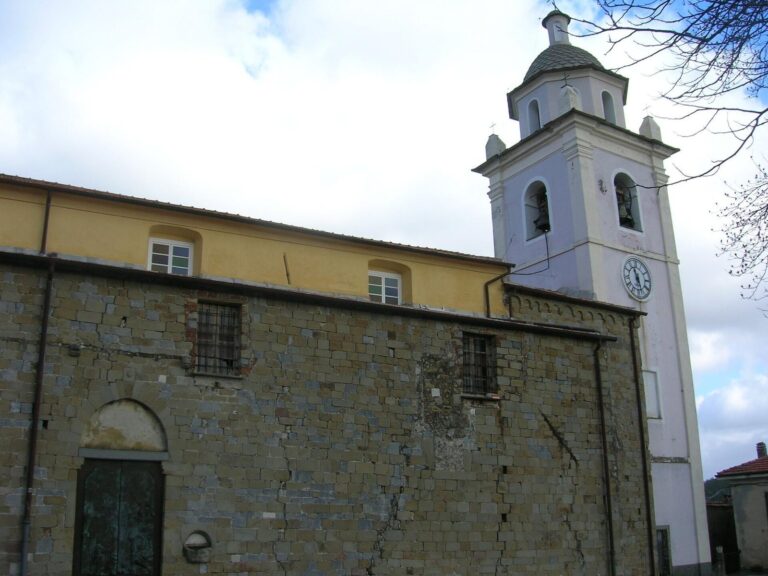
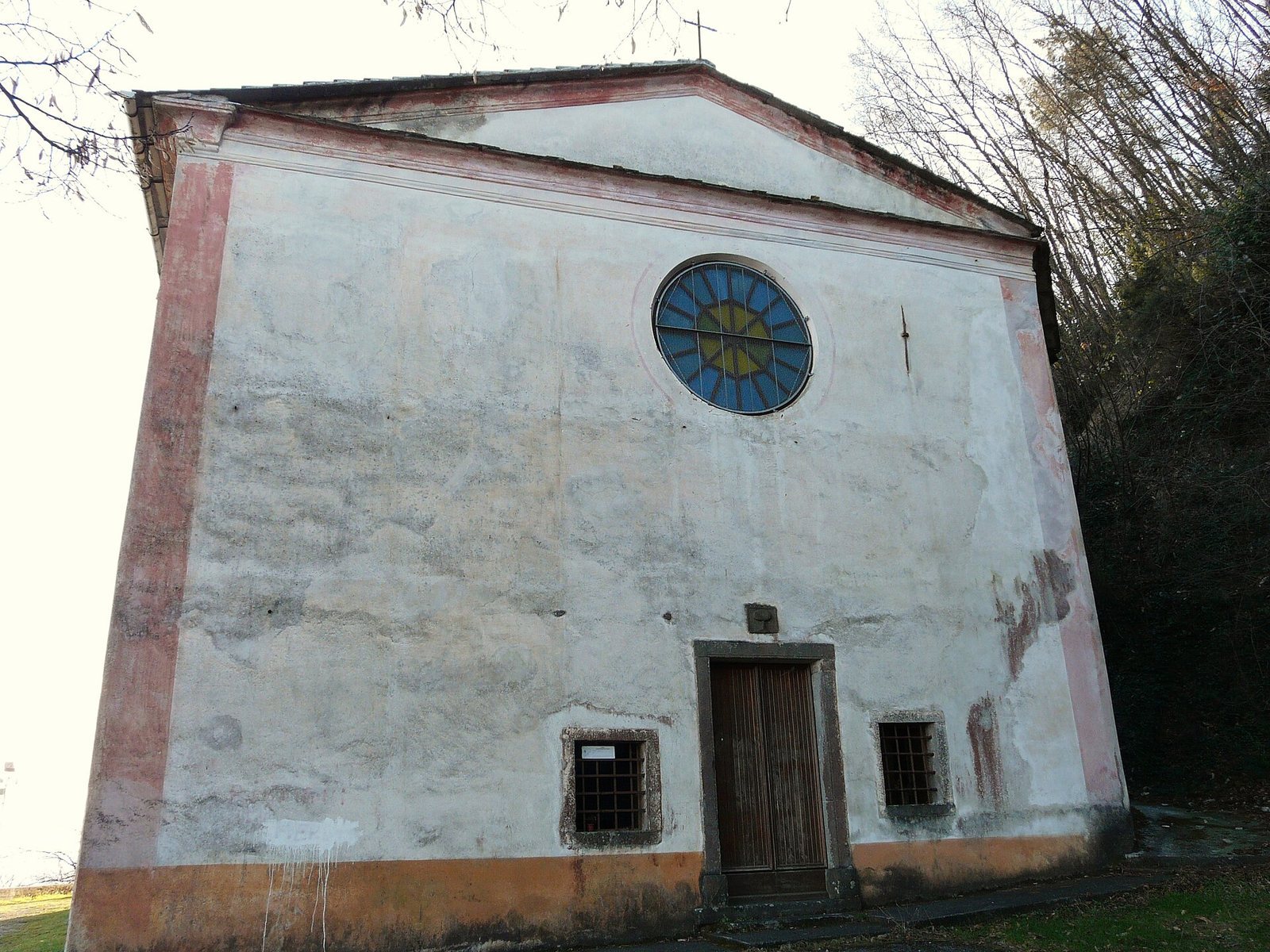
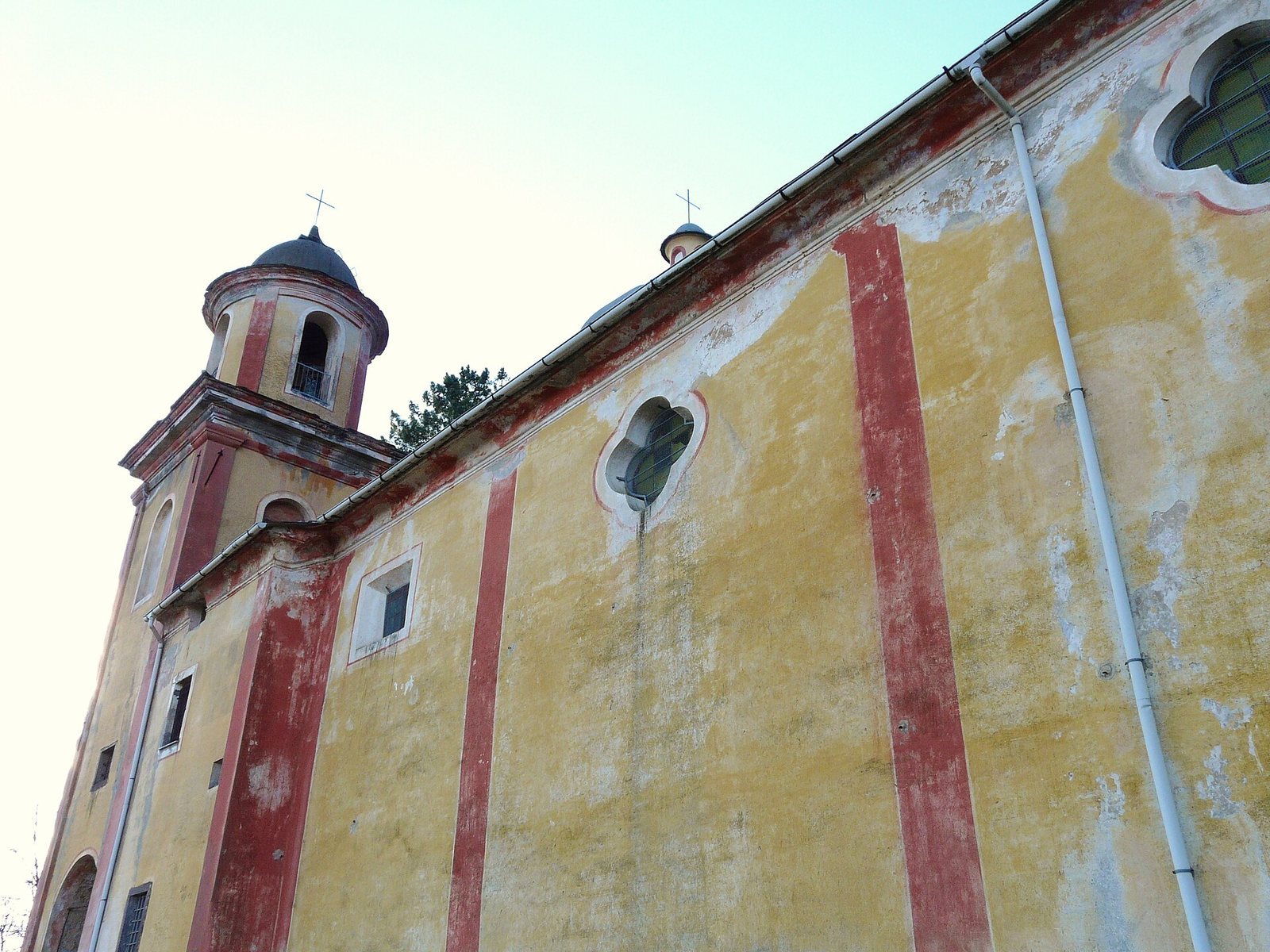
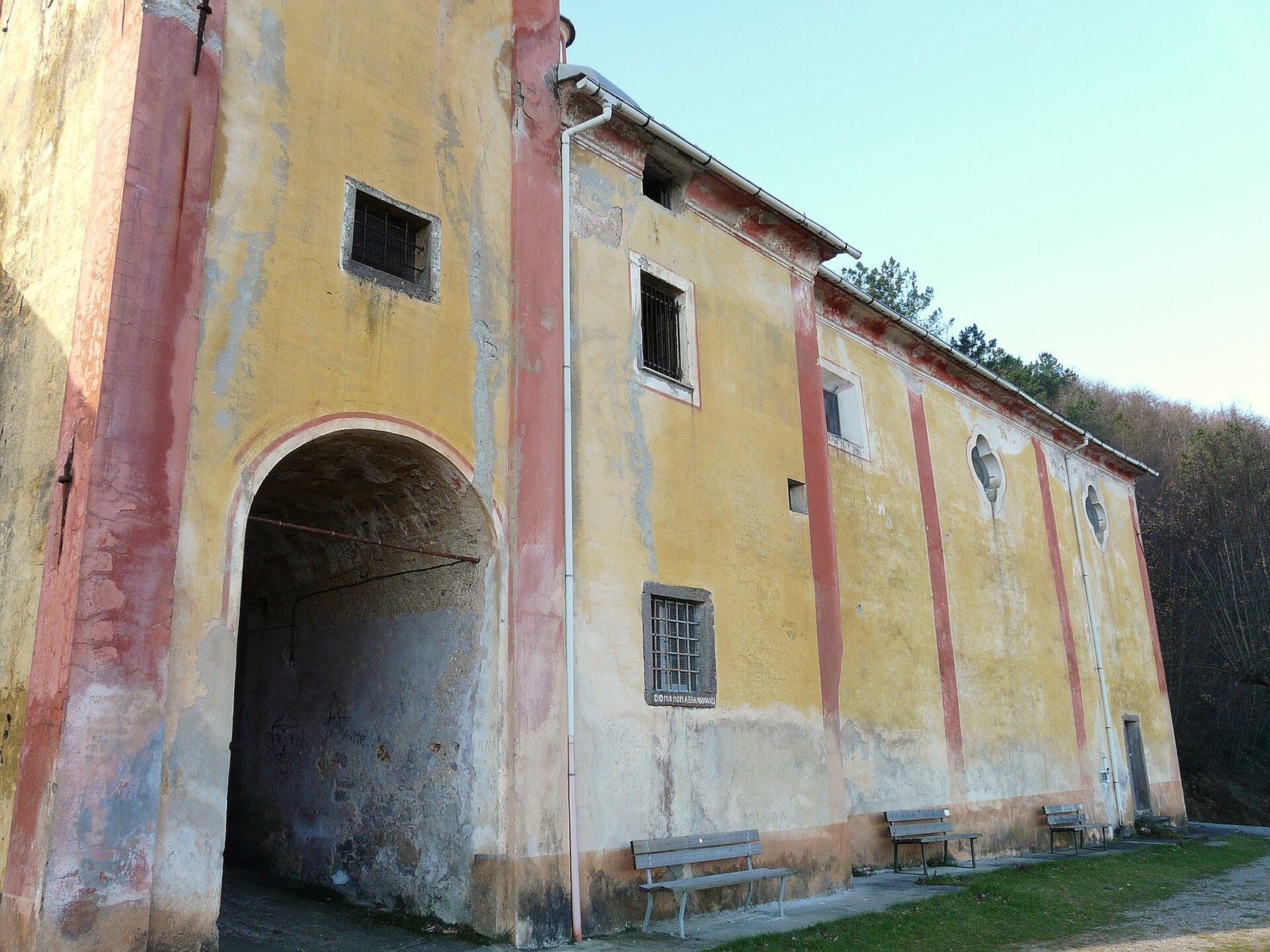
The sanctuary stands in an isolated, wooded setting about 300 metres above sea level, overlooking the plain of the Riccò stream. Its early church was enlarged by an additional building to form a church with two naves, the principal lengthwise spaces for the congregation, equal in shape and size. Alterations carried out between 1701 and 1750 established the building’s present form and volumes. The work included a marble altar resembling the one at the Sanctuary of Our Lady of Soviore in Monterosso al Mare, as well as renovation of the floor, choir, bell tower, and bells.