Dolmen des Pierres-Folles: A Chalcolithic Passage Tomb in France
Site at a Glance
- Popularity
- Very Low
- Country
- France
- Primary era
- Stone Age
- Eras represented
- Stone Age
- Civilizations
- Unclassified
- Site type
- Burial
- Remains
- Tomb
On this page10 sections
History
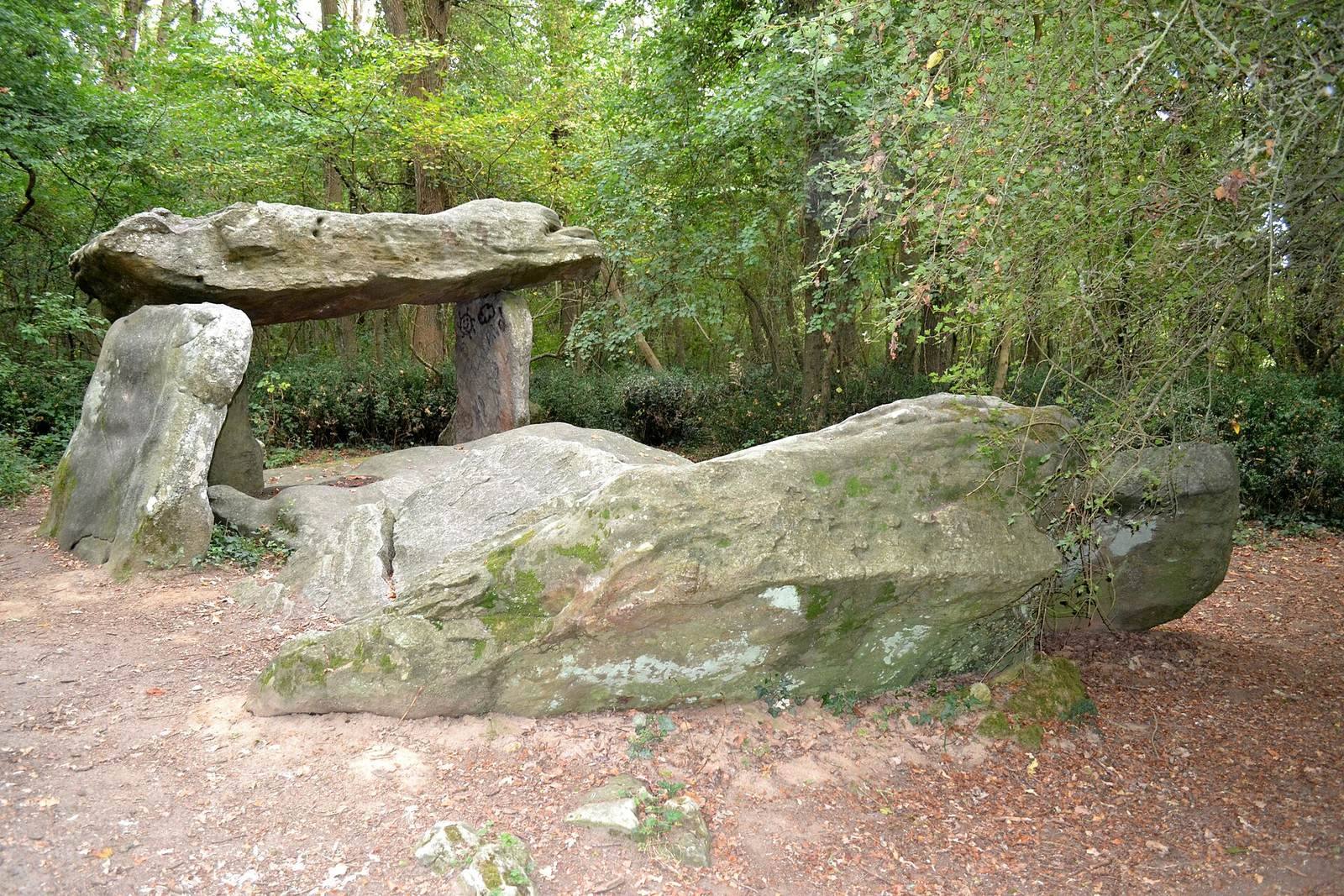
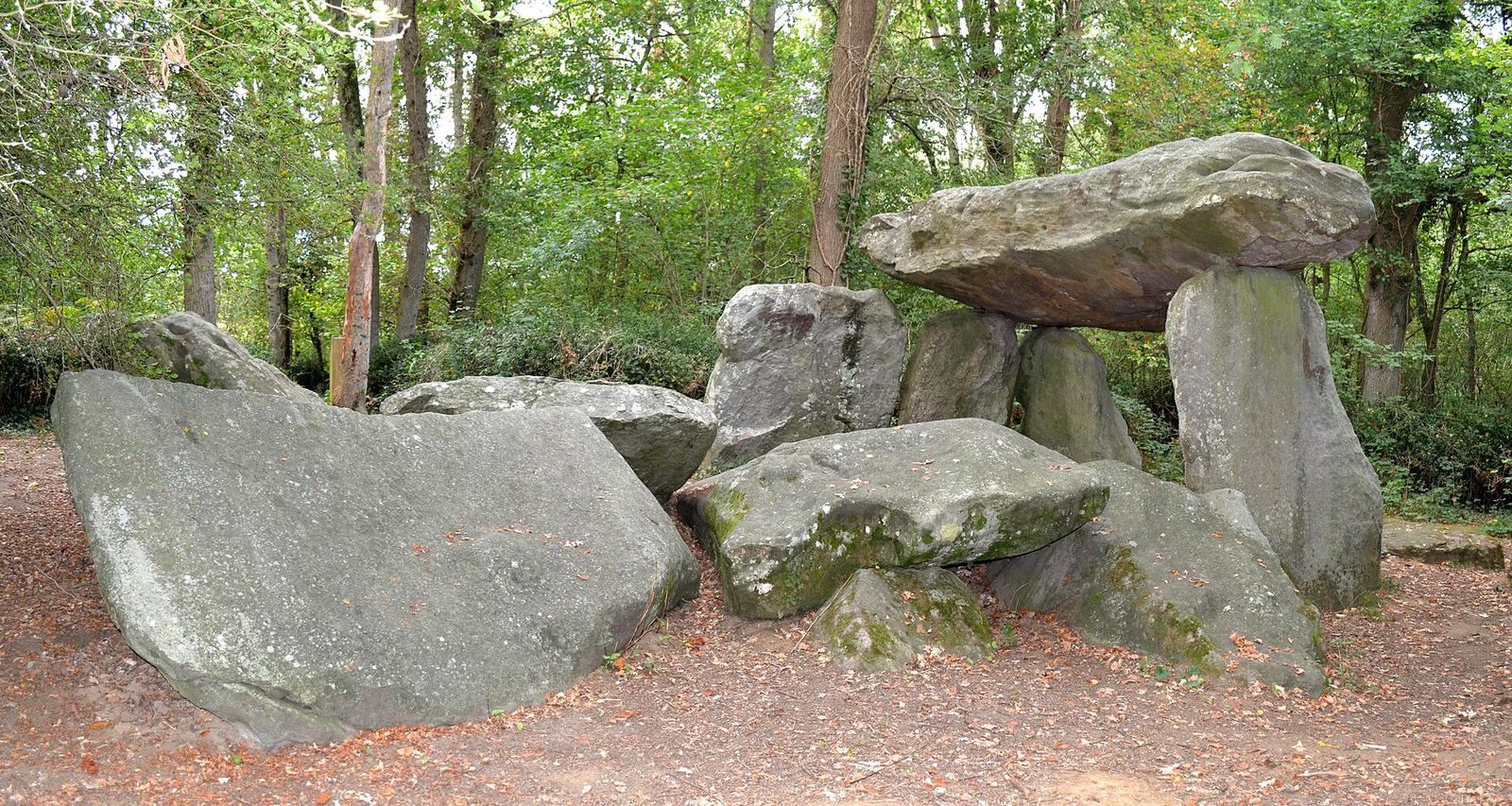
The Dolmen des Pierres-Folles is a Chalcolithic covered passage tomb in Commequiers, France. The Chalcolithic, or Copper Age, was a prehistoric period when copper was used alongside stone tools. The Angevin type is associated with the Loire region and is characterized by a recessed entrance formed by two upright stones supporting a lintel. The dolmen is regarded as one of the major megalithic sites of the Vendée.
Early accounts and excavation
In 1829, French antiquarian Charles Massé-Isidore described the roughly shaped slabs as resembling a table. Local tradition considered the monument an altar of the Druids, members of learned religious classes in ancient Celtic societies.
The site was quarried in the late nineteenth century. In 1901, Marcel Baudouin, a physician and prehistorian who had known the dolmen since childhood, excavated it and carried out a somewhat haphazard restoration. He believed it was a covered passage tomb.
Protection and damage
France classified the dolmen as a historic monument on 13 April 1929, a formal heritage-protection status. The isolated site suffered vandalism over a period of years. In May 2021, a severe fire lit beneath a covering slab caused substantial damage.
Remains
Chamber and stone arrangement
The dolmen is about 10 m long and aligned north to southeast. Its rectangular chamber measured approximately 5 m by 3 m and stood more than 2 m high, with an entrance at the eastern end. Eleven upright support stones formed its sides. Three on one side remain standing, while a stone opposite has fallen. A covering slab leans at an angle against the row, and three covering slabs are visible, one still in place. Other stones are scattered, though the original arrangement can still be made out.
The slabs are sandstone, apart from a block near the entrance and the packing stones around the upright supports, which are limestone. The 2021 fire caused large pieces of sandstone to break away from the monument.
Surface features
Folk names for hollows and markings include the Virgin’s Footprint, Satan’s or the Devil’s Foot, also called a handprint, and the Child Jesus’s Foot. The supposed carvings are natural irregularities. A foot-shaped hollow on a covering slab is about 19 cm long and 3 cm deep; a separate rock roughly 2 m east is associated with the name Devil’s Finger. Baudouin reported a stone-polishing surface, used to smooth tools, on each of four upright slabs.
Excavated finds
Stone tools and pottery
Most finds from Baudouin’s excavation are held at the Museum of Les Sables-d’Olonne. Stone objects include part of a polished axe, a flint scraper, a side scraper, a core, and flakes, as well as a perforated disc made of talc-schist. The pottery includes numerous sherds, among them a large piece of a brownish storage vessel with a rough surface and quartz grains and mica flakes mixed into its clay. Another piece is an elongated red-clay lug, or projecting handle.
Metal objects
A two-part metal object of unknown purpose was identified as brass and dates to the modern period. Another find is a copper pin, probably of Alpine origin and dating to the Chalcolithic. It weighs 17 g, measures 83 mm long, and has four roughly parallel grooves on one side. Its broad head gives it a palette-like shape.
Bone remains
The bone finds include a pendant made from a perforated canine tooth, which Baudouin identified as belonging to a wolf, and human skeletal remains.