Vernazza Castle: A Medieval Coastal Fortress in Italy


Site at a Glance
- Rating
- 4.3
- Popularity
- Medium
- Country
- Italy
- Primary era
- Medieval
- External website
- Open
- Eras represented
- Medieval, Early Modern
- Civilizations
- Genoese
- Site type
- Military
- Remains
- Castle
On this page9 sections
History
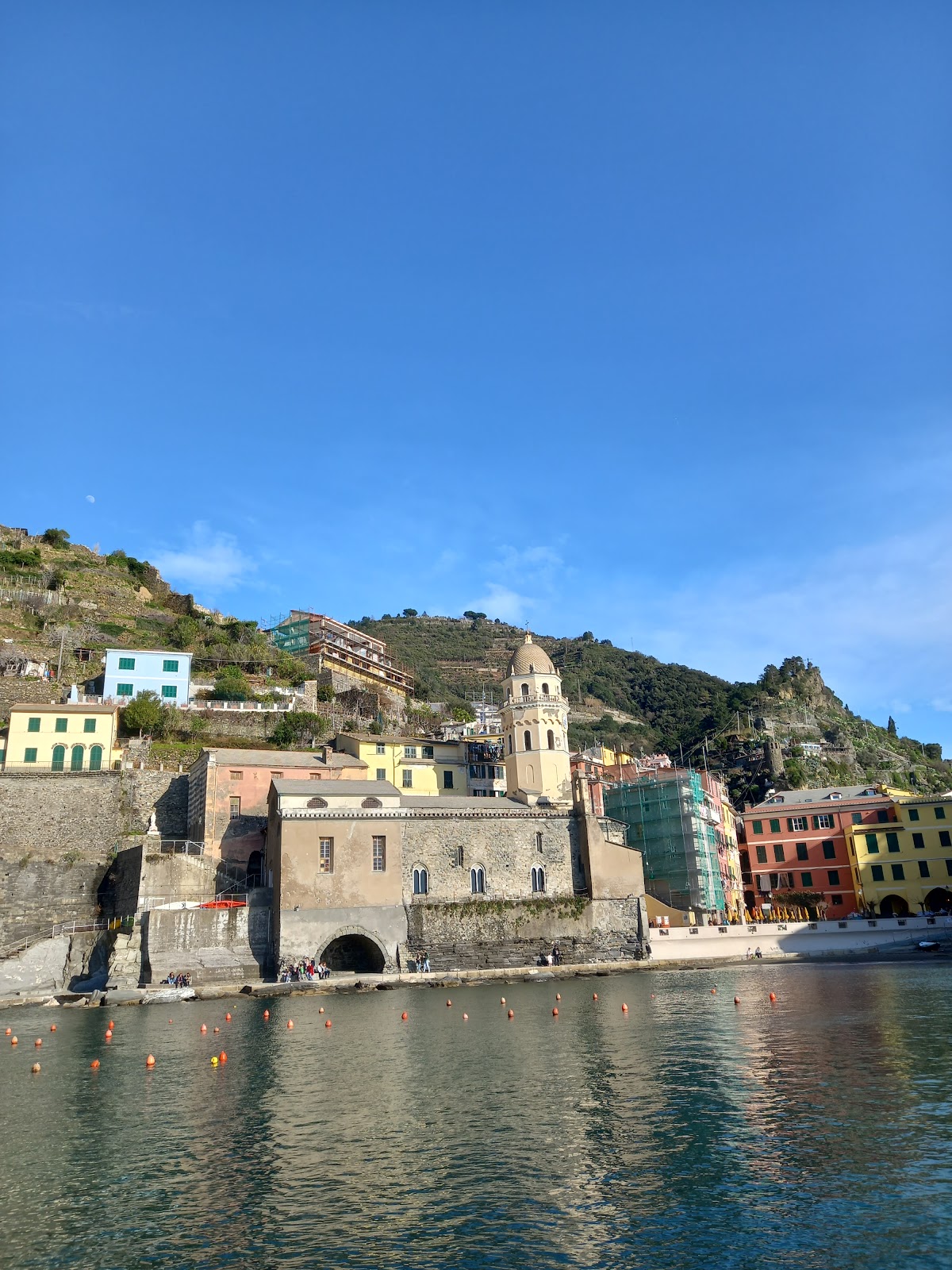
Vernazza Castle, also known as Castello Doria, is a medieval fortress in Vernazza, Italy. Its first nucleus is traditionally associated with the eleventh century and the rule of the Obertenghi, while the first documentary notices and formal foundation of a castle at Vernazza belong to the thirteenth century. Built and expanded as a coastal stronghold, it protected the settlement and the surrounding stretch of coast.
Changing lordship in the Middle Ages
During the twelfth century, control of the castle and settlement passed from the Obertenghi, a powerful marquessal dynasty in Liguria and northern Italy, to the bishops of Luni, the ecclesiastical rulers of a former bishopric in eastern Liguria. Authority then moved to the Da Passano marquises and, in the second half of the century, to the Fieschi counts, a prominent Genoese noble family with extensive lordships in Liguria.
In the thirteenth century, the Fieschi transferred Vernazza and its castle to the Republic of Genoa, the maritime state centered on Genoa that governed territories along parts of the Ligurian coast. The fortress was occupied by the Pisans during operations connected with the Battle of Meloria, a major medieval naval conflict between Genoa and Pisa. It returned to Genoese control shortly afterward, while sailors and ships from Vernazza also took part in those operations.
Later military use and preservation
Successive additions and alterations developed the fortress between the eleventh and eighteenth centuries, maintaining its defensive role above the coast. A chapel dedicated to Saint John the Baptist, a central prophetic figure in Christianity traditionally regarded as the forerunner of Jesus, stood within the castle and appears in a document of 1470 and an eighteenth-century plan.
During the final phases of the Second World War, German occupying forces used Vernazza Castle as an anti-aircraft position. The castle has held Italian national heritage status since 1937. Its cylindrical central tower was restored during the twentieth century, and the complex is now used as a museum and exhibition venue.
Remains
Rocky spur and defensive layout
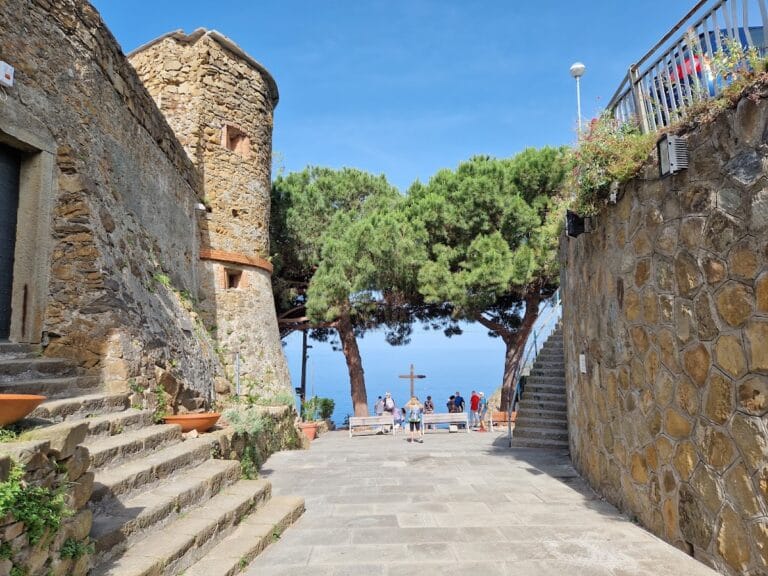
Vernazza Castle occupies a rocky spur approximately 70 metres high on the southern side of Vernazza’s coastal landing place, directly above the sea. Its irregular plan follows the shape of the outcrop, and the present form reflects additions and modifications made over several centuries. The fortress is described as being in good condition.
Central features and movable remains
Cylindrical tower
A cylindrical tower stands at the centre of the castle’s open area. It is the oldest surviving part of the fortification and was restored in the twentieth century, retaining its place within the irregular defensive complex.
Saint John the Baptist chapel
The chapel dedicated to Saint John the Baptist was located inside the castle. Its presence is recorded in 1470 and on an eighteenth-century plan, providing evidence of a religious feature within the medieval fortress.
Bronze cannon
A bronze cannon associated with the castle bears the Latin inscription Comunitas Vernatiæ, meaning “the community of Vernazza.” English soldiers removed the cannon from the castle, and it is now displayed in the galleries of the British Museum in London.