Church of Santa Maria della Catena in Naples: A Church Founded by Local Fishermen and Sailors
Site at a Glance
- Popularity
- Medium
- Country
- Italy
- Primary era
- Modern
- Eras represented
- Modern
- Civilizations
- Italian
- Site type
- Religious
- Remains
- Church
On this page13 sections
History
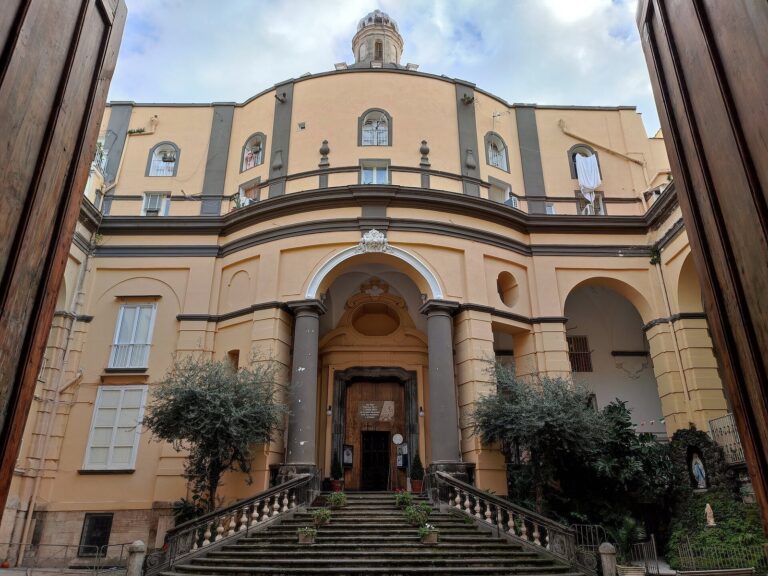
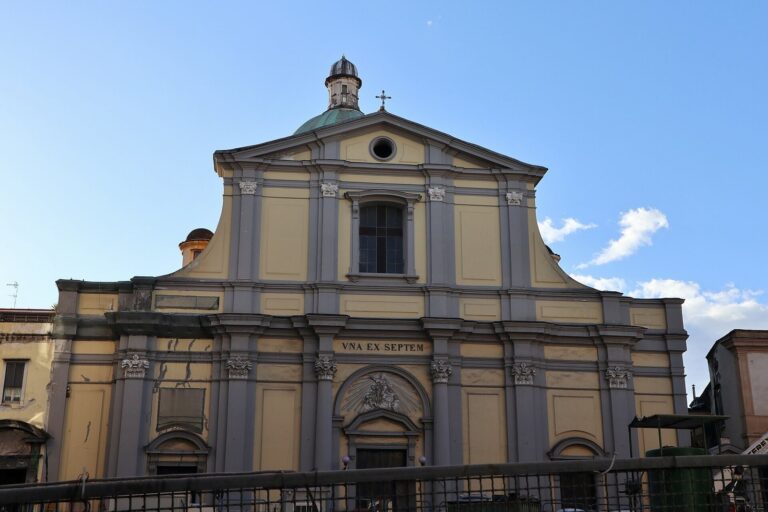
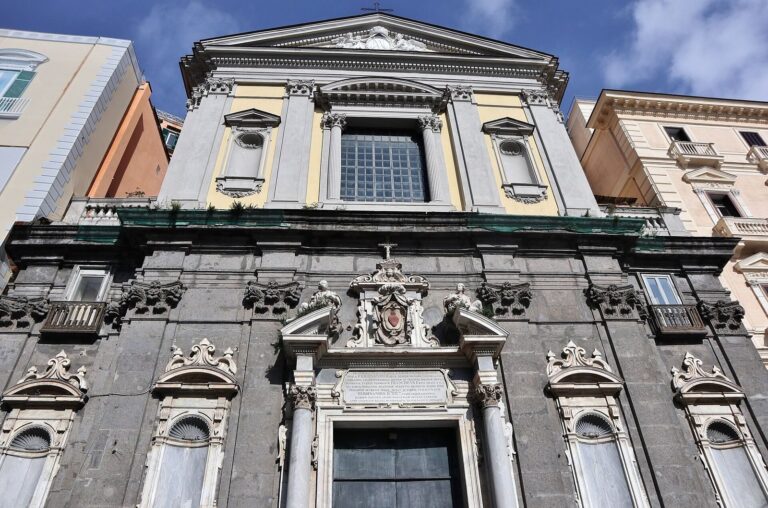
The Church of Santa Maria della Catena in Naples is a Roman Catholic church on Via Santa Lucia in Italy, founded in 1576 by residents of Borgo Santa Lucia and built by a confraternity, a religious association of laypeople, formed by local fishermen and sailors. They dedicated it to Our Lady of the Chain, a devotion to the Virgin Mary brought to Naples from Sicily.
Foundation and devotion
Since 1565, protective walls along the sea had enclosed Borgo Santa Lucia. They made the neighborhood safer and helped it develop as a place of aristocratic leisure. The church’s foundation followed this change in the area’s character.
Tradition traces the devotion to Palermo in 1390. Three prisoners said to be innocent reportedly escaped execution when torrential rain delayed it and the chains binding them in the church of Santa Maria del Porto broke through the Virgin’s intervention. The church came to be called Santa Maria della Catena, or Saint Mary of the Chain, and the Virgin was invoked as a protector of prisoners. In Naples, devotion also included prayers for Christians held captive by Muslim pirates who threatened the coasts of southern Italy.
Paolo Burali d’Arezzo, cardinal and archbishop of Naples, authorized the church’s blessing on 5 September 1579. He belonged to the Theatines, a Catholic clerical order founded in sixteenth-century Italy. The first chaplain was the Franciscan Giovanni Vollero, while Franciscan communities from the nearby convents of Santa Croce and Santissima Trinità di Palazzo also provided spiritual care.
Parish and community life
In 1597, Cardinal Archbishop Alfonso Gesualdo established the parish of Santa Lucia a Mare at the church, implementing reforms of the Council of Trent, a major Catholic council held from 1545 to 1563. Lelio de Bernaudo became its first parish priest. The church continued as a parish until the mid-nineteenth century.
The church was also the setting for the Nzegna, or Feast of the Chain, celebrated until the 1950s. The feast was first held on 15 August and later shifted to early September. Its festivities included singing and dancing around a boat burned on the beach.
Burials, rebuilding, and present role
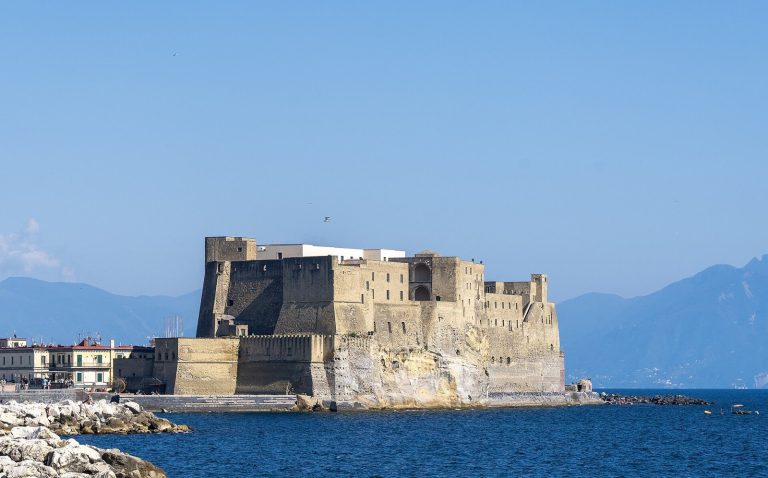
Admiral Francesco Caracciolo was executed in 1799 on the order of British admiral Horatio Nelson, a leading naval commander during the French Revolutionary and Napoleonic wars. Caracciolo’s body was recovered near Castel dell’Ovo and first placed in the church crypt, which had originally been intended for burials.
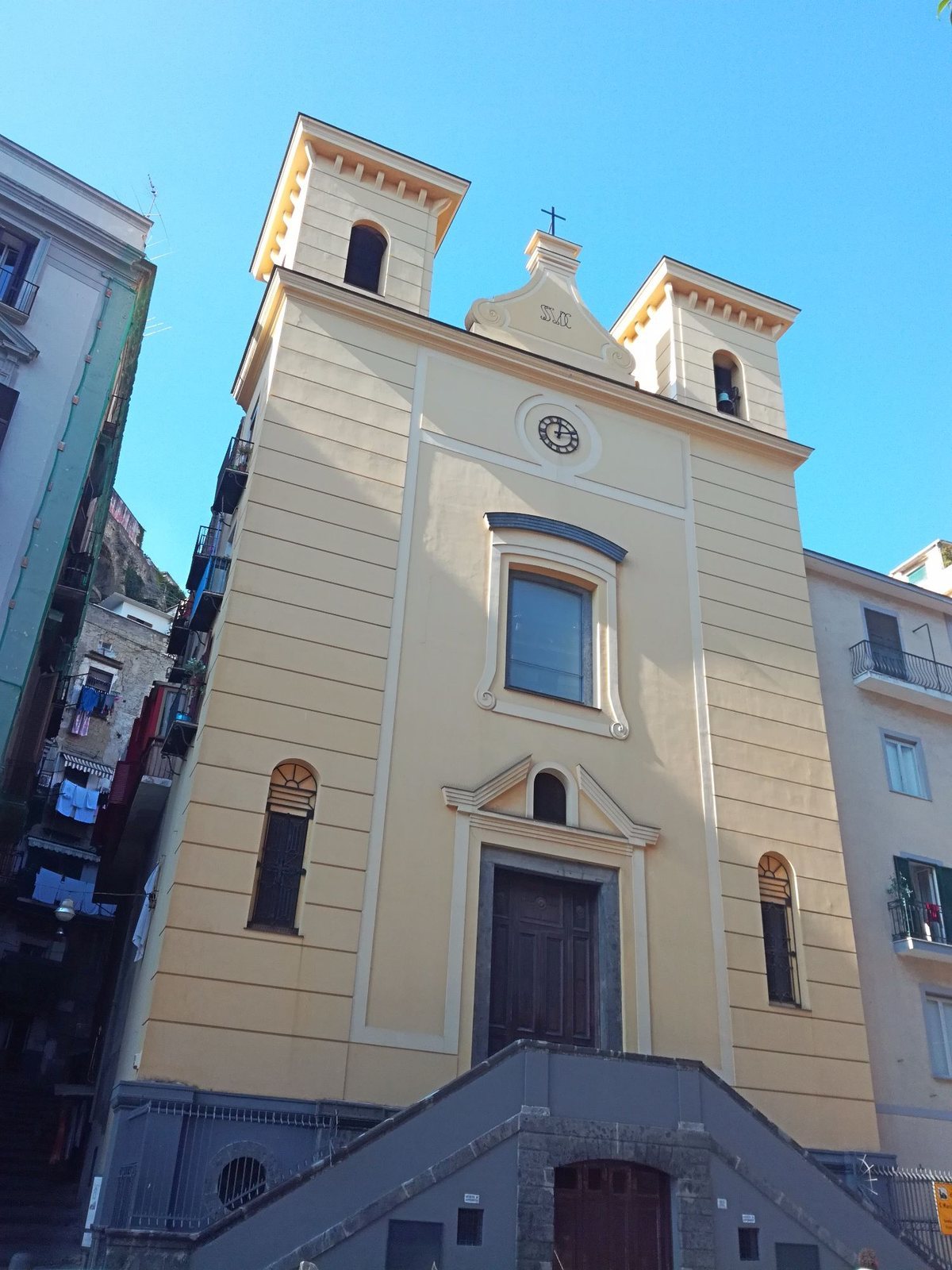
The church was entirely rebuilt in 1871 and reopened for worship in 1881, when it had a Neoclassical appearance. Architect Antonia Totaro oversaw major restoration work in 2005–2006. Today the church is a rectory within the territory of the neighboring parish of Santa Lucia a Mare. Its rector oversees worship and pastoral care and serves as spiritual father of the Archconfraternity of Santa Maria delle Grazie a Catena, a church association with particular standing that owns the building. The church belongs to the Archdiocese of Naples and falls within the Historic Centre of Naples, inscribed on UNESCO’s World Heritage List in 1997.
Remains
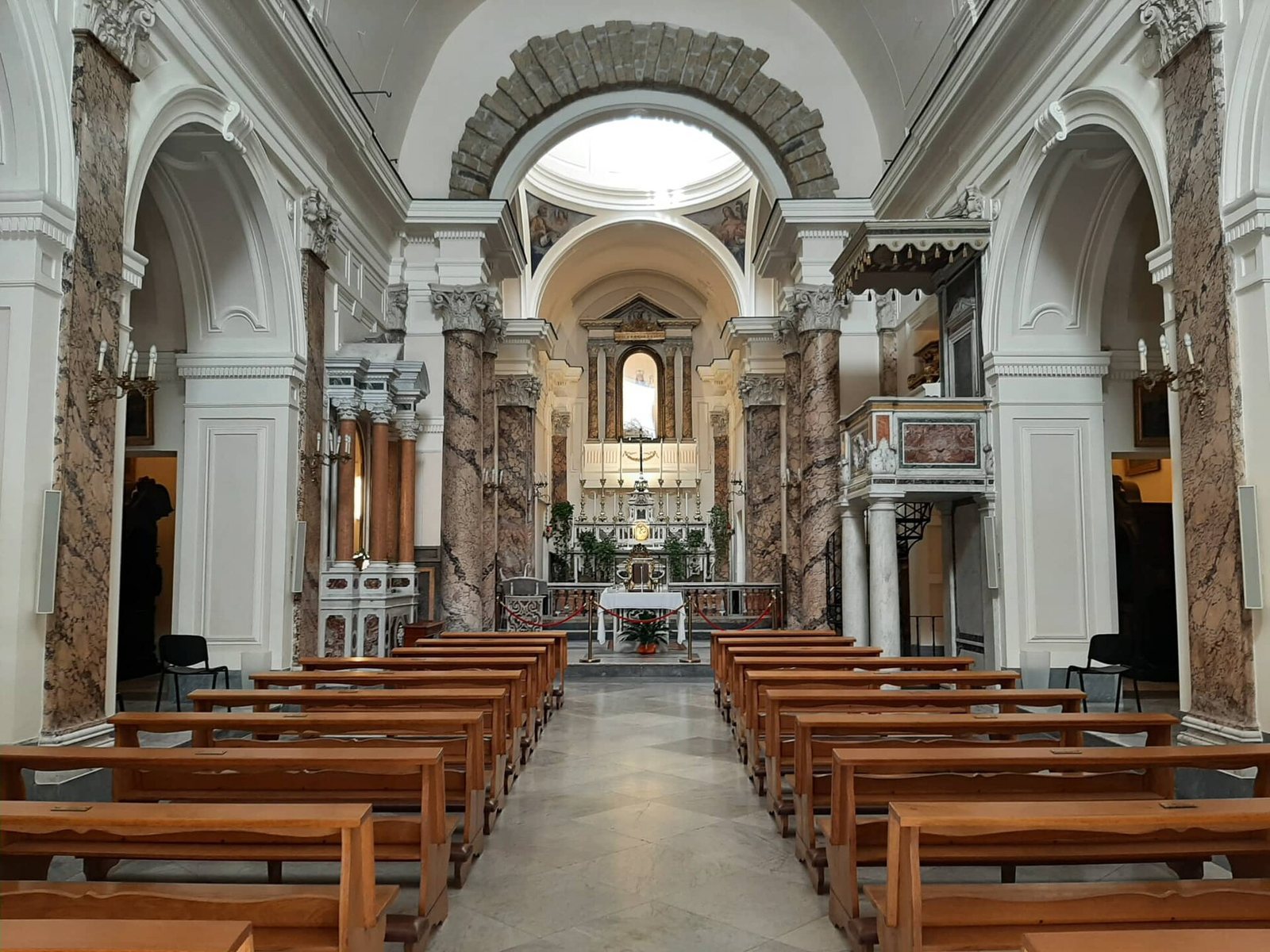
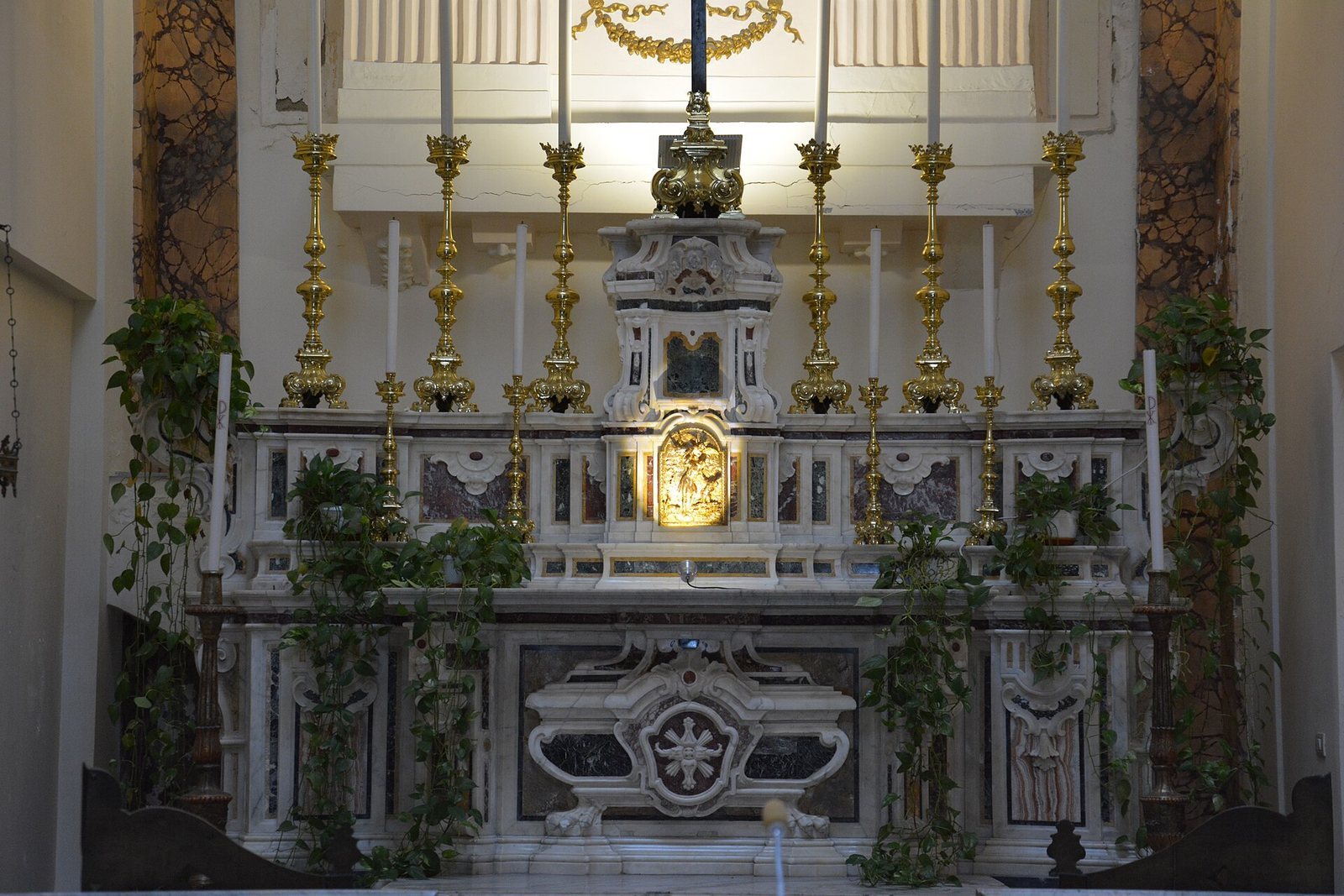
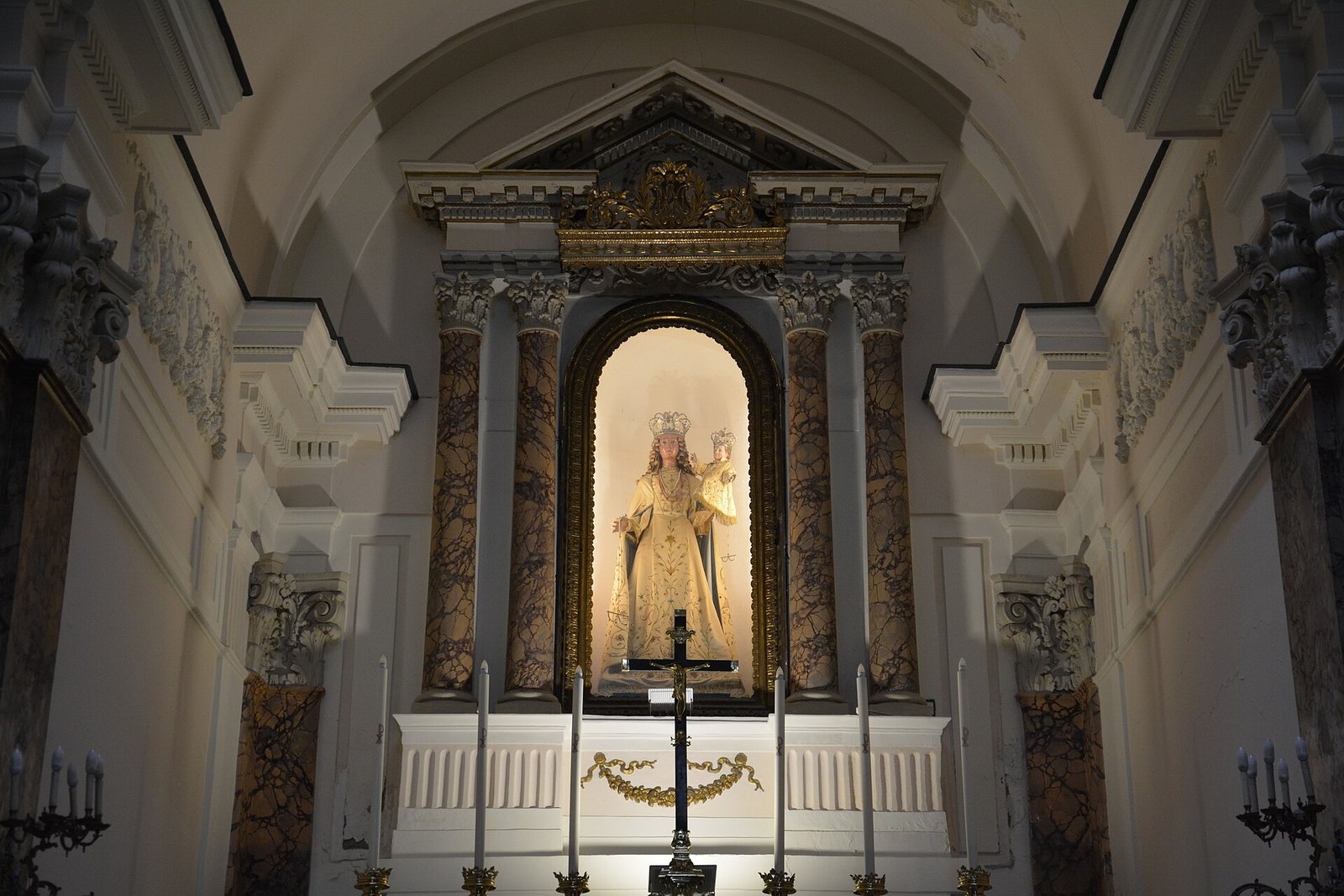
The church has a nave with three chapels along its sides and a main altar, and acquired a Neoclassical appearance in 1881. Following its 1871 rebuilding, it measured about 27 by 14 metres. Its surviving fabric and descriptions of earlier phases show how the interior and exterior changed over time.
Plan and exterior
Apartment buildings were constructed around and above the church after its rebuilding, blocking its windows and leaving the small dome barely unobstructed. A well was made in rooms beside the main altar. The 1881 façade had a large rectangular window set in a frame that extended toward the attic. The façade now reproduces an earlier appearance reconstructed with the help of period paintings.
Interior and decoration
Nave and main altar
By 1597, the nave had a keel-shaped vault, shaped like the underside of a ship, and a beaten floor. Three chapels stood along its sides, and the main altar was built of masonry. The church’s furnishings were modest and worn, with few silver objects. A 1648 description places the Virgin in the main-altar painting between Saints Andrew, one of Jesus’s apostles, and Leonardo. A 1688 description instead shows her surrounded by cherubs holding chains, with Saints Januarius, patron saint of Naples, and Andrew beside her and souls in purgatory below.
Dome and music galleries
By the mid-seventeenth century, the church had a dome, a smaller dome, windows, an organ, and a choir. Two small music galleries overlooked the presbytery, the area around the main altar. Stucco decoration on the domes was made by Gabriele Barrile with the participation of Andrea Canale.
Alchimia Chapel
The chapel of Salvatore Alchimia was designed around 1717 by Cristoforo Schor, and Pietro Scarola carried out its stucco decoration.
Burial monuments
Francesco Caracciolo’s tomb
Caracciolo’s tomb is in the left transept, the crosswise section of the church, beneath a large marble inscription. An epitaph installed in 1881 recalls the circumstances of his condemnation and death.
Jusepe de Ribera’s tomb
The church also contains the tomb of Jusepe de Ribera, the Spanish-born painter who worked in Naples and was known as Spagnoletto.