Kabutoyama Kofun: A Sixth-Century Burial Mound in Yasu
Site at a Glance
- Popularity
- Low
- Country
- Japan
- Primary era
- Medieval
- Eras represented
- Medieval
- Civilizations
- Yamato
- Site type
- Burial
- Remains
- Burial Mound
On this page8 sections
History
Sixth-century burial
Kabutoyama Kofun is a sixth-century Japanese burial mound in Yasu, Shiga Prefecture, Japan. It dates to the later Kofun period, when burial mounds were built, and forms part of the Oiwa Mountain Kofun Group. Grave goods linked to southern Korea, together with the scale of the tomb’s chamber and coffin, have been taken to indicate the status of the person buried there. Comparisons with nearby Maruyama Kofun also inform this interpretation.
Looting, excavation, and designation
The tomb was looted repeatedly, dispersing much of its burial inventory. Excavations carried out during improvements to the historic site recovered additional grave goods; the Yasu Town Board of Education reported on this work in 2001. Kabutoyama received National Historic Site designation in 1941. In 1985, six more tombs were added to the designations covering Kabutoyama and Maruyama, and the combined designation took the name Oiwa Mountain Kofun Group.
Remains
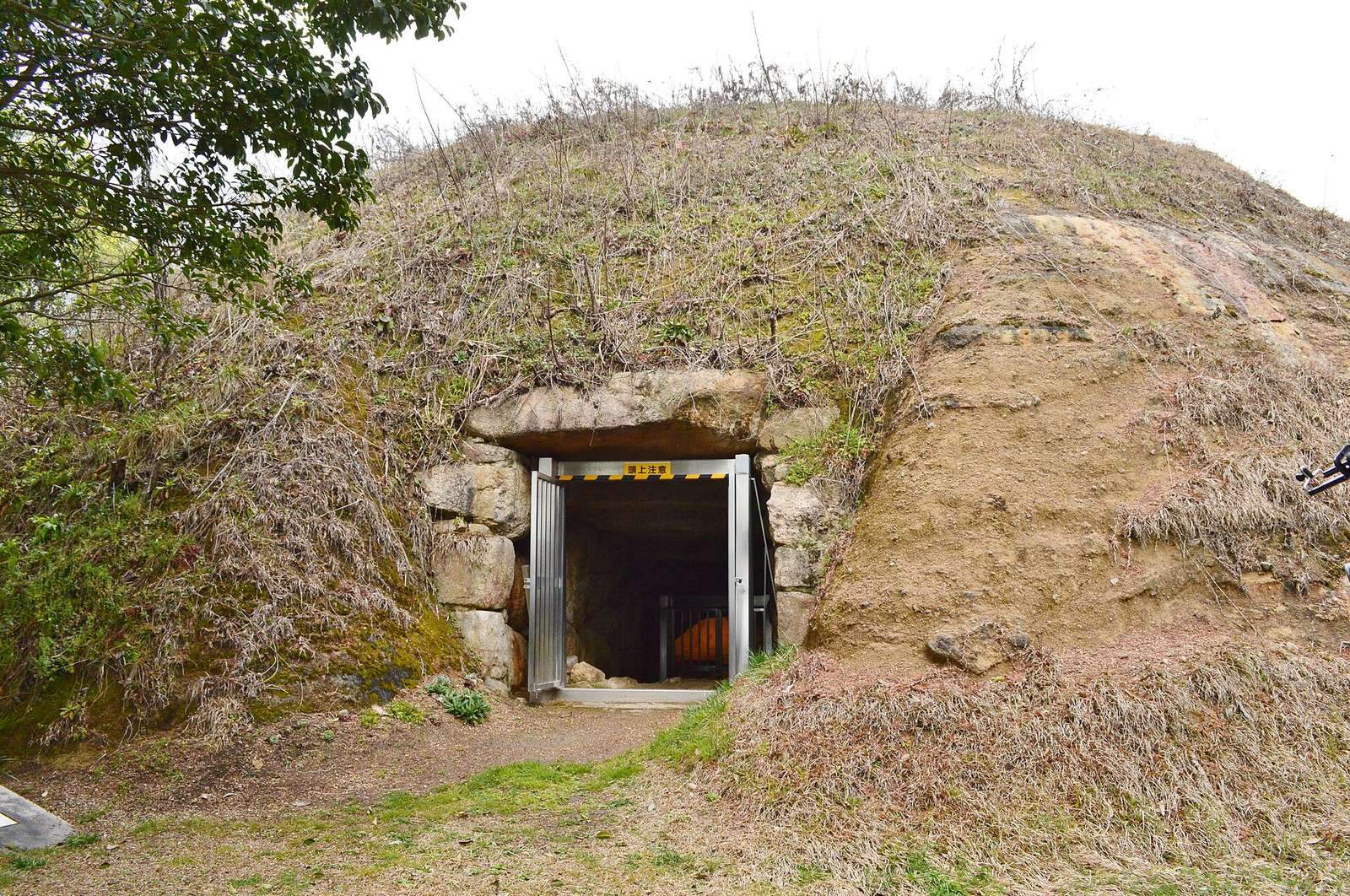
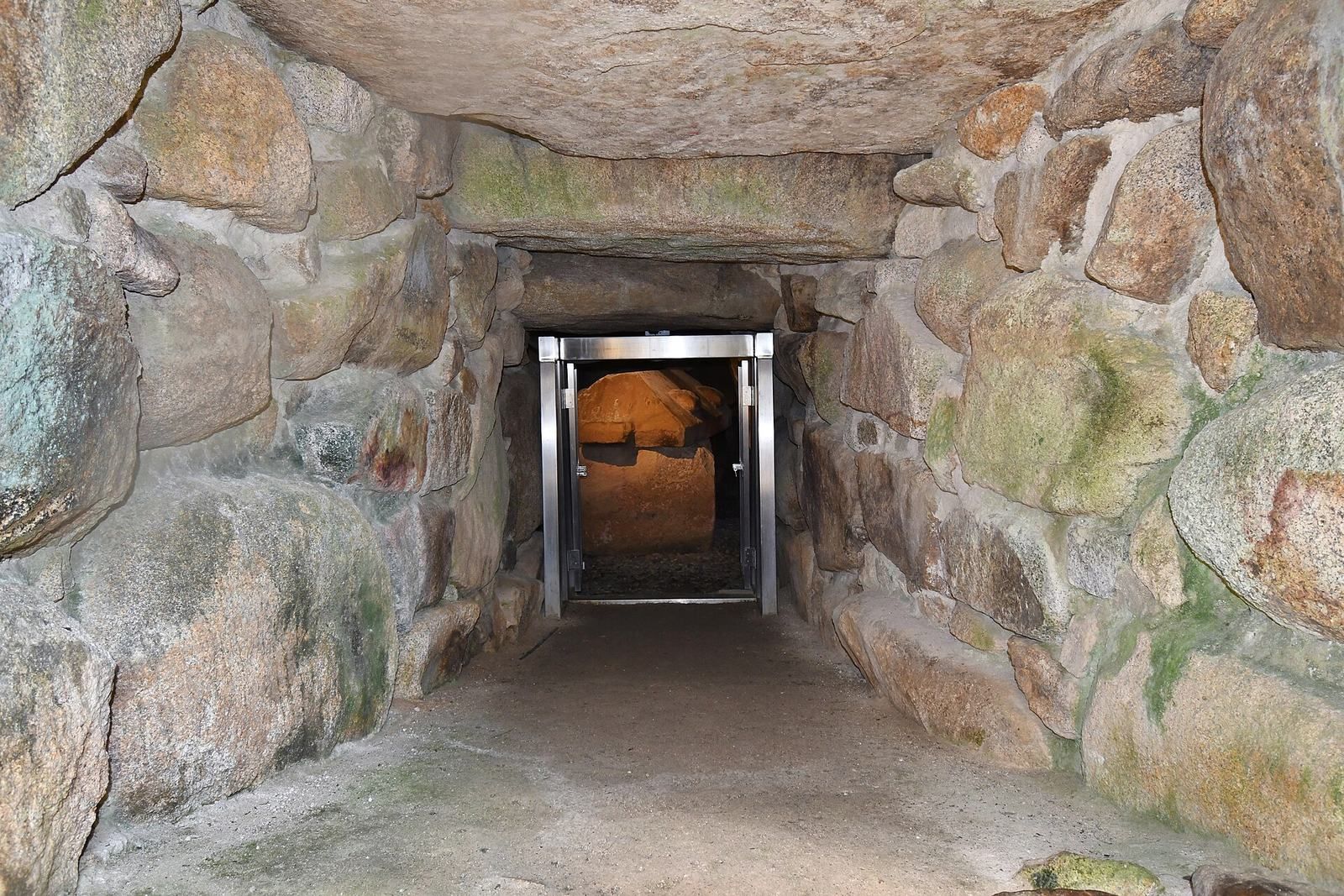
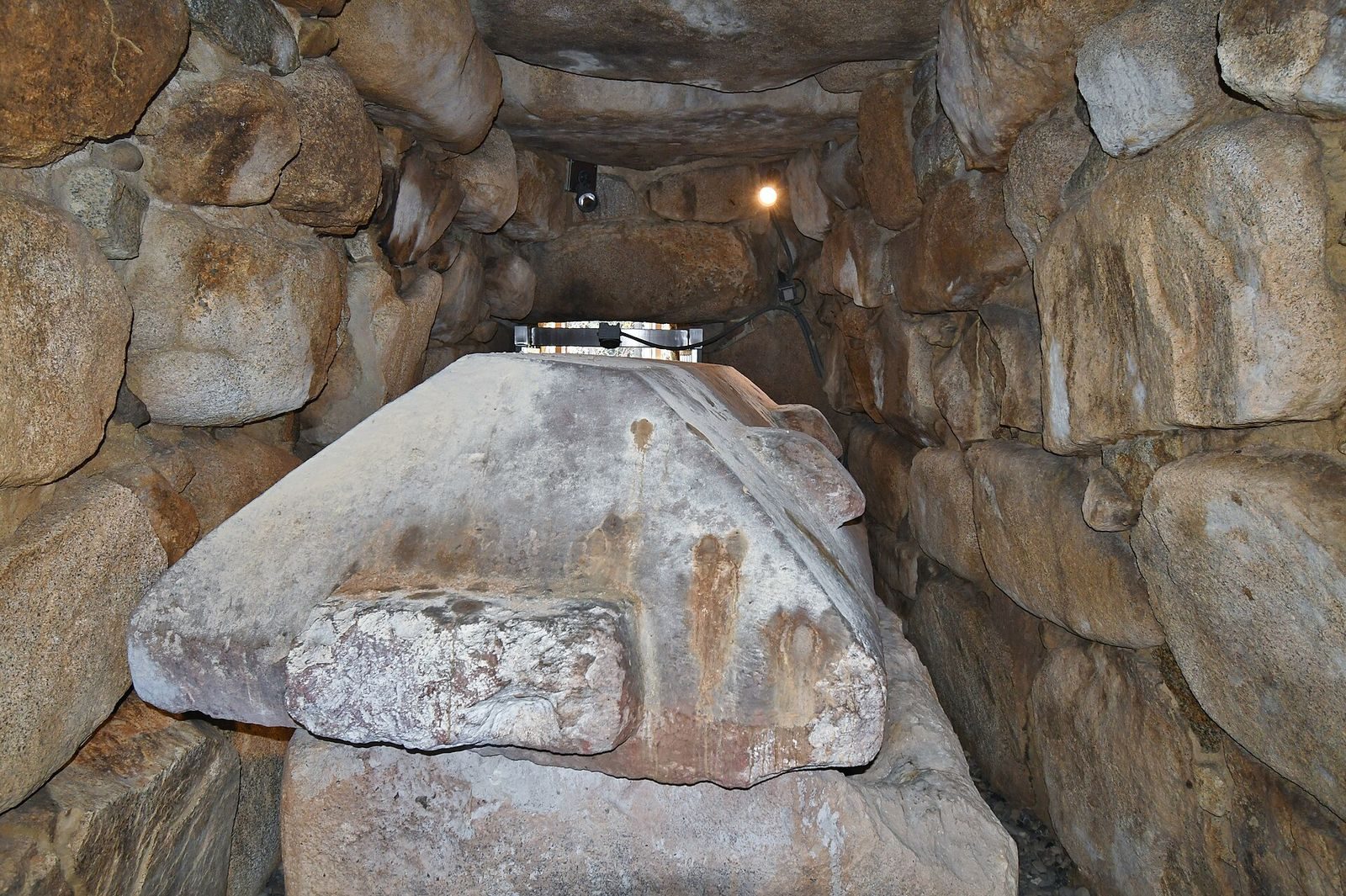
The site centers on a circular mound and a west-opening stone burial chamber entered through a passage. The chamber contains a large, house-shaped stone coffin, while finds from the tomb include beads and other grave goods.
Mound
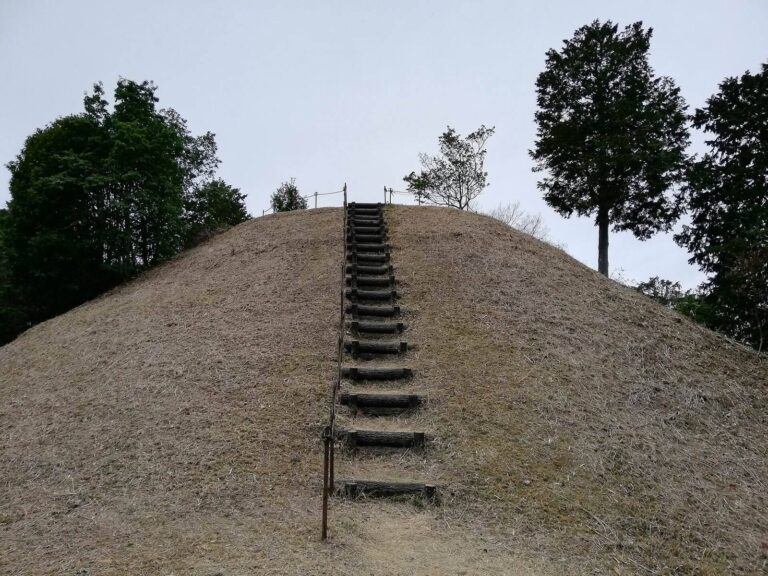
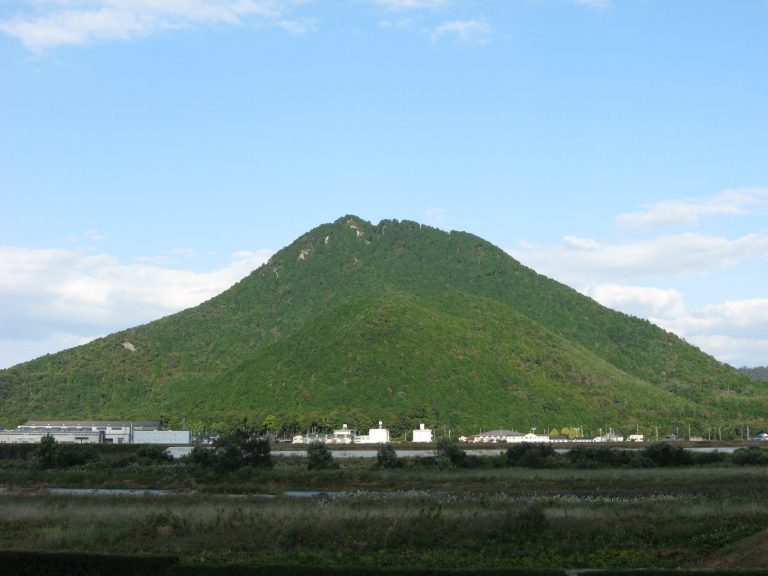
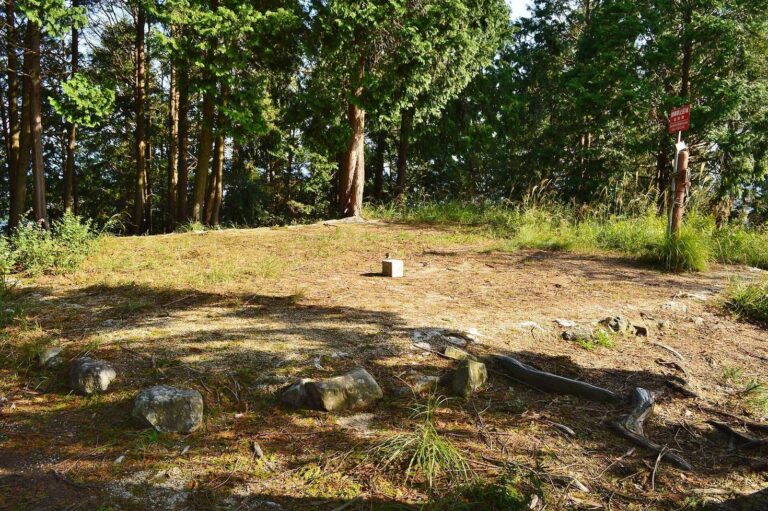
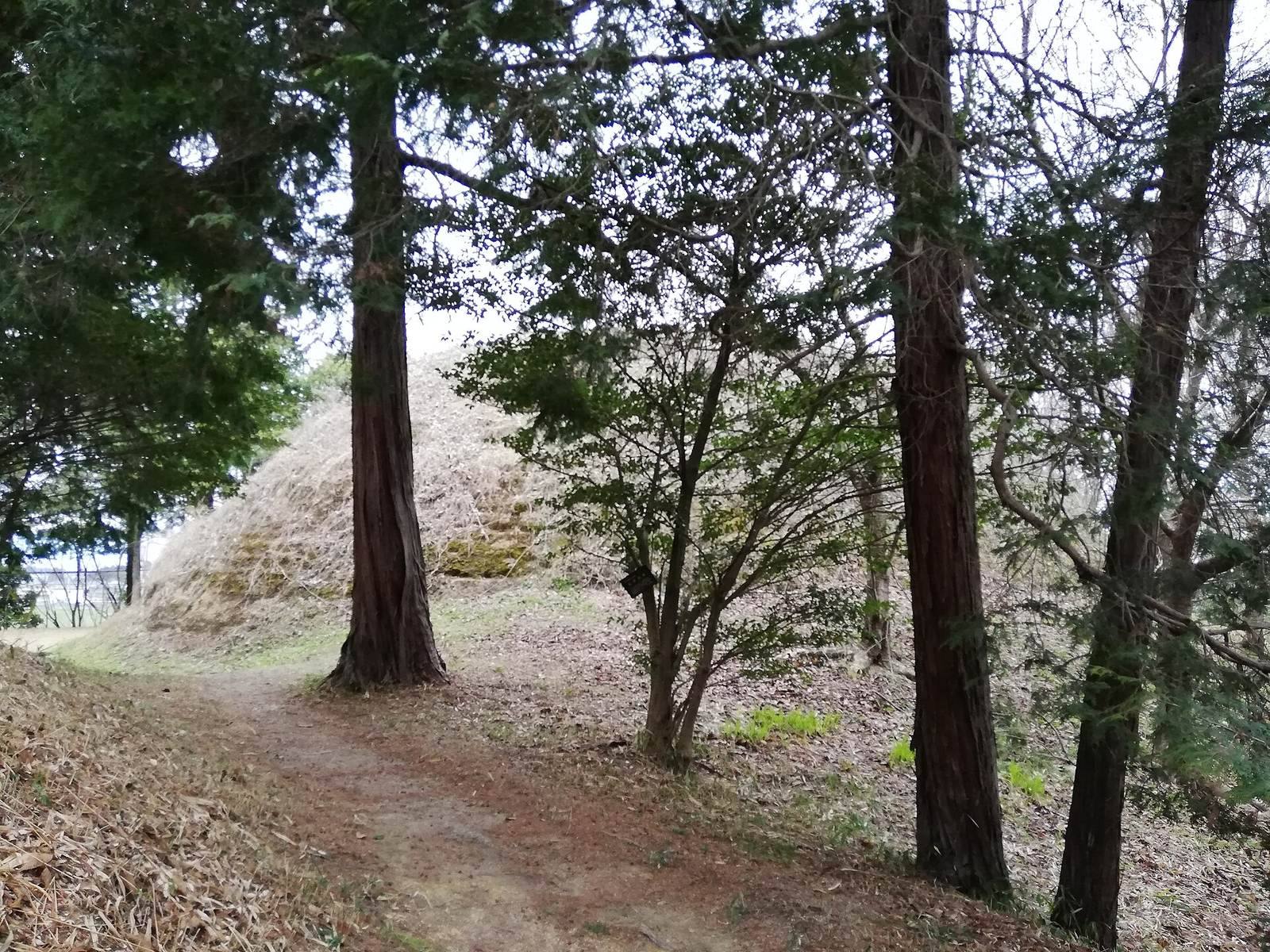
The mound stands at the tip of a ridge extending north from Mount Oiwa, on the right bank of the Yasu River. It is circular, about 30 metres across and 8 metres high.
Burial chamber
A passage meets the chamber off-centre along one side, forming a horizontal stone burial facility about 14 metres long, the largest surviving in Shiga Prefecture. The chamber measures 6.6 metres long, 2.9 metres wide, and 3.3 metres high. Its entrance passage is 7.5 metres long and about 1.8 metres wide, with ceiling stones descending in steps toward the chamber. Rounded stones pave the chamber floor, with vermilion and mica observed above them.
Stone coffin
At the centre of the chamber is a hollowed coffin carved in the shape of a house. Made from Aso welded tuff, rock formed when hot volcanic material settles and fuses, it is also known as Aso pink stone or Mamon stone. The coffin measures 2.6 metres long, 1.6 metres wide, and 1.9 metres high, making it the largest in Shiga Prefecture. Its lid has two knobs for securing lifting ropes on each long side and one on each short side. Vermilion and red ochre color the coffin’s inside and outside.
Grave goods and mirrors
Finds include horse armor and gold thread, both uncommon discoveries in Japan, as well as two glass beads recovered from inside the coffin. Two bronze animal-band mirrors, decorated with animal motifs arranged in bands, were found in 1898 and are now held by the Kyushu National Museum. Their find record assigned them to a supposed tomb beneath Mount Mikami, but Kabutoyama is considered a likely source. The fragment of a gilded-bronze, fish-shaped pendant attached to one mirror points to a high-status burial with a house-shaped stone coffin; Maruyama Kofun’s coffin was still underground at the time.
One mirror is 22.4 centimetres in diameter and is considered the same type as the other, although its smaller size has raised the possibility that it was based on a different prototype. The second measures 23.2 centimetres across. The pendant fragment attached to it suggests that the mirrors may have been buried stacked together. Comparable mirrors have been found at Watanuki Kannon-yama Kofun in Takasaki and the Tomb of King Muryeong in Gongju.