Honzen-ji Temple: A Head Temple of the Jinmon-ryu Branch of Nichiren Buddhism

Site at a Glance
- Rating
- 3.7
- Popularity
- Low
- Country
- Japan
- Primary era
- Modern
- Eras represented
- Modern
- Civilizations
- Tokugawa
- Site type
- Religious
- Remains
- Monastery
On this page13 sections
History
Foundation and Jinmon-ryu Lineage
Honzen-ji Temple is a Buddhist temple in Kyoto, Japan, founded by the Japanese reformer Nichiren’s tradition in 1406 during the medieval period. Formally known as Koryozan Honzen-ji, it is a head temple of the Hokke-shu Jinmon-ryu, a branch of Nichiren Buddhism, and its principal object of worship is the Sanbozon, a representation of the Buddha, Buddhist teaching, and Buddhist community. The temple is also associated with the Rakuchu Twenty-One Hokke Temples pilgrimage.
Nichijin, who founded the Jinmon-ryu lineage, established Honzen-ji at Shijo Horikawa after separating from Honkokuji. The separation followed a doctrinal debate with his senior fellow disciple Nichiden. The temple’s lineage is traced from Nichiren through Nichiro, Nichiin, Nissei, and Nichijin. Nissei was associated with the Uesugi branch of the Fujiwara family and was later removed from the recorded lineage.
After the debate, Nichiden’s former disciple Nitto submitted to Nichijin. Nichijin placed Nitto at Honzen-ji before returning to Honjoji to conduct missionary work. This arrangement formed part of the temple’s early development within the Jinmon-ryu religious network.
Destruction and Return to Kyoto
In 1536, the Tenmon Hokke Disturbance, a conflict that affected Kyoto’s Hokke temples, resulted in the burning of Honzen-ji and other temples in the tradition. Honzen-ji took refuge in Sakai in Kawachi Province. In 1540, the monk Nikkaku returned and rebuilt the temple at Sakurai-cho in Nishijin, two years before an imperial edict permitted the Hokke temples to return to Kyoto.
After its reconstruction, Honzen-ji became an imperial prayer temple of Emperor Go-Nara. This status connected the temple with prayers associated with the imperial household and added an imperial dimension to its religious history.
Relocation and Rebuilding
In 1591, Toyotomi Hideyoshi, the military ruler who unified Japan in the late sixteenth century, ordered Honzen-ji to move to its present location. The temple was later destroyed in the Hoei Fire of 1708 and again in the Tenmei Fire of 1788. It was rebuilt after both disasters.
Honzen-ji became a prayer site of the Arisugawa-no-miya imperial family in 1839. The surviving temple complex was rebuilt in 1852, and the present main complex dates principally from that reconstruction. The grounds now are leased almost entirely as monthly parking space, substantially changing the use of the precinct.
Remains
Precinct Layout
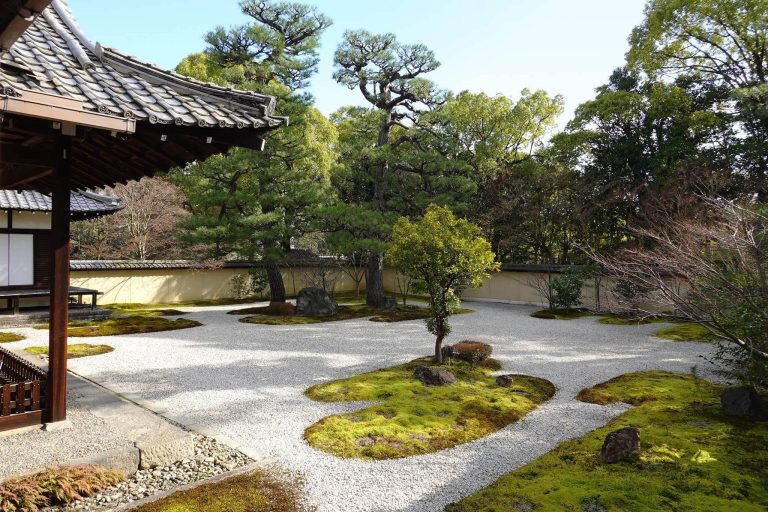
The surviving precinct contains the main hall, priests’ quarters and service areas, the Shakado, a bell tower, the Thirty Guardian Deities Hall, three subtemples, a cemetery, and the main gate. The buildings and other physical elements reflect repeated rebuilding after the fires of 1708 and 1788, with the principal surviving complex belonging to the 1852 reconstruction.
Principal Buildings
Main Hall
The main hall was rebuilt in 1852. It forms the principal religious building within the surviving complex and belongs to the reconstruction that followed the earlier cycle of destruction and rebuilding.
Shakado
The Shakado, also called the Standing-Image Hall, houses a gilt-bronze standing image of Shakyamuni Buddha. The image is said to have been Nichiren’s personal Buddha. It is opened for public viewing twice each year, during the Mannin-ko observance in early April and the Oeshiki memorial observance for Nichiren on October 13.
Bell Tower
The bell tower contains a bronze bell cast in 1606 on the orders of Toyotomi Hideyori, Toyotomi Hideyoshi’s successor. The bell was presented to Hoanji, the Buddhist temple attached to Ikukunitama Shrine, and tradition holds that Tokugawa Ieyasu used it as a camp bell during the Osaka Campaign. Okubo Tadachika, also known as Hikozaemon, later presented the bell to Honzen-ji.
Thirty Guardian Deities Hall
The Thirty Guardian Deities Hall functions as the temple’s guardian shrine. The Thirty Guardian Deities are protective Buddhist figures traditionally associated with safeguarding the Lotus Sutra and its devotees.
Subtemples and Cemetery
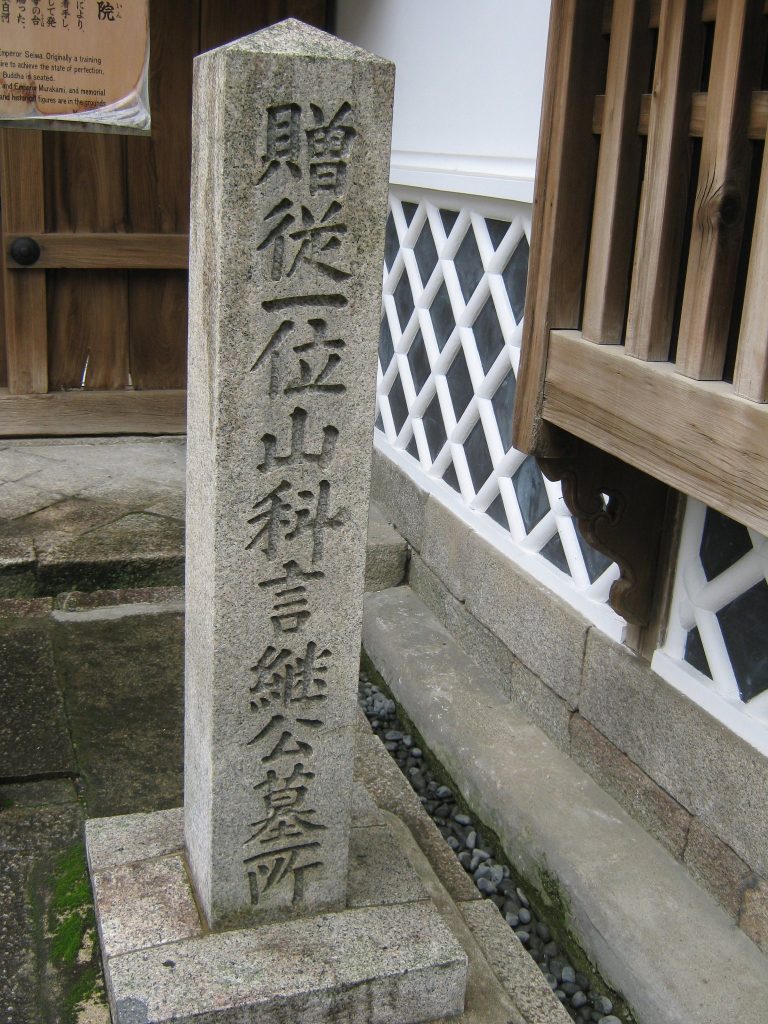
Three subtemples, Enryuin, Senryoin, and Shinjoin, form part of the Honzen-ji precinct. The cemetery contains adjoining burial areas belonging to the Edo-period Ishikawa and Okubo daimyo families. Seven Ishikawa graves stand on the left when facing the front, while nine Okubo graves stand on the right. A daimyo was a powerful territorial lord during Japan’s feudal period.
Cultural Properties
Honzen-ji’s cultural-property holdings include an eight-volume Lotus Sutra manuscript associated with Imperial Prince Kansei, a member of the imperial family. Single-sheet handwritten letters by Emperor Fushimi and Emperor Go-Fukakusa are also held by the temple. These three groups of materials are designated Important Cultural Properties.