Mantoku-ji Temple: A Shingon Buddhist Temple and Historic Garden in Japan


Site at a Glance
- Rating
- 4.2
- Popularity
- Low
- Country
- Japan
- Primary era
- Early Modern
- External website
- Open
- Eras represented
- Early Modern
- Civilizations
- Tokugawa
- Site type
- Religious
- Remains
- Sanctuary
On this page7 sections
History
Mantoku-ji Temple is a Kōyasan Shingon Buddhist temple in Obama, Fukui, Japan, whose principal image is Amida Nyōrai, the Buddha associated with the Pure Land tradition. Its predecessor, Gokuraku-ji, is considered older but first appears in the 1265 Wakasa Sōdaichō land register.
From Gokuraku-ji to Shōshō-in
During the Ōan period, from 1368 to 1374, a Buddhist priest from Enmyō-ji in Aki Province changed Gokuraku-ji from the Tendai school to Shingon Buddhism. Tendai was a major Japanese Buddhist school, while Kōyasan Shingon developed as an esoteric tradition associated historically with Mount Kōya. Following the conversion, the temple was renamed Shōshō-in.
During the Sengoku period, the Takeda clan, rulers of Wakasa Province, supported the temple and designated it as a place of prayer. In 1544, Takeda Nobutoyo formally recognized it as Wakasa’s only kakekomi-dera, a refuge temple where women could seek protection from abusive marriages under historical temple and legal customs.
War damage and reconstruction
The temple declined after suffering war damage during the Genki period, from 1570 to 1573. It was restored in 1602 and received the name Mantoku-ji.
In 1677, Sakai Tadanao, the feudal lord of Obama Domain under the Tokugawa shogunate, ordered the temple to move from its former location beside the Otonashi River to its present position at the foot of the mountains. The garden was created in the same year, giving the temple its surviving early Edo-period setting.
Protection and religious associations
Mantoku-ji’s garden became a nationally designated Place of Scenic Beauty in 1932. The large maple tree within the garden has been protected as a National Natural Monument since 1931. The temple’s seated Amida image and two Buddhist paintings are Important Cultural Properties of Japan. Mantoku-ji is also the fifth site on the Wakasa Kannon pilgrimage.
Remains
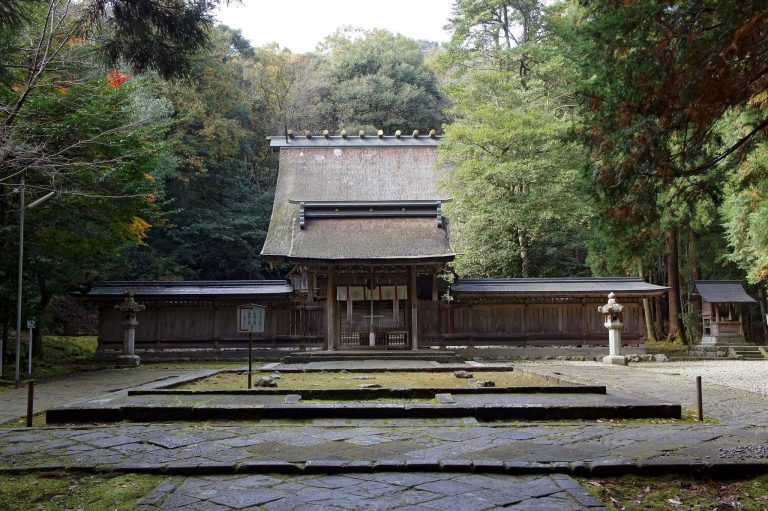
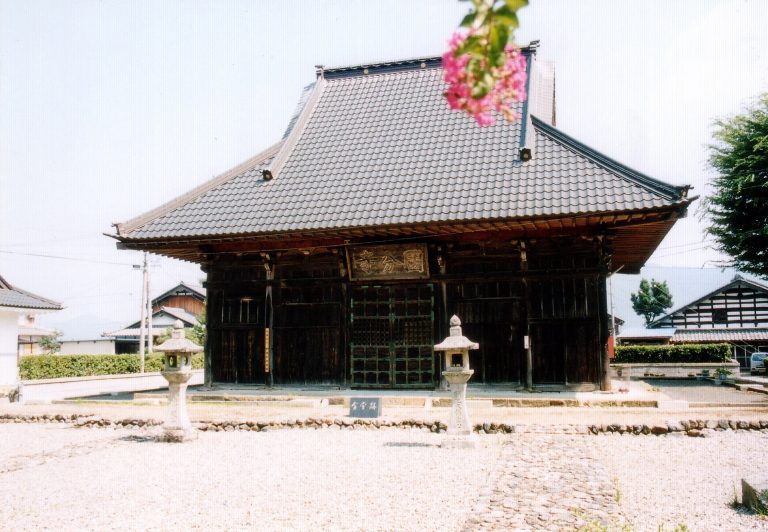
Mantoku-ji consists of a main hall and a Japanese garden covering approximately 1,500 square meters. The garden brings together rocks, ponds, and carefully arranged trees, combining features of a Japanese rock garden with elements of a planted landscape. Created in 1677, it is regarded as a representative example of early Edo-period garden design.
Garden and maple
The garden incorporates the large Oyama maple as borrowed scenery, meaning that a surrounding landscape element is made part of the garden’s visual composition. The tree is estimated to be more than 500 years old and has a trunk circumference of 3.6 meters at its base. Its age places it among the physical features that connect the present garden with the temple’s earlier history.
Buddhist images and paintings
The principal image is a seated wooden statue of Amida Nyōrai from the late Heian period, measuring 141.5 centimeters in height. The temple also preserves a Kamakura-period hanging scroll showing the standing Fudo Myōō, a wrathful guardian deity, with three attendants. The painting measures 113.7 by 61.2 centimeters. A second hanging scroll, from the middle Kamakura period, depicts Miroku Bosatsu, the bodhisattva Maitreya and traditionally the future Buddha, seated in meditation on a lotus throne while holding a small pagoda. It measures 93.1 by 52.7 centimeters.