Münster Schaffhausen: The Former Abbey Church of Allerheiligen
Site at a Glance
- Popularity
- Medium
- Country
- Switzerland
- Primary era
- Medieval
- Eras represented
- Medieval, Modern
- Civilizations
- Holy Roman Empire, Swiss
- Site type
- Religious
- Remains
- Basilica
On this page13 sections
History
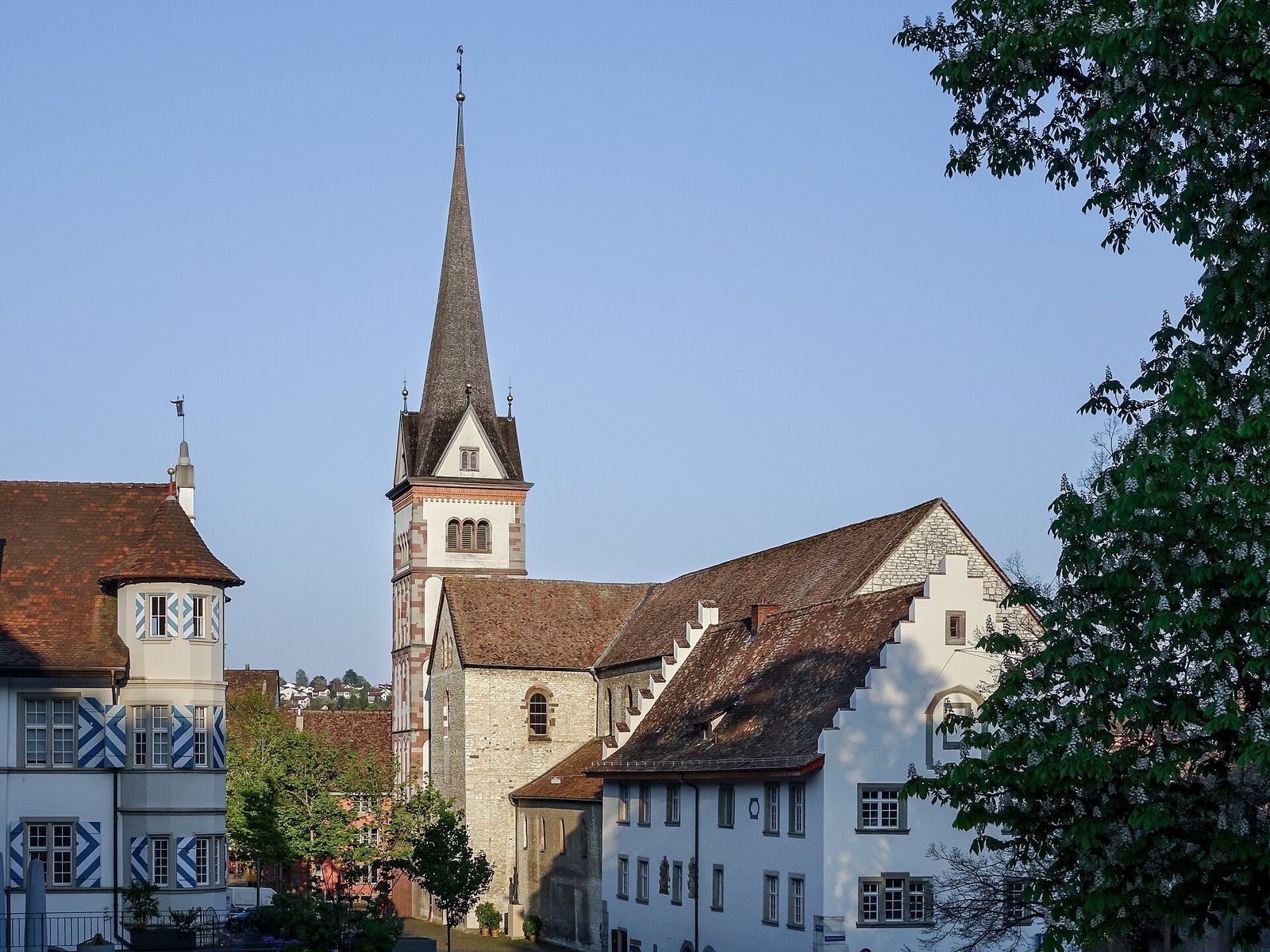
Münster Schaffhausen is the former abbey church of Allerheiligen in Schaffhausen, Switzerland. Built for a Benedictine community, a monastic order following the Rule of Saint Benedict, it is a basilica with Romanesque and Gothic Revival elements. Construction of the present church is broadly dated to around AD 1000. Eberhard von Nellenburg founded the abbey and its basilica in 1049, and Pope Leo IX consecrated the church on 22 November that year. Building work was completed in 1064. The church was dedicated to the Saviour, the Holy Cross, the Virgin Mary, and All Saints.
Foundation and Nellenburg patronage
Allerheiligen became the Nellenburg family’s burial place, replacing Reichenau Abbey in that role. Eberhard entered the community as a monk after 1075 and died there in either 1078 or 1079. He was buried in an outdoor crypt intended for the family. The Nellenburgs, a noble family whose members held the rank of count in Swabia, were closely involved in Schaffhausen’s development around 1100. They valued its position as a Rhine transshipment point and its links with routes that bypassed the Rhine Falls, controlled by Wörth Castle.
In 1080, during the Investiture Controversy, a medieval dispute over authority between the papacy and secular rulers, Eberhard’s son and heir, Count Burkhard von Nellenburg, confirmed the monastery’s rights. The abbey was placed directly under the pope and received the family’s extensive estate, the freedom to elect its abbot, the right to mint coins and hold a market, and the town of Schaffhausen. The abbot consequently became the town’s lord, while Burkhard remained its lay protector. He encouraged Abbot William to introduce reforms inspired by Hirsau Abbey, a Benedictine reform centre, with monks from Hirsau joining the community.
Decline and Reformation
After more than four centuries of economic and political decline, Allerheiligen’s last abbot, Michael Eggendorfer, began the monastery’s final renovations in 1521–1522. The abbey was dissolved during the Swiss Reformation, a period of religious change associated with the spread of Reformed Protestantism. In 1524 the church became Schaffhausen’s second principal city church. It is now Reformed and belongs to the Evangelical Reformed Church of the Canton of Schaffhausen.
Münster Schaffhausen is listed as a Class A object of national importance in the Swiss inventory of cultural property.
Remains
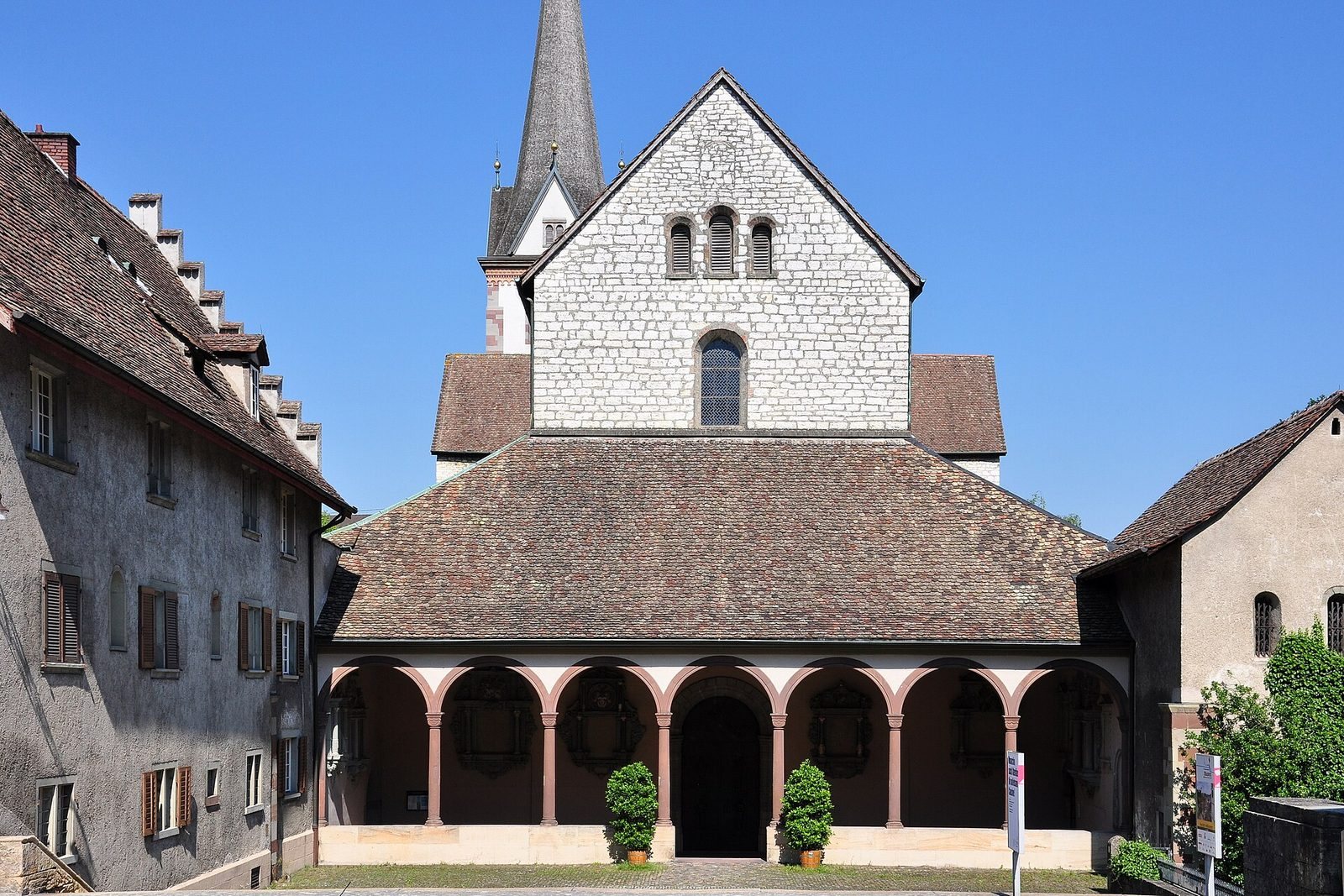
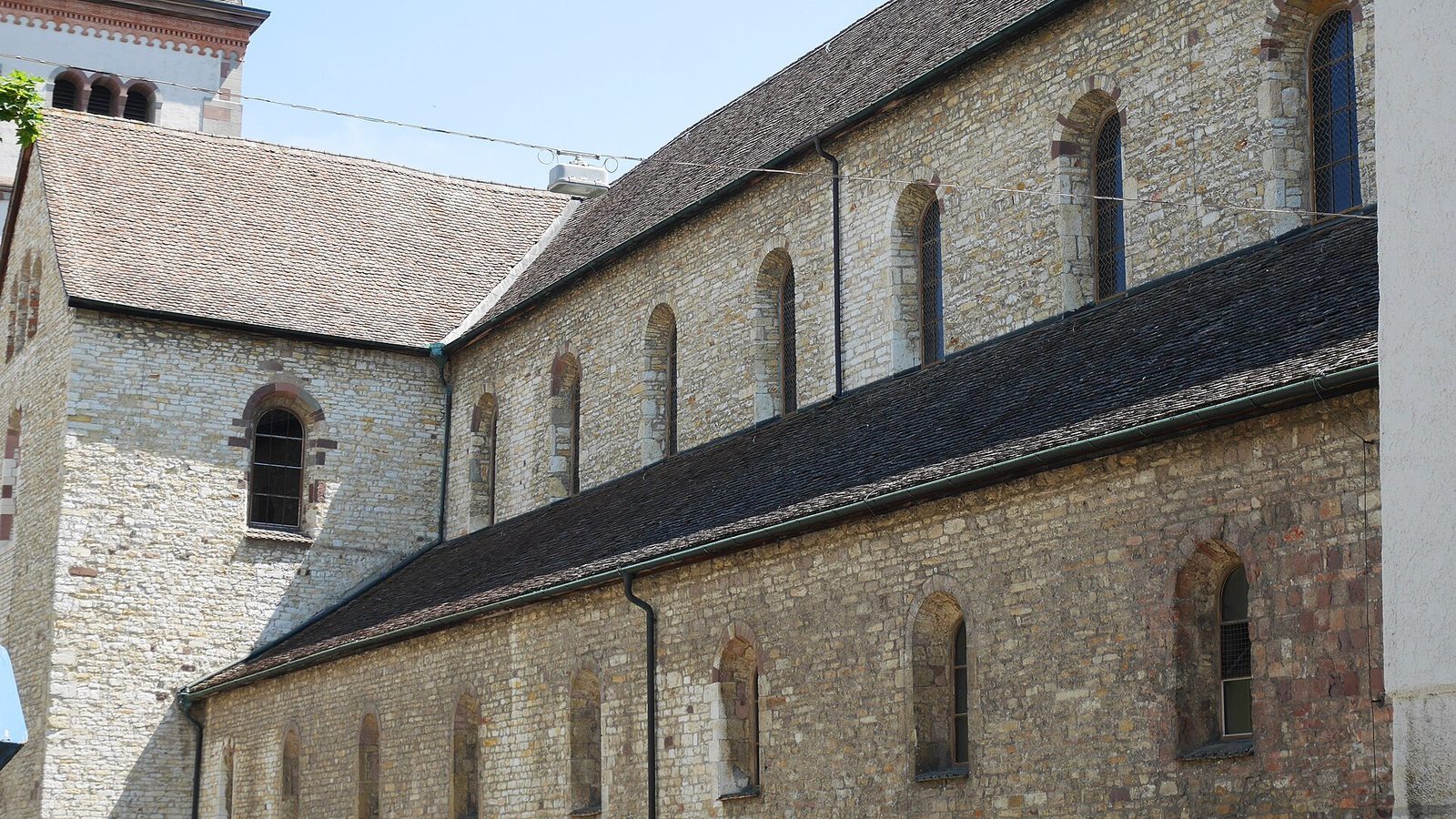
The church forms part of the former Allerheiligen Abbey complex in the centre of Schaffhausen’s historic old town. Its west-facing basilica combines Romanesque and Gothic Revival elements. The surviving fabric and recorded features reflect the church’s successive extensions and the wider arrangement of the abbey.
Church and abbey layout
Early church and western entrance
The early church had a central nave with two side aisles, a choir ending in three rounded apses, and a crosswise transept. Its western front had two towers. A courtyard on this side was entered through a single gate, with a chapel on either side. This entrance arrangement may have provided access to the Nellenburg Palatinate, formerly the family’s residence. Eberhard financed an additional tower at the centre of the western front. The church was also enlarged with a new chancel, the area around the altar, an outdoor burial crypt at its eastern end, and another courtyard. Around 1090, part of the building was taken down to make room for a larger church.
Romanesque additions and monastery wings
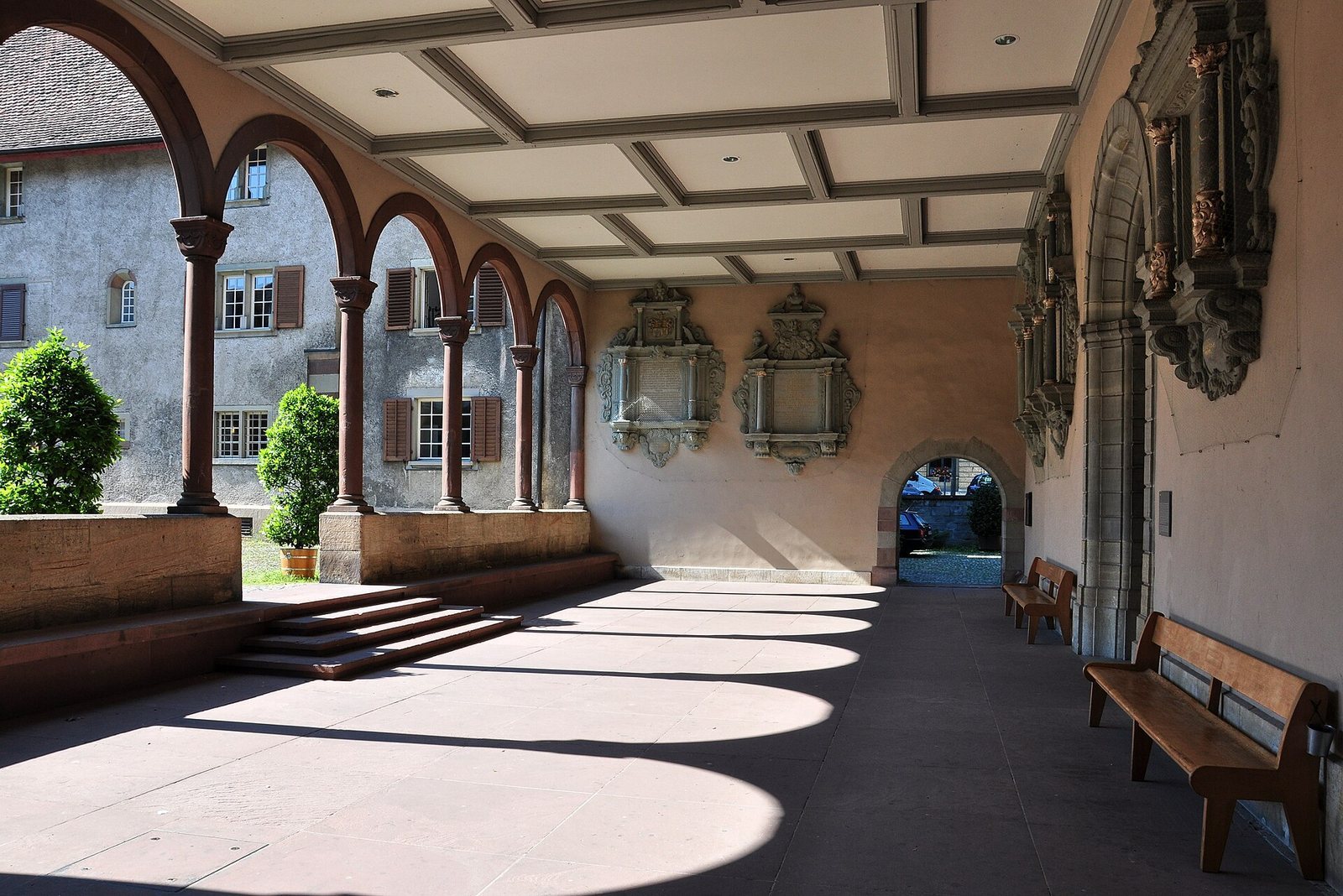
Between 1150 and 1250, Romanesque building work included the church tower, begun under Abbot Ullrich. The east wing of the convent placed the monks’ chapter house, their meeting room, on the ground floor and a dormitory with latrines above. Additions to the west included the monastery gate and a two-storey building for guests and lay brothers, members of the community who undertook practical work. This part of the complex also had a herb garden, a hospital, a novitiate for training new monks, and a loggia, a roofed gallery open on its sides.
Chapels and other surviving features
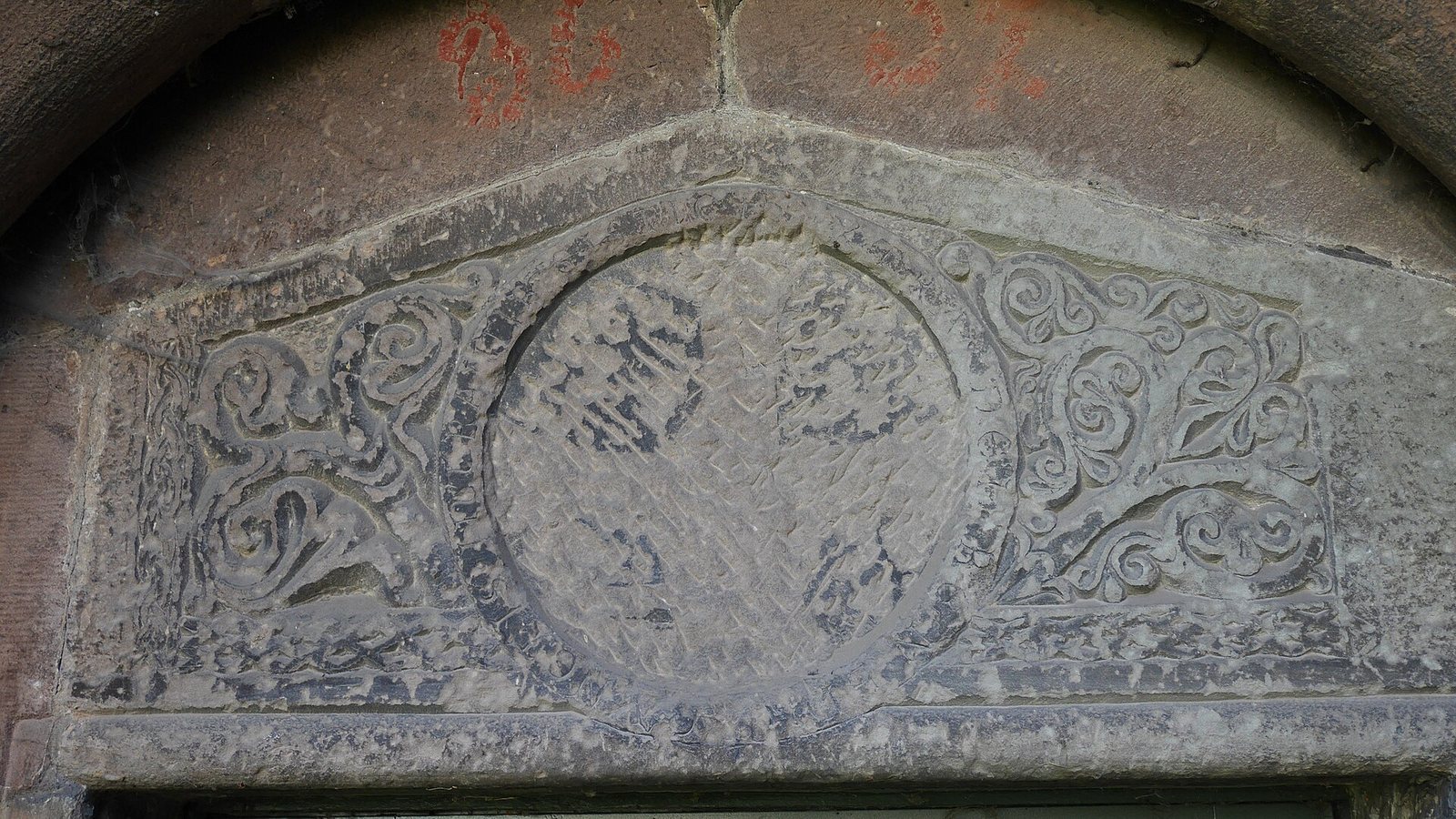
St. Johann’s church had a vaulted ceiling, with another chapel above it. Semicircular panels from the upper chapel, decorated with elaborate designs, are now displayed in a museum. The complex also included the chapels of St. Michael and St. Erhard, as well as a house for Beguines, women living in religious communities without formal monastic vows. The former abbey contains Schaffhausen’s oldest surviving buildings.
Church features and furnishings
Cloister, bell, and tower
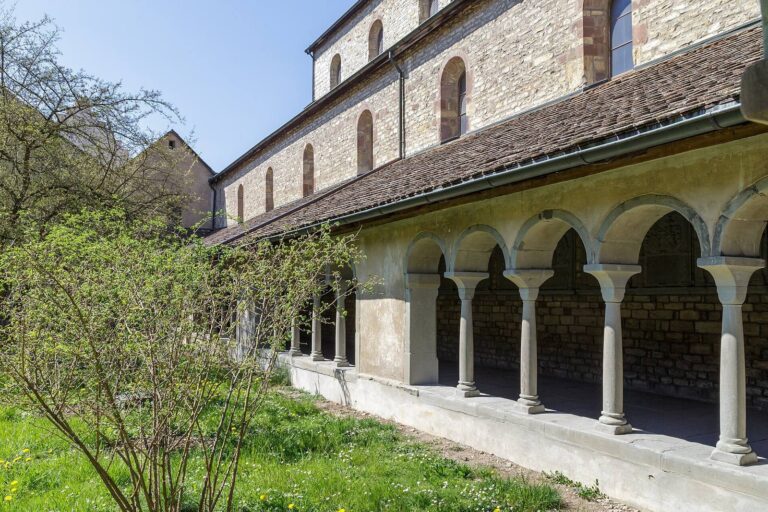
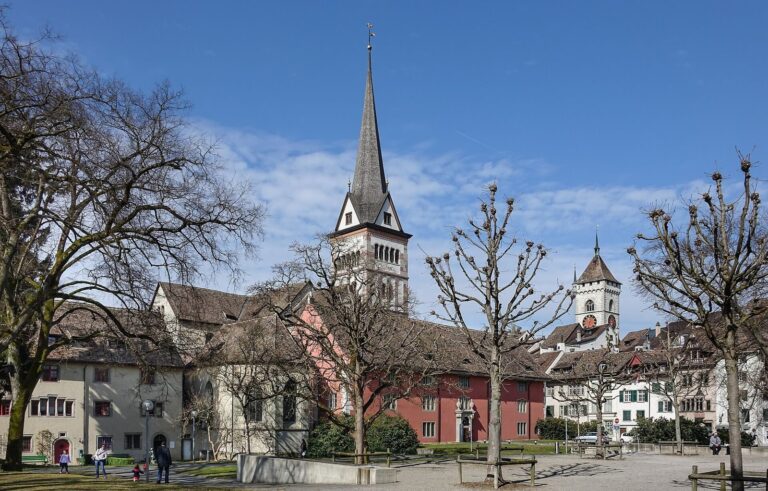
Features associated with the church and monastery include a pulpit, a fresco in the basilica, the cloister, a covered walk around a courtyard, and gravestones. The Schillerglocke stands in the garden. A tower is dated to 1851.
The organ
Earlier instruments
The first pipe organ, dating to the fifteenth century, projected from the north wall of the nave like a swallow’s nest. It was dismantled in 1529 during the Reformation. The city council considered installing an organ again in 1597, but the clergy opposed the proposal. A new instrument was finally placed on the western gallery in 1879 by Swiss organ builder Johann Nepomuk Kuhn. Its Neo-Gothic case followed plans by Franz Müller and another architect.
Restoration and present instrument
Kuhn’s builders substantially altered the organ in 1929. During the church’s major restoration of 1979–1985, the instrument was retained for its historic value and its front panel was moved back. The first two keyboards were restored to their earlier form; the third, which controls enclosed pipes whose volume can be varied, was lowered into the lower case. The side-mounted pedal mechanism was rebuilt on two levels. The organ has three keyboards, mechanical cone chests that use cone valves to direct air to the pipes, and Barker machines that assist the keys through pneumatic action. Of its 66 stops, which control groups of pipes, 51 are wholly or partly original, four were reconstructed, and 11 were added, mostly to the enclosed division. A 2003 addition provided a 20-step crescendo and a capture system storing 8 × 500 combinations, operated by a floppy drive. Couplers link the keyboards and pedalboard in the configurations II/I, III/I, III/II, I/P, II/P, and III/P.