Munoaundi: An Iron Age Fortified Settlement in Gipuzkoa, Spain
Site at a Glance
- Rating
- 4.3
- Popularity
- Very Low
- Country
- Spain
- Primary era
- Iron Age
- Eras represented
- Iron Age
- Civilizations
- Unclassified
- Site type
- Military
- Remains
- Fortified Town
History
Munoaundi is an Iron Age fortified settlement near the summit of Munoaundi in the Txalintxo area between Azkoitia and Azpeitia, Gipuzkoa, Spain. The Iron Age was a period when iron became widely used for tools and weapons. Built through communal labor, the settlement dates to about 470 BC according to radiocarbon dating.
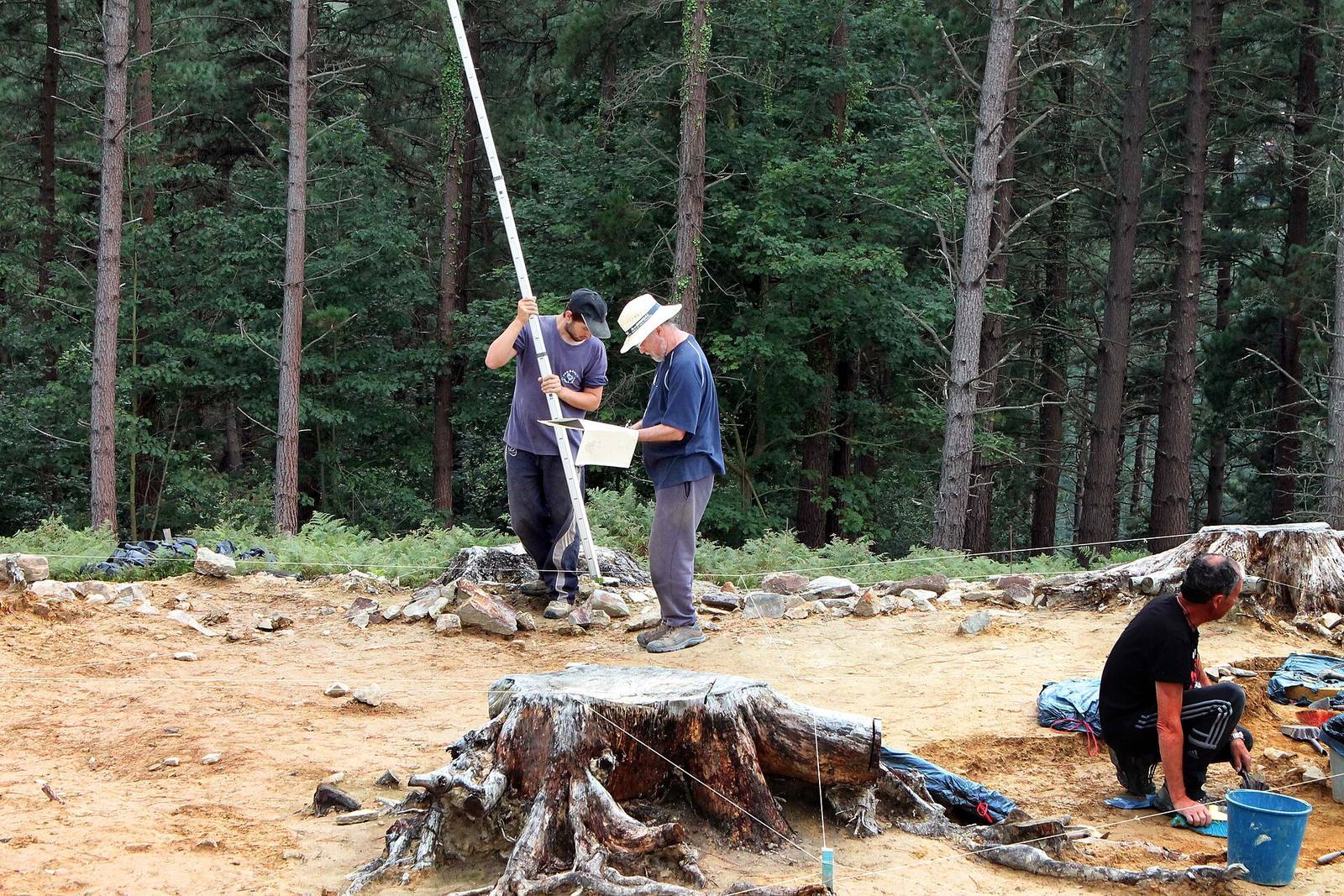
The site was discovered in 1995 by A. Olano, G. Alijostes, and Sonia San Jose, with Karlos Olaetxea coordinating the work. San Jose led surveys and test excavations, and systematic excavation began in 2006. Antxoka Martínez directed excavations from 2016. Munoaundi was among the first fortified Iron Age settlements in Gipuzkoa to undergo systematic excavation, alongside Basagain. Investigations brought attention to a previously little-explored area of archaeology and established that the Iron Age remains are well preserved.
On 7 October 2003, the Basque Government designated Munoaundi a classified cultural property as a monument complex, a formal heritage designation protecting a site or related group of features.
Remains
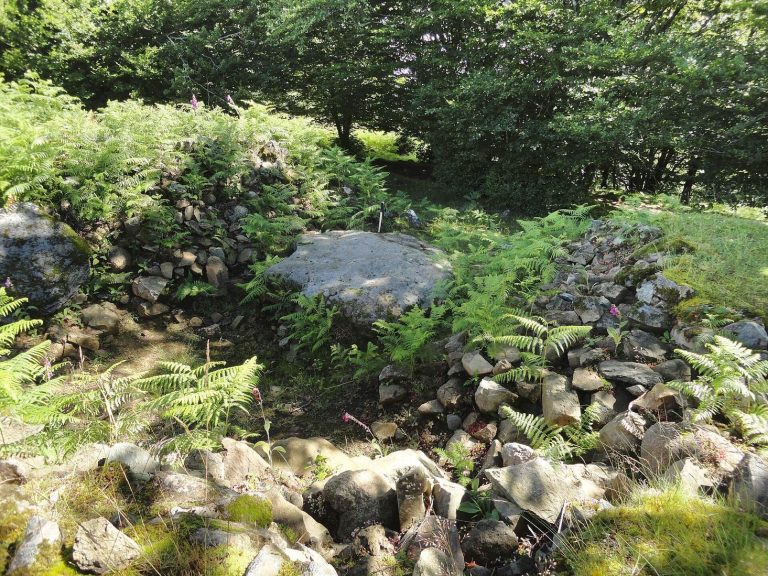
Munoaundi covers about seven hectares. Its roughly two-metre-wide wall leaves the eastern slope unenclosed, since that side required no artificial defenses. Within the wall, a terrace provided space for dwellings, whose floors were found near the wall; a second terrace lies farther downhill, outside the defenses. On the western side, two towers with square or polygonal plans protected the entrance. A path approaching at a right angle leads to the passage.
Excavated finds
Materials associated with the settlement include stone, wood, earth, pottery, bones, and seeds. Excavated objects include pottery, bones, stone mills, burnt seeds, and iron slag. Among the finds are part of a circular stone hand mill for grinding crops, an iron knife, an iron sheet, and a bronze balance weight shaped like a truncated cone, with marks on its upper surface. Weights of this type provide evidence of trade.
A bronze fibula, a brooch-like fastener used to secure clothing, was found in 1995 by Miel Sasieta of the Munibe archaeological group while assisting the Aranzadi Science Society, a scientific and archaeological organization, during a survey. About 2,400 years old, it bears a small tower design. It was the first Iron Age fibula identified in Gipuzkoa, and examples of this kind are very rare at such settlements. Its pin has not survived.