Sorginetxe: A Prehistoric Burial Dolmen in Álava, Spain
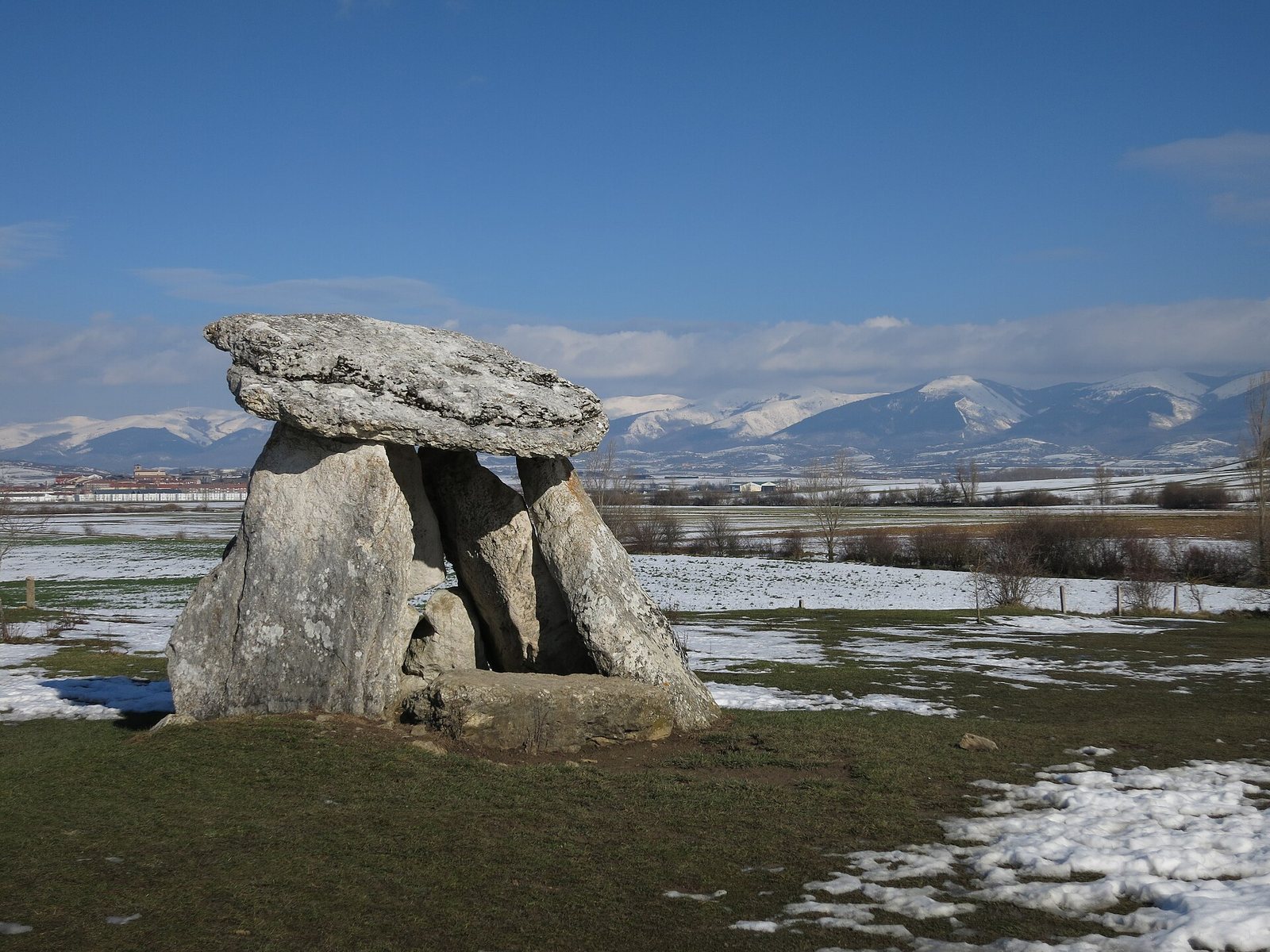
Site at a Glance
- Popularity
- High
- Country
- Spain
- Primary era
- Stone Age
- Eras represented
- Stone Age
- Civilizations
- Unclassified
- Site type
- Burial
- Remains
- Tomb
On this page6 sections
History
Prehistoric burial and local tradition
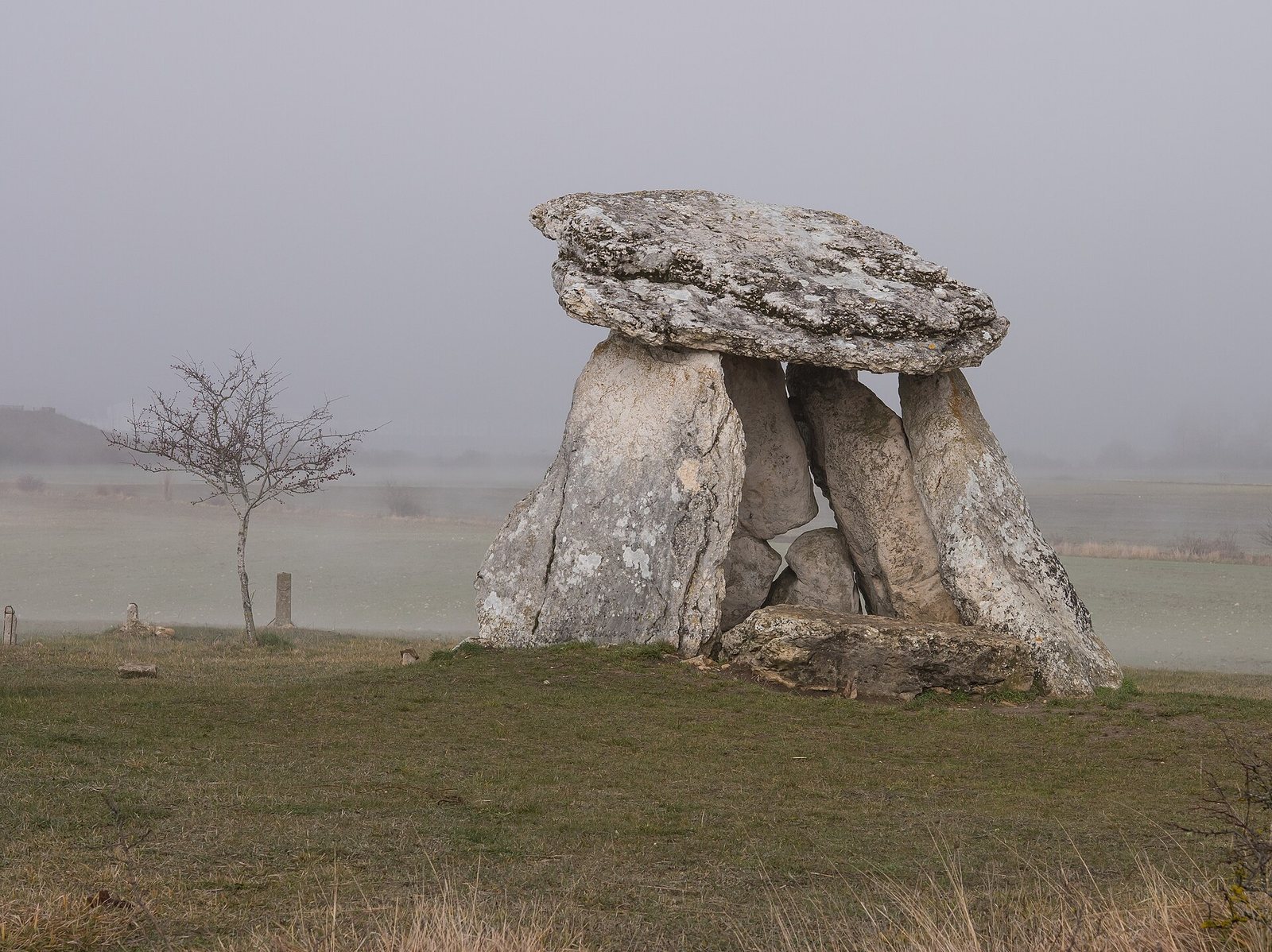
Sorginetxe is a funerary dolmen, a prehistoric tomb made from upright stones supporting a large capstone, near Arrizala in Álava, Spain. It dates to around 2500 BCE, in the Eneolithic, when copper use was emerging before the Bronze Age, and is associated with prehistoric Basque culture. People from the valley, most of them herders, used it as a burial place. Evidence from the site extends into the Bronze Age.
The name Sorginetxe means “house of witches.” In Basque tradition, sorginak, or witches and female supernatural figures, carried the monument’s great stones from the surrounding mountains at night while spinning wool. In one version of the story, a witch saw a man carrying bread. Because bread was associated with Christianity and the decline of older pagan beliefs, the sight was said to take away the witches’ powers and stop the building work.
Early accounts and preservation
Sorginetxe was known by the late eighteenth century and described around 1833. Federico Baraibar made finds there in 1879. In 1890, Julián Apraiz Sáenz de Elburgo partially excavated the dolmen. Moving a large fallen slab exposed the remains of three people and a flint arrowhead with a tang and barbs.
In 1909, Baraibar bought the land containing the monument from Onofre Pérez de San Román of Opacua to help preserve it. He donated the property in 1913 to the Provincial Council of Álava, the provincial government responsible for its conservation.
Research and heritage protection
Jesús Elósegui surveyed and photographed Sorginetxe in 1951. José Miguel de Barandiarán wrote about it in works on Basque prehistory and excavated it with Apellániz between 1953 and 1973. The dolmen became an Asset of Cultural Interest, a Spanish heritage-protection designation, on 27 January 2009. In 2011, a Basque Government decree classified Álava’s lowland dolmens as a Monumental Ensemble, a heritage category for related monuments. The group extends across the Álava Plain, Rioja Alavesa, Lantarón, and Kuartango, and shares structural, chronological, and material similarities with megalithic groups on the Iberian plateaus.
Remains
Burial chamber and setting
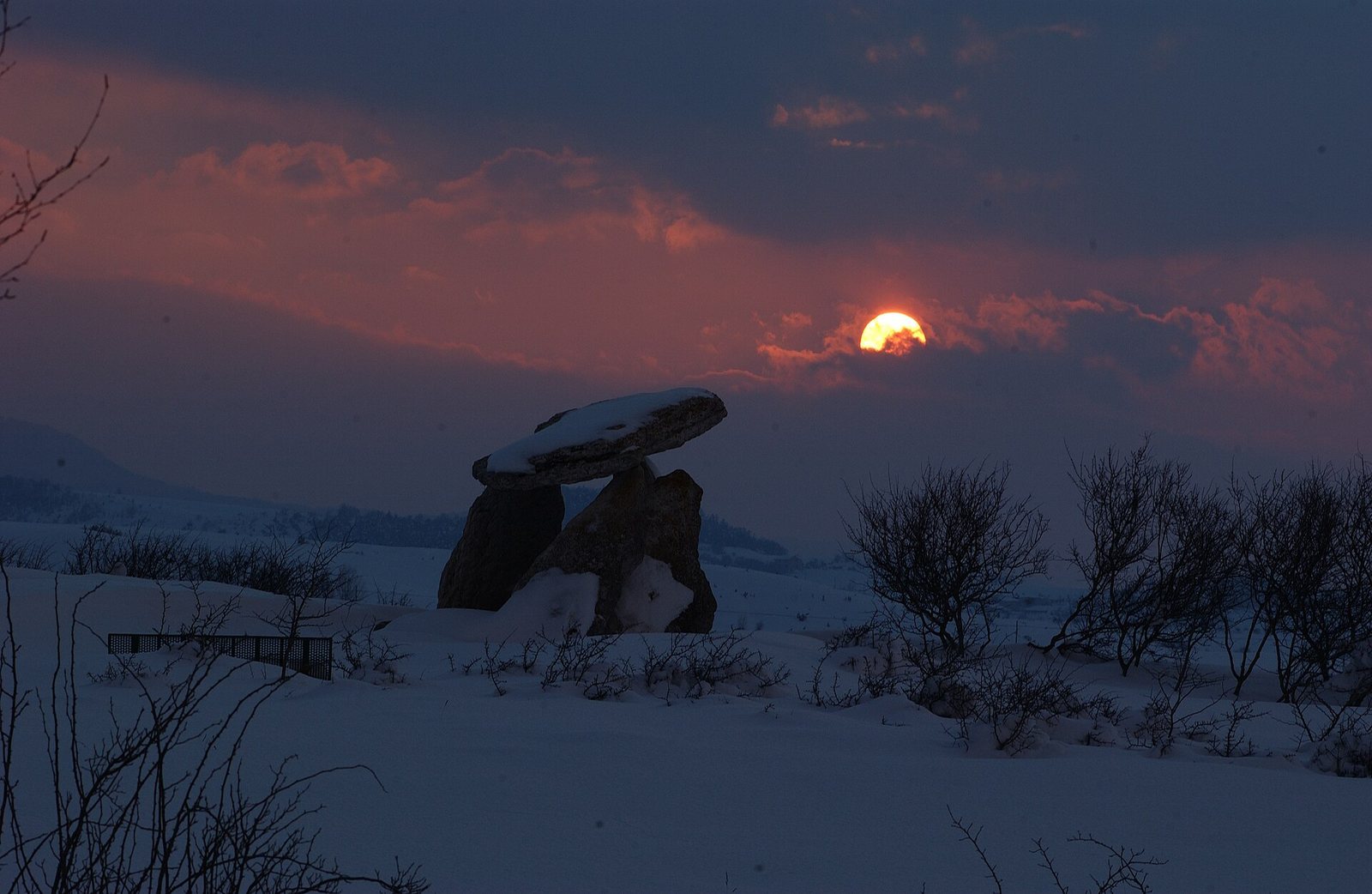
The many-sided burial chamber is built from six large limestone slabs. Sorginetxe stands about 600 m northwest of Arrizala, near the path between Arrizala and Egileor, at an elevation of about 620 m in the eastern Álava Plain megalithic zone. Five upright slabs form the chamber walls, while the sixth rests horizontally above them as a capstone. The chamber measures approximately 2.3 m long, 1.9 m wide, and 2.35 m high. Its surviving capstone is uncommon among dolmens of this kind. A west-facing, window-like opening, oriented at about 270 degrees, allows the setting sun’s light to enter. A burial mound probably covered the chamber originally, though its form is unknown. Sorginetxe is among the best-preserved megalithic monuments in the Basque Country.