Monastery of the Holy Spirit in Jēkabpils: An Orthodox Monastery in Latvia
Site at a Glance
- Popularity
- Medium
- Country
- Latvia
- Primary era
- Modern
- Eras represented
- Early Modern, Modern
- Civilizations
- Polish–Lithuanian Commonwealth, Russian
- Site type
- Religious
- Remains
- Fortified Monastery
On this page11 sections
History
The Monastery of the Holy Spirit in Jēkabpils is a Russian Orthodox monastic complex in Latvia, traditionally founded in 1670–1675 as the settlement became a town. Its present Holy Spirit Church, built in the late 1880s, follows Byzantine architecture, a tradition developed in the Eastern Roman Empire. The monastery became a religious centre for local Orthodox residents, travelling monks, education, and charitable work.
Jacobstadt and the monastery’s foundation
Jēkabpils grew from a Russian settlement on the left bank of the Daugava, opposite Krustpils Castle. By the mid-seventeenth century, it was a trading point at the meeting of Swedish-controlled Vidzeme, Polish-controlled Latgale, and the Duchy of Courland. Boatmen carried goods from Russia and Belarus downstream on rafts toward Riga, while goods from Lithuania and Poland arrived overland.
In 1670, Duke Jacob Kettler of Courland granted the settlement town rights and named it Jacobstadt after himself. He restricted residence to people of Russian origin whom he considered reliable and authorized the Orthodox community to maintain worship, churches, schools, clergy, and school staff.
A founding tradition connects the monastery to the Russian merchant Ratkevičs. He witnessed the miraculous healing of a mentally ill person before the Mother of God icon in the town’s Church of St George, then undertook to build a church better suited to the image. The Mother of God is an Orthodox title for Mary, the mother of Jesus. The monastery’s superior received timber from Duke Jacob for the project. Dedicated to the Holy Spirit, one of the three persons of the Christian Trinity, the church made the icon the monastery’s principal shrine. A masonry wall enclosed the religious precinct.
Religious centre and changing fortunes
Churches dedicated to St Nicholas and St George were already in Jacobstadt in the second half of the seventeenth century, probably dating to the 1650s or 1660s. The Holy Spirit Monastery developed alongside this local Orthodox community. Monks from Polotsk and Vitebsk served there, and the monastery offered rest and prayer to monks travelling along the Daugava toward Riga. It also supported a school and charitable work.
The monastery escaped damage during the Great Northern War, a major conflict in northern and eastern Europe in the early eighteenth century, and during Jacobstadt’s fires of 1769 and 1773. Its condition later declined as increasing numbers of Orthodox residents joined the Uniate Church, an Eastern Catholic church that retained an Eastern liturgical tradition. The monastery’s fortunes improved after Latgale became part of the Russian Empire in 1772. Courland joined the empire in 1795. The monastery was under Polotsk’s spiritual authority that year, transferred to Pskov in 1799, and placed under the Mogilev church province in 1803.
War, closure, and the end of monastic life
During the 1812 war, a French-Prussian force under the French commander Marshal Macdonald established its headquarters in Jacobstadt. Troops turned the monastery churches into stables and barracks, and looted both the monastery and the town. Left without food and basic necessities, the monks’ superior, Hieromonk Seraphim, a monk ordained as a priest, asked the church governing council, or Synod, to release the brethren and dissolve the monastery.
The Synod ordered the monastery closed on 30 April 1817. Its property, including two churches, passed to the parish, although some monks continued to live at the Holy Spirit Church. The monastery is considered to have ceased functioning in 1866, when its last registered monks had died. Its revered Jacobstadt Icon of the Mother of God was lost during the Second World War.
Reopening and renewed worship
On 1–2 October 1993, the Russian Orthodox Church’s Synod, chaired by Patriarch Alexy II, blessed the monastery’s reopening following the efforts of Metropolitan Alexander, a senior Orthodox bishop in Riga and Latvia. The formal reopening took place on 11 August 1996. Metropolitan Alexander celebrated the Divine Liturgy, the central Eucharistic service in Orthodox worship, in the Holy Spirit Church, then consecrated the monastery buildings and worshippers after a procession.
Orthodox services in Latvian resumed in 2000. The monastery remains linked to pilgrimage connected with the revered Mother of God icon and is the Latvian Orthodox Church’s only male monastery.
Remains
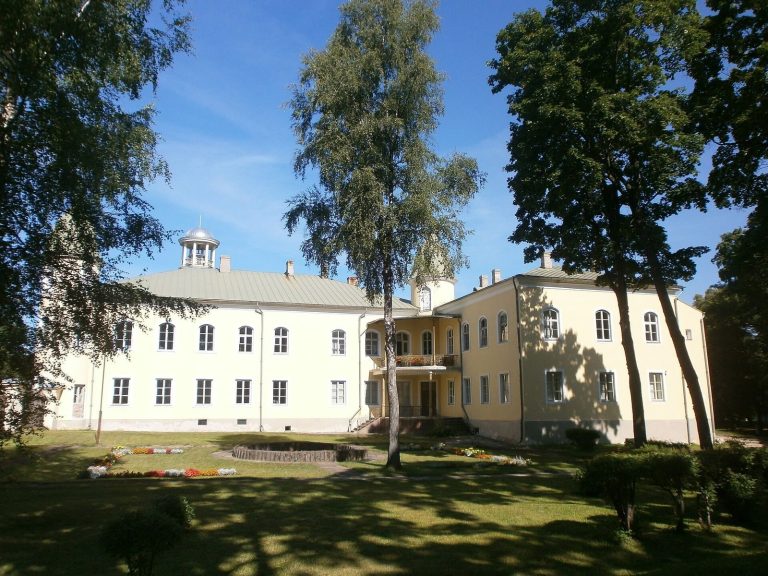
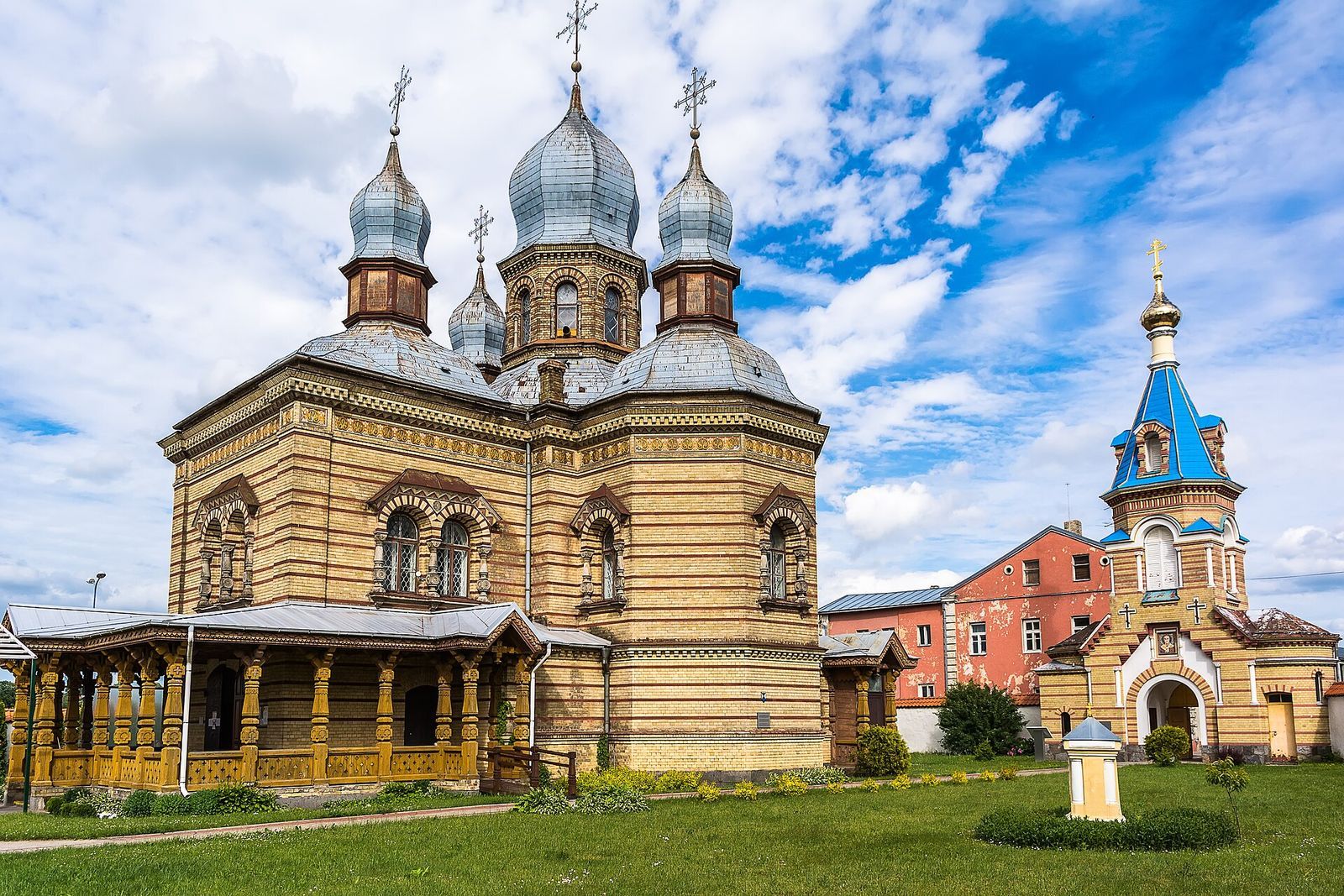
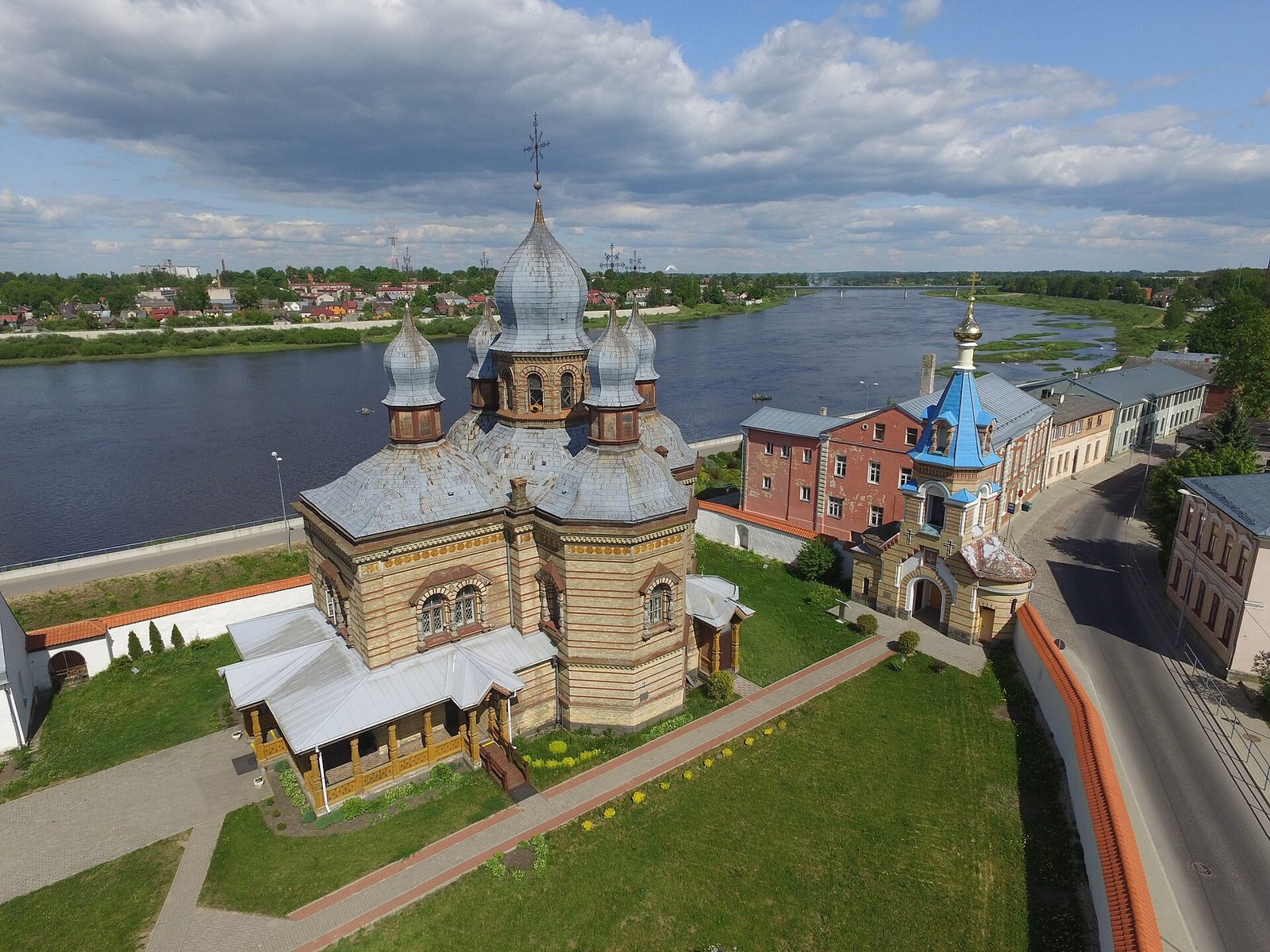
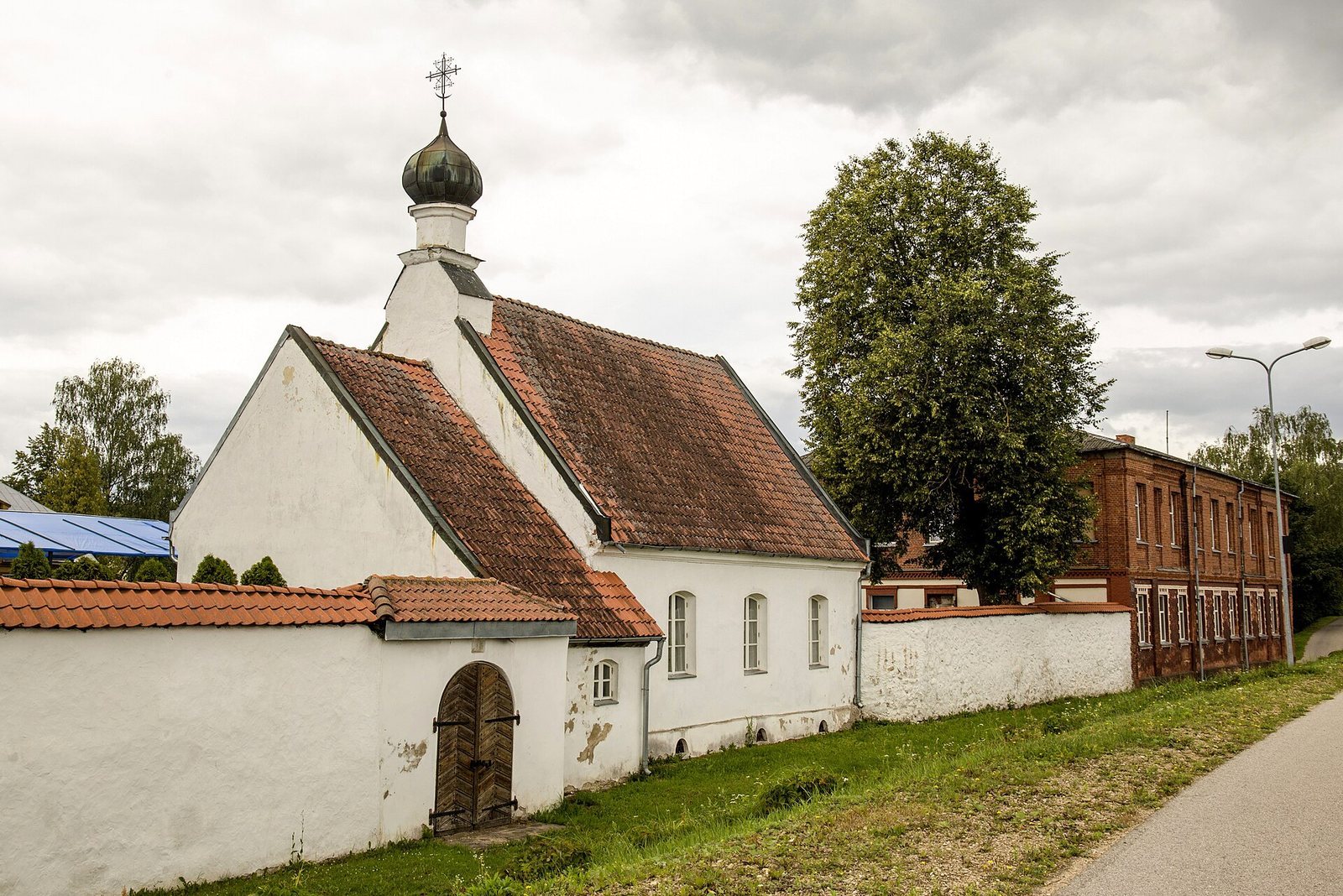
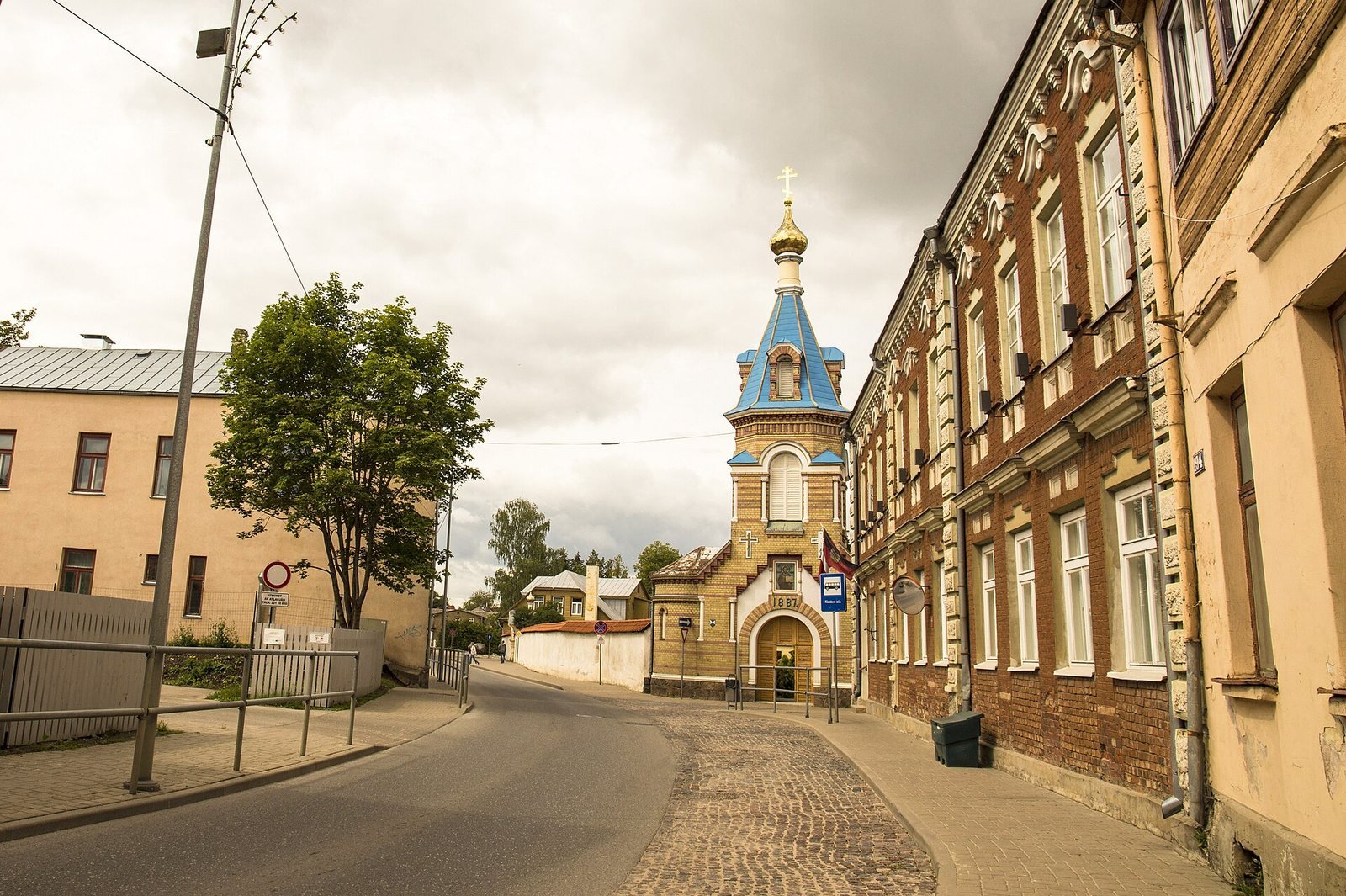
The monastery occupies part of Jēkabpils’s historic centre on the left bank of the Daugava. Its precinct is enclosed by a thick stone wall pierced by loopholes, narrow openings in a defensive wall. Ceremonial entrances known as Holy Gates have a bell tower above them. The complex also contains several buildings from different periods.
Church buildings
Holy Spirit Church
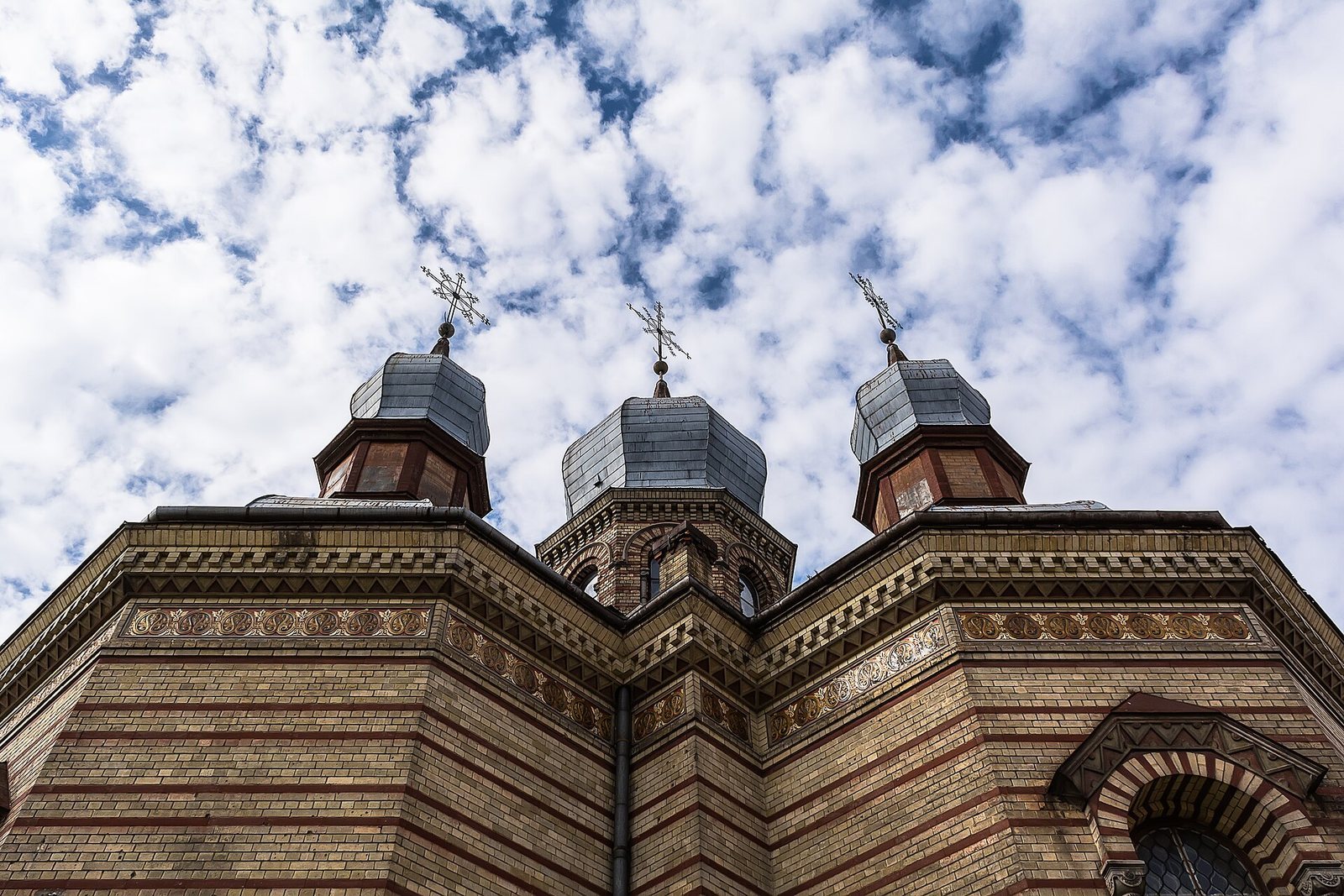
The first Holy Spirit Church was wooden and dates to 1670–1675. Renovated in 1882–1884, it burned and was blown up in 1885. A masonry successor was built in the late 1880s. The church is cross-shaped, with five domes and a bell tower, and follows Byzantine architecture.
Church of St Nicholas the Wonderworker
Built in 1774, this winter church was intended as a heated place of worship during colder months.
Chapel of St George the Great Martyr
The chapel, named for St George, a Christian martyr venerated as a soldier-saint, dates to 1887.
School building and icon
Among the other structures in the complex is a large, two-storey former Vladimir-Mariinsky School building.
The monastery houses the replacement Jacobstadt Icon of the Mother of God, a sacred image of Mary that occupies the place of the lost original. Painted in Moscow in 2008, the icon began to exude myrrh, fragrant oil regarded as miraculous in Orthodox tradition, during its consecration at the Church of the Deposition of the Robe in the Moscow Kremlin on 15 July. It reached Riga on 19 July and the monastery on 25 July.