Milicz Castle: A Historic Episcopal Residence in Poland


Site at a Glance
- Rating
- 4.7
- Popularity
- Low
- Country
- Poland
- Primary era
- Medieval
- Eras represented
- Medieval
- Civilizations
- Holy Roman Empire, Kingdom of Bohemia
- Site type
- Military
- Remains
- Castle
On this page6 sections
History
Origins and Medieval Development
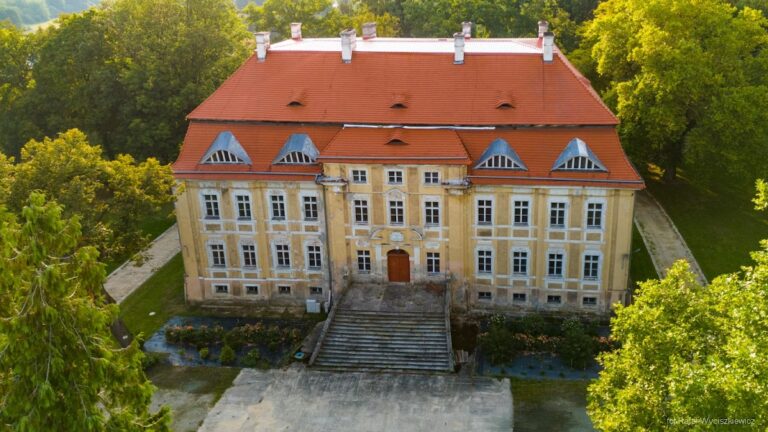
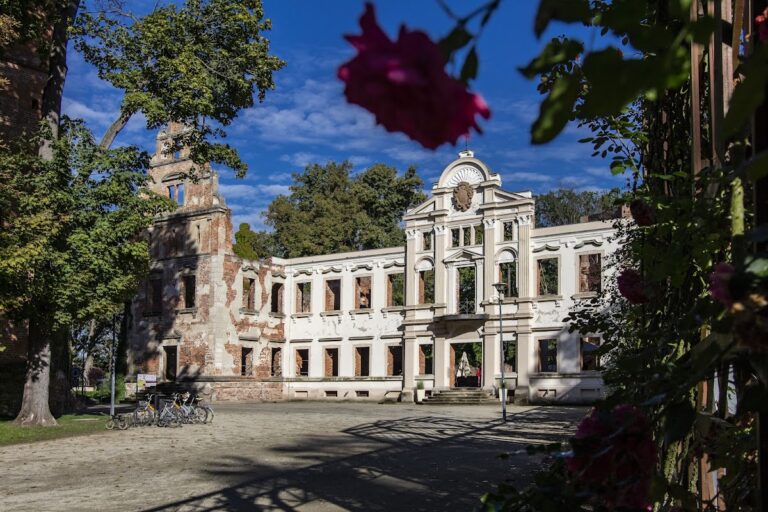
Milicz Castle is a historic castle in Milicz, Poland, beside the Barycz River. Its earliest phase now dates to the late thirteenth century, although it was formerly assigned to the mid-fourteenth century. The oldest masonry section was an episcopal palace, a bishop’s residence that could also serve administrative and representative purposes. At the time of its construction, the castle was the third-largest residence in Silesia.
Bishop Tomasz I of Wrocław may have founded the castle as his residence. A record from 1319, however, states that it was purchased from the Polish palatine Albert, suggesting that the site had previously belonged to a duke. The castle underwent repeated rebuilding and alteration, including a major phase in the fifteenth century.
The Milicz Agreement of 1282
On 8 May 1282, the castle hosted the Milicz Agreement between the Teutonic Order, a medieval military-religious organization that held territories around the Baltic Sea, and Mściwoj II, Duke of Gdańsk. The order challenged Mściwoj’s rights to Eastern Pomerania and referred the dispute to Pope Martin IV. The pope commissioned Filip of Fermo, his legate, or authorized representative, to investigate the case. For security, Filip stayed at the Wrocław bishops’ palace at Milicz while conducting the proceedings.
The dispute followed Mściwoj’s agreement with Przemysł II, Duke of Greater Poland, at Kępno in February 1282. In that agreement, Mściwoj donated his duchy to Przemysł. The later settlement at Milicz required Mściwoj to surrender the Land of Gniew and several villages in the Żuławy region to the Teutonic Order.
The Maltzan Lordship
The Maltzan family acquired the free state lordship of Milicz in 1590. This was a territory governed by a hereditary lord with special political and administrative rights. The lordship passed through Joachim III from 1590 to 1625, Joachim IV, Jan Bernard II, and Wilhelm jointly from 1625 to 1628, and Joachim IV again from 1628 to 1654. Joachim Andrzej I ruled from 1654 to 1693, followed by Joachim Wilhelm from 1693 to 1728, Franciszek from 1728 to 1729, Leopold Wilhelm from 1729 to 1735, Joachim Andrzej II from 1735 to 1786, Joachim Karol II from 1786 to 1817, Joachim Aleksander from 1817 to 1850, August from 1850 to 1878, Andrzej from 1878 to 1921, Joachim Karol III from 1921 to 1940, and Jan Mortimer from 1940 to 1945. During the final period, de facto rule was exercised by Elżbieta, Countess von Zech, widow of Joachim Karol III.
Joachim Wilhelm and Mikołaj Andrzej received Czech countly titles in 1694. In 1774, Count Joachim Andrzej received the hereditary office of senior treasurer of Lower Silesia. From the creation of the Prussian House of Lords, the upper chamber of the Prussian Parliament, in 1854, the free lord of Milicz held a hereditary seat.
Milicz Castle was entered in Poland’s register of historic monuments on 19 June 1961 under number A/2437/878. The entry reflected the then-prevailing view that the castle dated from the mid-fourteenth century, before later research identified its earlier late-thirteenth-century origins and several building phases.
Remains
Castle Structure
Milicz Castle developed beside the Barycz River through several building phases and repeated alterations. Its oldest identified masonry component is the episcopal palace, the earliest recognized part of the castle complex. The building also had three latrines, with one on each storey, an arrangement regarded as an exceptional luxury for its period.