Midhowe Chambered Cairn: A Neolithic Collective Burial Monument on Rousay
Site at a Glance
- Popularity
- Medium
- Country
- United Kingdom
- Primary era
- Stone Age
- Eras represented
- Stone Age, Modern
- Civilizations
- British
- Site type
- Burial
- Remains
- Burial Mound
On this page12 sections
History
Midhowe Chambered Cairn is a collective burial monument on southwestern Rousay in Orkney, United Kingdom. Built around 3500 BC during the middle Neolithic, the later part of the Stone Age, it was an Orkney–Cromarty chambered cairn. Its use for burials began in the early third millennium BC and continued for hundreds of years.
Burial and place-name
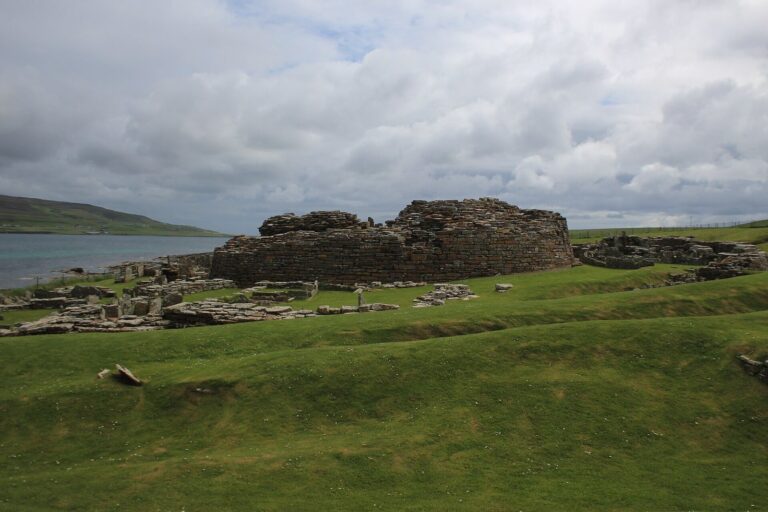
The cairn takes its name from the nearby Midhowe Broch, an Iron Age tower from the period that followed the Neolithic. This broch stood midway among three brochs grouped within 500 m. The cairn and broch form part of a larger complex beside Eynhallow Sound, between Rousay and Mainland Orkney. The name element “howe” comes from the Old Norse haugr, meaning a mound, barrow or cairn.
Disuse and modern care
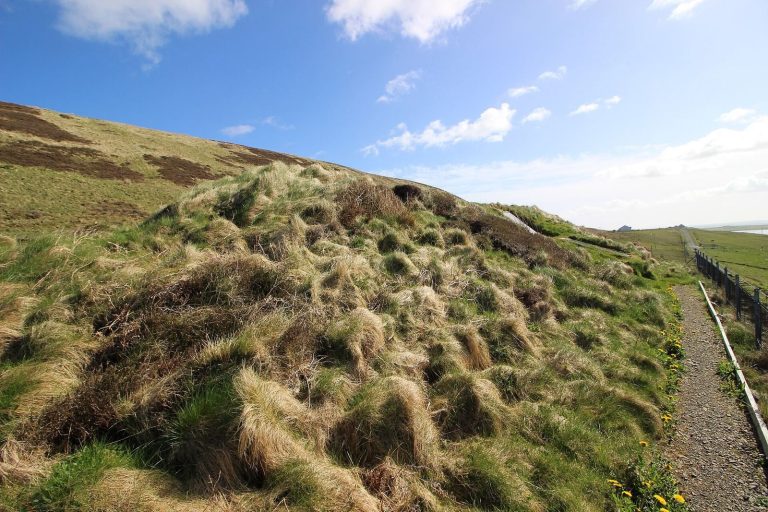
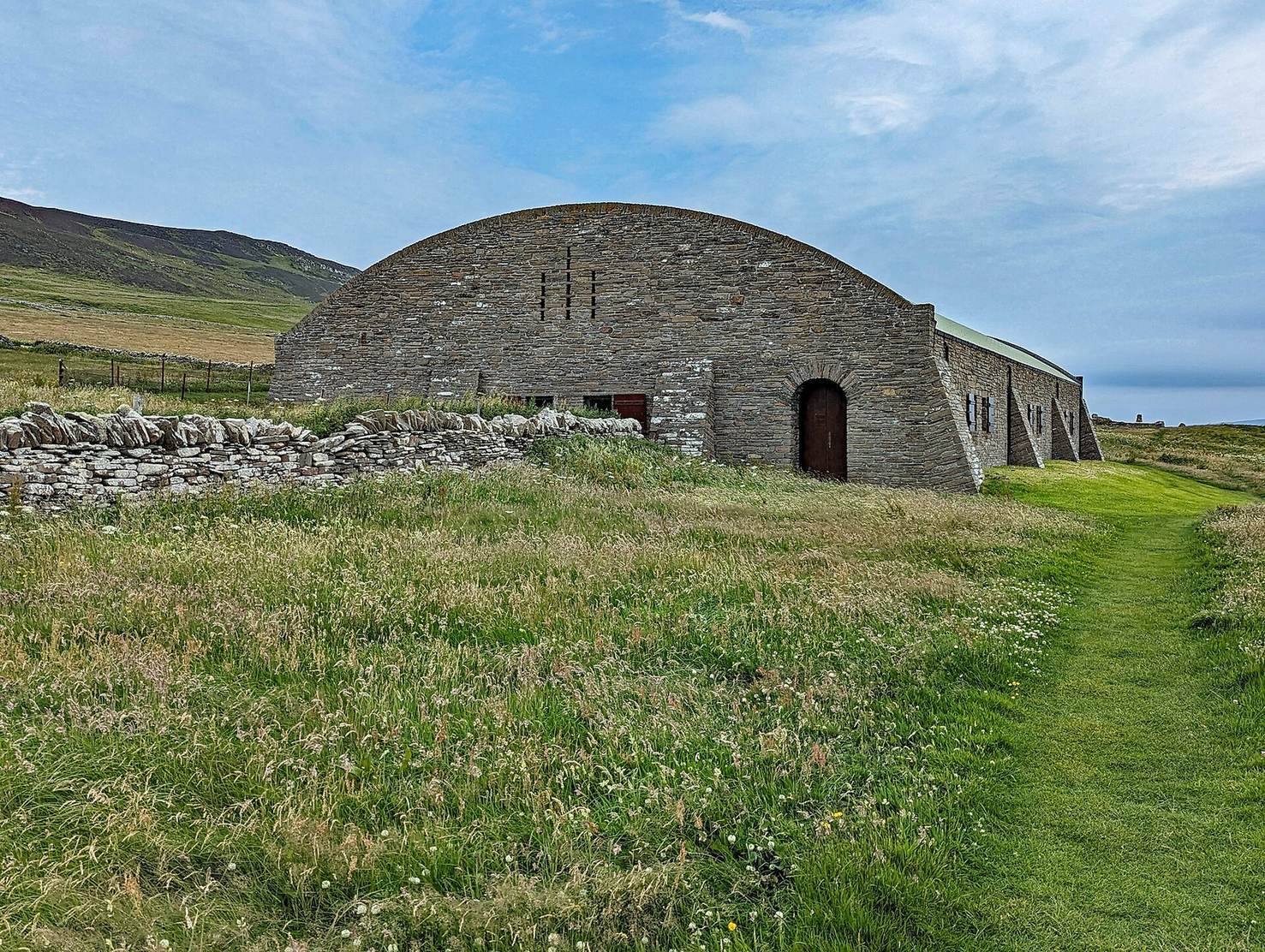
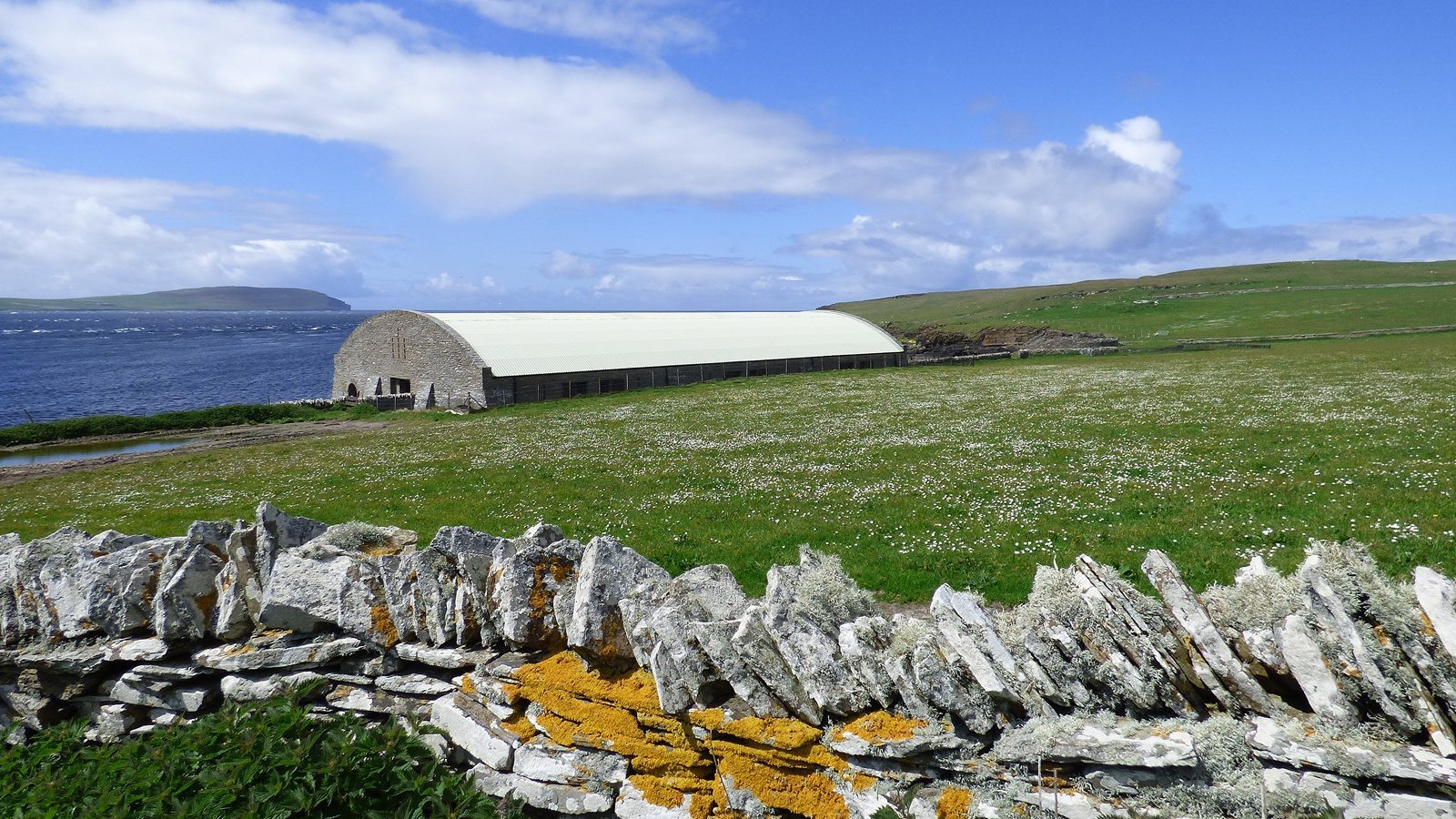
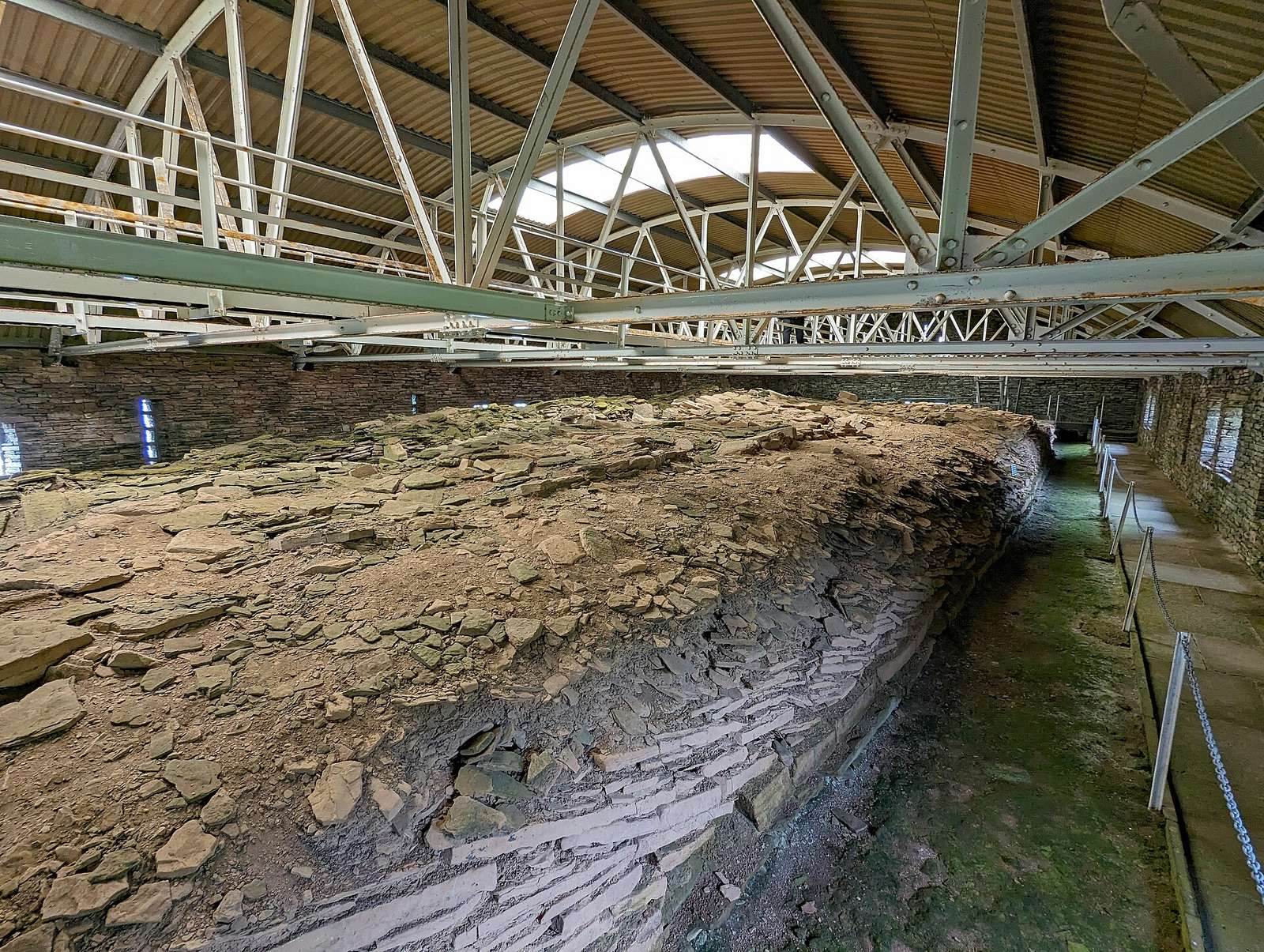
When the cairn ceased to be used for burials, its entrance was blocked and its interior deliberately filled with stones and debris. Excavation in 1932–33 was followed by the construction of a protective shelter and a platform above the cairn. The monument and surrounding Neolithic remains entered government care in 1934. Midhowe has been a Scheduled Monument, a legal designation for nationally important archaeological or historic sites in Scotland, since 1994.
Remains
The cairn lies about 20 m from the shore, with its long axis running northwest to southeast, parallel to the coast. Its rounded, elongated barrow measured about 33 m long and 13 m wide. The structure is also known as a stalled cairn, with a central passage flanked by compartments divided by paired upright stones.
The cairn
Barrow and stone walls
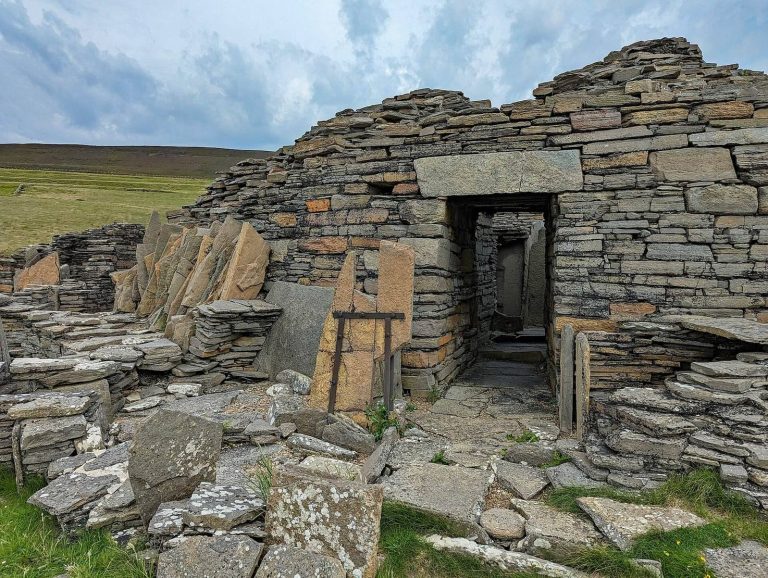
Three concentric stone walls supported the barrow and appear to have overlapped, giving its exterior a stepped form. The outer wall has patterned masonry: flat stones laid horizontally at the base support higher courses angled in opposing directions to create a herringbone design. The separate inner wall is made of horizontal flat stones and survives to about 1.8 m; the cairn’s walls reach about 2.5 m.
Passage and compartments
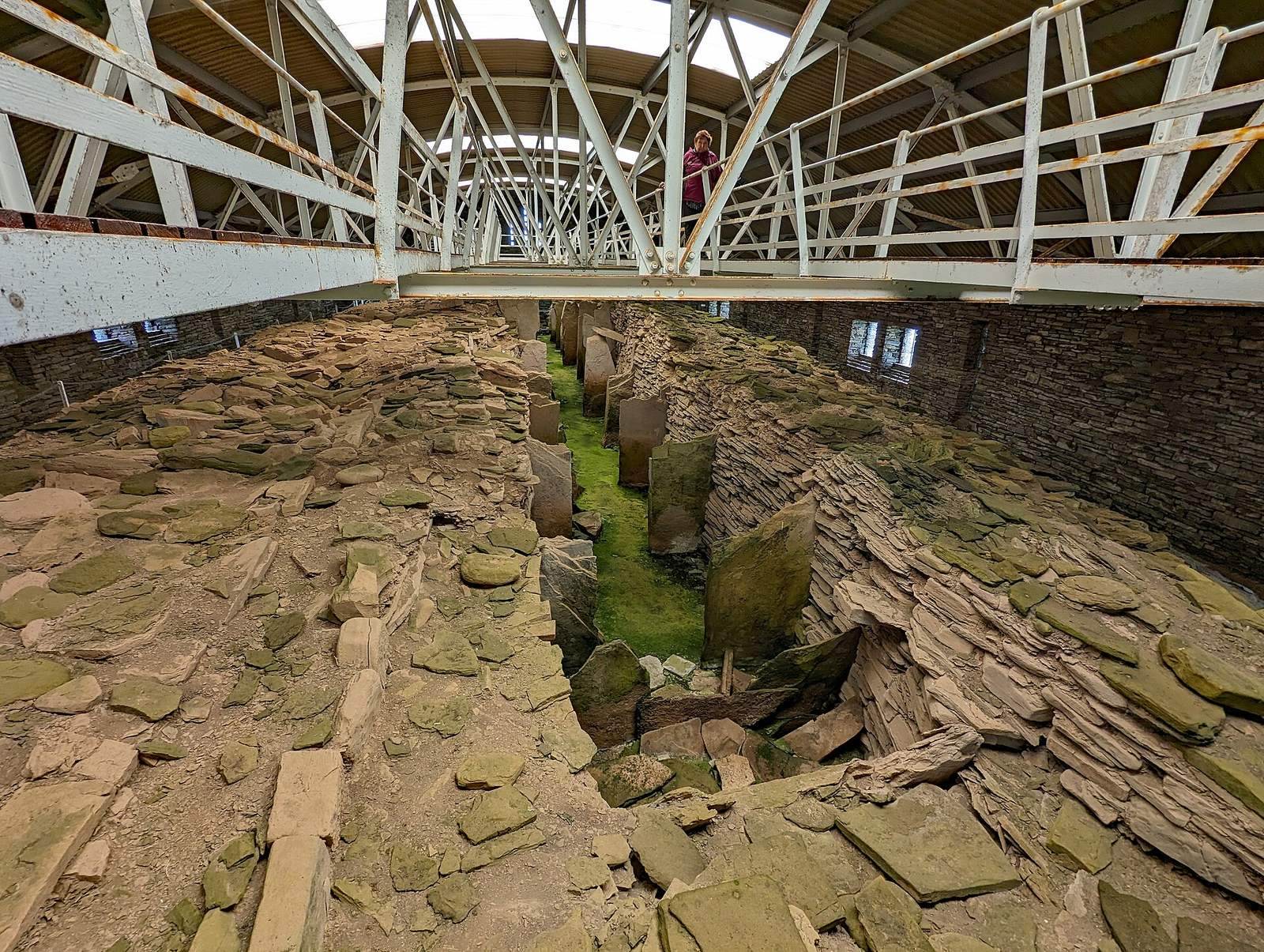
The central passage is about 23.6 m long and 2–2.4 m wide. Its entrance at the southeastern end was originally about 3.9 m long. Pairs of upright stones, reaching 2 m high, divide the spaces along the passage into twelve compartments, each about 1.2–2.1 m wide. Seven compartments had low stone benches or shelves. In the northernmost, low stones divided the space in two, and the inner part had a paved floor.
The original roof has disappeared. It may have used flat slabs at a height of 3 m or more, or an arch-shaped roof that could have reached 5 m. The cairn’s overall height is estimated at about 4 m. A hangar-like shelter now covers it, with a viewing platform above.
Forecourt and later structures
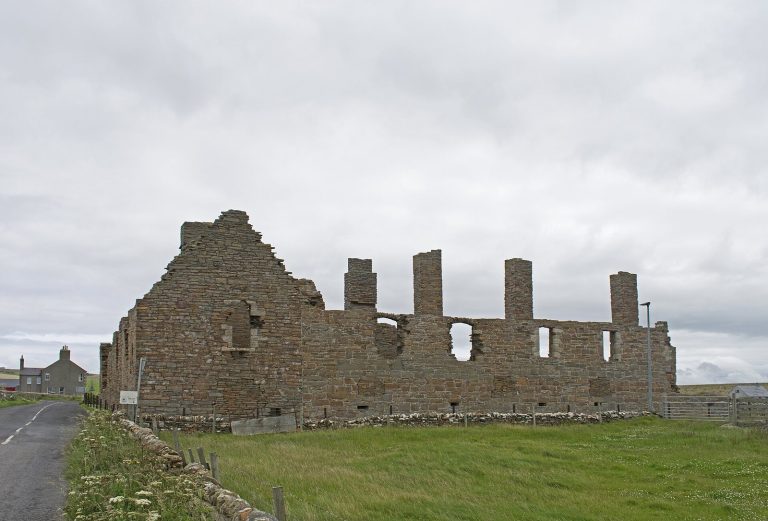
A horned forecourt adjoins the northern side of the barrow, aligned with its long axis. The curve suggested by its surviving horns indicates that the space may once have reached up to 70 m in diameter and could potentially have accommodated hundreds of people during ceremonies. At the cairn’s northwestern end, later reuse may have involved a passage leading to a chamber raised 0.9 m above floor level. Later structures at the northern corner include a rectangular stone water reservoir.
Burial evidence and finds
Human remains
The excavated remains represent at least 25 people. Nine skeletons lay on benches between the fifth and tenth compartments, counted from the entrance. Several were crouched with their backs against a side wall and their heads resting on supporting stones. Six shelves held groups of two to four people. Other bones were stacked in compartments or placed beneath benches, possibly after earlier burials had been moved to make space. In some cases only skulls remained; elsewhere, long bones were piled with a skull on top. Three skulls separated from skeletons stood upright on a bench. Two further skeletons lay in the rubble used to fill the cairn, one inside a stone coffin.
Pottery
Pottery from the seventh compartment on the southwestern side included examples with features of Unstan ware, a pottery style first identified at Unstan Chambered Cairn on Orkney Mainland in 1884. Examples of Unstan ware bowls were also found in the tomb. Some angled stones in the outer walls form patterns that echo the incised rims of these bowls, making the pattern part of the cairn’s visible design.
Animal remains
Animal remains include ox and sheep, as well as skua, cormorant, buzzard, eagle, gannet and carrion crow. Fish remains include bream and wrasse. The bream suggest that Neolithic waters around Orkney were several degrees warmer than they are today.