Maes Howe: A Neolithic Chambered Tomb on Orkney
Site at a Glance
- Popularity
- Very High
- Country
- United Kingdom
- Primary era
- Stone Age
- Eras represented
- Stone Age, Medieval, Modern
- Civilizations
- Norse, Norwegian
- Site type
- Burial
- Remains
- Tomb
On this page9 sections
History
Neolithic construction and use
Maes Howe is a Neolithic (New Stone Age) chambered tomb on Mainland Orkney, Scotland, in the United Kingdom. Farming communities in central Orkney probably built it around 2800 BC. Its builders belonged to a tradition associated with Grooved Ware, pottery decorated with incised grooves that emerged in Orkney around 3000 BC and later spread across Britain and Ireland.
Moving and setting the large stones required substantial communal effort. Estimates of the labor range from about 39,000 person-hours to at least 100,000, the latter proposed by archaeologist Colin Renfrew. The monument’s scale and setting have also prompted interpretations of community ceremonies, seasonal observances and remembrance of ancestors, alongside its purpose as a tomb.
In 1971, Peter Tompkins proposed that Maes Howe served chiefly as an astronomical observatory and calendar, and as a place for May Day ceremonies. His interpretation drew on the chamber’s design and supposed astronomical sightlines. It remains an alternative explanation, rather than an established account of the monument’s purpose.
Norse use and medieval accounts
The Orkneyinga saga, a medieval narrative about Orkney and its Norse rulers, preserves the Old Norse name Orkahaugr. Its ending, haugr, means “mound” or “burial mound,” and the full name has been interpreted as “Ork’s mound” or “Orkney’s mound.” The later Scots name retains the element howe, derived from haugr, while the origin of “Maes” remains uncertain. These names arose long after the tomb was built.
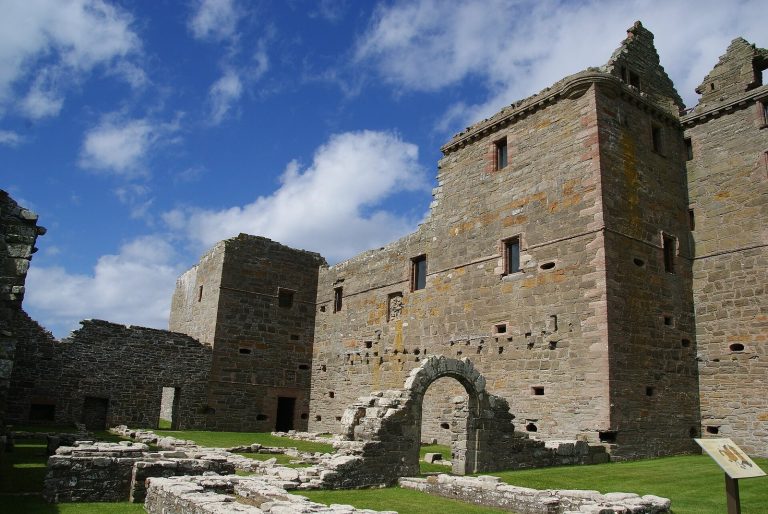
The outer wall around the ditch was rebuilt in the ninth century. This work has been interpreted as possible evidence of Norse reuse. During the twelfth century, Norse visitors entered the chamber through the roof rather than using the original passage. More than thirty runic carvings, made by several hands, indicate that people entered on multiple occasions.
The Orkneyinga saga tells of a party led by Harald Maddadsson, Earl of Orkney, and Rognvald, Earl of Møre in western Norway. In the story, they sheltered in the mound during a snowstorm and later broke into the chamber in search of treasure. The saga blends history and legend, but its account broadly accords with evidence for Norse entry.
Excavation and modern recognition
In July 1861, antiquarian and Member of Parliament James Farrer and a group of workmen opened the monument. After finding the entrance passage filled with debris, they broke through the mound from above and cleared the central chamber over several days. The work brought the runic carvings to light, revealing a medieval chapter in the tomb’s history. Farrer’s excavation was later criticized for its rough methods and limited publication.
Photographic imaging that combines views taken under different lighting now helps researchers examine faint rune marks and the order in which they were cut. Maes Howe is a scheduled monument, a legally protected archaeological site in Scotland, and part of Heart of Neolithic Orkney. The wider property, which includes Skara Brae, the Standing Stones of Stenness and the Ring of Brodgar, joined the UNESCO World Heritage List in December 1999.
Remains
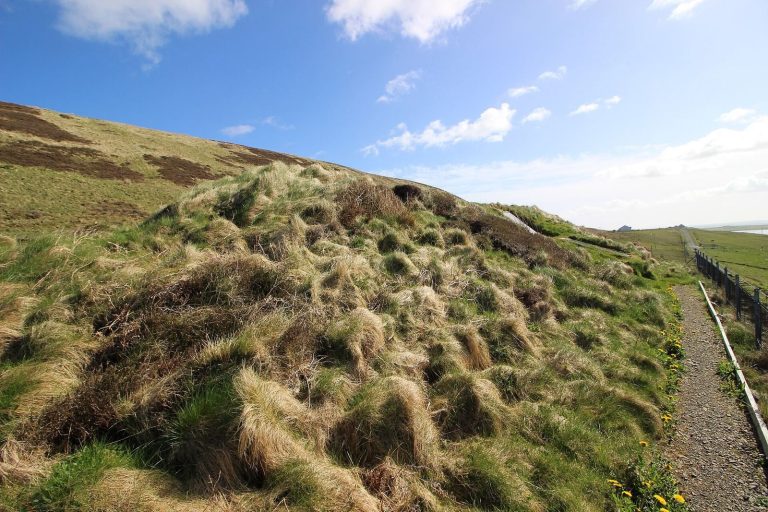
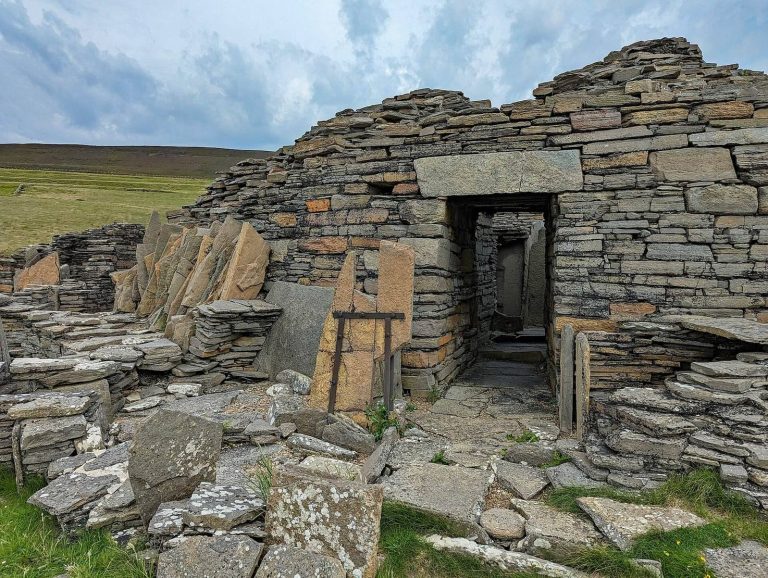
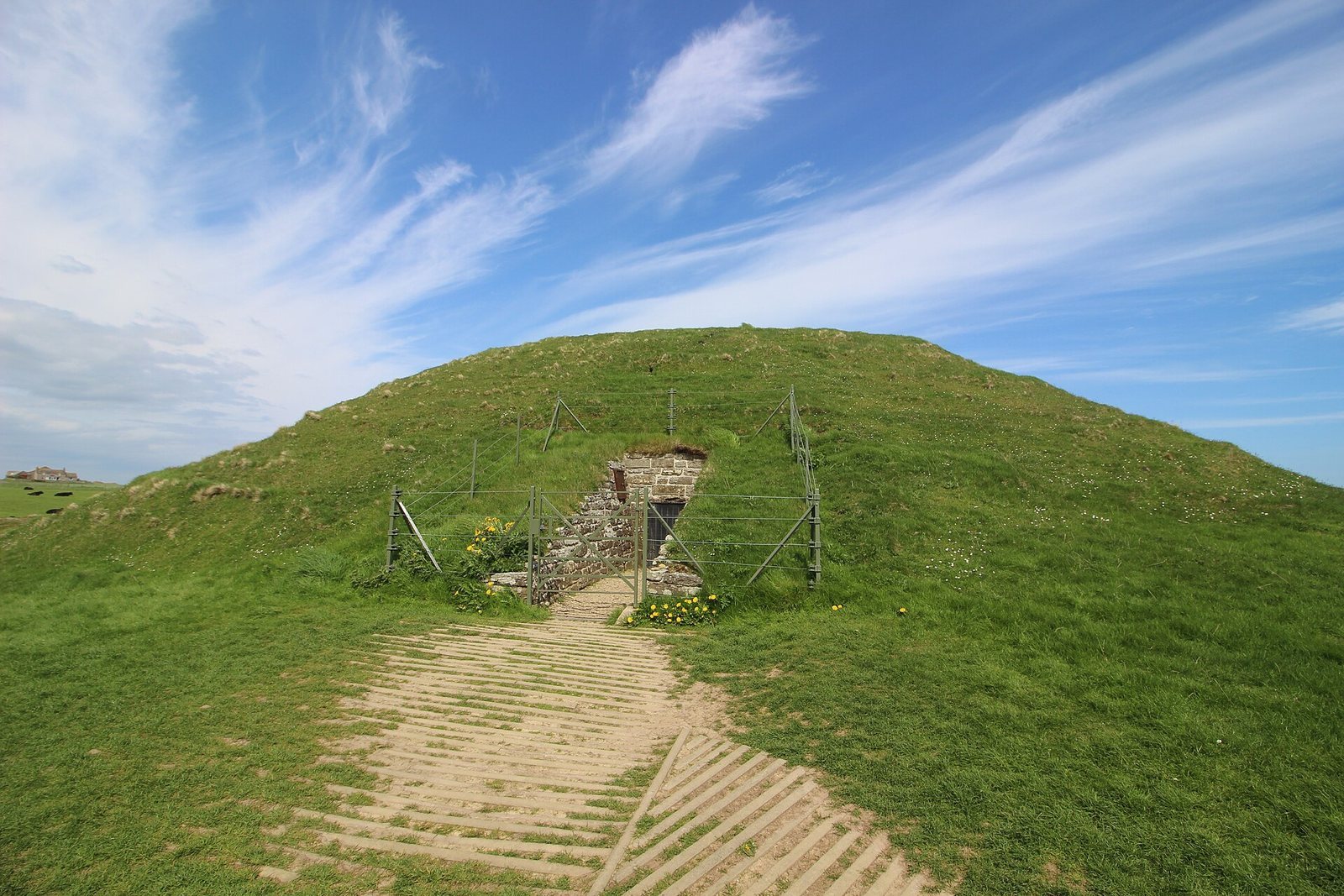
A grass-covered mound and surrounding ditch enclose a stone tomb built from large local flagstones. A long, low passage leads inward to a nearly square central chamber, with a smaller chamber at the rear. The arrangement combines an earthwork with carefully fitted stone architecture.
Earthwork and setting
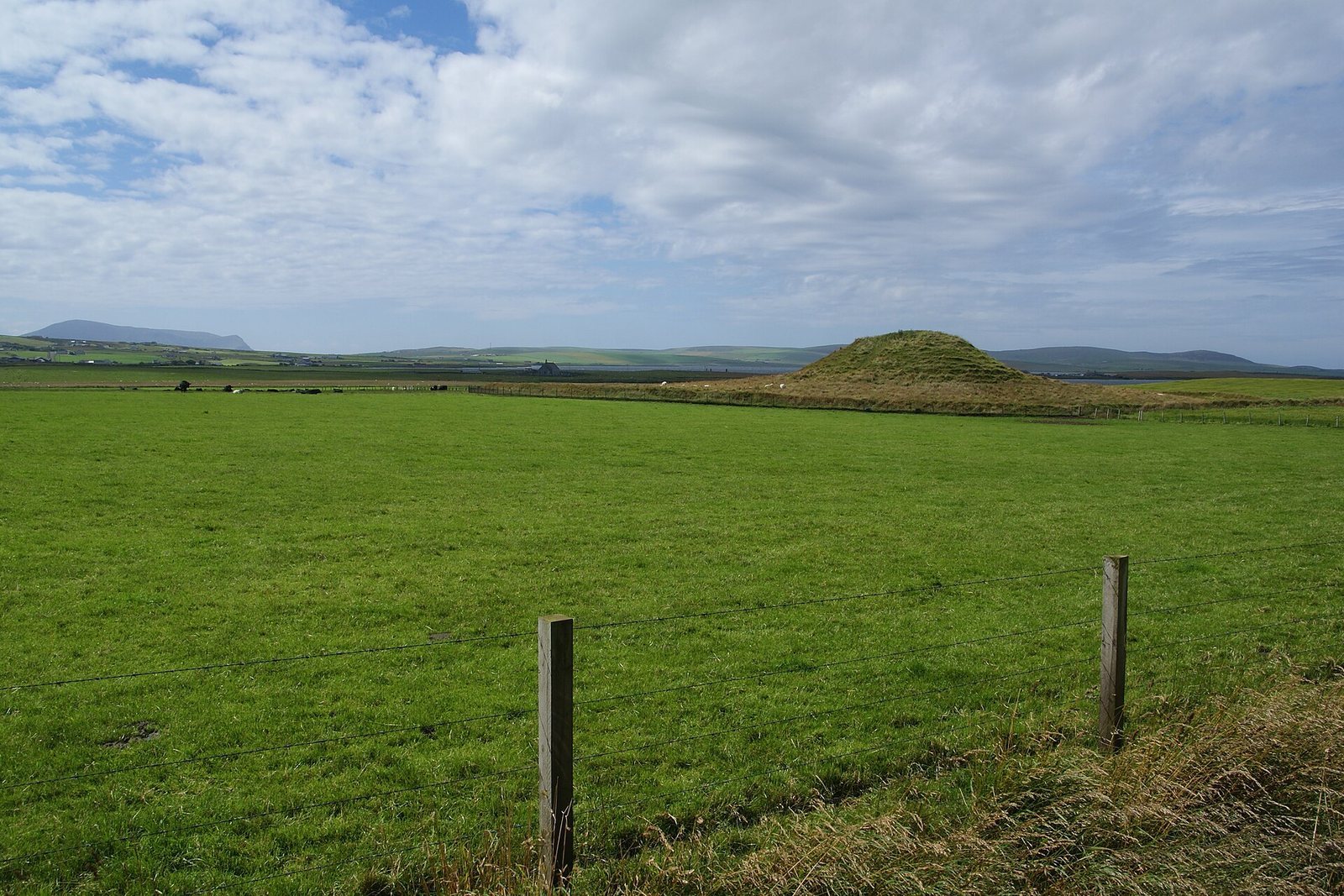
The mound measures about 35 metres across and stands 7.3 metres high. Its encircling ditch lies about 15 to 21 metres from the mound and reaches up to 14 metres in width. Maes Howe occupies a flat plain near the southeast end of the Loch of Harray. Pollen evidence indicates mixed agriculture in the surrounding area, with pastoral activity alongside cereal cultivation.
Passage and chamber
The entrance passage is about 11 metres long and only about 0.91 metres high. It opens into a central chamber measuring approximately 4.6 metres on each side. Some of the local flagstone slabs used in the structure weigh as much as 30 tons. The chamber’s surviving original stonework reaches about 3.8 metres. A modern roof covers it, built from stone courses that project inward until they meet; the original roof may have risen to about 4.6 metres or more. Large angled support stones rise from the chamber’s corners, and overlapping stones above them create a beehive-shaped ceiling.
Maes Howe gives its name to a chambered-tomb type found in Orkney. These tombs have a long, low entrance leading to a square or rectangular chamber with access to side chambers. Seven examples are firmly assigned to the type: Maes Howe, Cuween Hill, Wideford Hill, Quanterness, Quoyness, Vinquoy Hill and an unnamed tomb on Holm of Papa Westray.
Alignments in the Neolithic landscape
The passage is aligned so that sunlight at sunset around the winter solstice travels into the chamber, reaching its rear wall and illuminating the entrance to the rear chamber. Nearby features connect Maes Howe with a wider ceremonial landscape. The entrance to Structure 8 at the Barnhouse Settlement faces the mound, while the Barnhouse Stone, about 700 metres away, aligns with the tomb’s entrance. A prehistoric route linked Maes Howe with Skara Brae, passing near the Standing Stones of Stenness and the Ring of Brodgar. Maes Howe also aligns with the entrance and central axis of the temple at Ness of Brodgar. Archaeologists involved in excavations there, begun in 2003, have argued that the alignment reflects a shared plan. Some have also proposed that a large stone circle once surrounded the mound.
Norse inscriptions
Informal runic graffiti covers parts of the chamber walls. The carvings include a boast by a rune-carver who claimed to be the most skilled west of the ocean, a compliment describing Ingigerth as the most beautiful of women, and the names of carvers. One identifies Ofram as the son of Sigurd. A section of the carved stonework has been moved to the Museum of Scotland in Edinburgh.