Mashtots Hayrapet Church of Garni: A 12th-Century Armenian Apostolic Church

Site at a Glance
- Rating
- 4.9
- Popularity
- Very Low
- Country
- Armenia
- Primary era
- Medieval
- Eras represented
- Medieval
- Civilizations
- Armenian
- Site type
- Religious
- Remains
- Church
On this page9 sections
History
Mashtots Hayrapet Church of Garni is a small Armenian Apostolic church in Garni, Armenia, built in the 12th century on the site of an earlier pagan shrine. The surviving building is broadly dated to the 12th and 13th centuries and remains affiliated with the Armenian Apostolic Church, an ancient Christian church belonging to the Oriental Orthodox tradition.
Origins and Names
The church is traditionally named for Mashtots Eghivardetsi, an Armenian catholicos, or senior head of an autocephalous Christian church, who died at Garni in 897. Preserved inscriptions give the church another name, Surb Astvatsatsin, meaning “Holy Mother of God.” In the 14th century it was also known as Sumpents Monastery.
Its construction on the site of a former pagan shrine links the Christian building with an earlier religious landscape. A carved red-tufa stone near the entrance to the grounds is associated with that predecessor site. Its image of a bird on a floral stem, with an eternity rosette below the tail, has been connected with pagan ideas of the sun or moon and the recurring pattern of life, death, and rebirth.
Inscriptions and Restoration
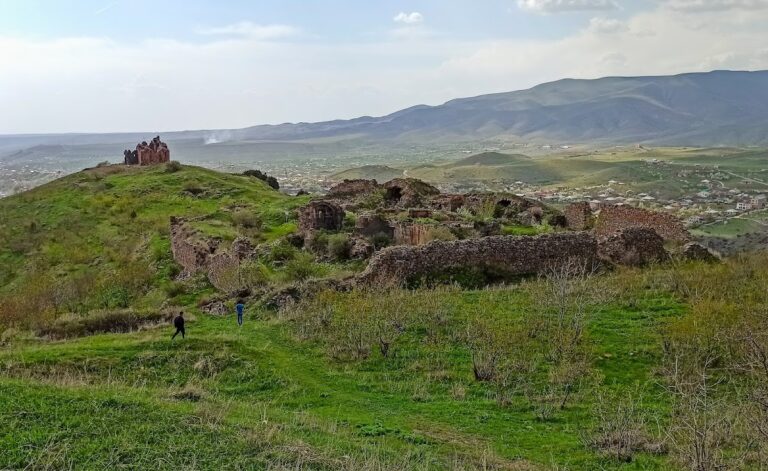
Inscriptions on the church date from 1315 and 1341. The building later fell into ruins before being restored by the architect Gagik Soghomonyan. It remains an active church and is recognized as a cultural monument in Armenia.
Remains
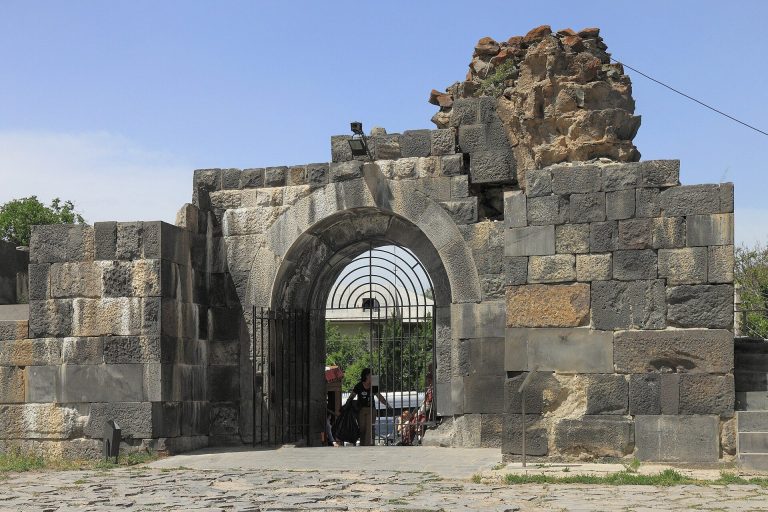
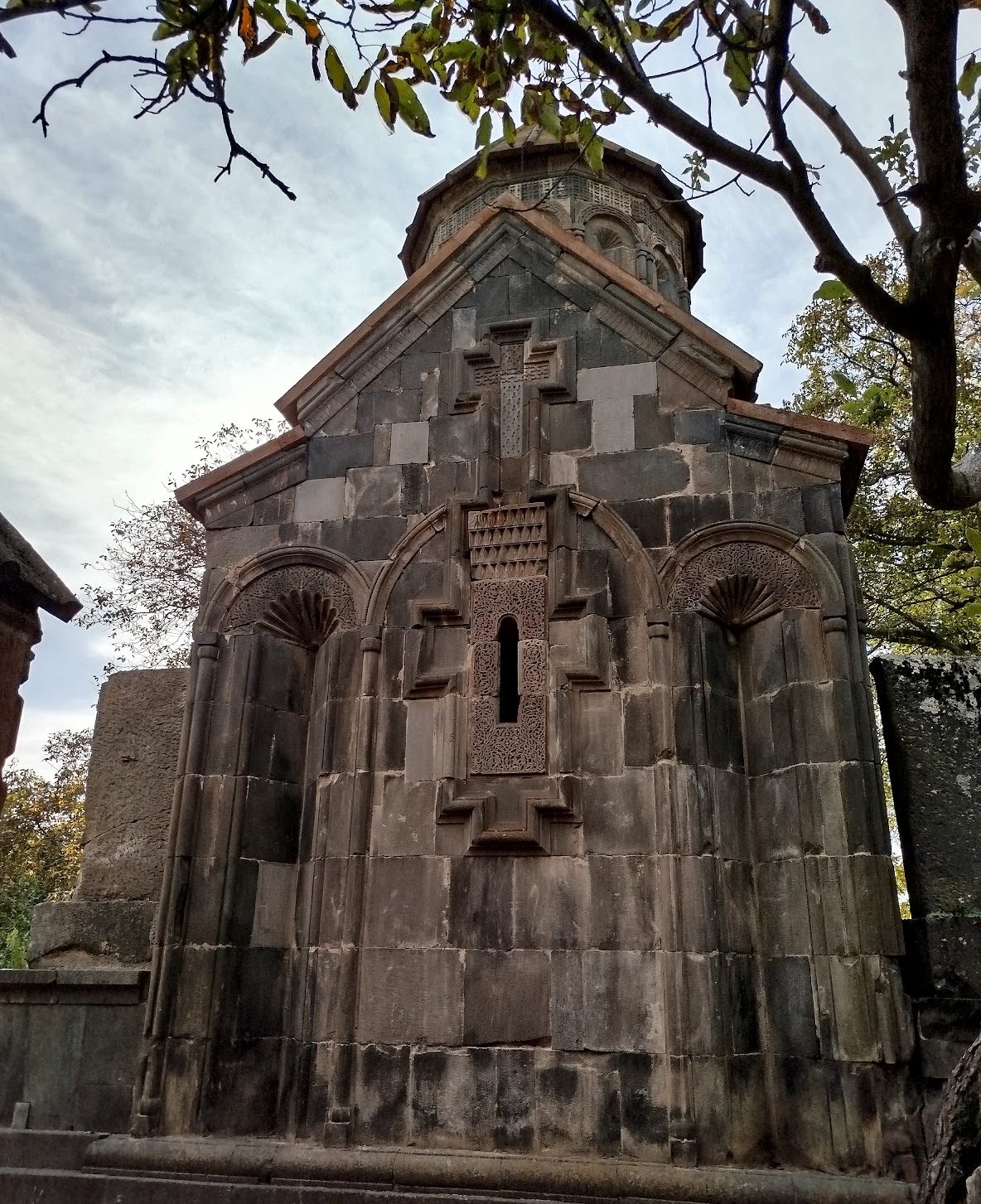
The church stands on the eastern side of Garni within grounds enclosed by a wall and containing a cemetery. It is a small central-domed building, described both as a cruciform central-plan church with one drum and dome and as a single-nave, central-domed structure with a square exterior. A drum, the raised structure supporting a dome, crowns the building.
Church Building
Tufa Construction and Ornament
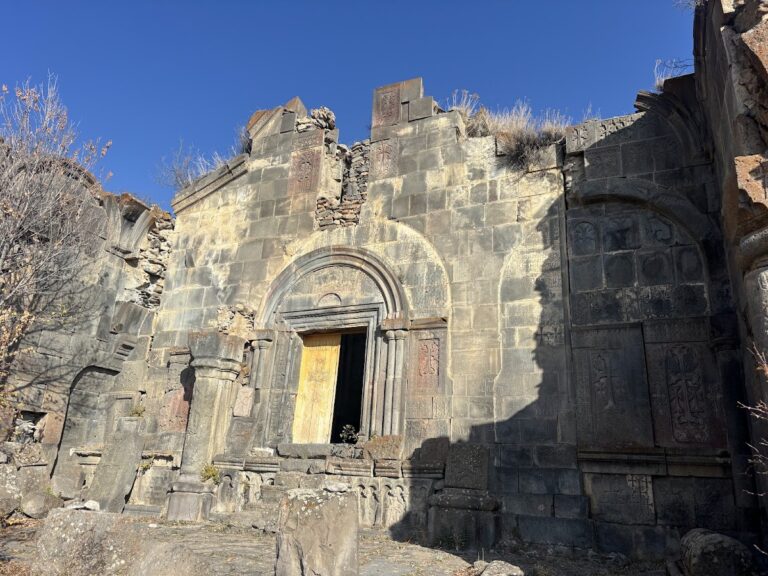
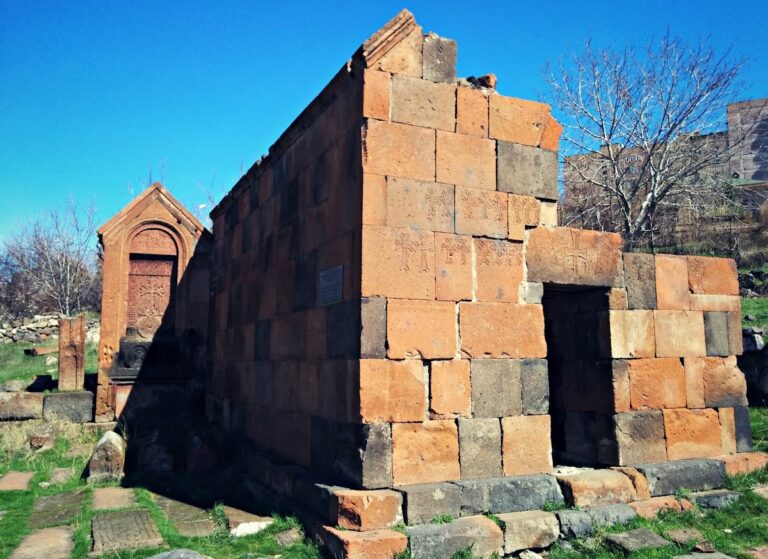
Mashtots Hayrapet is built from tufa, a porous volcanic stone widely used in Armenian construction and carving. Dark gray stone is combined with red-tufa inlays around the windows, roof, and dome. Niches and carved rosettes decorate the drum, while geometric and foliate ornament covers the four facades, windows, portal, dome, and other exterior surfaces. Three walls contain two elongated niches. The entrance facade includes a khachkar, an Armenian carved cross-stone, and vegetal wall paintings, while the interior apron around the apse is intricately carved.
Khachkars and Memorial Features
South-Side Memorials
A khachkar-mausoleum attached to the south side carries donor inscriptions. Nearby, a separate khachkar enclosed by a wall bears an inscription naming the married couple Hovhannes and Aghvorik, who erected it. Several other carved cross-stones are distributed around the grounds, including one beside the church that resembles a small shrine and additional examples in the courtyard.
Mashtots Eghivardetsi Chapel
A tombstone attributed to Mashtots Eghivardetsi lies inside a chapel called Mashtots Hayrapet near Garni’s pagan temple. The chapel and the church preserve the connection between the remembered catholicos and Garni, reflected in the church’s traditional name.