Aghjots Vank: A Medieval Armenian Monastery in Armenia
Site at a Glance
- Rating
- 4.9
- Popularity
- Very Low
- Country
- Armenia
- Primary era
- Medieval
- Eras represented
- Medieval
- Civilizations
- Armenian
- Site type
- Religious
- Remains
- Monastery
On this page12 sections
History
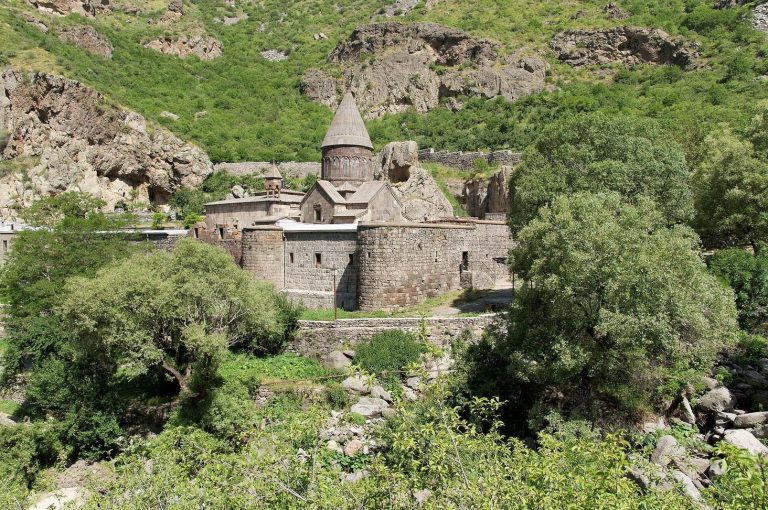
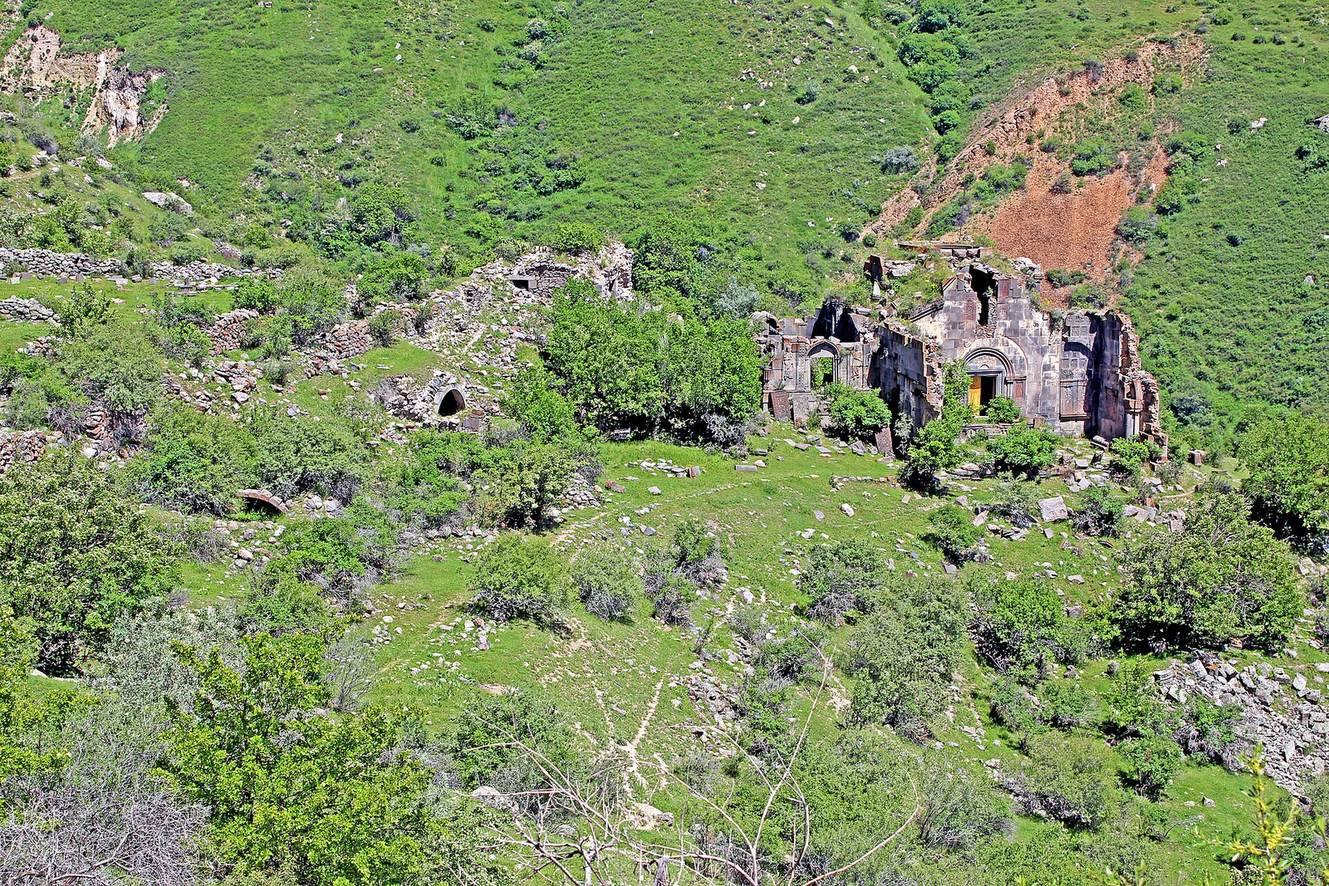
Aghjots Vank is a medieval Armenian Apostolic monastery in Armenia, built chiefly during the thirteenth century in the tradition of Armenian architecture. It stands in the Khosrov State Reserve near Garni and Goght, beside a tributary of the Azat River and near the abandoned village of Aghjots, whose name the monastery bears.
Traditions of Foundation
The monastery is traditionally associated with the martyrdom of Saint Stephen, regarded as a companion of Saint Hripsime, during Armenia’s conversion to Christianity in 301. In this tradition, Hripsime and other Christian nuns had fled Rome after the Roman emperor Diocletian threatened Hripsime with forced marriage. Gregory the Illuminator, the missionary traditionally credited with converting Armenia and establishing Christianity as the kingdom’s state religion, is locally said to have founded the monastery. Its exact foundation date, however, is unknown.
Aghjots Vank formed part of a wider concentration of historic sites in the reserve. The nearby fortress of Kakavaberd and the monastic complex of Havuts Tar are also located within the Khosrov State Reserve.
Thirteenth-Century Construction
Most of the surviving complex was built or commissioned in the thirteenth century. Prince Grigor Khaghbakian and Princess Zaza are associated with the principal building campaign of 1217, while further construction was funded by Ivane Zakarian, a medieval Armenian nobleman and military-political leader, together with Grigor Khaghbakian. Their son, Prince Vasak, is associated with the construction of the Church of Saints Paul and Peter.
Saint Stephen Church was constructed between 1212 and 1217. The gavit, an entrance and assembly hall attached to an Armenian church, was added to its western side between 1217 and 1234. The Church of Saints Paul and Peter followed in 1270. Its western doorway preserves an inscription giving that construction date.
Destruction and Later Decline
Persian forces sacked the monastery in 1603, after which it was restored. A major earthquake in 1679 destroyed Aghjots Vank, Havuts Tar, and the ancient temple at Garni. The monastery was later looted during the eighteenth century and was finally ruined during the Armenian–Tatar massacres of 1905–1906, a period of intercommunal violence in the Russian Empire, including Armenia.
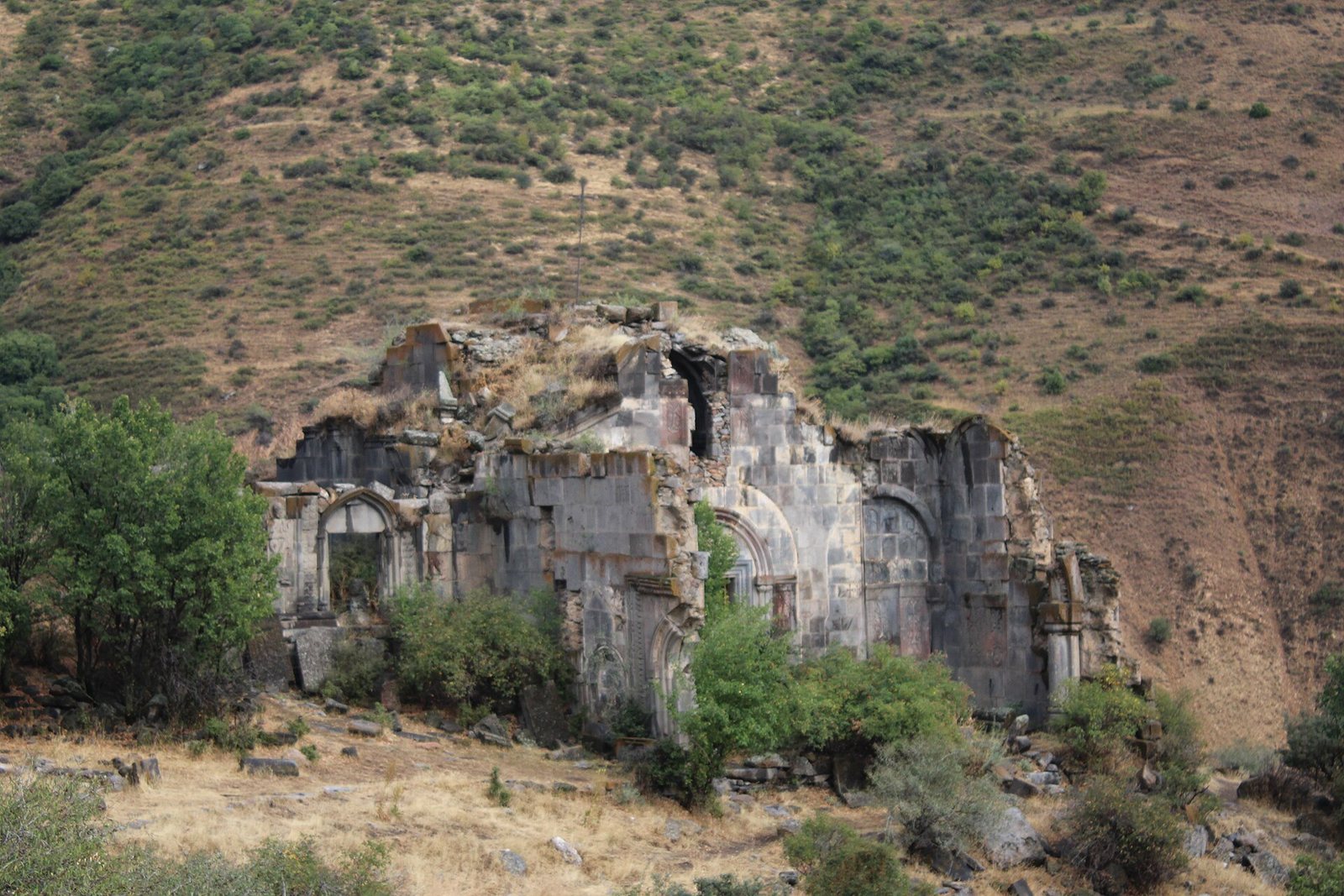
Aghjots Vank is now abandoned and remains in ruins. It is included among Armenia’s monuments protected by the Ministry of Culture and has appeared on the World Monuments Fund watch list. The complex is nevertheless in a severely neglected and unstable condition. Vandalism and modern graffiti have damaged or obscured historic inscriptions, while fires and soot have affected many of the khachkars. A resident of a nearby settlement is described as maintaining the site voluntarily, although inappropriate modern use has also left traces of fires made for barbecuing around Saint Stephen Church.
Remains
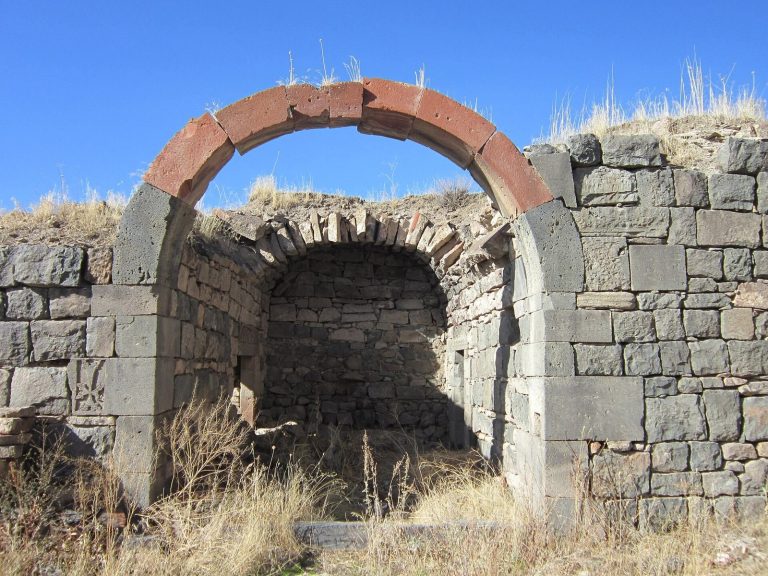
Aghjots Vank consists of Saint Stephen Church, the attached Church of Saints Paul and Peter, the western gavit, monastic buildings, and associated burial grounds. The principal structures are built in the Armenian architectural tradition. Their surviving fabric is fragmentary, and the complex is structurally precarious. The roof of Saint Stephen Church is partly destroyed, while the altar area of the Paul and Peter Church survives in a ruined condition.
Churches and Gavit
Saint Stephen Church
Saint Stephen Church is the main building of the complex and dates from 1212–1217. It has a domed cruciform plan, four portals, four corner spaces, and single-storey chambers along its sides. Both the interior and exterior are architecturally simple. The church’s roof has been partly destroyed, leaving the principal structure exposed to the continuing risks associated with its unstable condition.
Church of Saints Paul and Peter
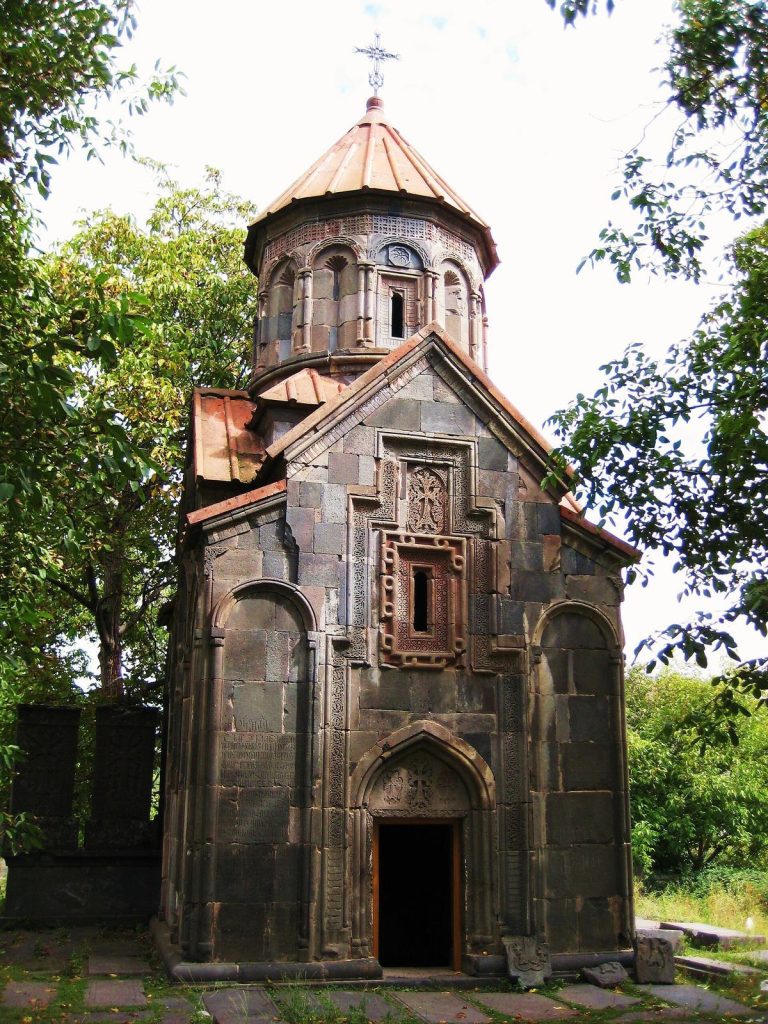
The Church of Saints Paul and Peter is attached to the northern wall of Saint Stephen Church and was built in 1270. It is a vaulted building with a simple plan, a semicircular eastern apse, and side chambers. A construction inscription from 1270 remains on the lintel of the western doorway.
High-relief carvings of the apostles Peter and Paul flank that entrance. Peter appears on the left and Paul on the right. The sculptures are regarded as exceptional examples of medieval Armenian sculpture, and additional relief decoration survives on the church walls. The altar area is now ruined.
The Gavit
The gavit was added west of Saint Stephen Church between 1217 and 1234. It belonged to the four-column type, with a roof formed by two pairs of intersecting arches. Part of the structure has collapsed down the slope, and only sections of its eastern walls remain. Its original role as an entrance or assembly hall placed it between the church and the wider monastic complex.
Inscriptions, Khachkars, and Cemeteries
Inscriptions and Khachkars
Inscriptions survive on the churches and the gavit, including the date-bearing inscription on the western doorway of the Paul and Peter Church. Modern graffiti increasingly covers some of these texts. Several khachkars, carved Armenian stone crosses with ornamental stonework, date from the twelfth to the seventeenth centuries. Some were incorporated into the monastery walls. Soot and thick layers of melted wax cover many of them.
Cemeteries
A large cemetery surrounds the monastery and contains numerous khachkars. Another cemetery lies approximately 150 metres to the west on a hill. Its graves date from the seventh to the seventeenth centuries, providing a burial landscape that spans the period before and after the principal thirteenth-century building campaign.