Marienthal Monastery: A Dominican Convent in Luxembourg
Site at a Glance
- Popularity
- Low
- Country
- Luxembourg
- Primary era
- Early Modern
- Eras represented
- Early Modern, Modern
- Civilizations
- Holy Roman Empire
- Site type
- Religious
- Remains
- Monastery
On this page13 sections
History
Marienthal Monastery is a former convent for women in Marienthal, Luxembourg, founded in 1232 by Theodoric, lord of Mersch, as a house for noblewomen. Its medieval development included a Gothic convent church, completed and consecrated in 1296. Theodoric endowed the community with land he had acquired from St Maximin Abbey in Trier. A local tradition links the choice of site to the miraculous discovery of a stone statue of the Virgin Mary in a tree.
Foundation and growth
The first residents formed a community resembling that of the Beguines, women who shared a religious life without necessarily taking formal monastic vows. In 1236, two Dominican sisters arrived from Strasbourg, probably at the urging of Walter of Meisembourg, a Dominican. One of them, Margareta, remained and became the first prioress, or leader of the convent. The community followed the Augustinian Rule, a framework for religious community life, while under Dominican authority. In 1248, Pope Innocent IV placed its spiritual leadership within the German province of the Dominican Order, a Catholic religious community founded by Saint Dominic.
The monastery was initially poor, but its fortunes improved after Yolanda of Vianden became the second prioress in 1258. Gifts of land and other support from the counts of Vianden and Luxembourg helped it grow. Yolanda established a library and encouraged the community’s economic and cultural life. Under her leadership, the Gothic convent church was completed and consecrated in 1296.
Dominican observance and rebuilding
In 1314, the new prioress, Marguerite of Luxembourg, abandoned the Augustinian Rule. The community thereafter observed the Dominican Rule exclusively and strictly. Marguerite was a daughter of Henry VI of Luxembourg and a sister of Henry VII, who later became Holy Roman Emperor.
The Thirty Years’ War, a major European conflict fought from 1618 to 1648, and an outbreak of plague nearly destroyed the community in 1636. Only six young nuns survived. Following an appeal to the pope, a small group of reinforcements arrived from Augsburg, including women of high rank, and convent life resumed under their leadership.
Marie-Reine Elisabeth, countess of Daun and prioress from 1661 to 1681, commissioned a side aisle for the church. She also established a residence for the sisters in the city, beyond the monastery walls, and parish churches at Tënten, Uewerpallen, Biekerech, Frellen, and Recken. During the prioress-ship of Marie-Catherine de Manteville, from 1709 to 1740, the dilapidated monastery was rebuilt and enlarged. She established a monastic farmstead on the hill above it and commissioned parish churches at Réissech, Tarchant, Rammerech, Woulker, Sterpenech, Réisseng, Gierleng, and Habergy. From 1751, the community admitted only women who could demonstrate four generations of noble ancestry.
Suppression and changing ownership
In 1783, Joseph II, the Habsburg ruler and Holy Roman Emperor, dissolved contemplative religious communities in territories under Habsburg rule, including Marienthal. The nuns received pensions too small to support them. Many moved in with relatives, while some who had nowhere else to go remained among the monastery’s buildings. The furnishings were sold for the state religious treasury. The main altar and organ went to Jonglënster; two large side altars went to Steesel, and others to Stadgronn and Tënten. The pulpit went to Conter and the choir stalls to Branebuerg. The priest Hostert recorded the destinations of numerous statues and relics. The buildings were first used as a military hospital.
After French revolutionary troops occupied Luxembourg, the monastery was sold as national property in 1795. The state bought it back in 1815, after Luxembourg again became a grand duchy. Between 1830 and 1840, the Neyen family converted the complex into a country estate. It was sold to the count of Ansembourg in 1868. Count Friedrich Mathias von Spee bought the grounds and buildings in 1883, intending to establish a Dominican community there, but the plan did not take hold. The property was sold again in 1890.
Missionary, refuge, and public uses
The Society of the Missionaries of Africa, commonly known as the White Fathers, acquired the monastery in 1890; part of the property also passed to the Sisters of Christian Doctrine, a Catholic religious congregation. In October, the first candidates arrived to train as missionaries for the colonies. A new training monastery for prospective priests opened in Trier in 1894, but the White Fathers kept Marienthal and built a church there.
In 1940, the monastery sheltered refugees from areas near the front. Nazi authorities requisitioned it in 1941 for a re-education home for boys, then later returned it to the White Fathers. After the war, it again provided emergency shelter and subsequently served as a refugee service. The White Fathers left in 1974, when the Luxembourg state bought the buildings. The National Youth Service began using them in 1977. The state acquired the neighboring farm in 1999, and asylum seekers were housed there from that year until 2010.
The grounds and buildings became a national monument on 13 September 2002. A renovation law followed in 2008, and comprehensive renovation began in 2010. The buildings now serve as the Marienthal Youth Centre.
Remains
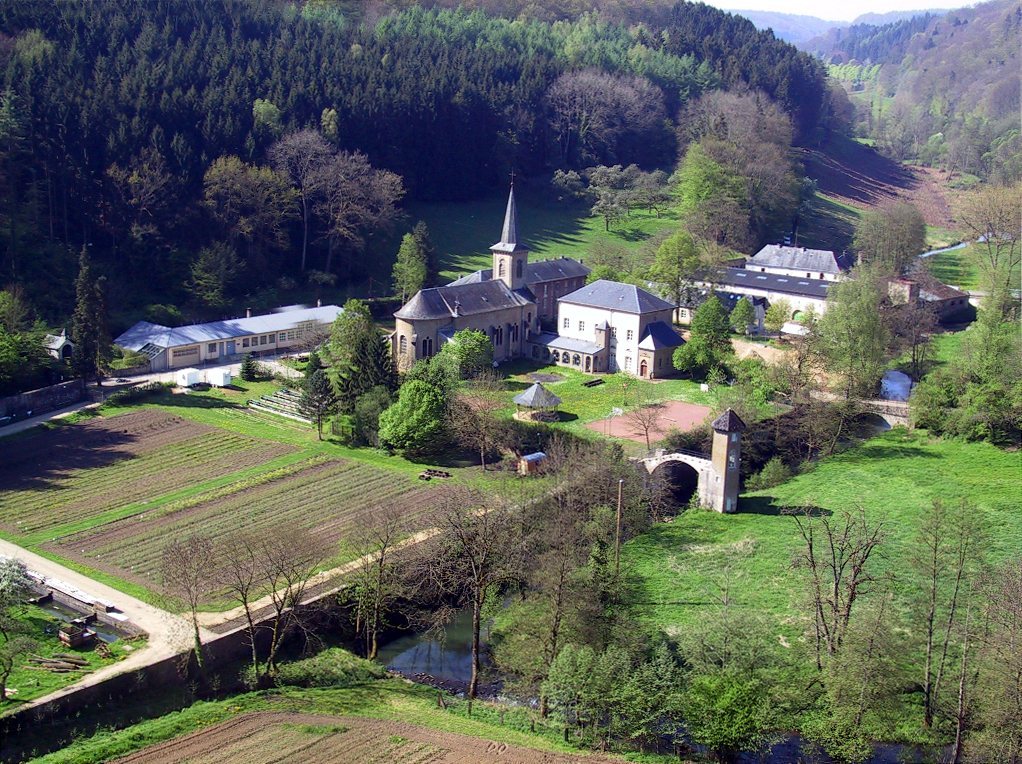
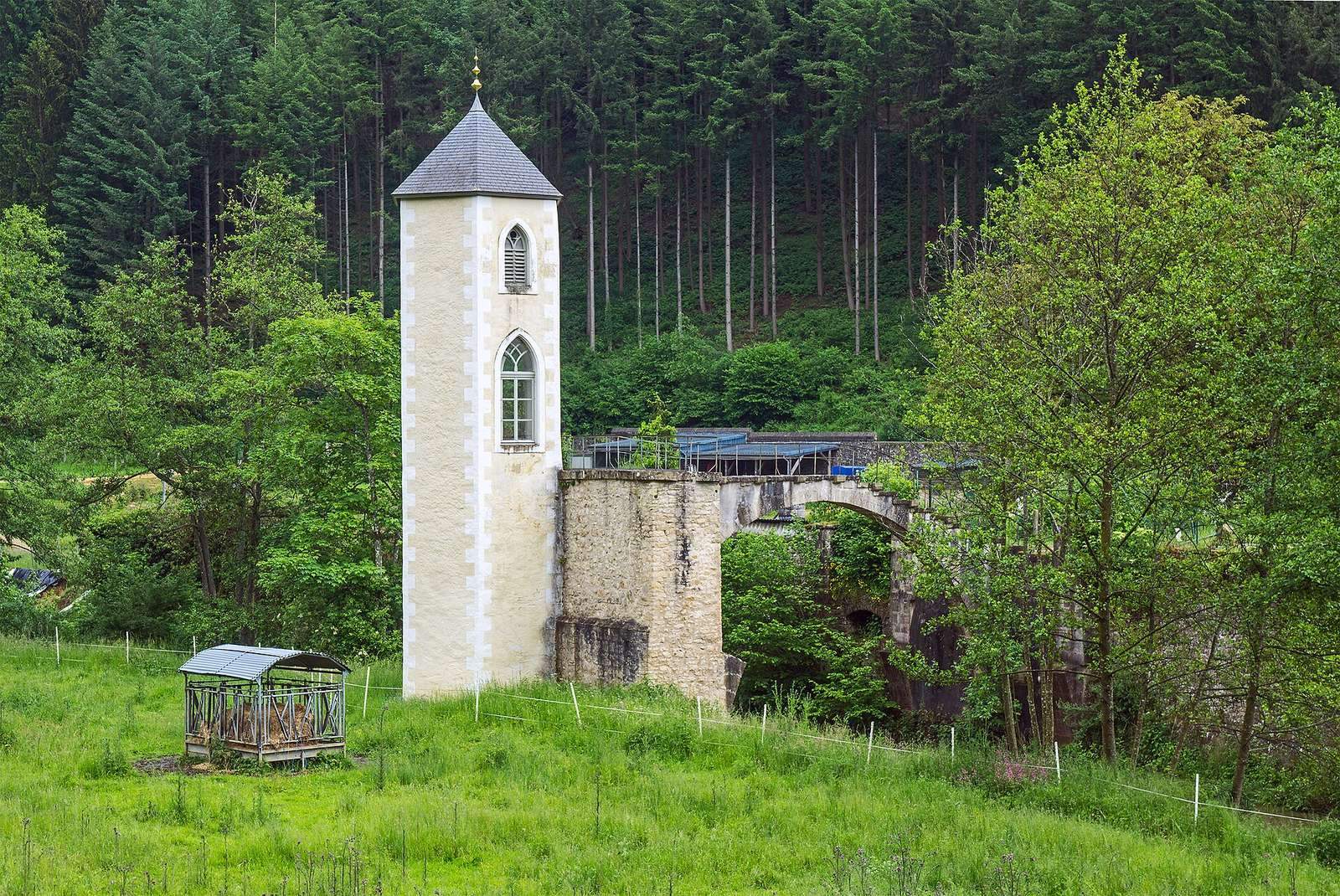
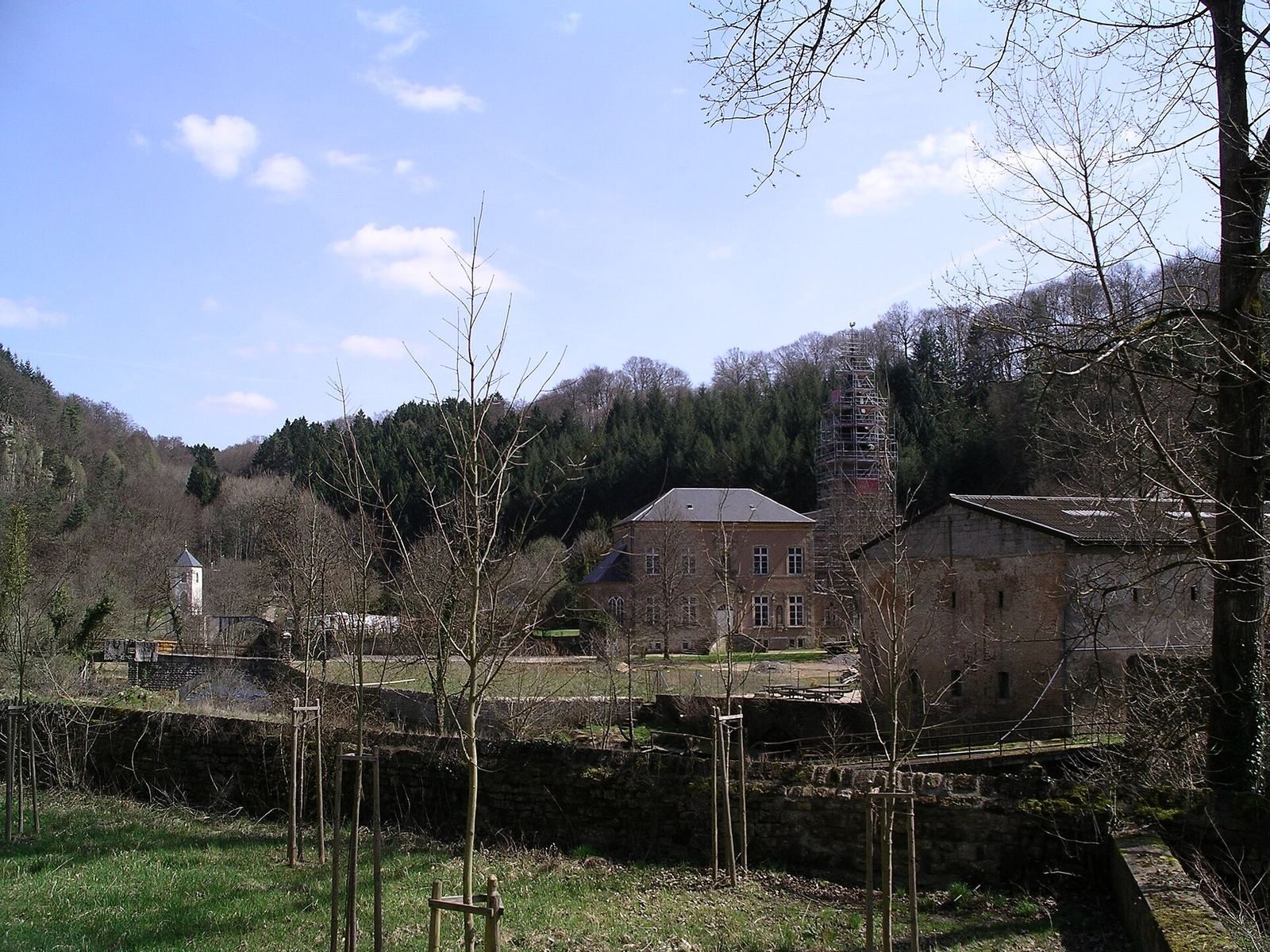
The monastery stands in the Eisch valley, northeast of Ansembourg, beside the Eisch River. Its construction is broadly dated to the thirteenth century. In 1248, the masonry was still unfinished, and the roofs were covered with broom thatch. The remaining complex includes buildings on the monastery grounds and a tower on the river’s left bank, connected to them by a narrow bridge.
Convent buildings and church
Surviving buildings
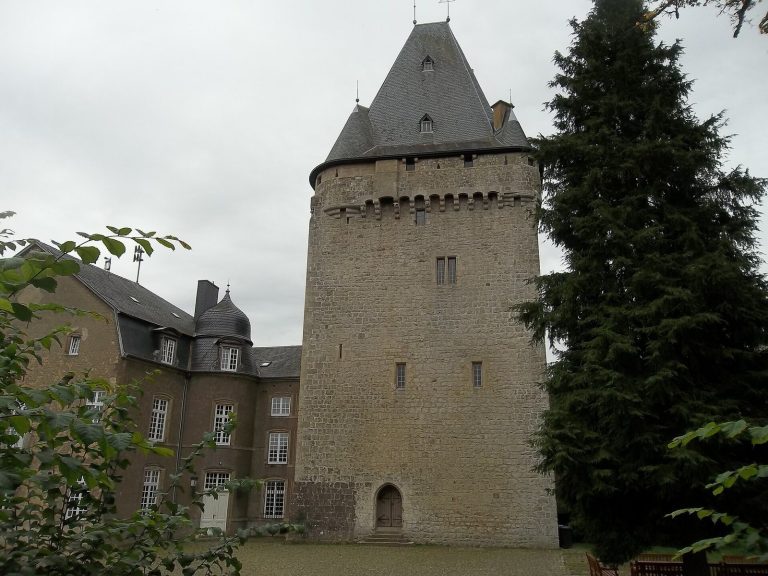
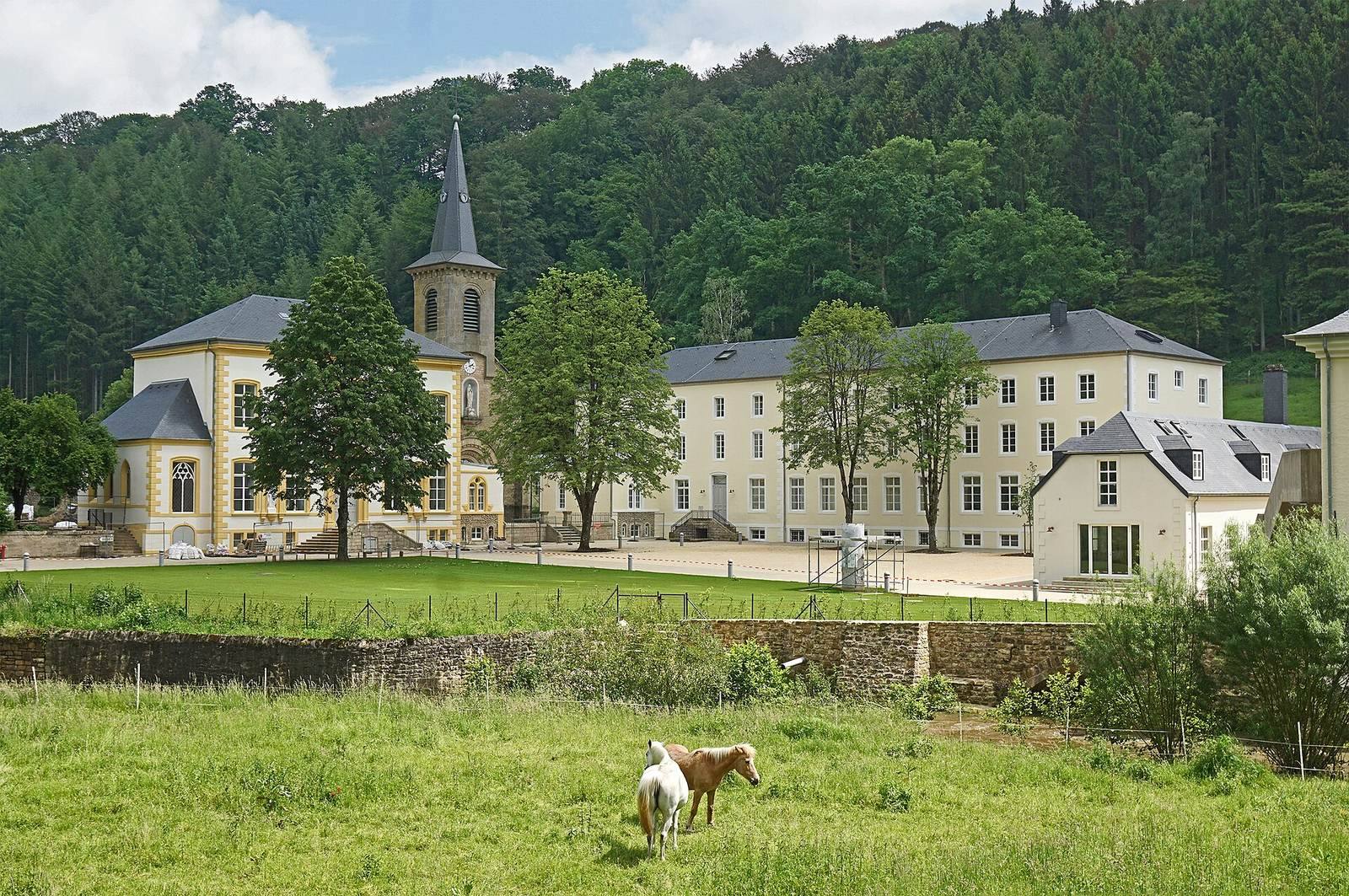
Following demolitions in 1824, the main block with its Baroque façade remained. Baroque is an ornate European architectural style associated especially with the seventeenth and eighteenth centuries. Other surviving structures included a small dwelling, part of a side wing, the tenant farmer’s house, the mill, and agricultural buildings. Some dismantled building material was reused in Walferdange Castle. Ponds in the monastery garden supported a small trout-breeding operation for a time.
Convent church
Yolanda’s Gothic convent church measured 50 by 35 metres and contained five naves, the lengthwise divisions of the church. She was buried beneath its altar.
Tower and river crossing
Yolanda Tower
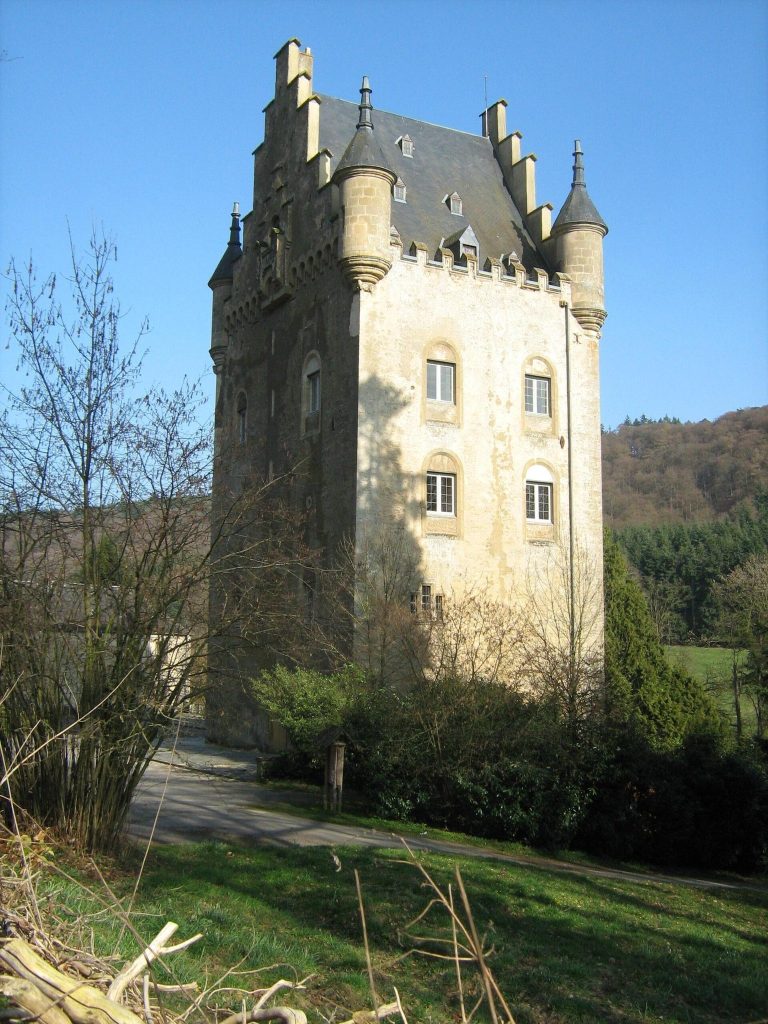
The tower now called Yolanda Tower stands on the left bank of the Eisch. Its name probably arose only after 1932 and is unrelated to the thirteenth-century prioress Yolanda of Vianden. An earlier tower may have occupied the site between the fifteenth and seventeenth centuries. The present structure dates to the eighteenth century, with alterations in the first half of the nineteenth century. It once formed part of a monastery wing that crossed the river and served as a stair tower giving access to a garden and washing basin on the left bank.
Between 1824 and 1836, Jean Nicolas Neyen-Petit converted the tower into a belvedere, a structure designed to provide a view. Its medievalizing appearance reflected the enthusiasm for the Middle Ages shared by Neyen-Petit and his brother Auguste. The work removed the stone spiral staircase and added an intermediate floor. Pointed openings were made above to admit light, while a dovecote at the top could be reached only by ladder. A new hatch gave access to the intermediate level. A tent-shaped ceiling, along with older projecting supports and a central arch stone brought from elsewhere, helped create the medieval appearance.
The roof was renovated between 2004 and 2006, with its shape guided by old photographs and the towers of Schoenfels Castle, which themselves date from the nineteenth century. A golden finial was added to the roof.
Bridge
The narrow bridge links the grounds to the tower. Its surviving arch was once accompanied by two matching arches that supported a building of one or two storeys, probably used as a kitchen, laundry, or toilet block. The bridge vault was divided into three sections, allowing openings for waste and toilets. Steps were added to the surviving bridge section in 1836.
Later religious buildings
The White Fathers built a new church at Marienthal. Their former monastery chapel, dedicated to the Queen of the Rosary, has been converted from religious use into an event hall.