Manor in Ożarów Mazowiecki: A Nineteenth-Century Residence and Wartime Headquarters
Site at a Glance
- Popularity
- Medium
- Country
- Poland
- Primary era
- Modern
- Eras represented
- Modern
- Civilizations
- Unclassified
- Site type
- Domestic
- Remains
- Manor House
On this page7 sections
History
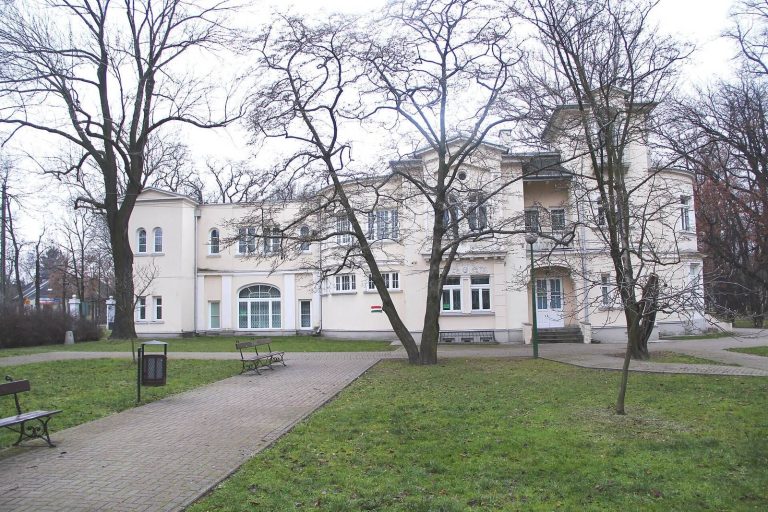
The Manor in Ożarów Mazowiecki is a nineteenth-century Classical residence in Poland, built for the Deskur family, owners of the Ożarów estate. It later became a center of political and cultural life and was connected to events surrounding the Warsaw Uprising, the 1944 Polish resistance uprising against German occupation.
The Deskur and Kronenberg years
By the middle of the nineteenth century, the manor belonged to Stanisław and Konstancja Deskur. Their heir, Tekla Rapacka, sold it with the estate on 25 November 1879 to musician Władysław Kronenberg, son of banker Leopold Kronenberg. Władysław treated the property as an investment, moved permanently to Paris in 1892, and sold the estate in 1912 to Stanisław and Maria Reicher.
Reicher ownership and wartime history
The Reicher family retained the manor through the Second World War. Before the conflict, the house was a focus of political and cultural activity; a silent film adaptation of The Leper was made there in 1926. During the war, co-owner Kazimierz Reicher, a member of the Home Army, the principal Polish underground military organization, allowed weapons to be stored in the manor and a clandestine radio station to operate there.
During the Warsaw Uprising, the manor became the headquarters of Bach-Zelewski, a senior German SS officer who directed the suppression of the uprising. Negotiations held there ended with the uprising’s capitulation on 2-3 October 1944.
Postwar activity and commemoration
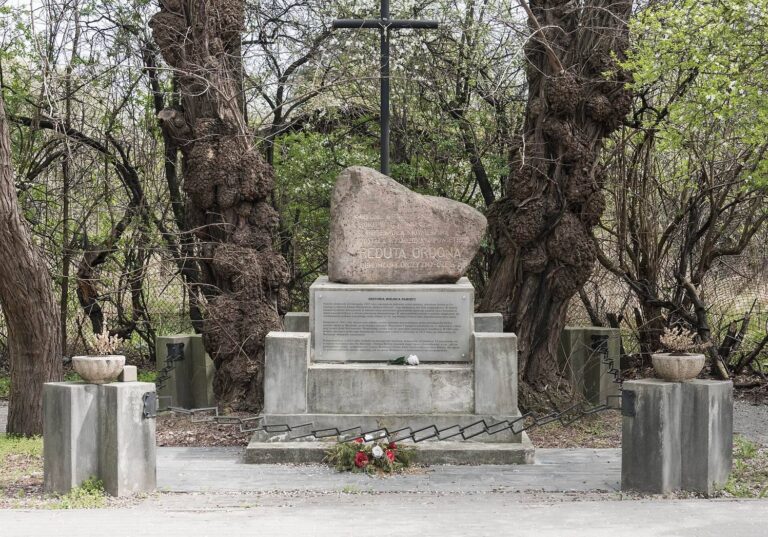
From 1959, meetings of the Catholic Intelligentsia Club (KIK), an organization of Catholic intellectuals in Poland, took place at the manor. Its owner at the time, Aniela Urbanowicz, née Reicher, was one of the club’s founders. In 1969, Henryka Modrzejewska bought the manor with a plot that had by then become relatively small. W. Modrzejewski is the current owner. A commemorative plaque was unveiled on 3 October 2004, sixty years after the Warsaw Uprising ended.
Remains
The manor and its outbuilding
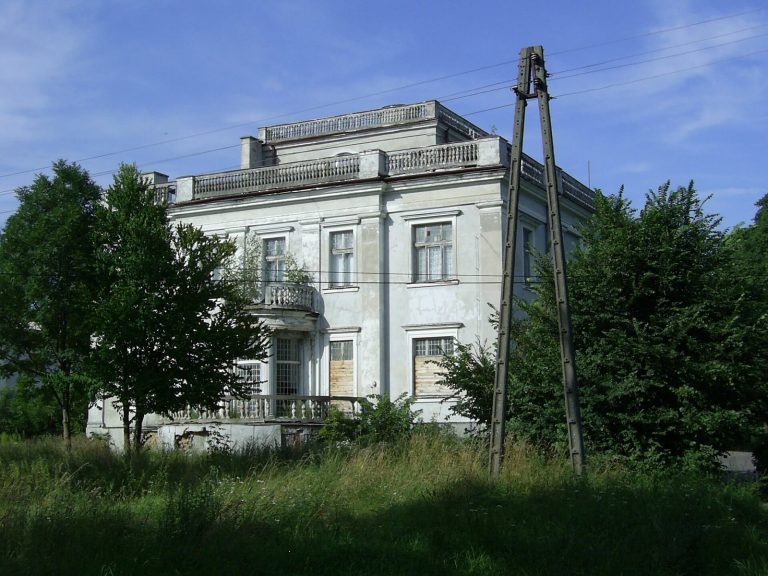
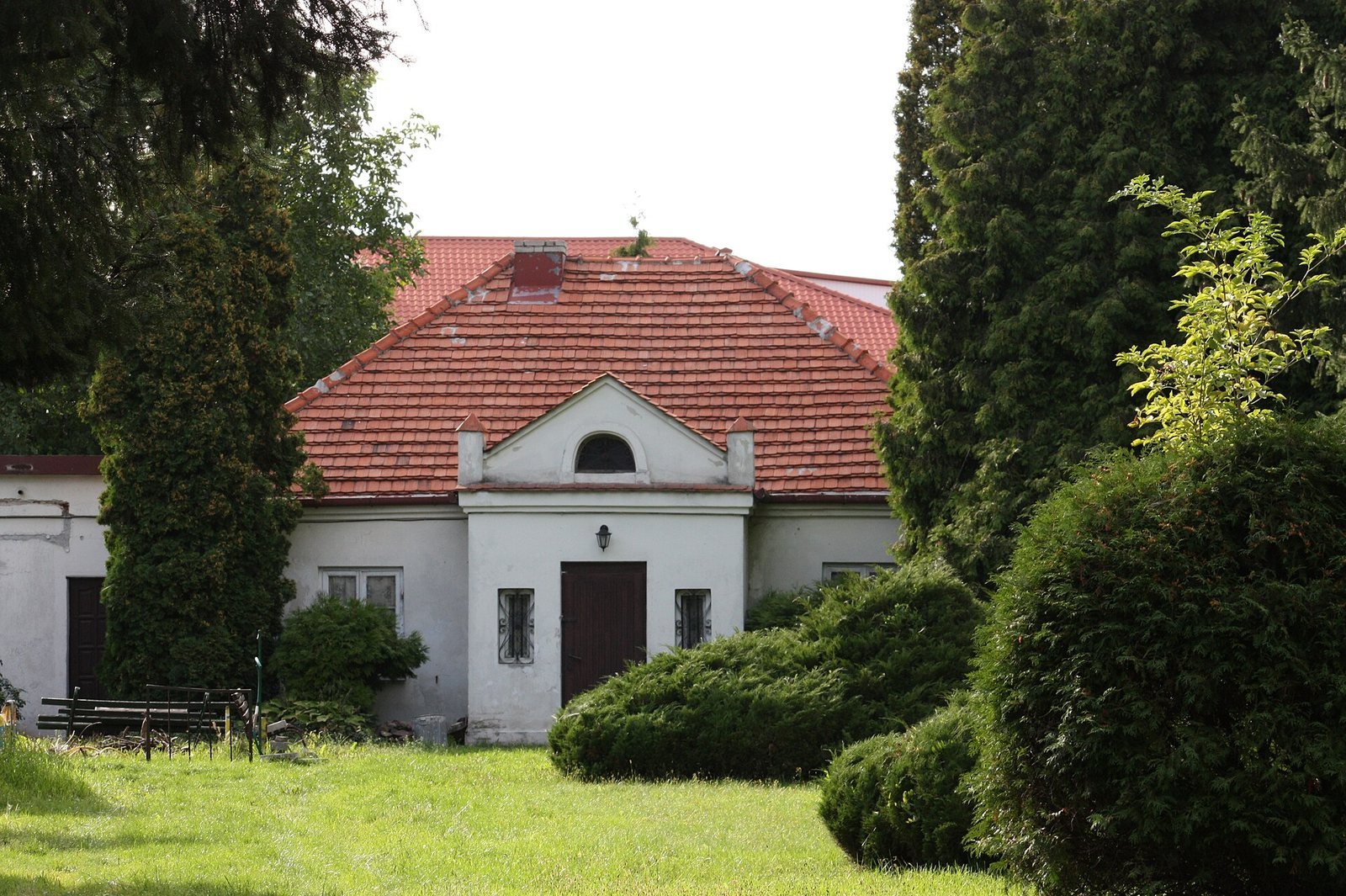
The one-storey masonry manor stands on a rectangular plan with seven bays and a basement. Its front entrance has a later wooden vestibule, while a later porch with four columns occupies a side elevation; a terrace faces the garden. Inside, two parallel ranges of rooms are arranged around an entrance hall and salon on the central axis. The building has a hipped roof covered with shingles and small, shallow curved dormers. A physically connected outbuilding dates from the same period and has a tiled roof. Paintings by leading Polish artists once decorated the manor’s interior walls; works are now held in several places, including the National Museum in Warsaw.
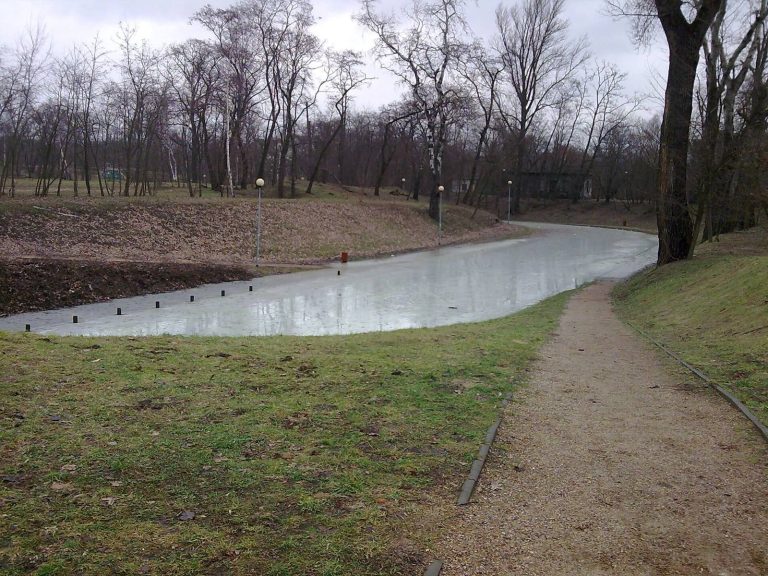
Park and commemorative plaque
The manor was once surrounded by a landscape park. A surviving portion adjoins the property to the south and now forms a publicly accessible municipal green. The plaque commemorating the Warsaw Uprising’s capitulation stands on Poniatowskiego Street, in front of the fence enclosing the property.