Fort III Twierdzy Warszawa: An Outer-Ring Fort of Warsaw
Site at a Glance
- Rating
- 4.6
- Popularity
- Very Low
- Country
- Poland
- Primary era
- Modern
- Eras represented
- Modern
- Civilizations
- Russian
- Site type
- Military
- Remains
- Fort
On this page6 sections
History
Construction and military setting
Fort III Twierdzy Warszawa is a nineteenth-century fort in Warsaw, Poland, built during the 1880s as part of the outer ring of the Warsaw Fortress, a defensive system constructed around the city. Also known as Blizne, it occupied a position between the forward Fort IIA “Babice” and Fort IV “Chrzanów” in the sequence of the outer fortifications.
Dismantling and wartime history
After the Warsaw Fortress began to be dismantled following 1909, the fort’s caponiers, fortified structures projecting into or alongside a moat, were blown up. Their ruins remain at the site. During the defense of Warsaw in September 1939, the commander of the unit occupying the fort abandoned his positions without offering sufficient resistance to German forces. He was subsequently brought before a field court, a military tribunal convened under wartime conditions.
Fort III is entered in Poland’s register of monuments as Fort III Blizne-Groty, at 187 Lazurowa Street, under registration number 10-A. The entry dates from May 24, 2001.
Remains
Layout and defensive works
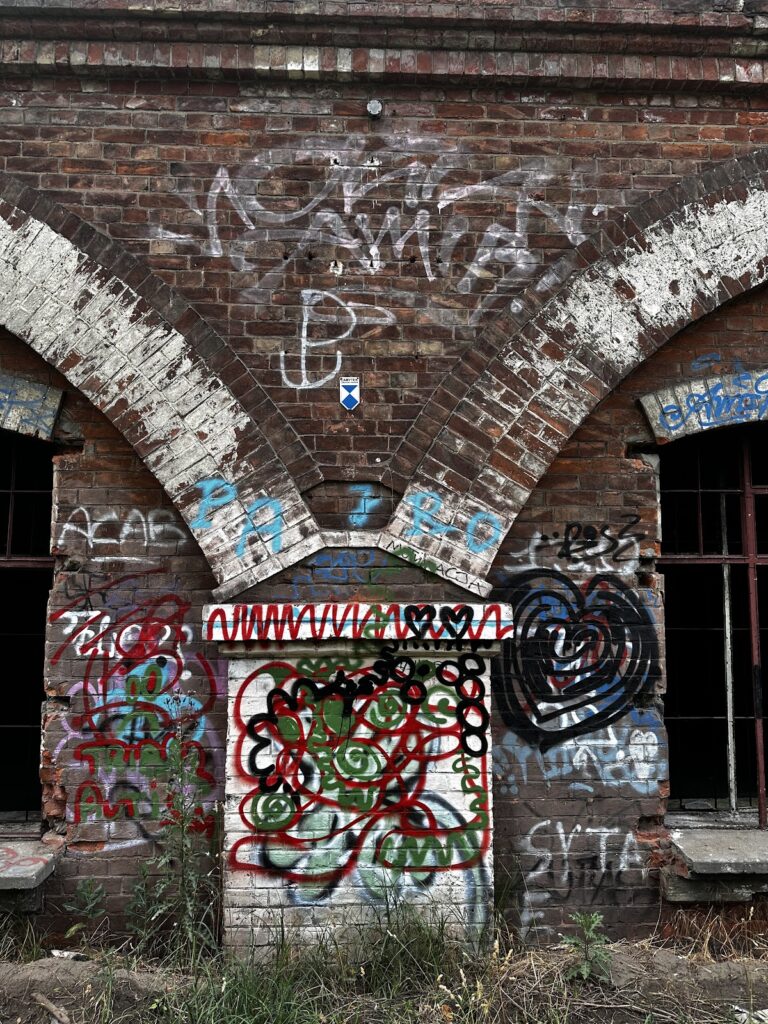
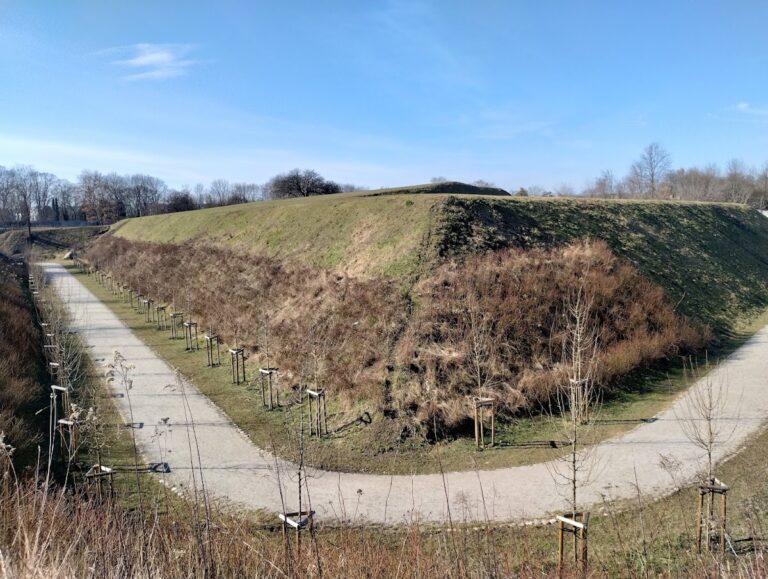
The fort was arranged on a pentagonal plan and surrounded by a wet moat. A ravelin, an outwork placed in front of a fortification to protect its main defensive line and entrances, guarded the front caponier. The barracks were built of brick, while the caponiers were constructed from concrete despite the presence of the wet moat. The concrete caponiers were demolished during the post-1909 dismantling, but their ruins survive as part of the fort’s remains.
Central shelter
A concrete air-raid shelter from a later period occupies the central area of the fort. It stands on the main axis of the postern, a covered passage through or beneath a fortification that allowed protected movement between its interior and exterior.
Nearby sites