Lukovnya Hillforts: Early Iron Age and Medieval Archaeological Sites
Site at a Glance
- Popularity
- Low
- Country
- Russia
- Primary era
- Iron Age
- Eras represented
- Iron Age, Medieval
- Civilizations
- Unclassified
- Site type
- Military
- Remains
- Fortified Town
On this page15 sections
History
The Lukovnya Hillforts are two hillforts, or elevated settlements enclosed by defensive earthworks, near the village of Lukovnya in Russia, with archaeological phases extending from the fifth century BCE to the seventh century CE. Together, they form the oldest archaeological monument in the Podolsk urban district.
Early Iron Age and Dyakovo periods
Lukovnya I began as an Early Iron Age settlement. Later deposits there belong to the late Dyakovo culture, an Iron Age archaeological culture of central Russia, as well as to Ancient Rus. Lukovnya II also has Early Iron Age and Dyakovo-culture phases.
Medieval settlement and use
In the medieval period associated with Ancient Rus, the East Slavic polity and its cultural sphere, the northern ramparts at Lukovnya I were probably built or reconstructed. A nearby settlement on the Pakhra’s left bank was occupied during the eleventh to thirteenth centuries and again from the fourteenth to seventeenth centuries. Two burial-mound cemeteries from the pre-Mongol Ancient Rus period were also found in the area.
Late-medieval pottery from Lukovnya I probably relates to a settlement there between the fourteenth and seventeenth centuries. A hamlet on the Pakhra, now the village of Lukovnya, was recorded in 1627. The locality had been the hereditary estate of a court official responsible for the ruler’s tents in 1621.
Investigation and protection
The hillforts entered the archaeological record in 1879, when M. A. Sablin noted excavations of burial mounds. Lukovnya I was almost entirely excavated between 1968 and 1982 under A. G. Veksler, Moscow’s chief archaeologist. M. I. Gonyany, N. A. Krenke, and A. L. Aleksandrovsky investigated Lukovnya II in the mid-1980s and early 1990s. Lukovnya I has federal-level archaeological monument status, while Lukovnya II has regional-level status.
Remains
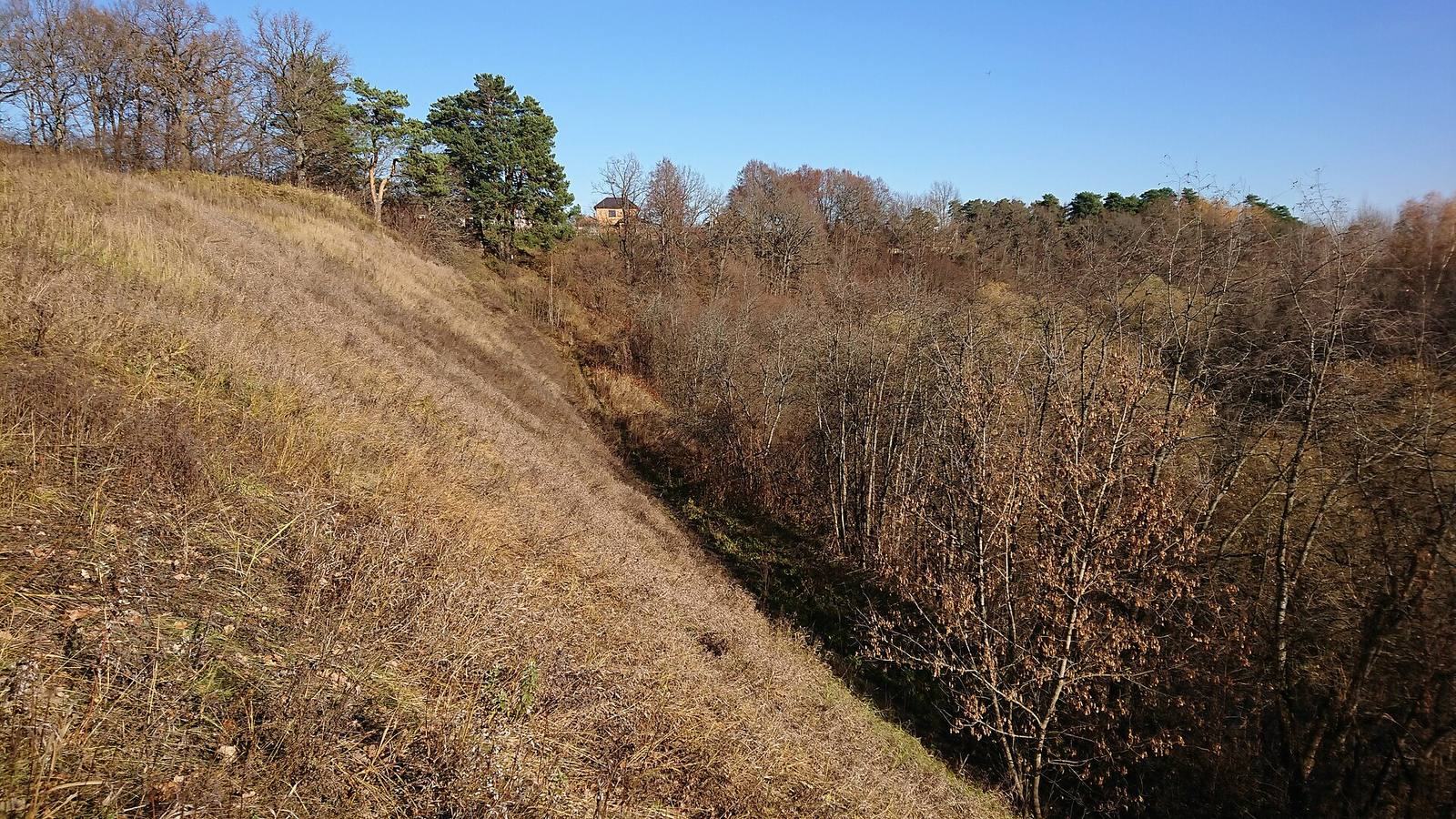
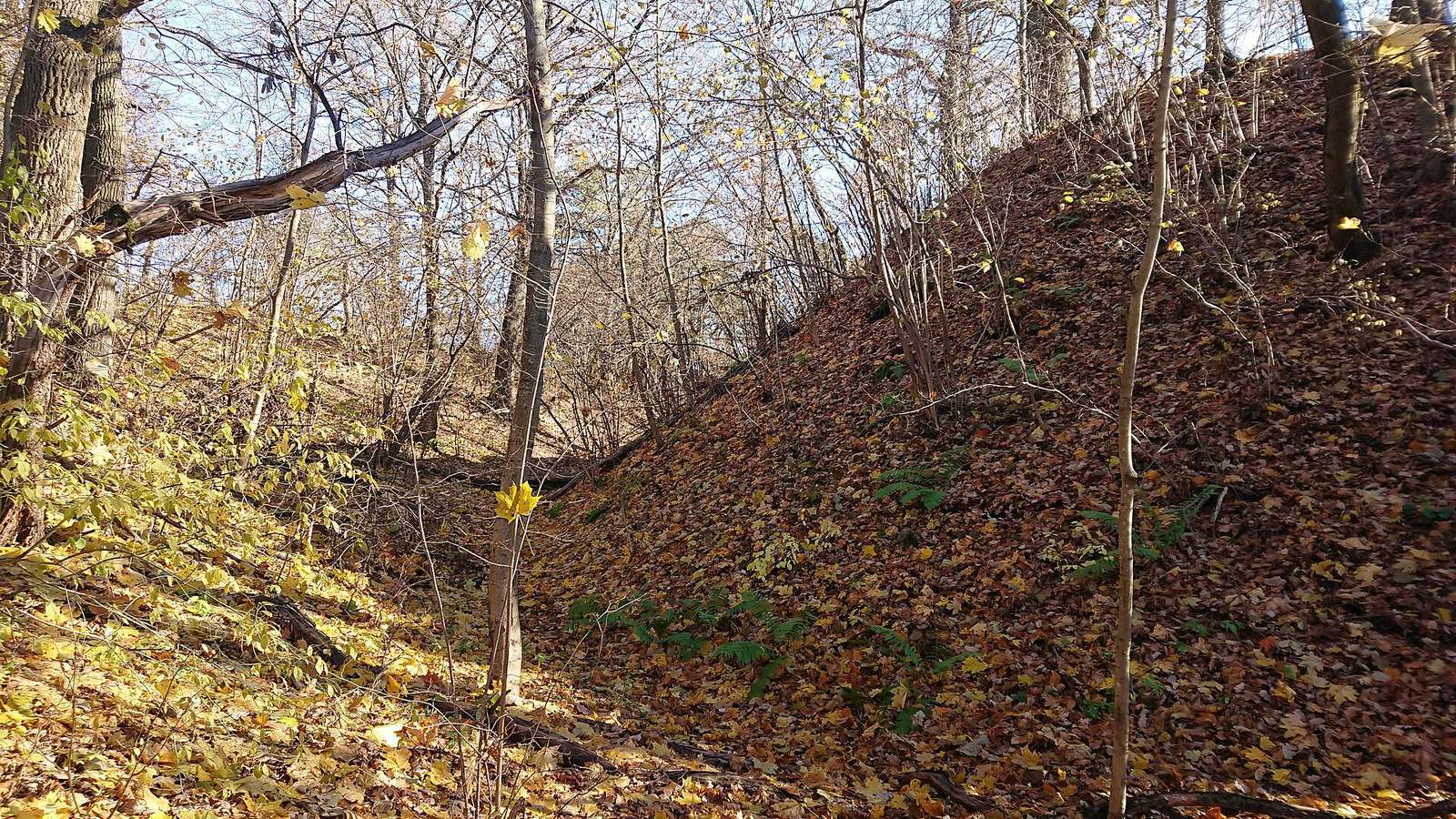
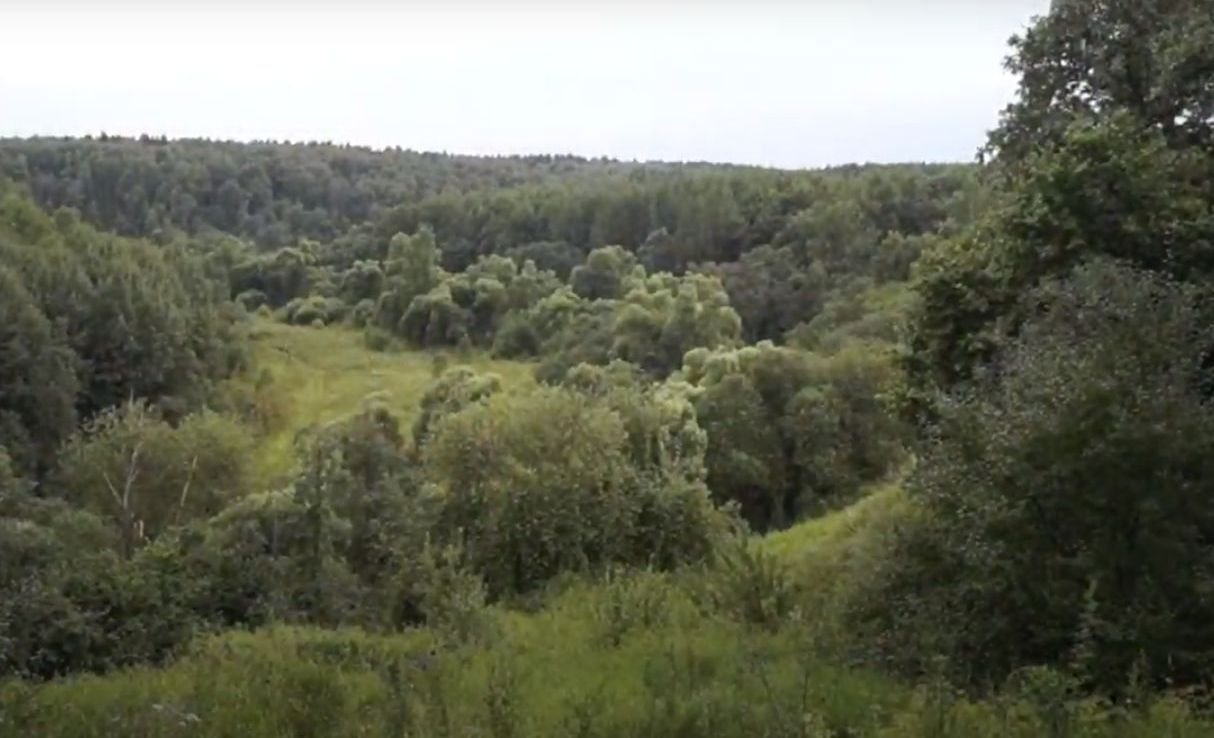
Both sites consist of elevated platforms enclosed by earthworks, but their shapes, positions, and defenses differ. Lukovnya I stands beside a bend in the Pakhra, while Lukovnya II occupies a promontory between ravines.
Lukovnya I
Platform and defenses
On the river’s left bank, at the southern edge of Lukovnya village, Lukovnya I has a trapezoidal platform measuring 40 by 85 m. It extends from north-northeast to south-southwest and rises as much as 20 m above the river. Two ramparts, up to 3 m high, and two ditches defend its northeastern side. The ditch between the ramparts reaches 6.5 m deep, while the outer ditch is up to 2 m deep. On the southwestern promontory are four ramparts, also up to 3 m high, and three ditches measuring 5 m, 1.5 m, and 1 m deep.
The rampart lines appear to have been built differently. The southern ramparts were probably raised from natural subsoil and faced with limestone, with rubble masonry and compacted material, possibly fired clay, between the stones. The northern inner rampart likely incorporated remains of wooden structures and was built over an existing cultural layer as much as 1 m thick.
Cultural layer and finds
The cultural layer is up to 0.4 m thick in the south and up to 1 m thick in the center and north; earlier excavations disturbed the northern part of the platform. Finds associated with the Dyakovo culture include handmade pottery bearing textile impressions, smooth-walled and polished pottery, miniature vessels, bone arrowheads, needles, awls and other piercing tools. Other objects include clay weights, spindle whorls (weighted tools for hand spinning), beads, fragments of bricks with projecting horns, female figurines, casting ladles, crucibles, and air tubes used in furnaces and forges. Copper and bronze ornaments, stone casting molds, iron arrowheads, and sickles were also recovered.
Later Dyakovo objects
Objects from a later Dyakovo phase include an iron shield boss, the raised fitting at the center of a shield, and imported ornaments decorated with enamel set into recessed areas. The ornaments date to the third to fifth centuries, while components of a belt set date to the sixth and seventh centuries.
Residential building
Several residential and production structures were identified at Lukovnya I. One above-ground dwelling, built with posts, measured 6 by 7 m and contained two rooms with traces of hearths.
Metalworking structure
A separate post-built production building was about 9 m long. Its finds included fragments of crucibles and casting ladles, casting molds, and finished and defective bronze ornaments. One mold, for a crescent-shaped pendant, was unique. The building’s floor had been strongly heated.
Ancient Rus remains
Finds from the upper layers, concentrated in the platform’s center and north, include wheel-made pottery, iron arrowheads, a fragment of chain mail, spurs, knives, belt buckles, a lock and key, bronze seven-lobed temple rings (jewelry worn near the temples), small bells, bracelets, and glass beads. Structural remains include an above-ground building on a limestone foundation, stone paving, and a stone hearth beside a concentration of pottery.
Lukovnya II
Platform and defenses
On the Pakhra’s right bank, about 400 m south of the village and 200 m from the river channel, Lukovnya II occupies a promontory between two ravines. Its oval platform measures 30 by 40 m, rising about 15 m above the river and 6 to 7 m above the ravine floor. Two ramparts, each up to 1 m high, enclose the southern side, with a ditch between them as much as 3 m deep. The inner rampart consists of natural loam; the outer was built over forest soil. The platform’s cultural layer is no more than 0.2 m thick.
Finds
Lukovnya II has yielded handmade pottery with textile impressions, smooth-walled pottery attributed to the Dyakovo culture, and bronze ornaments.