Lillkyrka Church: A Medieval Parish Church in Sweden
Site at a Glance
- Country
- Sweden
- Primary era
- Medieval
- Eras represented
- Medieval, Early Modern, Modern
- Civilizations
- Swedish
- Site type
- Religious
- Remains
- Church
On this page11 sections
History
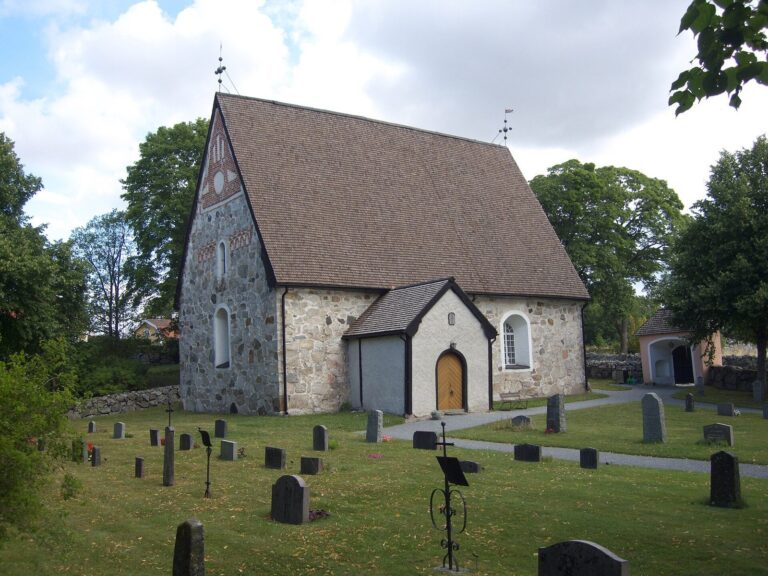
Lillkyrka Church is a medieval stone church in Lillkyrka, Sweden, consecrated in either the thirteenth or fourteenth century. It appears in a record of a 1303 visitation by Nils Allesson, a medieval Swedish archbishop, and is probably the same church that stands today.
Early modern changes
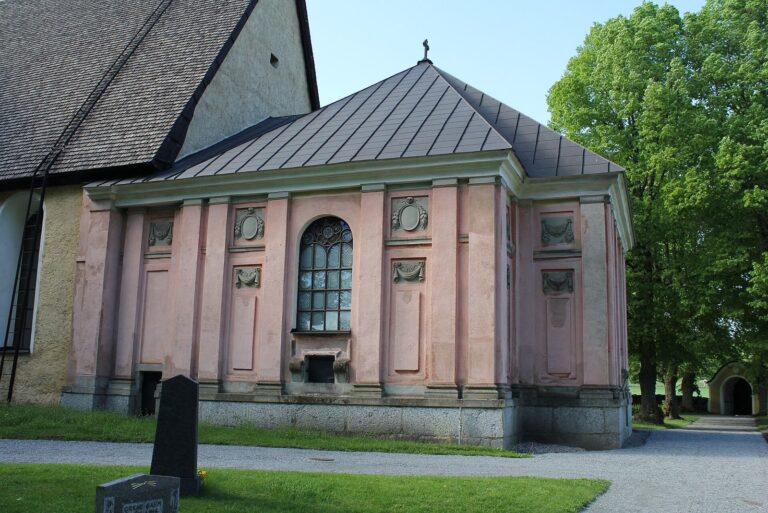
The churchyard wall was once covered with tarred boards, and part of this covering was renewed in 1648. A visitation record also refers to two gateways. One was erected that year at the expense of Åke Oxenstierna of Eka, a Swedish nobleman and chamberlain, a senior court official; both gateways were later demolished. The funerary chapel is associated with Eka, the maternal estate of Gustav Vasa, a sixteenth-century king of Sweden, although its construction date is unknown.
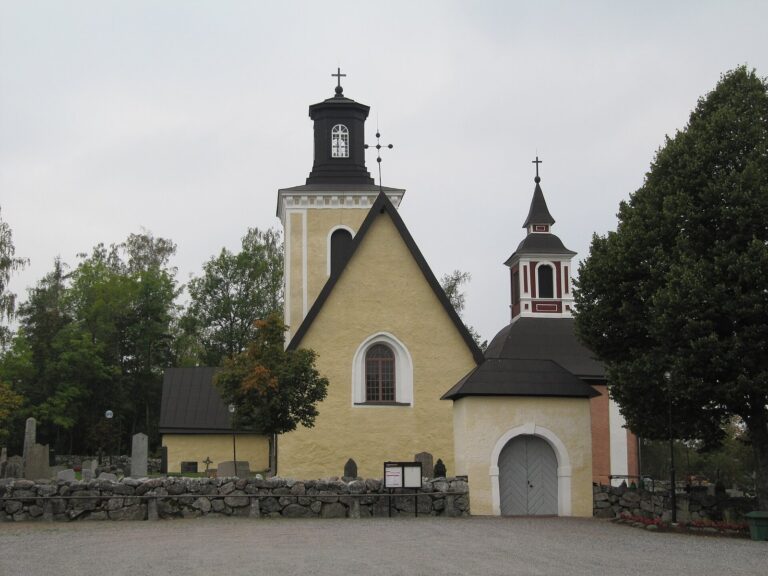
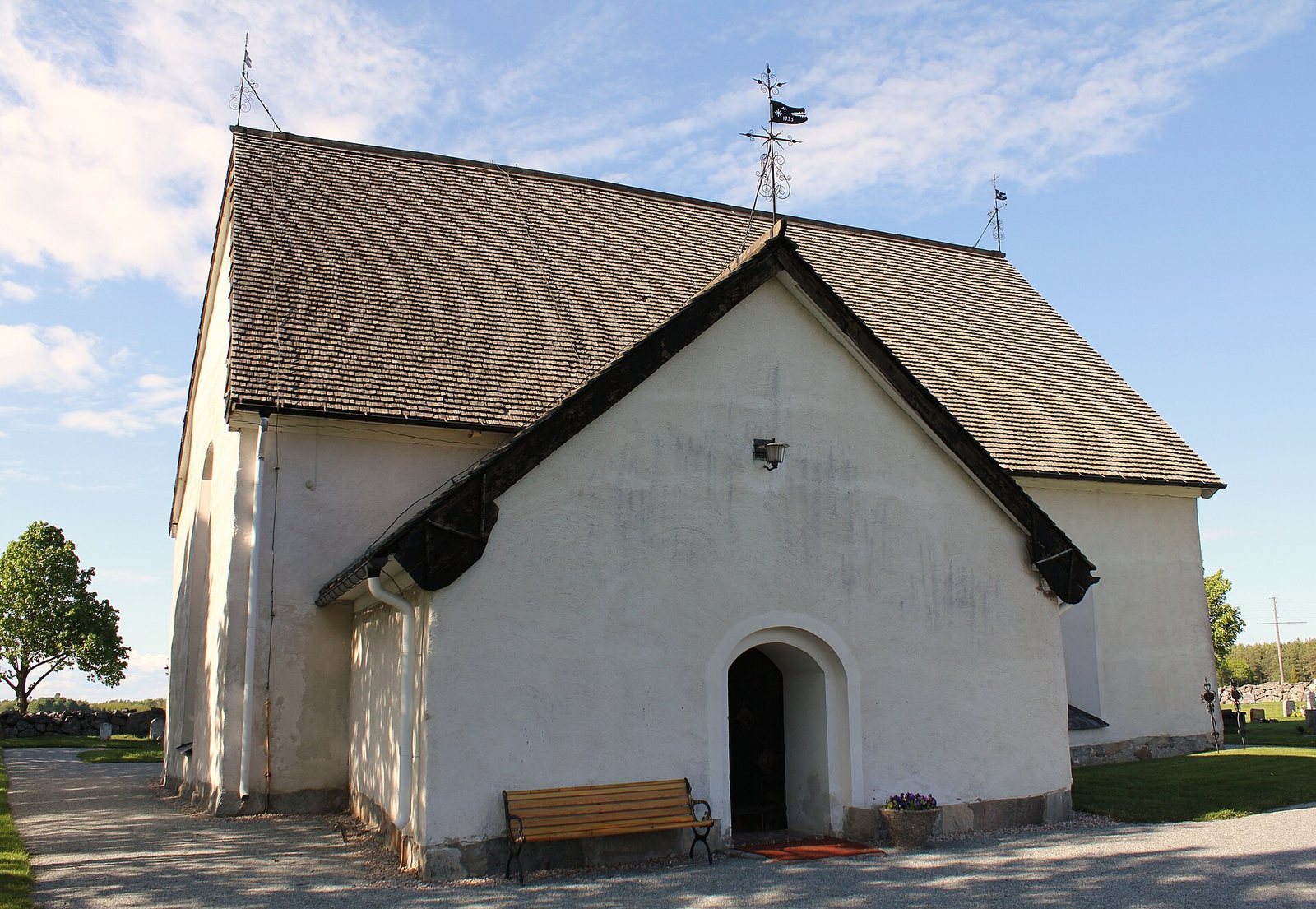
The present porch was built in 1730, probably replacing a medieval porch on the same spot. In 1752 the east gable was dismantled and rebuilt, and the exterior walls were then plastered. The present bell tower, the third known at the site, was erected in 1744. Its predecessor had been built in 1687 and extensively repaired in 1714. The small bell, given to the church in 1648, was recast in 1743 by G. Meyer of Stockholm. The great bell, already old, was recast in 1880 by J. A. Beckman of Stockholm.
Baron Åke Oxenstierna gave the church a pulpit made by Hans Hebel in 1649. Two medieval wooden sculptures were kept in the bell tower until the 1920s. The church’s old silver was stolen in 1858 and never recovered.
Nineteenth- and twentieth-century changes
The organ was made in 1840 or 1841 by local resident Pehr Gullbergson and supplied to the parish at half price, 721 riksdaler and 24 skilling banco, historical Swedish currency. A. P. Bergstrand, an inspector at Häflinge estate, contributed 300 riksdaler, and parish members paid the balance. Baroness Oxenstjerna, née von Essen, of Eka covered the organ’s decoration.
In 1856 the brick floor was replaced with limestone slabs, the gable windows were enlarged, and the chancel window was enlarged to its present size. Inner panes of cathedral glass were added to the chancel and nave-side windows in the 1920s, and electric heating was installed in 1949. The church has otherwise remained largely unchanged.
Lillkyrka Church is affiliated with the Church of Sweden, a Lutheran church, and the Diocese of Uppsala, an ecclesiastical administrative district. It served Lillkyrka parish until that parish became part of Boglösa parish in 2006; the church now serves as Boglösa’s parish church.
Remains
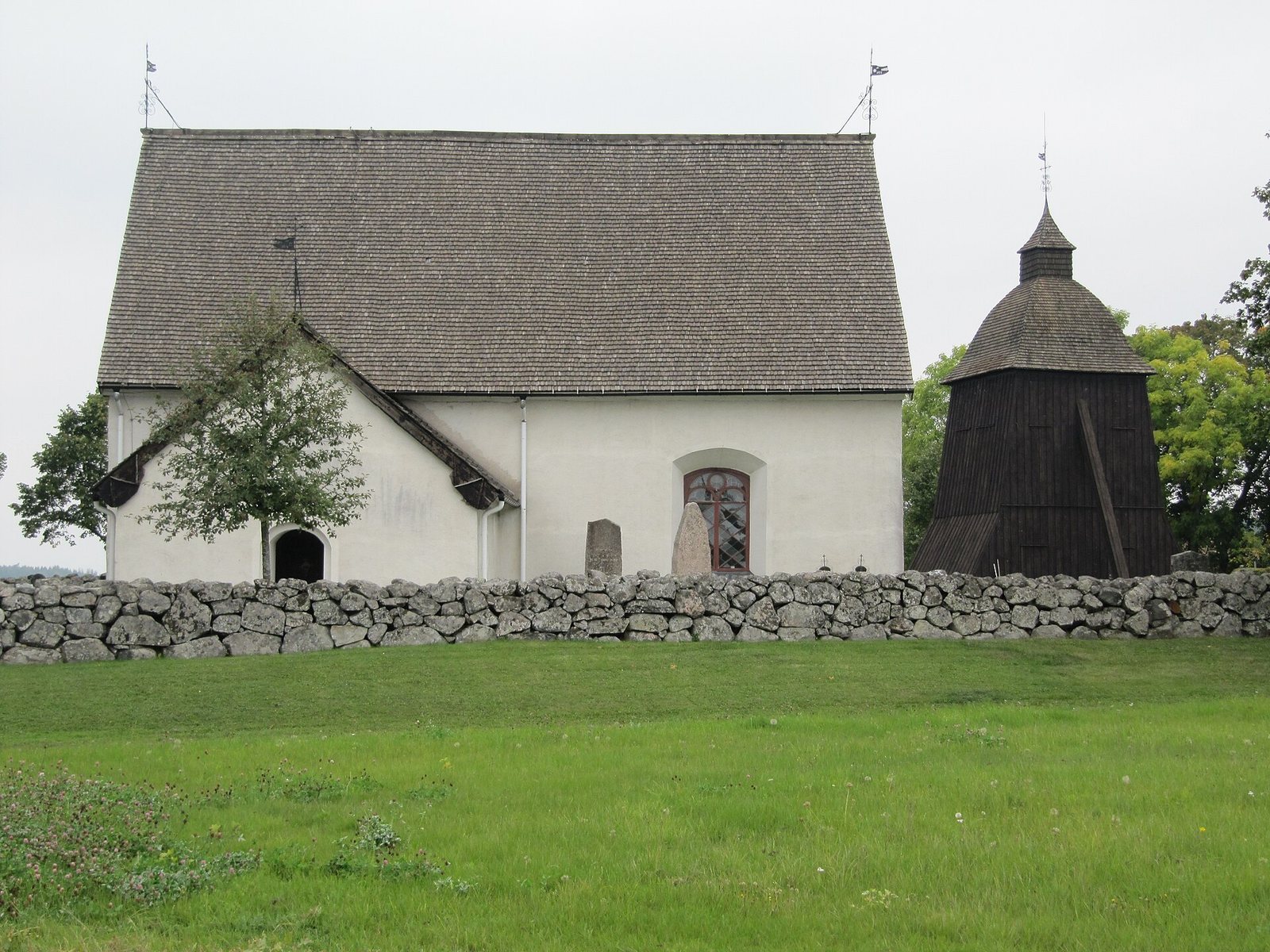
The church is a compact grey-stone building with a rectangular main body and a low roof covered in black tarred shingles. Its porch, clergy’s room, and funerary chapel occupy the southwest, northeast, and northwest sides respectively. The building stands within a stone-walled churchyard.
Interior and furnishings
Vaults and windows
Three brick vaults form the church’s ceiling; they were added later in the Middle Ages, probably in the fifteenth century. A window was opened in the north wall in 1653, when that wall had previously had no window. The chancel is the area around the altar, while the nave is the main body of the church.
Furnishings and sculptures
The church’s wooden sculptures depict Mary and Christ; Mary’s figure belonged to a shrine cabinet, a case for a sacred image or relic. The pews, dating from 1750, are arranged in three enclosed blocks. One metal chandelier hangs in the middle of the church, alongside two glass chandeliers in the Empire style, an early nineteenth-century decorative style. The organ has a mechanical system and slider chests, which distribute wind to the pipes; its stated compass, or playable range, is 54/20. The pulpit is accompanied by an hourglass purchased in 1759 from the sculptor Holmén in Västerås.
Churchyard and surroundings
Churchyard wall
A grey-stone wall encloses the churchyard. The former gateways are part of the site’s history, while the surviving enclosure is the stone wall.
Bell tower
The board-clad bell tower stands in the northeast corner of the churchyard and contains two bells.
Waterway and nearby runestone
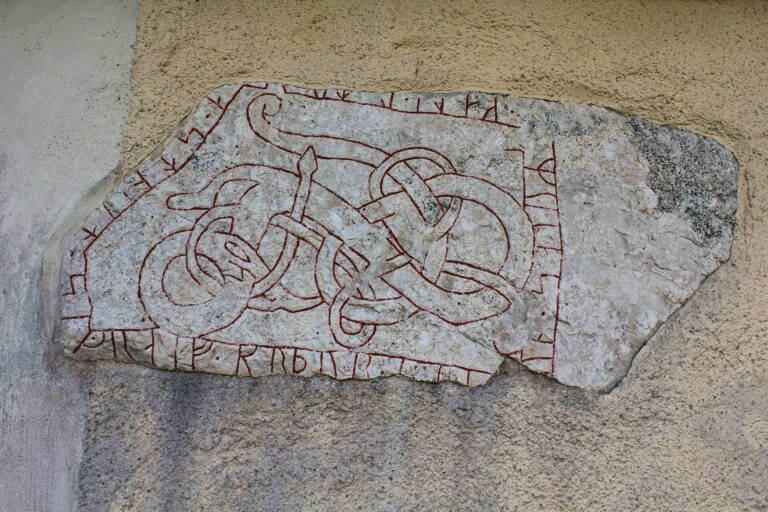
The church stands beside an ancient waterway. A bridge below it crosses a ditch in an area that was formerly waterlogged. Runestone U716, a stone monument bearing a runic inscription, stands at Viggby gärde a few hundred metres to the north.