Grönsö Castle: A Historic Manor Estate in Sweden


Site at a Glance
- Rating
- 4.3
- Popularity
- Low
- Country
- Sweden
- Primary era
- Early Modern
- External website
- Open
- Eras represented
- Early Modern
- Civilizations
- Swedish
- Site type
- Domestic
- Remains
- Manor House
On this page7 sections
History
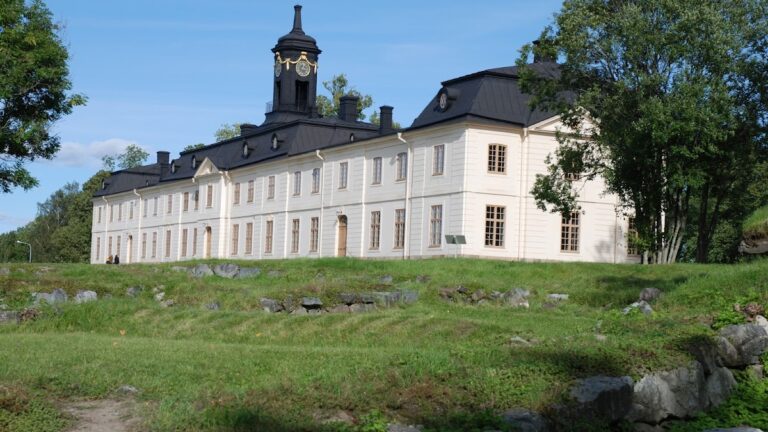
Grönsö Castle is a historic manor estate on Grönsö Island in Lake Mälaren, in Enköping Municipality, Sweden. Its manor house was built around 1607–1611, and the estate later acquired interiors influenced by eighteenth-century Swedish Neoclassicism, also known as Gustavian design. The property developed from a medieval village and has remained associated with the von Ehrenheim family since 1820.
From medieval village to manorial estate
A small village occupied the site at least from the Middle Ages. In the sixteenth century, it consisted of five farms. One of these was given to Johan Skytte by Prince Gustavus Adolphus, the future Swedish king whom Skytte had tutored. Skytte later became chancellor of Uppsala University and a member of the Privy Council of Sweden, the central royal advisory and governing institution.
Skytte acquired the other farms between 1608 and 1609 and formed the present manorial estate. The manor house is generally dated to approximately 1607–1611, although a note from 1611 indicates that construction had only recently begun at that time. The estate passed to Skytte’s son, Bengt Skytte, and then to Bengt’s daughter, Maria Skytte. It remained in the family throughout the seventeenth century before entering Crown ownership. During the eighteenth century, it passed through several owners.
Eighteenth-century reconstruction
Under the Falkenberg family, the manor was repaired and reconstructed, giving it the relatively simple appearance it has today. During the second half of the eighteenth century, David von Schultzenheim, a medical doctor and owner of the estate, had several interiors remade in a restrained Neoclassical style. Gustavian design was the Swedish eighteenth-century expression of Neoclassicism, a style inspired by ancient Greek and Roman art and architecture.
Von Schultzenheim also enlarged the park and commissioned the Chinese Pavilion. In 1820, ownership passed to Reinhold Fredrik von Ehrenheim, Marshal of the Court, a senior official in the royal household. Grönsö has remained in the von Ehrenheim family, who continue to live at the estate.
The orchard tradition
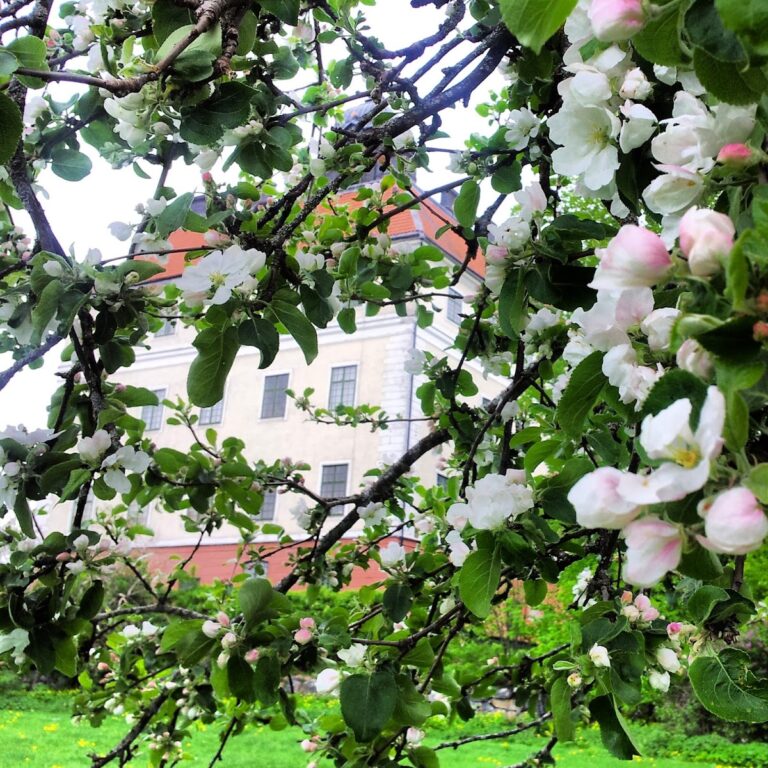
Johan Ludvigsson, formerly royal gardener to King Charles IX of Sweden, established an apple orchard at Grönsö in 1623. During replanting in the 1890s, coins dated 1634 were found among the roots of a tree. The orchard still produces apples and apple juice, and the present owners regard it as Sweden’s oldest commercial orchard.
Remains
The manor and park
Grönsö’s first manor house was an elaborate building with corner towers and a central roof spire. Although the building has been rebuilt and reshaped, its basic original layout remains structurally intact. The present house reflects the later repairs and reconstruction that gave the manor its comparatively simple form.
The manor park includes the Chinese Pavilion, whose interior is decorated with shells and rocks from East Asia. Its architectural style recalls the work of William Chambers, an eighteenth-century architect known for designs combining European and East Asian influences. Opposite Grönsö, the medieval manor known as Utö hus is visible from the park.
The historic apple orchard
The estate’s apple orchard occupies a continuing agricultural part of the historic property. Founded in 1623, it includes cultivars such as Åkerö, Ingrid Marie, and Gravenstein. The discovery of 1634 coins among the roots of an orchard tree during nineteenth-century replanting adds material evidence to the orchard’s long history. Apples and apple juice are still produced there.