Goguryeo Tombs: A Royal and Aristocratic Burial Complex in North Korea
Site at a Glance
- Country
- North Korea
- Primary era
- Medieval
- Eras represented
- Medieval
- Civilizations
- Goguryeo
- Site type
- Burial
- Remains
- Necropolis
On this page7 sections
History
The Goguryeo Tombs, officially designated the Complex of Koguryo Tombs, are later-period burial sites in Kangsŏ, Nampho, North Korea, and across Pyongyang, Nampo, and Anak. They were used for kings, queens, other royal family members, and high-ranking aristocrats. Goguryeo was one of the three Korean polities grouped as the Three Kingdoms, alongside Baekje and Silla.
Goguryeo and its burial sites
Goguryeo’s foundation is conventionally placed around 37 BCE, though the kingdom may have existed one or two centuries earlier. The twelfth-century Korean chronicle Samguk Sagi credits Tongmyong with founding the kingdom. Goguryeo expanded through Manchuria and the Korean Peninsula, reaching its greatest extent under King Gwanggaeto and his son King Jangsu.
The capital moved to a site in present-day Ji’an in 3 BCE and later to Pyongyang, where Jangsu transferred it in 427. Hill tombs became more common after the move, while tombs from the kingdom’s period are also found elsewhere. An alliance between Silla and Tang conquered Goguryeo in 668.
Study and recognition
Over roughly a millennium, uncontrolled digging disturbed many tombs, leaving relatively few that had been scientifically investigated or yielded intact finds. The tombs drew wider attention in 1905, when public access was permitted during Japanese rule. Japanese specialists studied and recorded them from 1911 into the 1940s; systematic surveys and excavations followed after 1945. Conservation in the 1940s included restricting entry and creating new entrances to some tombs. Regular maintenance, security, and conservation began in 1946, alongside organized management and protective laws.
In July 2004, the complex became North Korea’s first World Heritage property and was also designated a national treasure. The recognition cited the tombs’ art and engineering, their evidence for daily life, beliefs, and burial customs, their contribution to the study of burial forms, and the influence of Goguryeo culture elsewhere in East Asia, including Japan.
Remains
Layout and construction
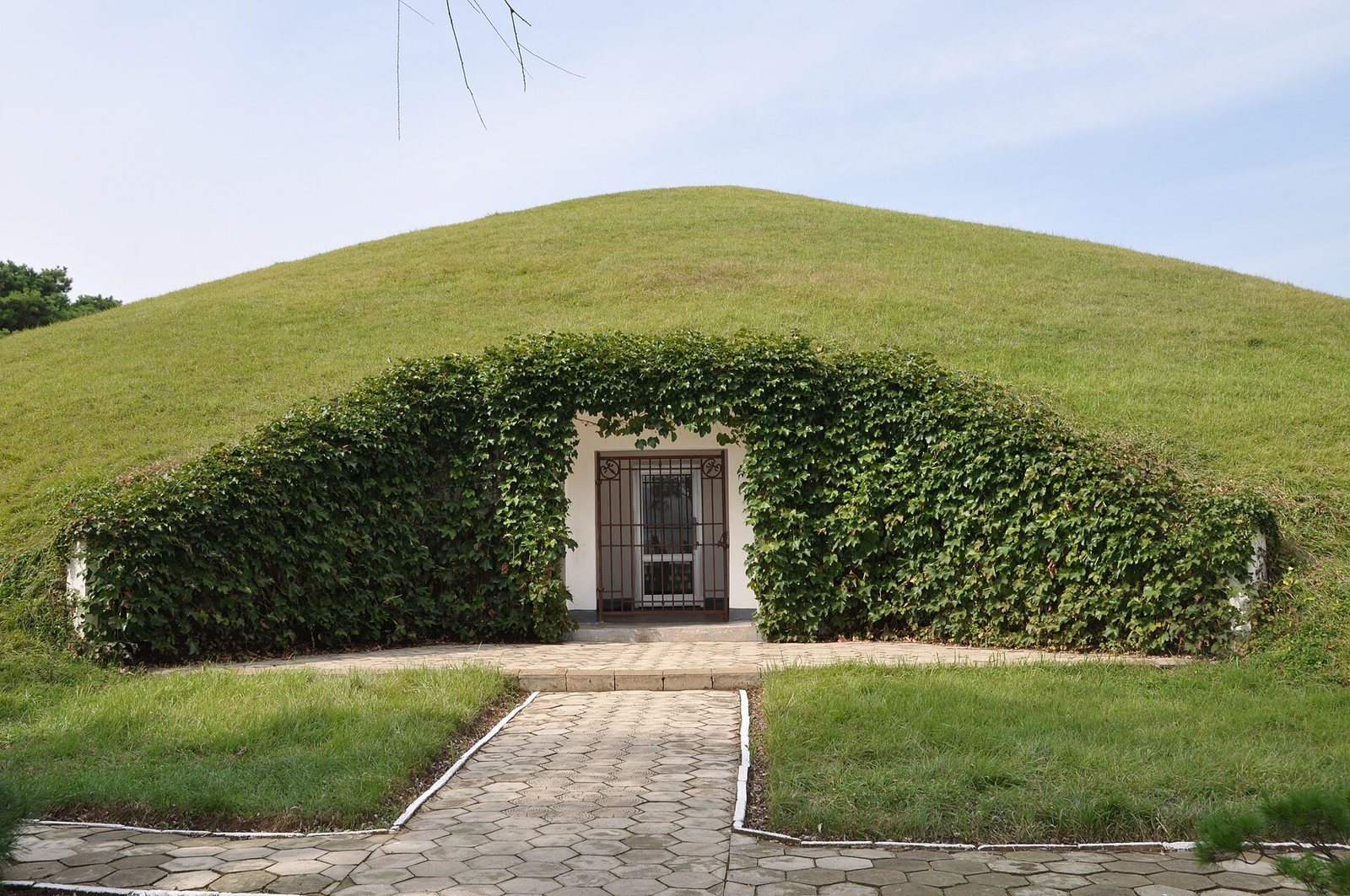
The complex covers about 233 hectares, with a buffer zone of approximately 1,701.2 hectares. Its 30 principal tombs are arranged across 12 areas, one of which also contains clusters of smaller graves. The component sites lie mainly among agricultural land, with some close to villages, and tombs stand within constructed compounds. Their forms include stone mounds, covered structures, and mound-shaped buildings. Plans range from single chambers to multiple chambers, sometimes with side chambers; stone corridors provide access to some tombs.
Roof designs vary, and some span broad spaces without supporting columns. Large stone blocks bear the roof’s weight and, in some cases, also support the earth covering the tomb.
Principal tombs and associated features
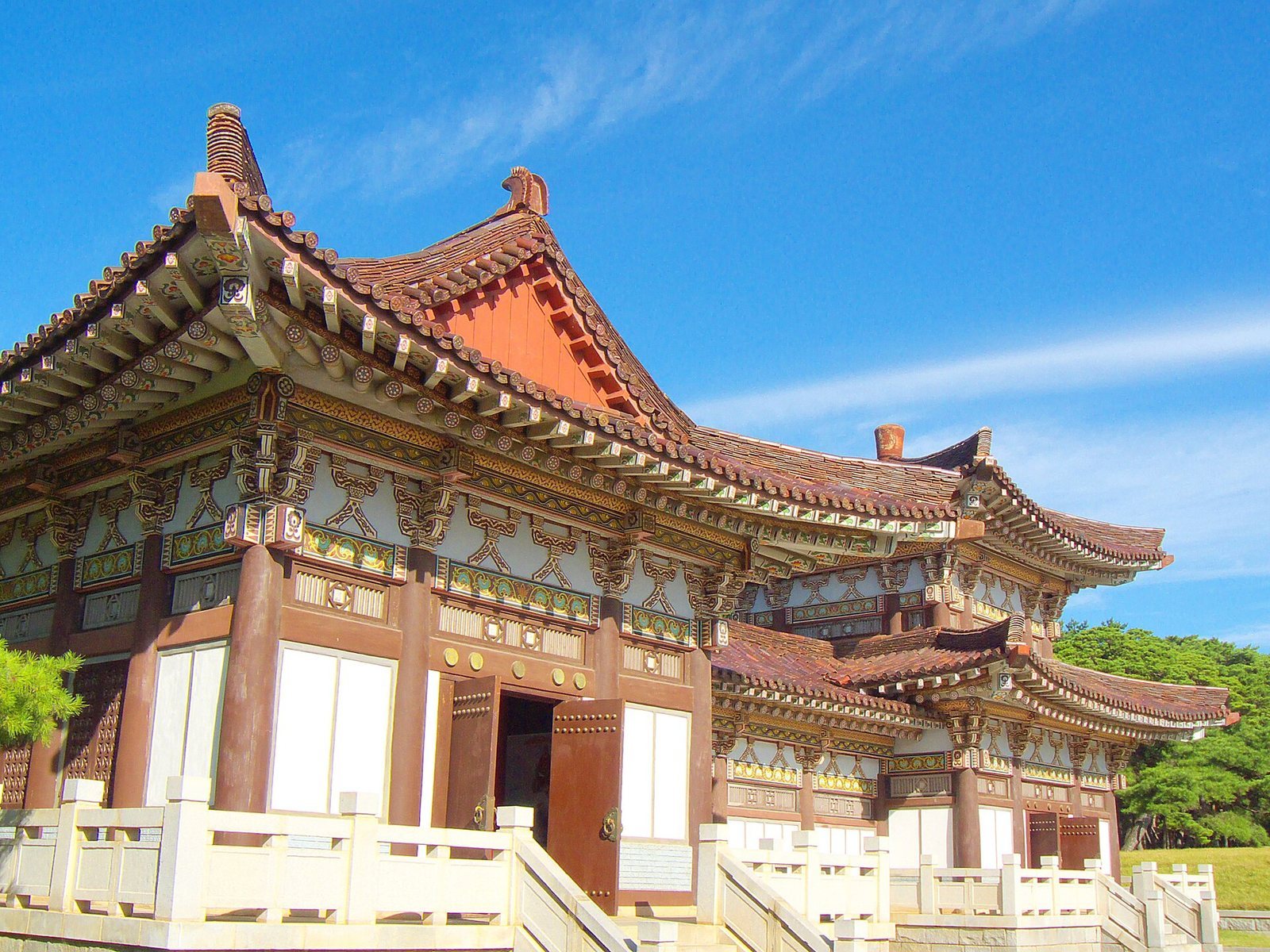
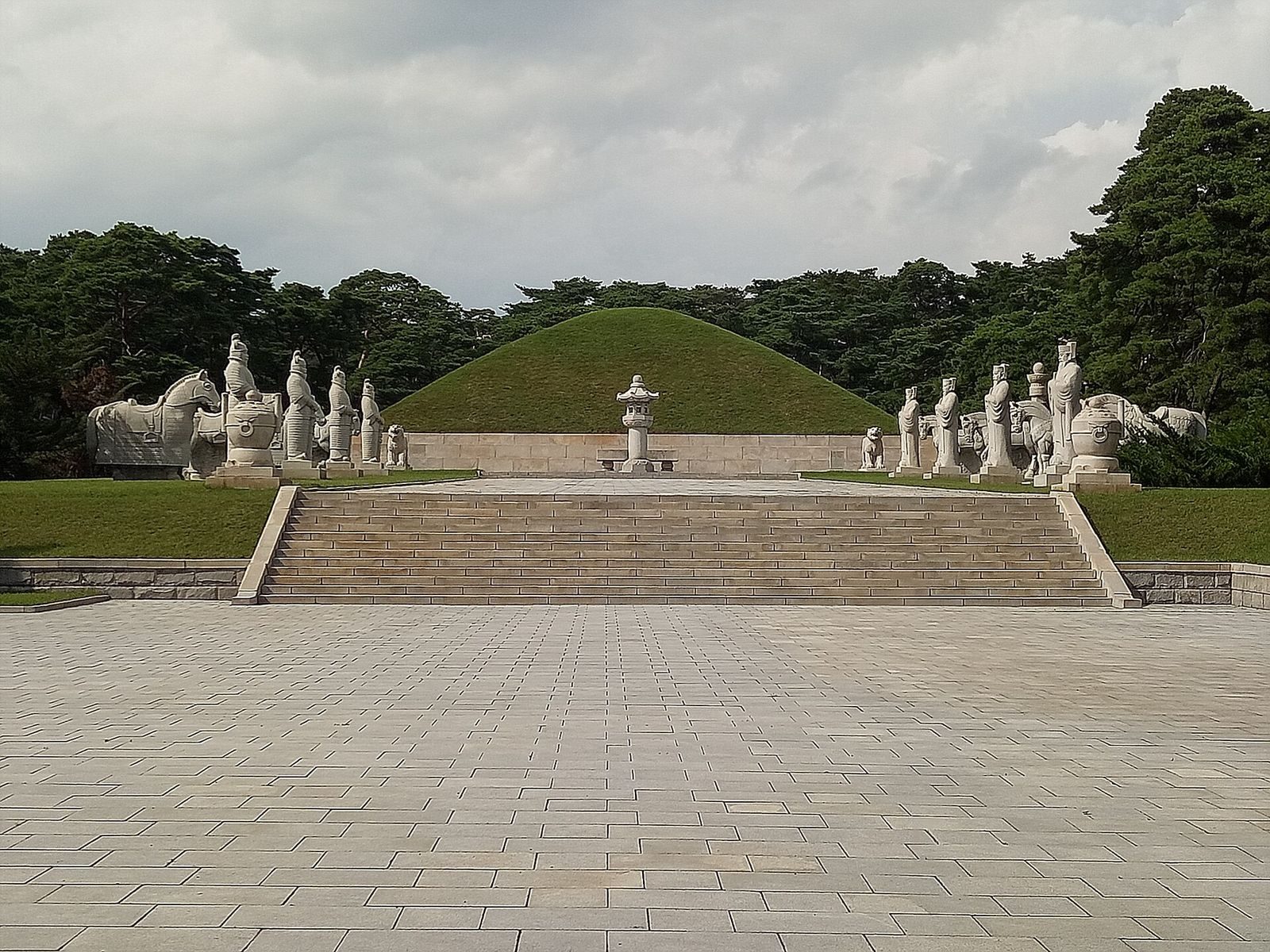
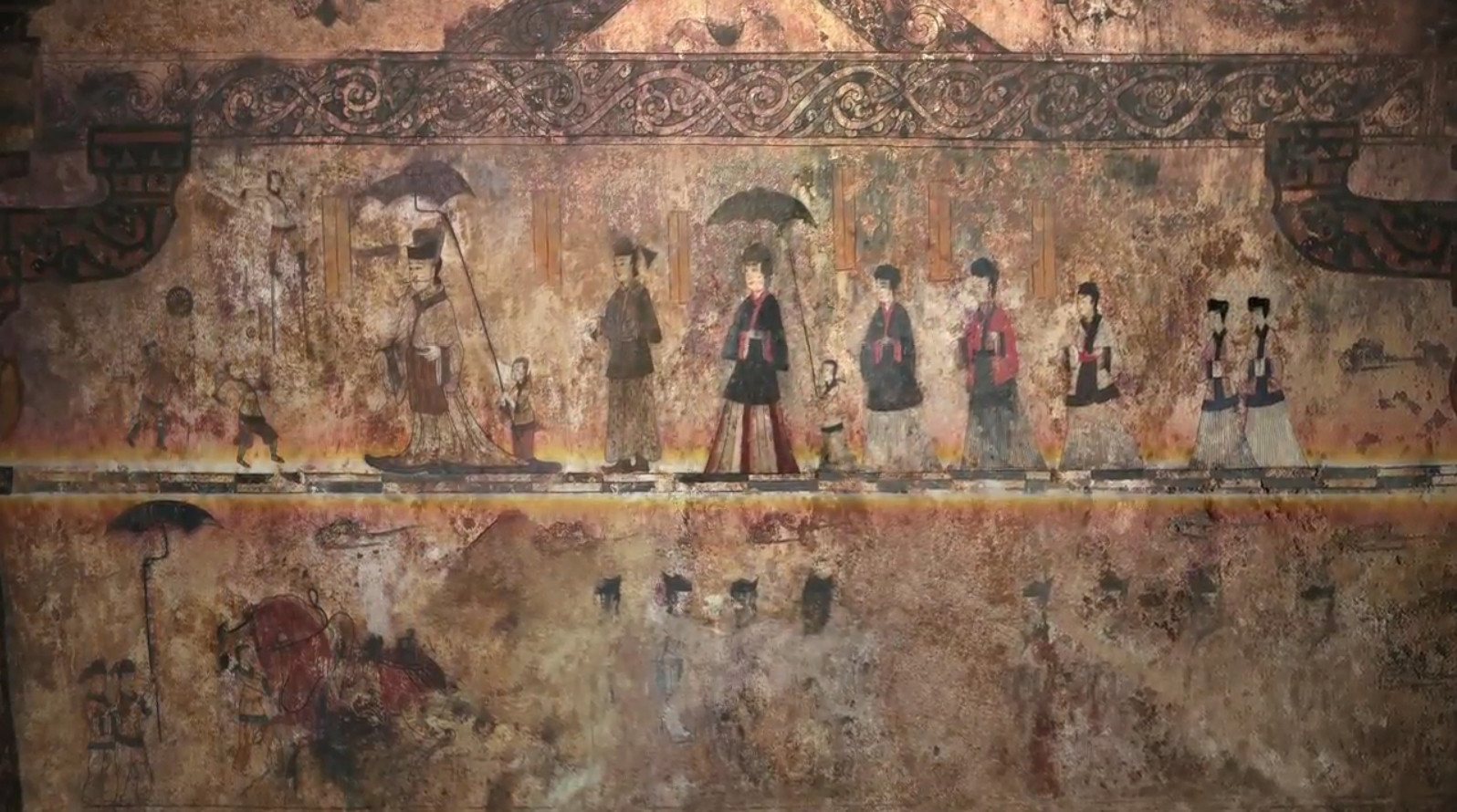
Named parts of the complex include the Tomb of King Tongmyong, Jinpha-ri Tombs Nos. 1–15, the Four Deities Tomb, Tokhwa-ri Tombs Nos. 1–3, and the Great, Middle, and Small Kangso Tombs. Anak Tomb No. 3 is another prominent burial. A temple stands by the Tomb of King Tongmyong, with a stone figure near the tomb. Murals in Anak Tomb No. 3 portray a woman, a man, and Dong Shou, an official of the fourth-century state of Former Yan in northeastern China.
Murals and imagery
Murals survive in about 90 of more than 10,000 known Goguryeo tombs in China and North Korea, and the complex contains most of these decorated burials. Nearly half of the mural tombs are in and around Pyongyang. By 2005, about 70 murals had been documented, chiefly in the Taedong River basin near Pyongyang, the Anak area, and Ji’an in China’s Jilin Province. Painted in strong colors, they show portraits and scenes of daily life, including clothing, food, housing, and burial practices, as well as mythology and decorative compositions. Some depict the Four Deities, protective divine figures associated with the directions, together or separately. Other images relate to Buddhism, a religious tradition originating in South Asia, and Taoism, a Chinese religious and philosophical tradition.