Kastelen Tower Ruins: A Medieval Stronghold in Alberswil, Switzerland
Visitor Information
Google Rating: 4.8
Popularity: Low
Official Website: www.kastelen.ch
Country: Switzerland
Civilization: Early Modern, Medieval European
Site type: Military
Remains: Castle
History
Kastelen Tower Ruins stand in the municipality of Alberswil, Switzerland, and trace their origin to a medieval construction initiated by the Counts of Kyburg. The tower was erected between 1249 and 1253 as a residence within a larger castle complex during a period marked by feudal administration and territorial consolidation.
Following the extinction of the Kyburg family around 1264, the castle became part of the Habsburg domains. In 1273, it was designated as the administrative center for a Habsburg district, reflecting its role in regional governance. Kastelen survived the 1375 invasion by the Gugler forces — mercenary knights threatening many Swiss strongholds — and avoided destruction during the 1386 Sempach War. The latter was likely due to positive relations between the castle’s vassals and the nearby city of Lucerne, which sought to protect its allies.
Ownership shifted in 1482 when Hans Feer, the mayor of Lucerne, acquired the lordship. Later, in 1598, it passed to Hans Ulrich Heinserlin, a patrician who undertook significant renovations. However, Heinserlin’s financial difficulties led to bankruptcy, and by 1645, the city of Lucerne assumed control of the unfinished and unoccupied castle.
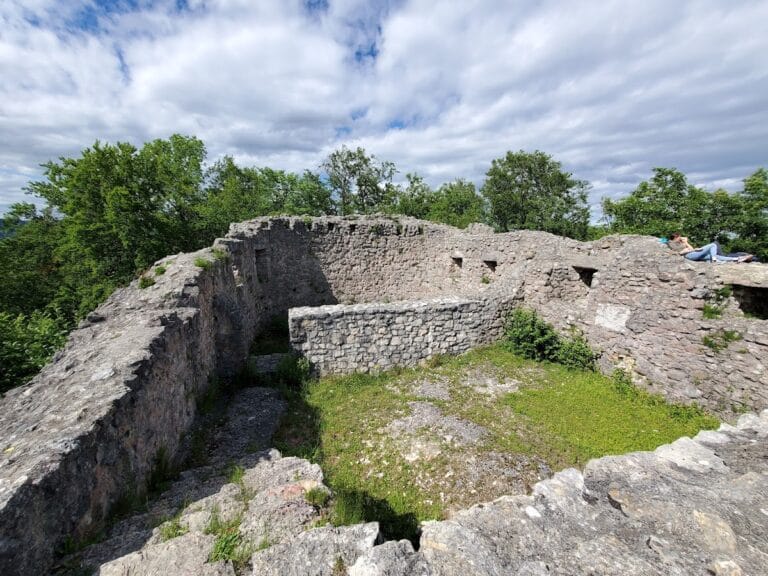
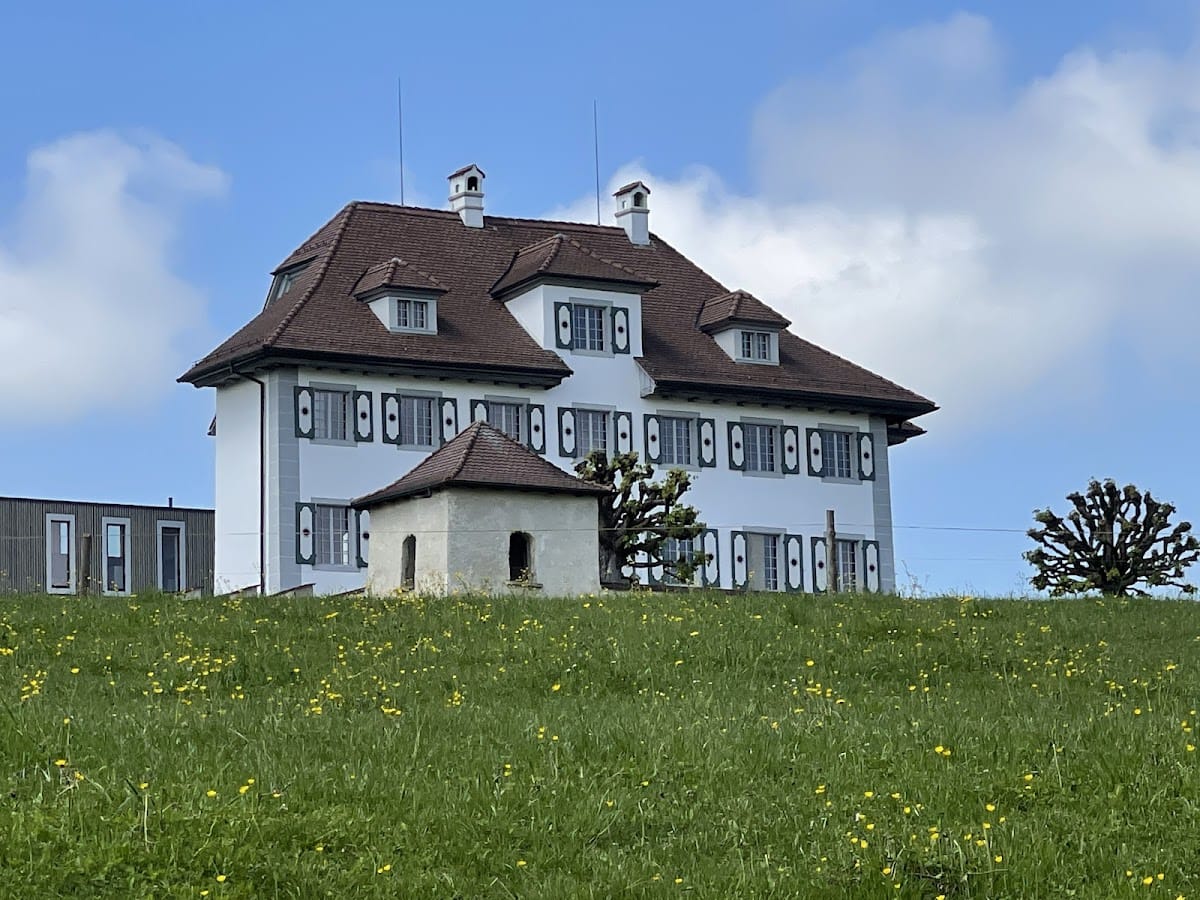
Political tensions surfaced in 1653 during the Peasants’ War when the castle, representing urban authority, was plundered by rebellious peasants. Following the conflict, local authorities required the culprits to pay for repairs. In 1680, Franz von Sonnenberg purchased the lordship and castle grounds. His nephew then constructed a new Kastelen Castle at a lower elevation in 1682 between the original ruins and Alberswil. By 1743, the decaying medieval castle was dismantled by the state of Lucerne, leaving mainly the outer walls of the main residential tower standing.
Interest in the site revived in the late 20th century after the Burgruine Kastelen association acquired it in 1996. Archaeological work uncovered noteworthy remnants, especially inside the tower, contributing to a better understanding of its medieval history. In 2006, a detached observation tower was installed within the ruins, emphasizing the site’s cultural importance. The hill on which the Kastelen Tower stands also bears a long history of human occupation, with evidence of Neolithic use, a Late Bronze Age settlement, and an earlier medieval wooden castle predating the stone tower visible at the site.
Remains
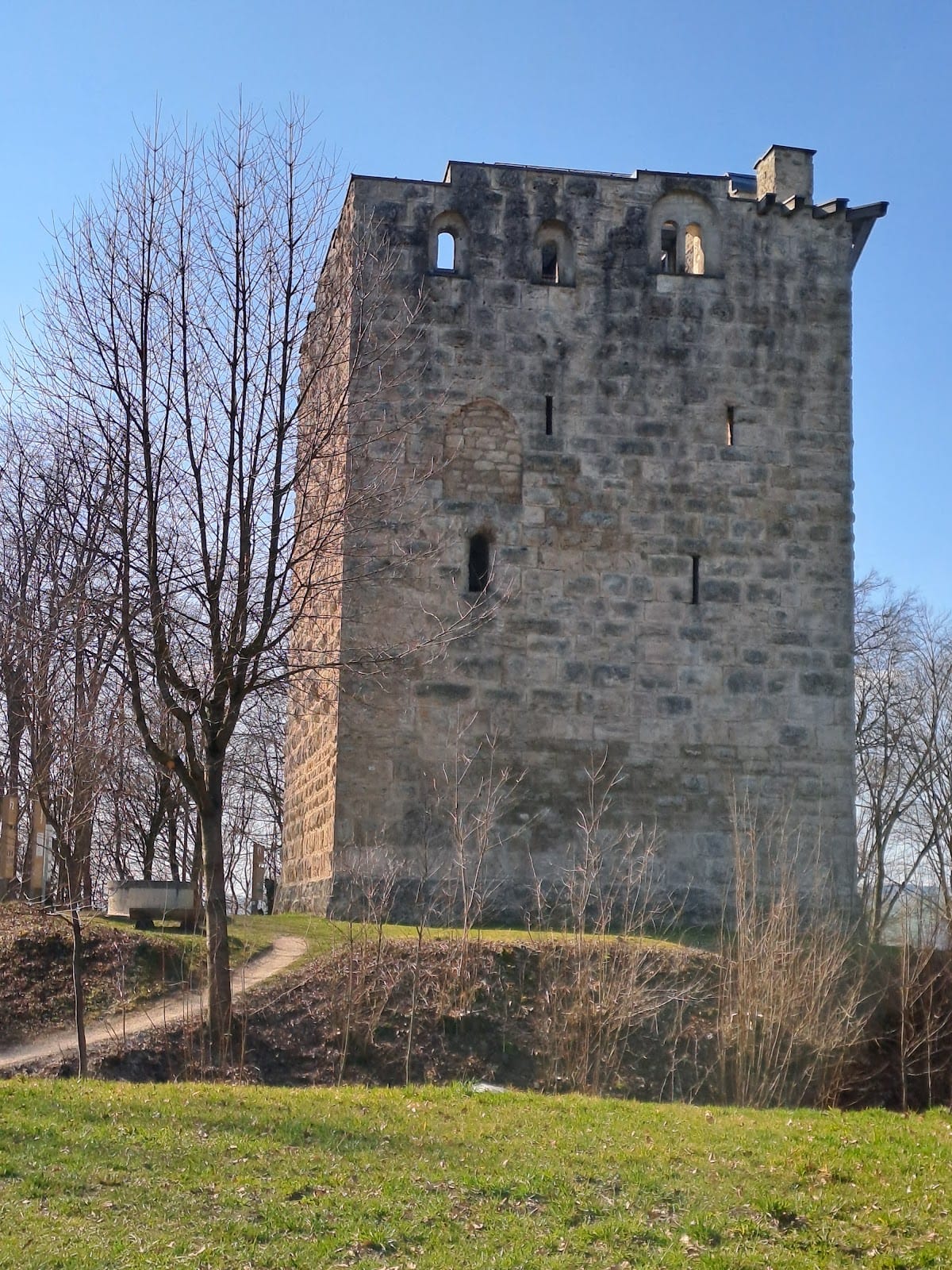
The surviving Kastelen Tower ruin is dominated by the 21-meter-high residential tower, constructed with durable stone masonry from the mid-13th century, as confirmed by tree-ring dating of timber elements integrated into the walls. The tower’s main entrance is unusually set high above ground level, accessible today by an external staircase added in modern restoration efforts. The structure consists of a cellar and four upper floors, showcasing functional adaptations through the centuries.
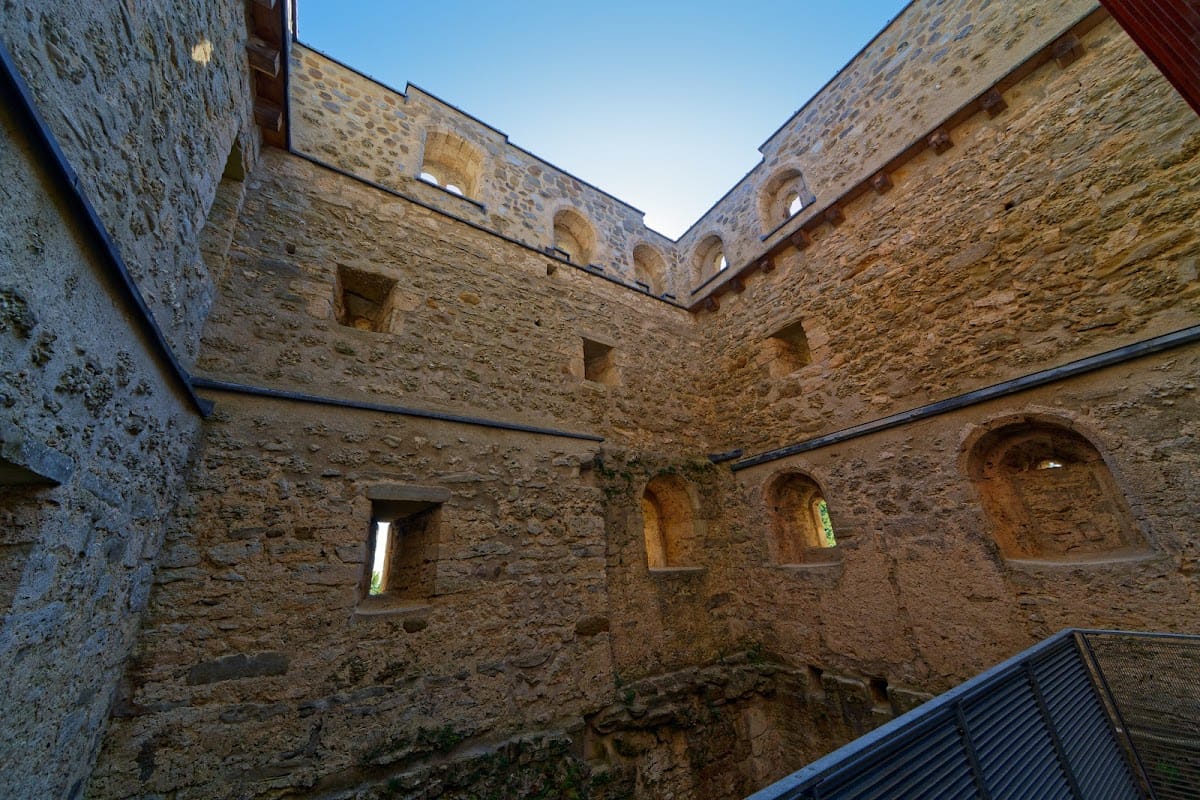
Distinctive architectural details include the south and east facades, where three rounded-arch windows reveal the presence of a chapel located on the first floor. On the second floor, a kitchen occupies the northwest corner, an addition from the late Middle Ages emphasizing evolving domestic needs. The third floor contains living quarters, notable for their tiled stove that provided warmth. Originally designed for defense, the fourth floor featured four corner turrets and large embrasure windows, which were later converted into additional living spaces in the 16th century, reflecting a shift from military to residential use.
Adjacent to the tower is the Sodbrunnen, a remarkably deep well measuring 57.6 meters in depth, one of the deepest wells in Switzerland. This feature was not part of the initial construction but added during the late medieval period. The well’s stone lining and structure demonstrate careful engineering, maintaining a steady water level due to natural drainage via permeable soil layers above the underlying Nagelfluh rock. During restorations in 2003 and 2004, the well was cleared of debris and fitted with illumination to enable viewing into its depths.
The castle ruins occupy a wooded hill rising 651 meters above sea level, surrounded on three sides by beech forest. An open vista faces eastward through a trio of large linden trees. A protective concrete shelter has been constructed beneath the ruins to safeguard the site from environmental damage.
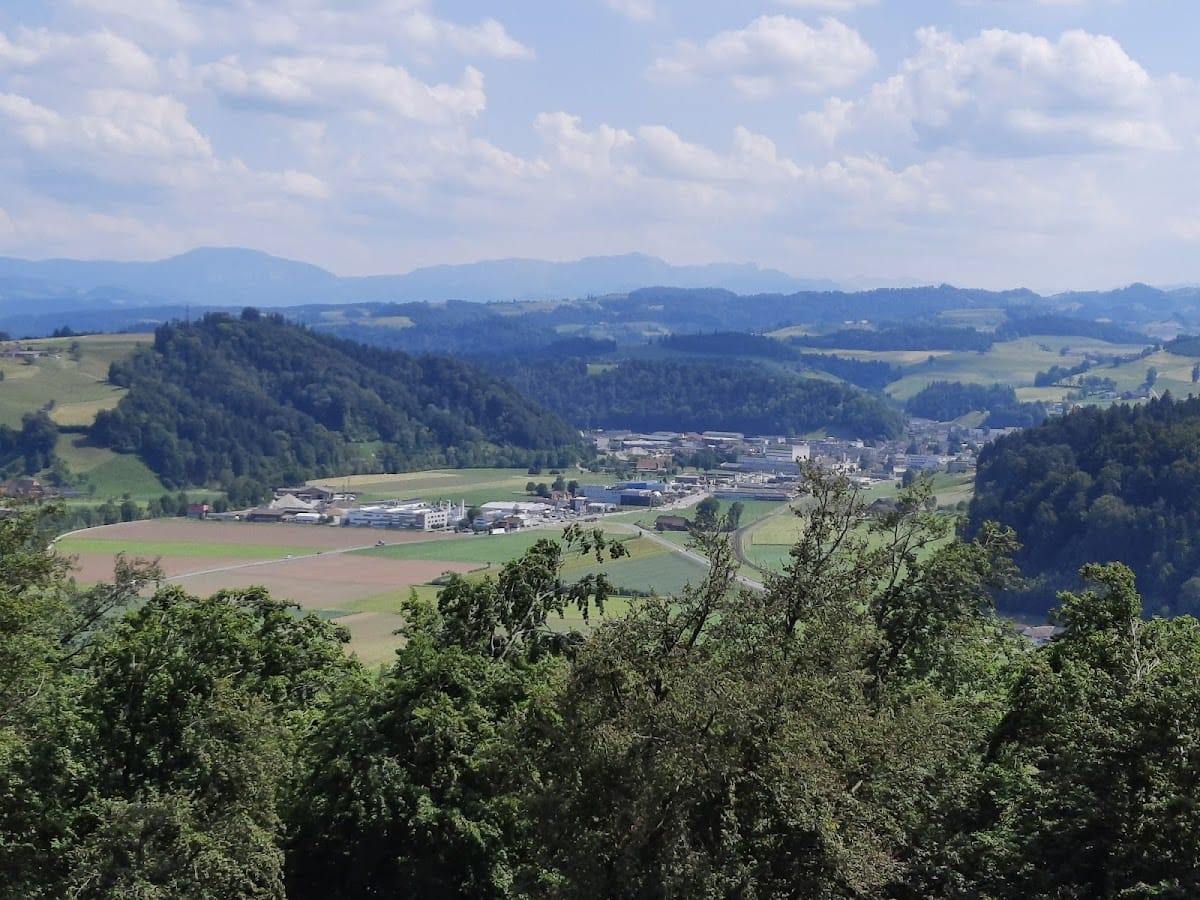
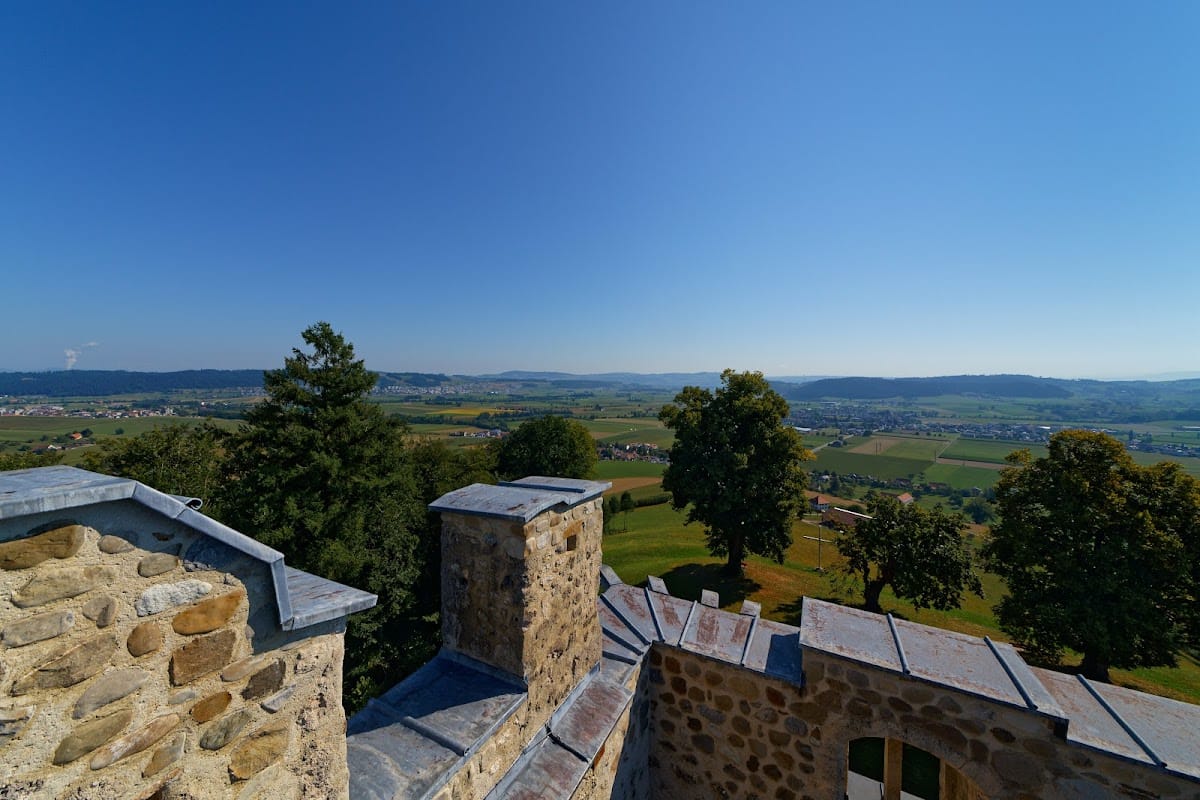
During recent restoration initiatives, the uppermost floor of the tower, previously unstable, was secured, enabling safe access. In 2006, a freestanding metal observation tower was installed within the ruin itself, featuring two platforms. A lower platform offers views into the inner walls, allowing close examination of the masonry, while an upper platform provides a full 360-degree panorama of the surrounding landscape, including nearby villages, the nearby Schloss Wyher, and distant mountain ranges visible on clear days.
Nearby sites