Karlík Castle: A Medieval Fortress in the Czech Republic
Visitor Information
Google Rating: 4.1
Popularity: Low
Country: Czechia
Civilization: Medieval European
Site type: Military
Remains: Castle
History
Karlík Castle stands in the municipality of Mořinka, Czech Republic, and was constructed by the medieval Czech civilization. Although specific details about its foundation and purpose are not directly recorded, historical research indicates that the castle likely originated in the mid-14th century. According to historian Miloslav Bělohlávek, construction may have begun in 1358 under the reign of Charles IV, the King of Bohemia and Holy Roman Emperor. The earliest firm documentary evidence appears in 1400, when King Wenceslaus IV pledged the fortress and allocated funds for its repair, suggesting that the castle was already established and functional by that time.
By the mid-16th century, references to the castle itself become scarce, with a 1544 record mentioning only a nearby pond and a mill site, implying that the castle may have fallen out of use or been abandoned by then. Scholars Pavel Bolina and Tomáš Klimek have proposed that the castle’s creation was linked to its strategic position along a long-distance route connecting Prague and Dobříš, serving as a point of oversight or control over this important thoroughfare.
In addition to historical records, the site has been the subject of legend. Václav Hájek of Libočany’s chronicle claims that Charles IV built Karlík Castle to provide a residence for the queen and her court, since women were purportedly forbidden at the nearby Karlštejn Castle. This story later inspired the play *Noc na Karlštejně* by Jaroslav Vrchlický, embedding the castle into Czech cultural narrative as part of royal folklore. Today, the castle and its surroundings are recognized for their cultural and natural value, protected as a cultural monument and incorporated into the Karlík Valley nature reserve.
Remains
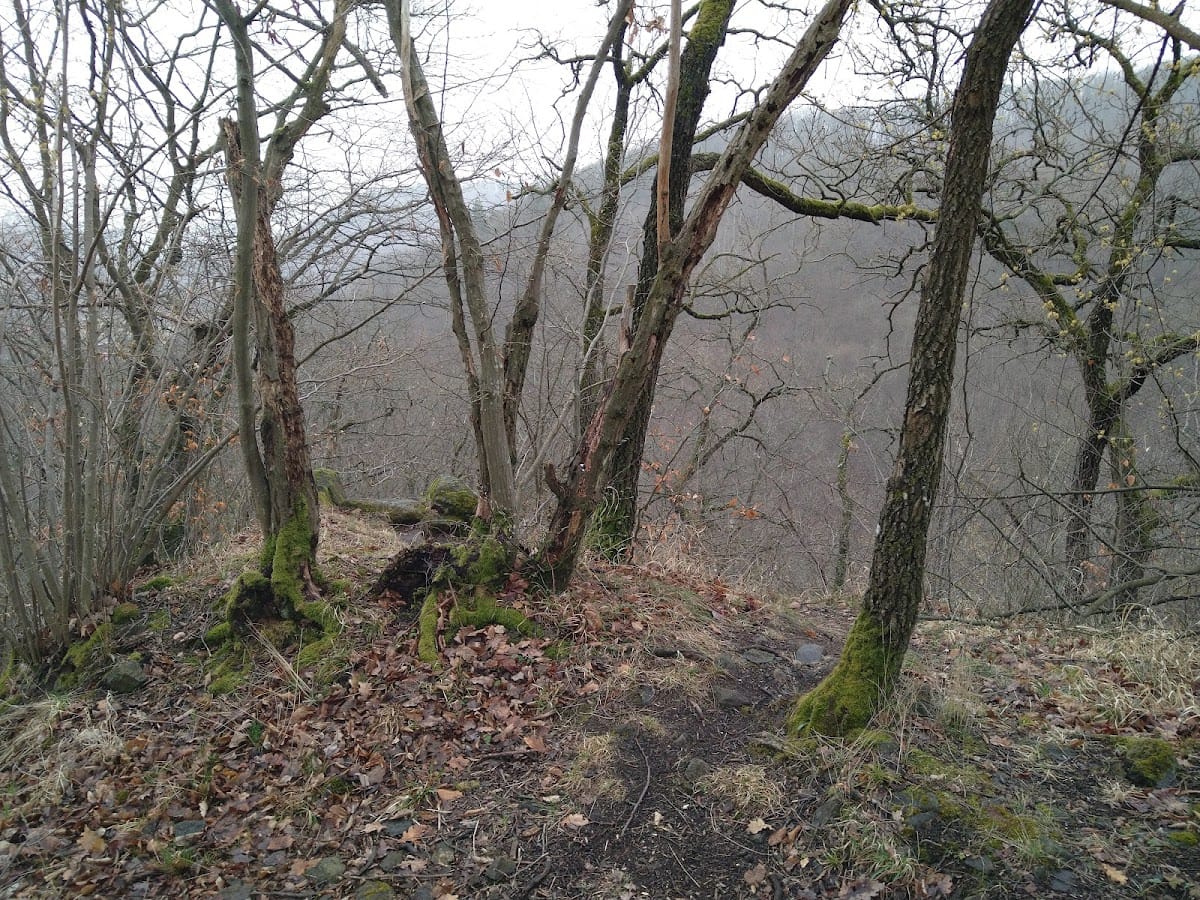
The ruins of Karlík Castle are situated on a promontory locally known as Hrádek, offering a naturally defensible position above the Karlík Valley. The castle’s layout was compact, dominated by a small core featuring a polygonal building, likely serving as a tower or keep. This primary structure was positioned prominently near the edge of the promontory, providing a vantage point over the surrounding landscape.
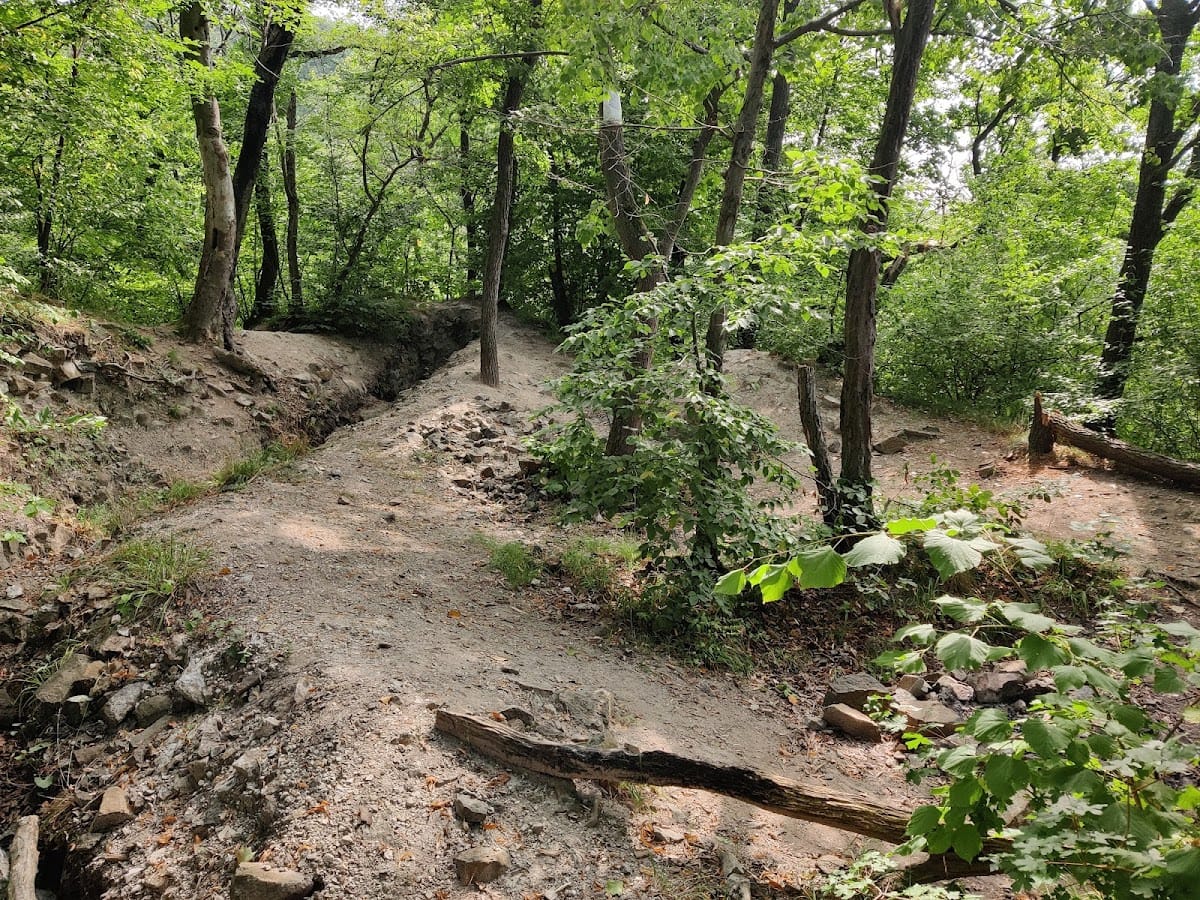
Access to the fortress was limited to a single entrance on the northern side, which was fortified by a neck ditch—a defensive trench cutting across the approach—and an earthen rampart. These earthworks were designed to hinder attackers and protect the castle’s main gate. Adjacent to the southwestern curtain wall, archaeologists have identified another building whose interior was partially divided by a surviving fragment of a partition wall, indicating functional use of interior space, possibly for residential or storage purposes.
No detailed descriptions exist regarding the castle’s building materials or decorative elements, and no inscriptions or artifacts have been recorded in connection with the ruins. The current visible remains consist primarily of fragmented masonry and earthworks, preserving the general form of the site but offering limited evidence of the castle’s architectural refinement. Oral traditions linked to the castle chiefly derive from later historical writings rather than direct archaeological findings.
Nearby sites