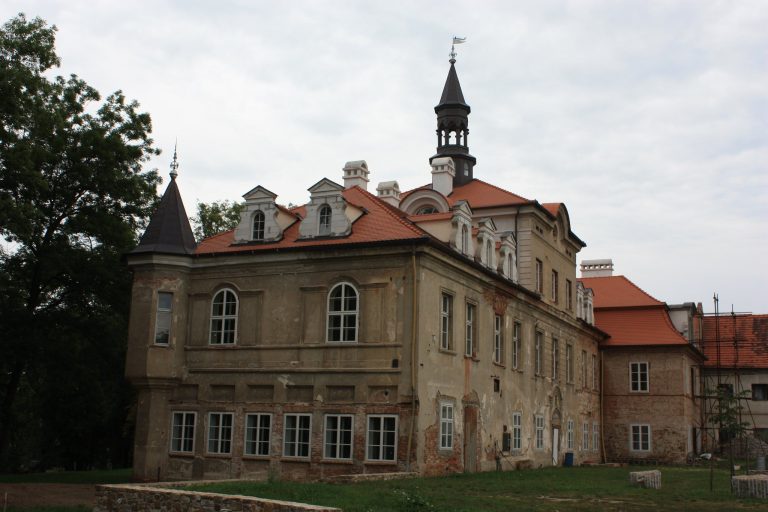
Tetín Castle: A Gothic Royal Castle in Czechia

Site at a Glance
- Rating
- 4.7
- Popularity
- Medium
- Country
- Czechia
- Primary era
- Medieval
- External website
- Open
- Eras represented
- Medieval
- Civilizations
- Holy Roman Empire, Kingdom of Bohemia
- Site type
- Military
- Remains
- Castle
On this page11 sections
History
Foundation and royal administration
Tetín Castle is a Gothic castle in Czechia, built around the middle of the thirteenth century on the site of an older Tetín hillfort. Its construction is archaeologically documented, and King Přemysl Otakar II was probably responsible for commissioning it. The Přemyslids were the medieval ruling dynasty of Bohemia, and the castle formed part of the political and administrative landscape of their kingdom.
In 1288, Tetín was recorded as the seat of a royal huntsman, an official responsible for royal hunting grounds and their administration. Its burgrave, the official who administered and defended the castle or its associated lordship, was Hynek of Lichtenburk. Together with Dětřich Švihovský, a nobleman from Švihov, he plundered episcopal estates. This episode may have been connected with archaeological evidence that the castle was conquered.
Rebuilding under the Přemyslids
During the reign of Wenceslas II, the castle was rebuilt for the use of Přemyslid illegitimate sons. Wenceslas II, the son of Přemysl Otakar II, also granted the office of royal huntsman to the Chotěšov Monastery, a medieval Premonstratensian monastery in Bohemia. The monastery was to use income from the forest for the churches of Tetín, while the inhabitants of Tetín could cut timber for their own construction needs.
After John of Luxembourg came to power as the Bohemian king who succeeded the last Přemyslid king, Štěpán of Tetín became provincial notary and supreme scribe of the Kingdom of Bohemia. He may also have served as Tetín’s burgrave. Štěpán was a nephew of Jan Volek, a Přemyslid royal relative and churchman, linking the castle with circles close to the former ruling dynasty.
Connection with Karlštejn and decline
Charles IV, the fourteenth-century king of Bohemia and Holy Roman Emperor, later bought Tetín Castle and attached the Tetín estate to Karlštejn, his royal castle in Bohemia. He may have referred to Tetín in the legal code Majestas Carolina, although that reference may instead concern Děčín or Děvín. The castle ceased to exist during the second half of the fourteenth century.
Tetín Castle, the archaeological traces of the earlier hillfort, and the surviving ruins are protected as a cultural monument of the Czech Republic.
Remains
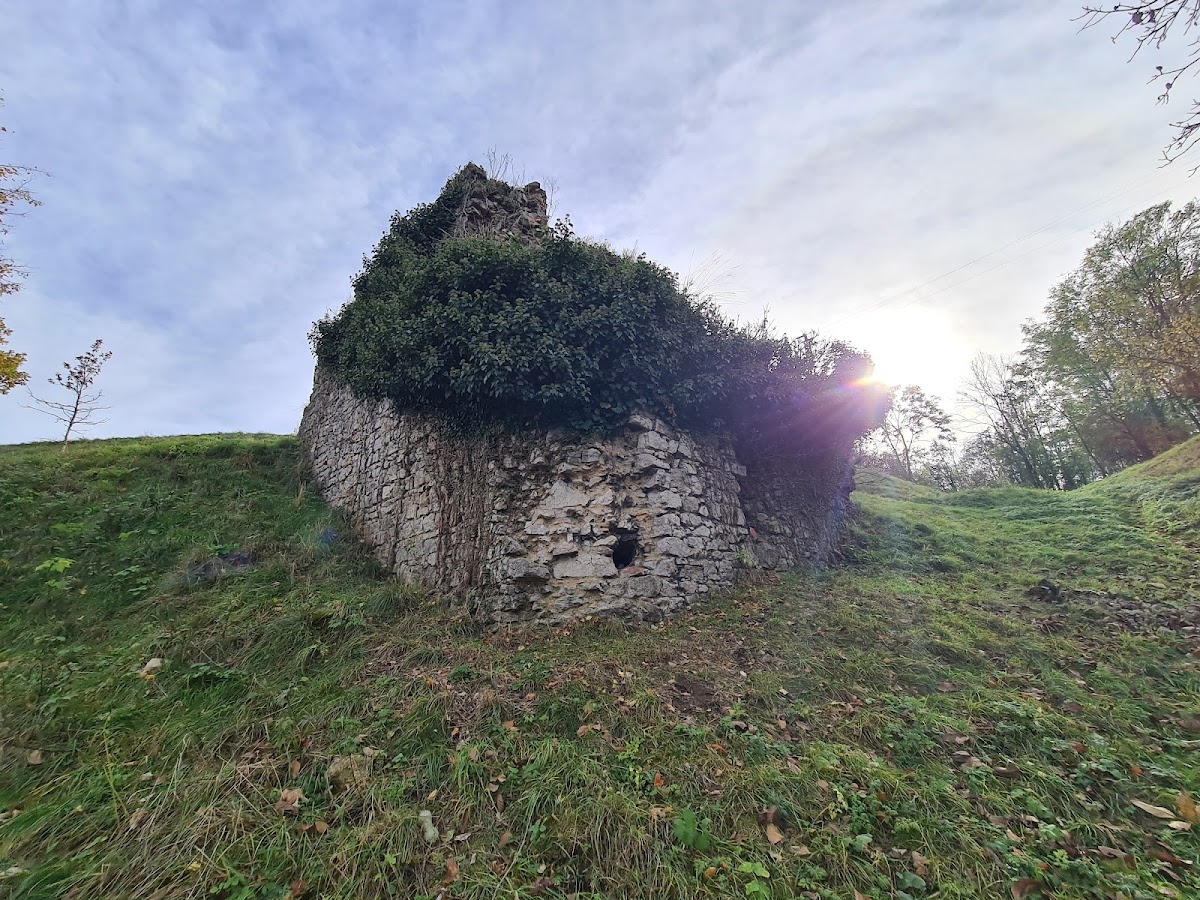
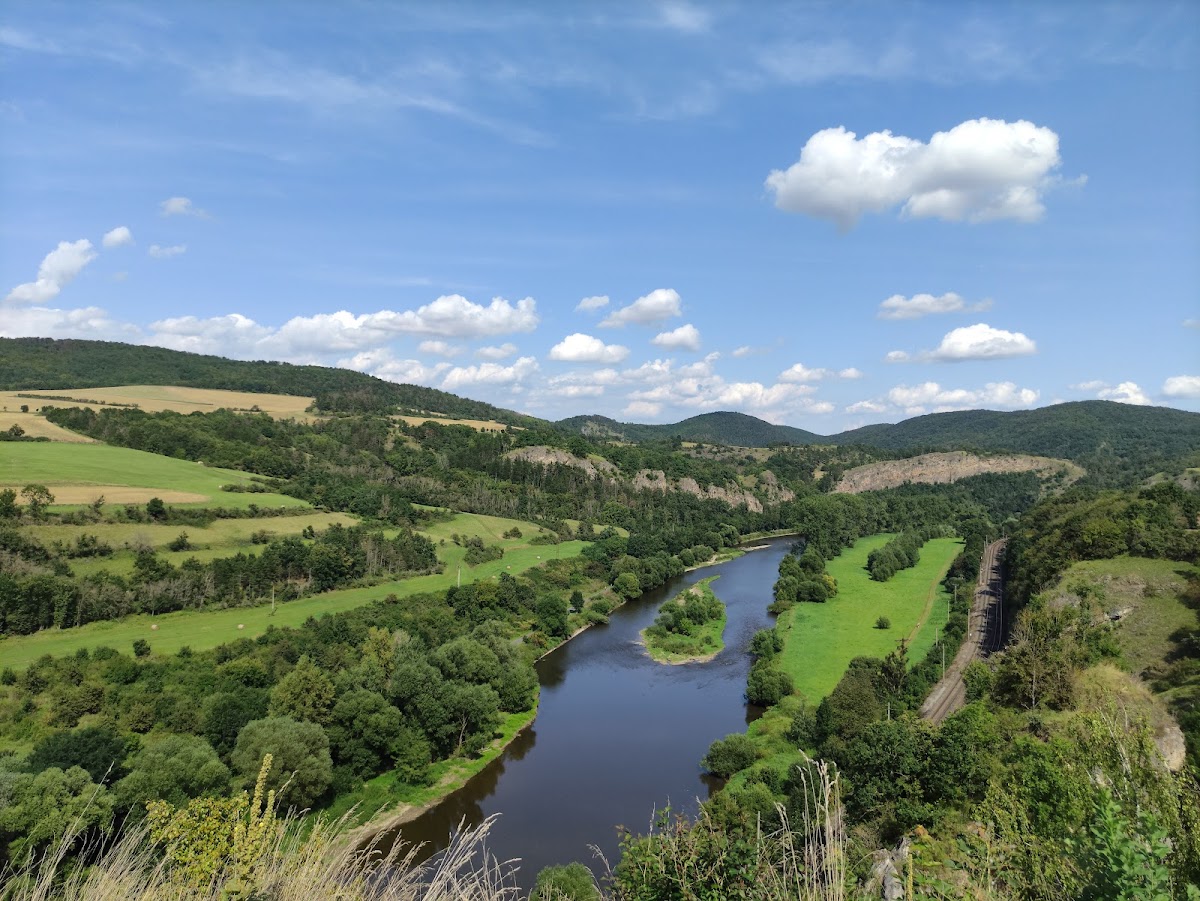
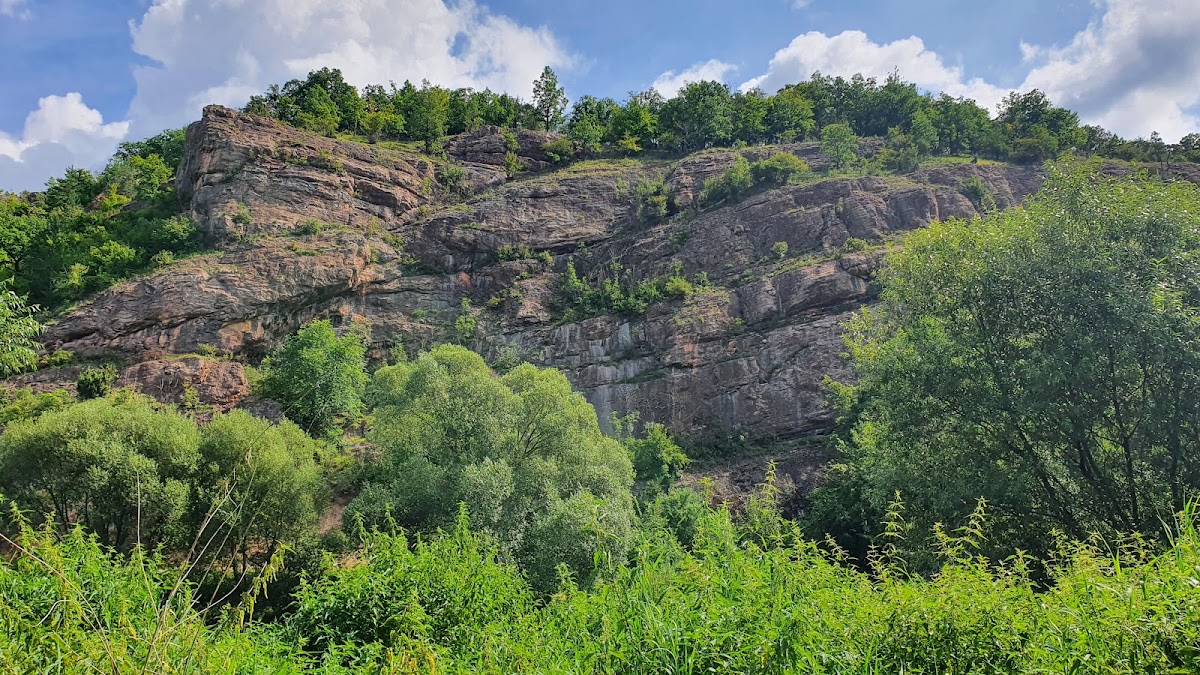
The ruin occupies a rocky promontory about 270 metres above sea level on the northeastern edge of Tetín, approximately 2 kilometres southeast of Beroun. The Gothic castle probably began as a towerless enclosure with a trapezoidal plan. Its eastern part was later destroyed by nineteenth-century limestone quarrying, which also removed much of the surviving structure.
Original castle and residential core
Palace
The principal residential building was a large three-room palace on the northeastern side of the castle. A long palace wing was later added to the original core. Its entrance was secured by a portcullis, a vertically sliding fortified gate, and was reached by a bridge from the gate tower.
Possible defensive tower
Two plans made in the second half of the nineteenth century show a large rubble cone that may represent the remains of a round bergfried, a tall defensive tower that usually stood independently within a medieval castle. Bernhard Grueber interpreted a square projection at the northern corner as a possible tower. If either interpretation is correct, the castle may have had buildings arranged along its perimeter.
Later enlargement and surviving masonry
Lower western section
At the end of the thirteenth century, the complex was enlarged by a lower western triangular section. This addition contained a massive square gate tower. The wall of the lower castle was built in opus spicatum, masonry laid in a distinctive herringbone pattern, and was probably reinforced by an outer defensive enclosure above the ditch.
Gate tower and palace wing
Part of the square gate tower survives, along with fragments of the masonry belonging to the later palace wing. These remains preserve the principal evidence for the castle’s thirteenth-century expansion, including the fortified entrance linking the gate tower with the added residential structure. Limestone extraction in the nineteenth century destroyed the rest of the castle.