Kaniman-ji Temple: A Late Asuka Buddhist Temple in Japan
Site at a Glance
- Rating
- 4.2
- Popularity
- Low
- Country
- Japan
- Primary era
- Early Modern
- External website
- Open
- Eras represented
- Early Modern
- Civilizations
- Tokugawa
- Site type
- Religious
- Remains
- Temple
On this page6 sections
History
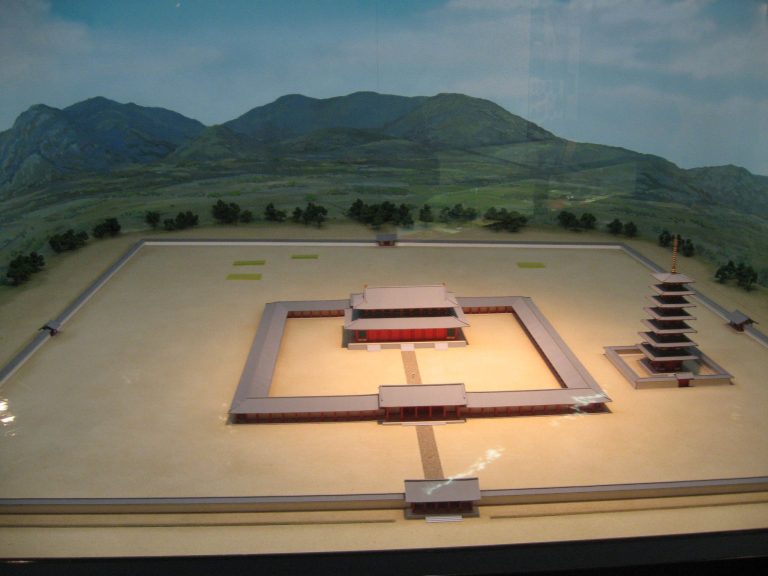
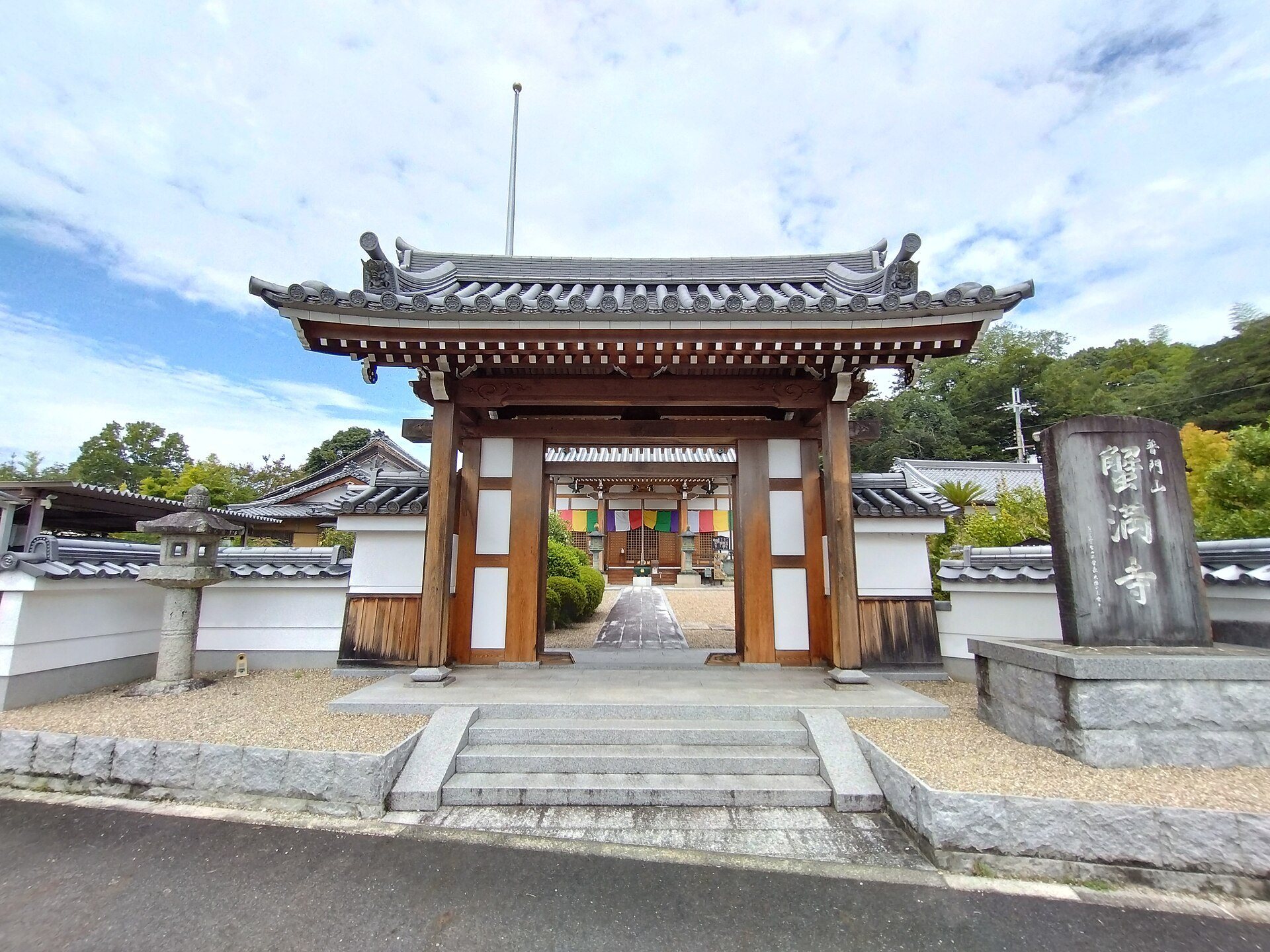
Kaniman-ji Temple is a Buddhist temple in Japan, located in Kizugawa, Kyoto, with origins in the late seventh-century Hakuho phase of the late Asuka period. It belongs to the Chizan branch of Shingon Buddhism, a Japanese school of esoteric Buddhism, and its principal image is Shakyamuni Buddha. Archaeological excavations indicate that the temple was founded during the late Asuka period, although its exact foundation date and circumstances are unknown.
Foundation and Early Tradition
The foundation is traditionally attributed to Hata Waga, but this attribution is not historically certain. Kaniman-ji is closely associated with a Buddhist miracle tale in which crabs repay a human kindness. The story appears in the Konjaku Monogatari-shu, a late Heian-period collection of Buddhist and other tales, showing that the connection between the temple and the crab-repayment tradition was established by that time.
The place-name Kabata was formerly read in forms associated with kani, meaning crab, and was written with several different character forms. The temple itself was once known by names equivalent to Kawata-dera and Kamihata-dera. The later adoption of the name Kaniman-ji strengthened its association with the crab story.
Kannon and the Temple’s Revival
The crab narrative is a Buddhist miracle tale associated with Kannon, the bodhisattva linked with compassion and the answering of prayers. The mountain name Fumon-san comes from the Universal Gate chapter of the Lotus Sutra, a major Mahayana Buddhist scripture whose chapter focuses on Kannon’s compassionate powers. These associations suggest that Kannon may originally have been the temple’s principal image. The principal image later became Shakyamuni Buddha, while a Kannon hall formerly stood near the temple entrance.
Kaniman-ji was revived in 1711 by Ryohan, a monk of Chishaku-in Temple. This revival forms a later phase in the temple’s history, after its early foundation and the development of the traditions linking its name with crabs and Kannon.
Remains
Temple Buildings and Precincts
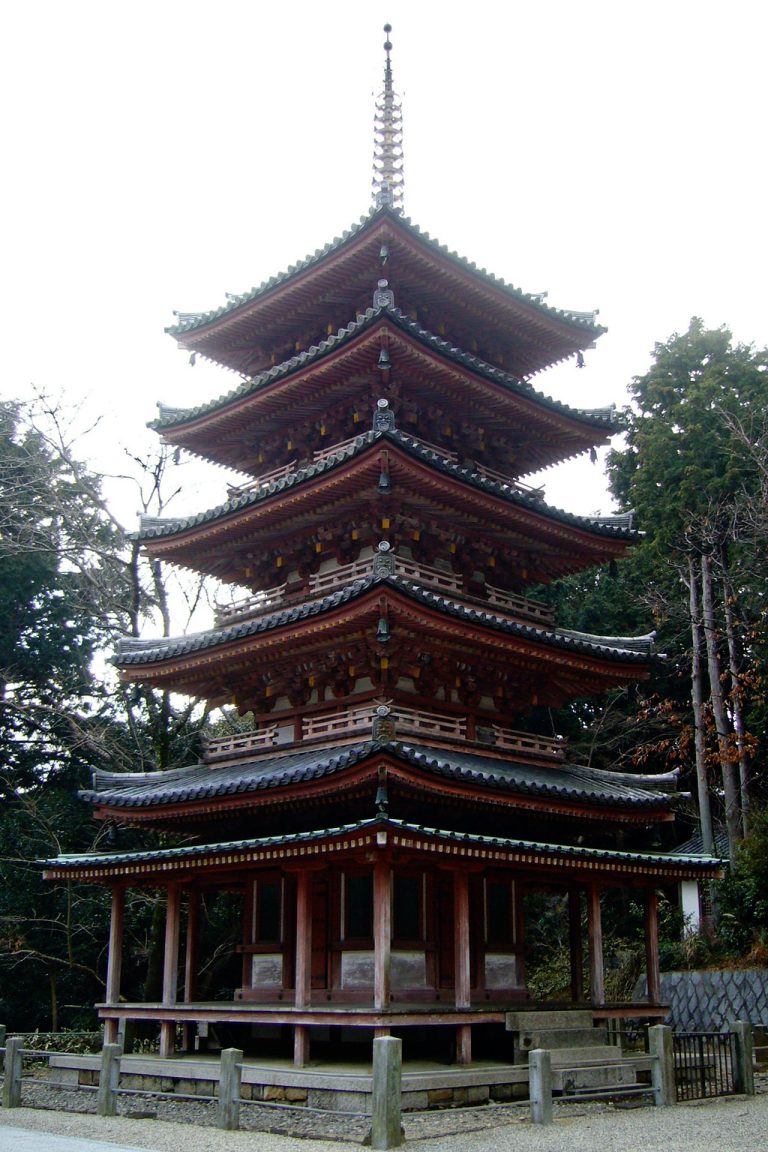
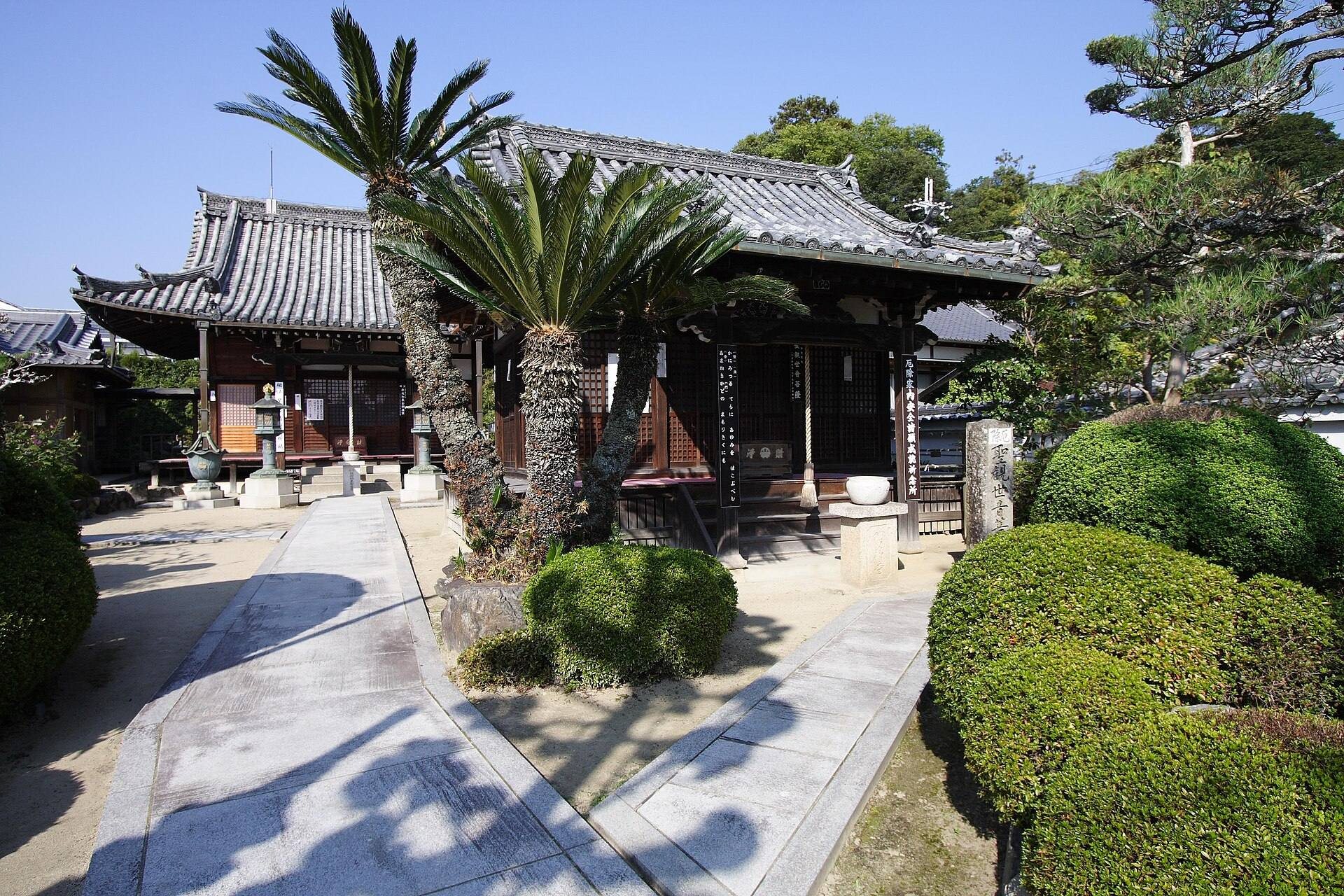
The main hall was built in 1759 and rebuilt in 2010. The earlier buildings no longer survive. Crab sculptures are placed at various points throughout the temple precincts, preserving the visual association with the crab-repayment tradition. A Kannon hall formerly stood near the entrance to the precincts, although the temple’s principal image had already changed to Shakyamuni Buddha.
Bronze Image of Shakyamuni Buddha
The principal image is a seated bronze Shakyamuni Buddha made during the late Asuka, or Hakuho, period. The statue is 240 centimetres high and weighs 2,172 kilograms. Its principal body sections have exceptionally thin bronze walls, approximately 2 to 3 millimetres thick.
The face was altered using a cast-on repair technique, in which additional metal was applied to adjust or repair cast features. The statue’s manufacturing method has been debated. Earlier interpretations proposed either sectional casting, which uses separately made mold or cast components, or a non-sectional lost-wax process, in which a wax model is replaced by molten metal. A detailed investigation connected with the rebuilding of the main hall raised the possibility that the image was made with a clay mold. The same investigation produced new findings about its weight, thin walls, facial repairs, and casting method.
The image’s original provenance is unknown. It may have been created for Kaniman-ji, but another interpretation holds that it was transferred from a different temple. The bronze statue is designated a National Treasure. A separate wooden seated image in Tathagata form is designated a cultural property by Kizugawa City.