Ishinokarato Kofun: An Aristocratic Burial Mound in Japan
Site at a Glance
- Rating
- 3.9
- Popularity
- Very Low
- Country
- Japan
- Primary era
- Medieval
- External website
- Open
- Eras represented
- Medieval
- Civilizations
- Yamato
- Site type
- Burial
- Remains
- Burial Mound
On this page7 sections
History
Ishinokarato Kofun is an ancient Japanese burial mound in Japan, built around the beginning of the eighth century during the closing years of the Kofun period and the transition to the Nara period. The person buried there is unknown, but the tomb is considered to have belonged to an aristocrat of the time. Its position north of the former capital of Heijo-kyo places it within a landscape shaped by the political and cultural changes that accompanied the emergence of the Nara period.
Construction and Burial
The mound was created as a joenkahofun, a tomb with a square lower section and a circular upper section. Its stone burial chamber faces south and has a horizontal entrance. The name “Karato” is traditionally explained as a reference to the chamber’s resemblance to a Chinese-style chest. On the Kyoto side, the mound is also known as Kazahahi Kofun.
The tomb’s careful construction and aristocratic association indicate the status of the person for whom it was made, although the individual’s identity has not been established. The chamber resembles that of Takamatsuzuka Kofun, a late seventh-century burial mound in Asuka known for its painted stone chamber.
Later History and Preservation
The burial chamber was robbed during the medieval period or at another time before the modern era, and many burial goods were lost. Items recovered during archaeological work nevertheless included a gold bead, a silver bead, three pieces of silver-fitted sword hardware, fragments of gold leaf, and pieces of black lacquer. Sue ware, a high-fired wheel-made pottery produced in ancient Japan, was found in the passageway. The lacquer fragments may have come from a lacquered coffin.
An archaeological investigation took place in 1979 as part of plans for new-town development. The site was restored in 1987 and is maintained as a park. On July 16, 1996, Ishinokarato Kofun was designated a National Historic Site of Japan.
A Boundary Across Two Cities
Ishinokarato Kofun extends across the boundary between Nara City and Kizugawa City. A map from 1724 records a dispute between the Choshoji settlement in Yamato Province and Soraku District in Yamashiro Province. The territorial projection produced by that dispute is considered the reason the mound now reaches across both prefectures.
Remains
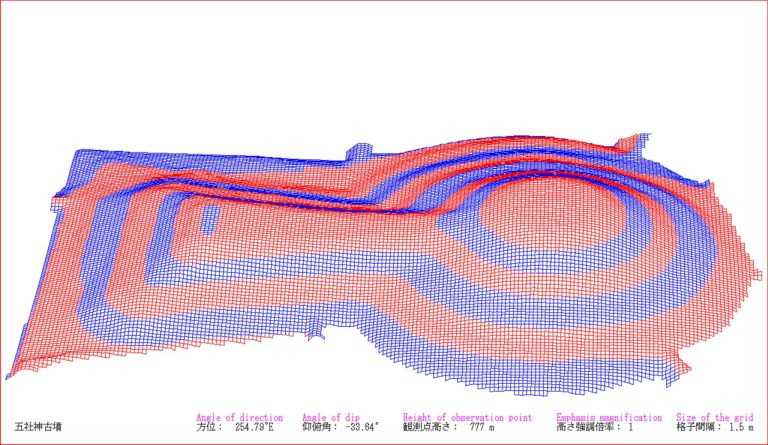
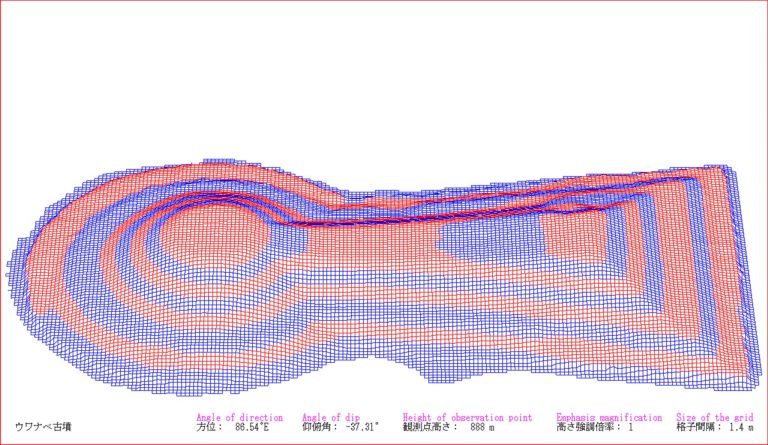
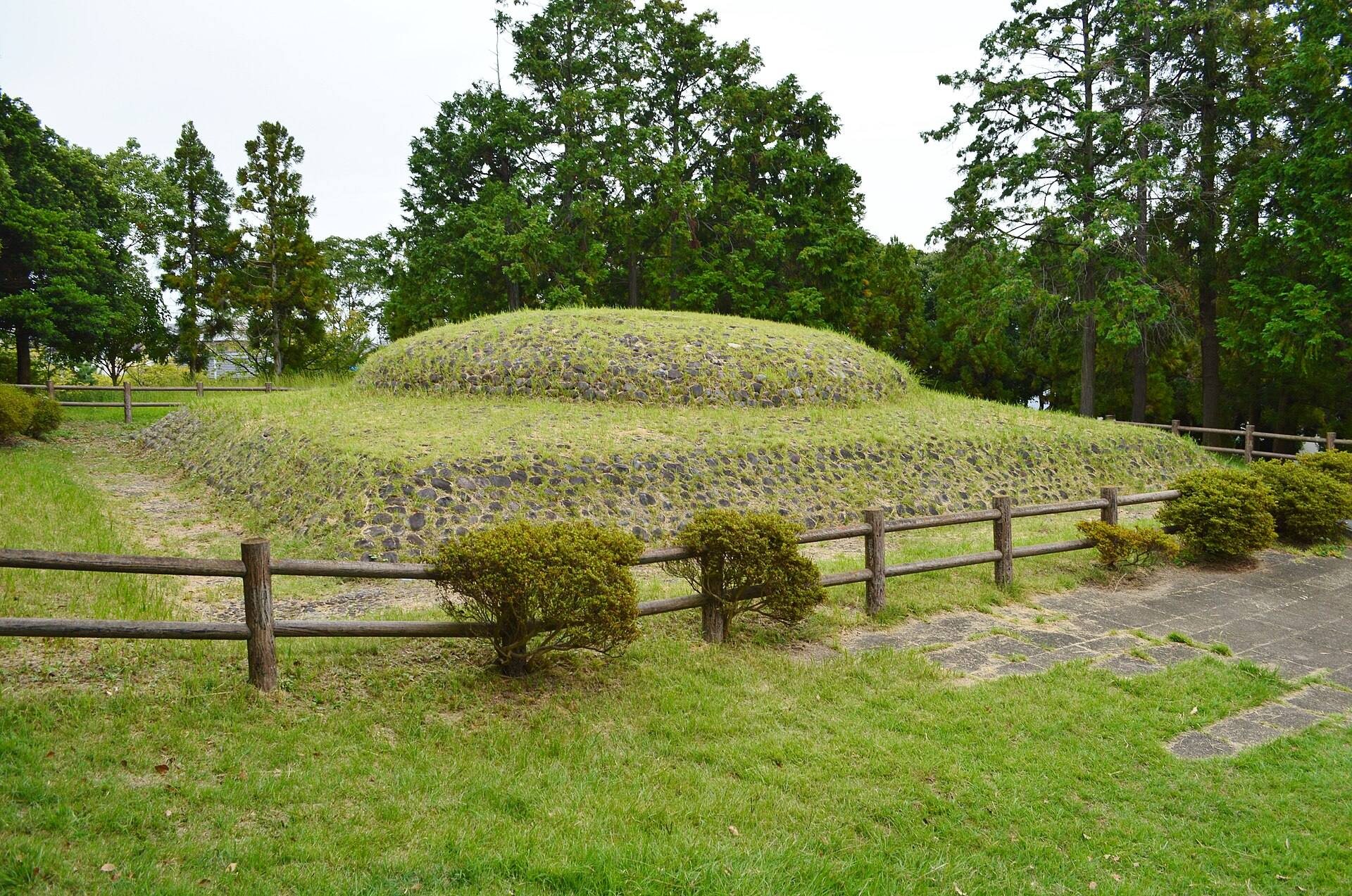
Ishinokarato Kofun occupies a terraced flat area on the eastern slope of the Heijoyama Hills, north of Heijo-kyo. The mound consists of a square lower platform supporting a circular upper mound. Its two levels were formed from compacted earth using the rammed-earth technique, while drainage ditches and culverts around the structure helped carry away water.
The Two-Tiered Mound
The lower platform measures approximately 13.8 metres on each side and stands about 1.2 metres high. Above it, the circular mound is approximately 9.2 metres in diameter and 1.6 metres high. River stones, known as fukiishi, covered the mound’s surface to protect the earthen covering and strengthen its slopes. Many of the stones on the upper tier have been lost, while the restored mound remains within the maintained park.
The Stone Burial Chamber
The south-facing chamber is a horizontal-entry stone structure, also described as a stone-coffin-style chamber. It measures approximately 1.4 by 2.6 metres and is about 1.06 metres high. Its walls, floor, roof, rear, and doorway were assembled from 16 cut tuff slabs: four ceiling slabs, four floor slabs, three slabs for each side wall, one rear wall slab, and one door slab.
The ceiling slabs were shaped into a roof-like form, giving the chamber its distinctive appearance and contributing to its resemblance to the chamber at Takamatsuzuka Kofun. Excavation produced the surviving beads, sword fittings, gold-leaf fragments, and black-lacquer fragments, while Sue ware pottery came from the passageway. Together, these remains provide material evidence for the tomb’s construction and its aristocratic funerary context.