Shibagahara Kofun: An Early Kofun-Period Burial Mound in Jōyō
Site at a Glance
- Rating
- 3.7
- Popularity
- Very Low
- Country
- Japan
- Primary era
- Classical
- External website
- Open
- Eras represented
- Classical
- Civilizations
- Yamato
- Site type
- Burial
- Remains
- Burial Mound
On this page7 sections
History
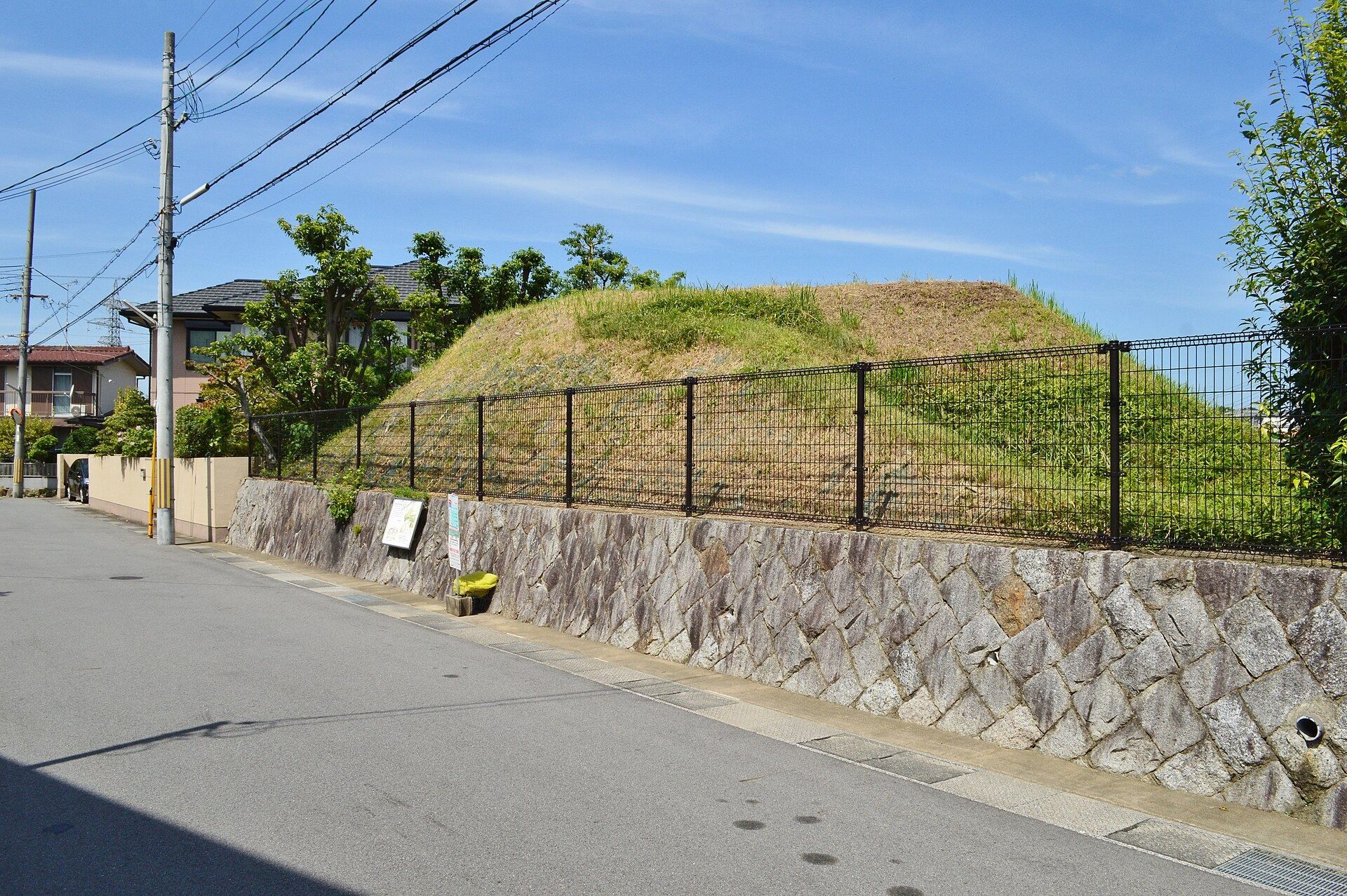
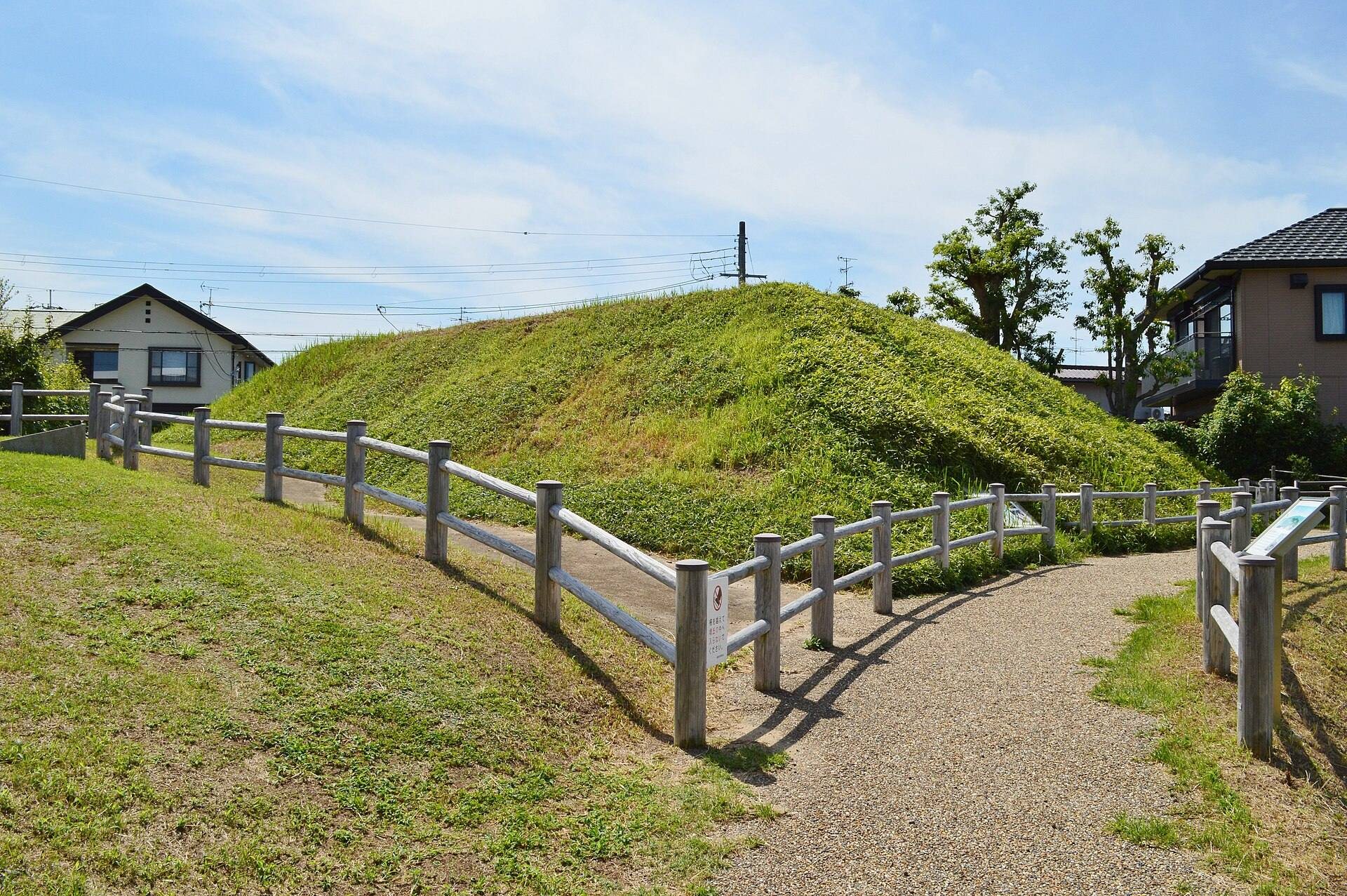
Shibagahara Kofun is an early Kofun-period burial mound in Jōyō, Kyoto, Japan, built around the middle of the third century, or possibly in the first half of that century. The Kofun period was an era of large Japanese burial mounds, conventionally dated from roughly the third to the sixth centuries. A kofun could mark the burial of a regional ruler or another high-status individual. Shibagahara Kofun is one of 13 mounds in the Shibagahara cluster and is regarded as one of the prominent chiefly tombs of its time in southern Yamashiro, before the construction of Tsubai Ōtsukayama Kofun.
The Shibagahara Burial-Mound Cluster
The Shibagahara cluster lies in the northern part of Jōyō, about 500 meters southeast of the separate Kutsugawa Kofun cluster. Shibagahara Kofun is also known as Shibagahara Tomb No. 12. Its construction belongs to the early stage of the Kofun period, when the keyhole-style mound was emerging, although this mound itself had a different rectangular form.
Within the wider cluster, Mounds 1 through 9 include two keyhole-style mounds and seven circular mounds preserved in place. Mounds 10 and 11 are large circular mounds associated with clay coffins, and a triangular-rimmed divine-beast mirror was excavated from No. 11. Mound 13 is a square mound preserved in place. Together, these forms show the range of mound designs represented within the group.
Excavation and Preservation
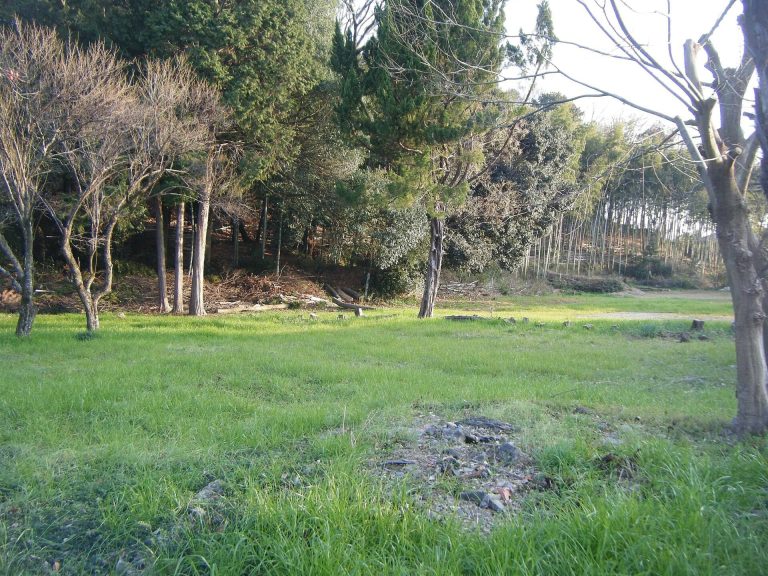
Excavation began from June to August 1986 in advance of residential development. Additional investigations connected with site improvement took place in fiscal years 2008 and 2009 and again in fiscal year 2012. The mound was designated a National Historic Site in 1989, and the protected area was extended in 2012. The excavated artifacts received collective designation as a National Important Cultural Property in 1990. The site has been preserved as a historic-site park. The artifacts are kept and displayed at the Jōyō City History and Folklore Museum, while replicas are displayed at the Kyoto Prefectural Yamashiro Local Museum.
Remains
Mound and Surrounding Ditch
Shibagahara Kofun is a zenpō-kōhō-fun, a mound with a rectangular rear section joined to a rectangular front section by a narrower connection. This differs from the more familiar keyhole-shaped mound, whose front section is rounded. The front section faced south and has largely been leveled, with a surviving length of about 3.5 meters. The rear section measures approximately 21 meters from north to south and 19 meters across.
A surrounding ditch formed part of the mound’s layout. On the north side, the natural ground was cut down to create the base of the mound. The eastern side was divided by a ditch, beside which the surviving embankment measures about two meters in thickness. These earthworks preserve the relationship between the burial mound and the enclosed space around it.
Burial Facility and Pottery
The burial facility consisted of an assembled wooden coffin placed directly in a burial pit. The coffin measured approximately 3 meters long and 0.8 meters wide, while the pit measured about 4.7 meters long and 2.5 meters wide. A layer of gravel covered the top of the pit.
Pottery offerings recovered from the gravel included four double-rimmed jars and one high-footed vessel, together with other fragments of Shōnai-style pottery. This early pottery classification is characterized here by double-rimmed vessels and geometric or wavy decoration. The recovered pieces bear wavy horizontal lines, circular raised patterns, blind horizontal lines, and mountain-shaped motifs.
Grave Goods
Grave goods found near the northern end of the coffin included a bronze mirror decorated with four animals, two bronze bracelets, eight jadeite magatama beads, 187 jasper tubular beads, and 1,276 small glass beads. Magatama are curved, comma-shaped beads commonly found among ancient Japanese grave goods.
The bronze bracelets are an unusual find in this burial context. One round bracelet has 72 radial lines whose tips are spaced apart. The form of its lines and edges retains characteristics of an older style, adding another chronological detail to the objects placed with the burial.