Kalbe Castle: A Medieval Water Fortress in Germany

Site at a Glance
- Rating
- 4.3
- Popularity
- Low
- Country
- Germany
- Primary era
- Medieval
- External website
- Open
- Eras represented
- Medieval
- Civilizations
- Holy Roman Empire
- Site type
- Military
- Remains
- Castle
On this page7 sections
History
Kalbe Castle is a medieval water castle in Germany, located in Kalbe (Milde), Saxony-Anhalt. Built by the Saxons around AD 900–1000, it served as a frontier fortress against the Wends, a medieval German term for Slavic peoples living east of the Elbe. The castle probably stood on the site of an earlier Slavic rampart in the marshes of the Milde and later became an important military, judicial, and territorial center.
Frontier fortress and castle district
A nunnery established under the castle’s protection was devastated by the Obotrites in 983. The Obotrites were a West Slavic political group active in the eastern Baltic and northeastern German regions. Despite the attack, the nunnery continued to exist until 1121.
Kalbe was one of the four castle districts of the Altmark, alongside Tangermünde, Osterburg, and Arneburg. These districts, known as Burgwarden, were territorial units administered from fortified centers and combined judicial, military, and administrative functions. Together, the four castles protected Frankish-colonized territory and missionary monasteries between the Elbe and the Milde.
The castle also gave its name to the Markish noble family von Kalben. The family is connected with Kalbe in 1207 and served there in ministerial service, the work of officials who administered territories and acted as military retainers.
Destruction and reconstruction
In late June 1240, during the Teltow and Magdeburg wars, Margrave John I of Brandenburg besieged and destroyed the castle. John I was a ruler of Brandenburg. The wounded Magdeburg Archbishop Wilbrand of Käfernburg had taken refuge at Kalbe with the remnants of his followers after their severe defeat on 24 June in the Battle of the Biese.
In 1300, the von Kröcher family became the castle’s feudal holders. After the Brandenburg Askanian dynasty became extinct, control of the Altmark passed to the Welfs, another major German ruling dynasty. In 1324, the Welfs enfeoffed the von Alvensleben family with the castle after the family had purchased the lordship from the von Kröchers.
The von Alvenslebens expanded the ruined stronghold into what became the largest castle in the Altmark. They transformed the surrounding Calbe Werder and its villages into a fortified island, using external defenses and newly excavated water channels supplied from the Milde by dams. The castle, fortified town, and outer works could accommodate large military forces. Pastureland, fields, mills, and villages supplied the stronghold, while the scale of the defenses meant that only a large siege ring could completely surround it.
Lordship and decline
Kalbe and Bismark were mediate towns, meaning that they were subject to a territorial lord rather than administered directly by the central sovereign. Until the Prussian Reforms at the beginning of the nineteenth century, they also formed judicial districts administered by the castle lords. The lords held property in 73 villages until the eighteenth century.
The lordship of Calbe was governed jointly by several branches of the von Alvensleben family. This condominium, or jointly held territory, appointed a commander for the castle. The complex was last renewed in 1479.
During the Thirty Years’ War, the major European conflict of 1618–1648 that involved dynastic, political, and religious struggles across the Holy Roman Empire, the castle’s walls and ramparts were demolished in 1631. The castle then fell into ruin, although its lordship continued. In 1795, the lordship passed into the sole possession of the Alvensleben branch based at Neugattersleben Castle.
In 1903, the von Alvensleben family repaired and stabilized the ruin to prevent further deterioration. The castle owners were expropriated in 1945. The remains are protected as a cultural heritage monument in Saxony-Anhalt.
Remains
Water defenses and fortified area
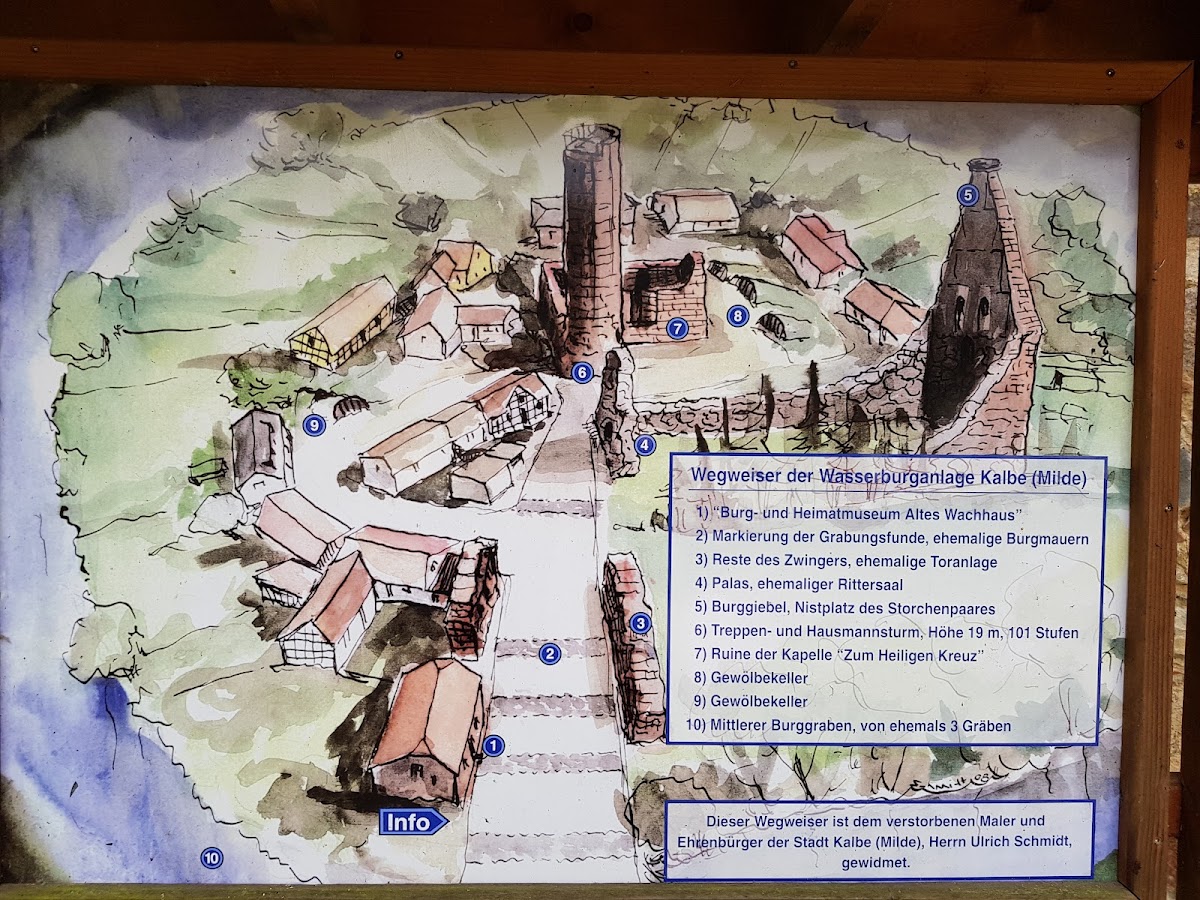
The ruin occupies a marshy elevation on the Calbe Werder between two arms of the Milde, within the urban area of Kalbe. The former castle area had a diameter of approximately 360 metres, and its outlines were still clearly recognizable in the landscape in 1584.
The water castle was organized as a large fortified island. Three moats, four outer baileys, and additional entrenchments formed its defensive system, while dams carried water from the Milde into the newly excavated moats. The enlarged castle area was integrated with the fortified town and with pastureland, fields, mills, and villages that supported its military and economic functions.
Surviving buildings
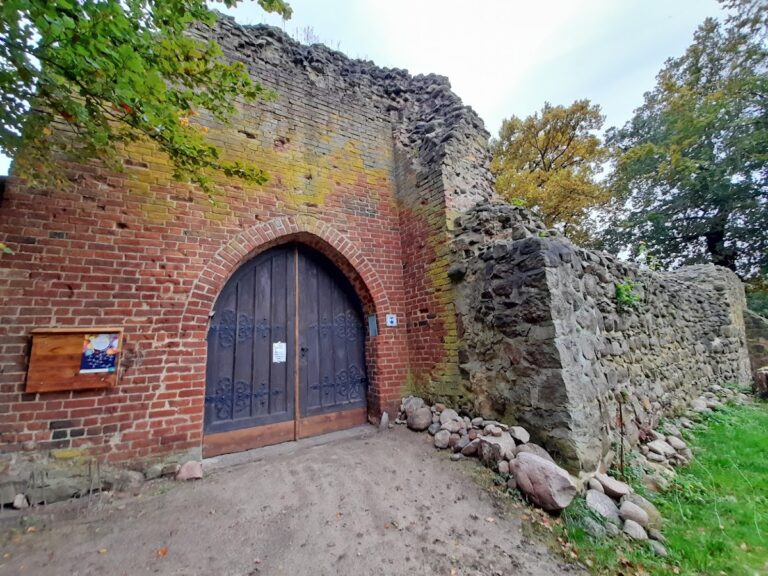
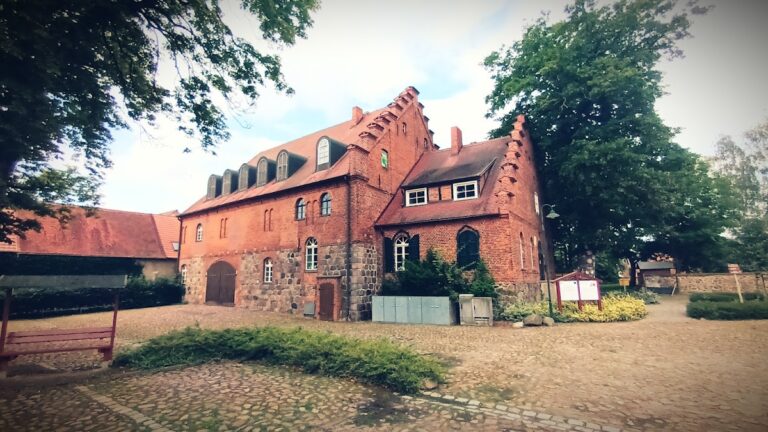
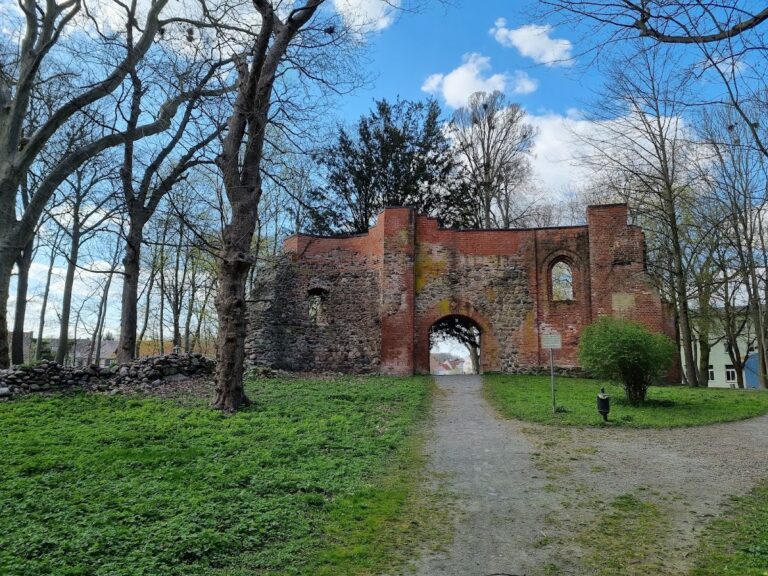
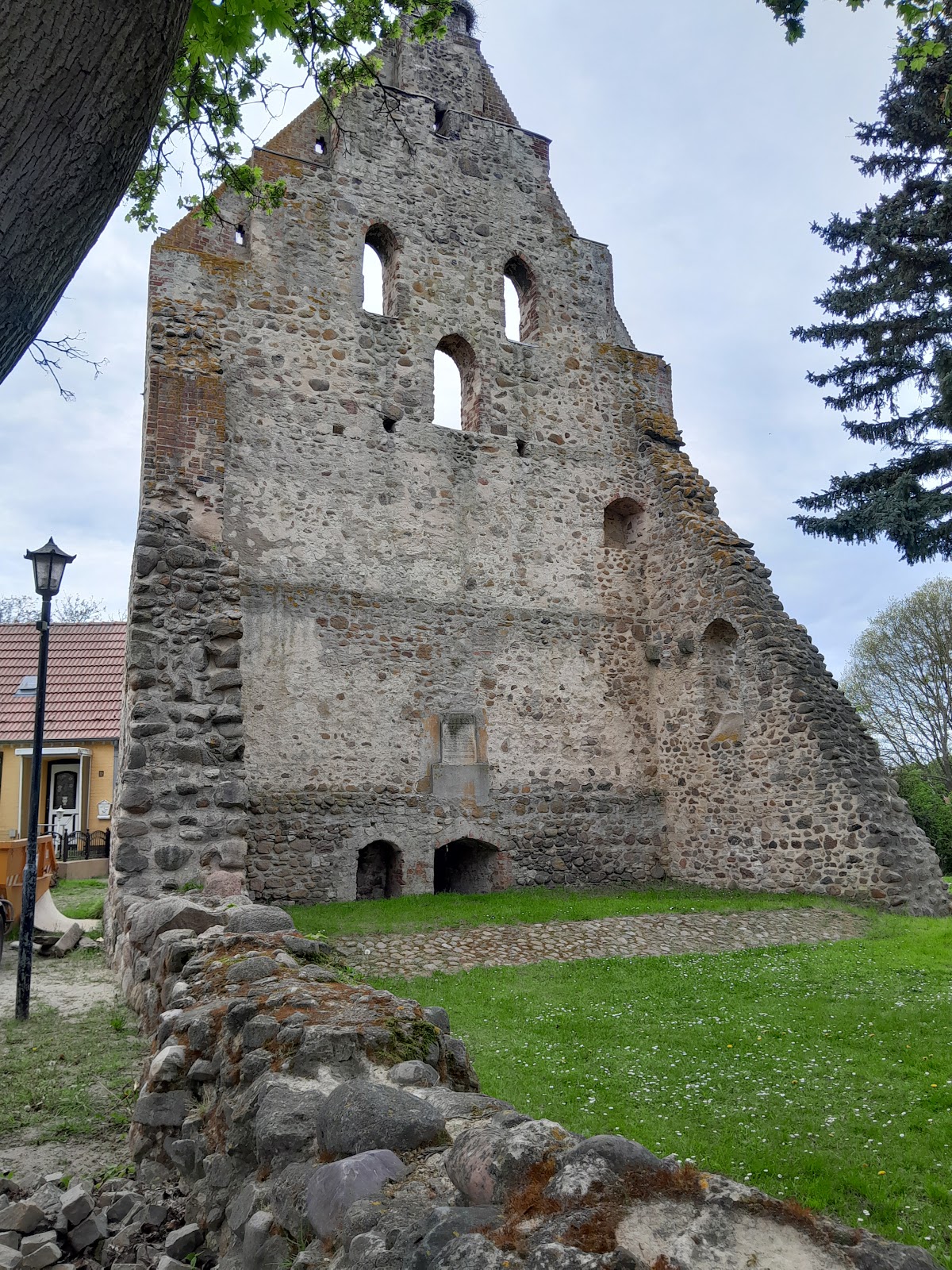
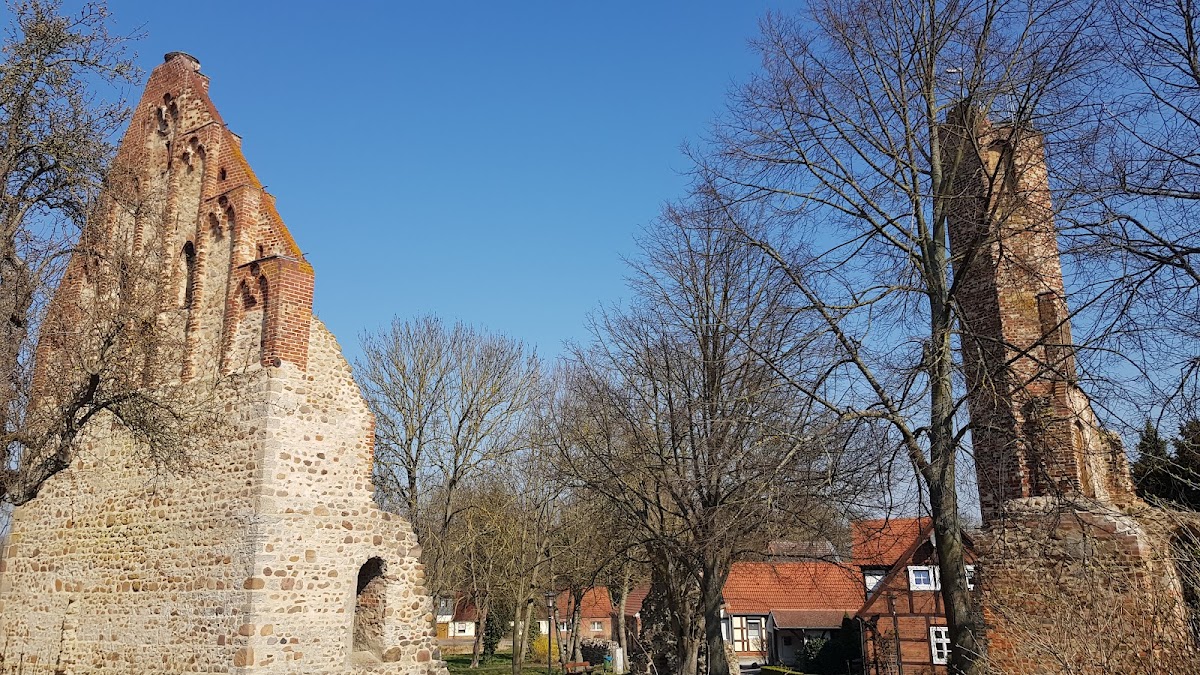
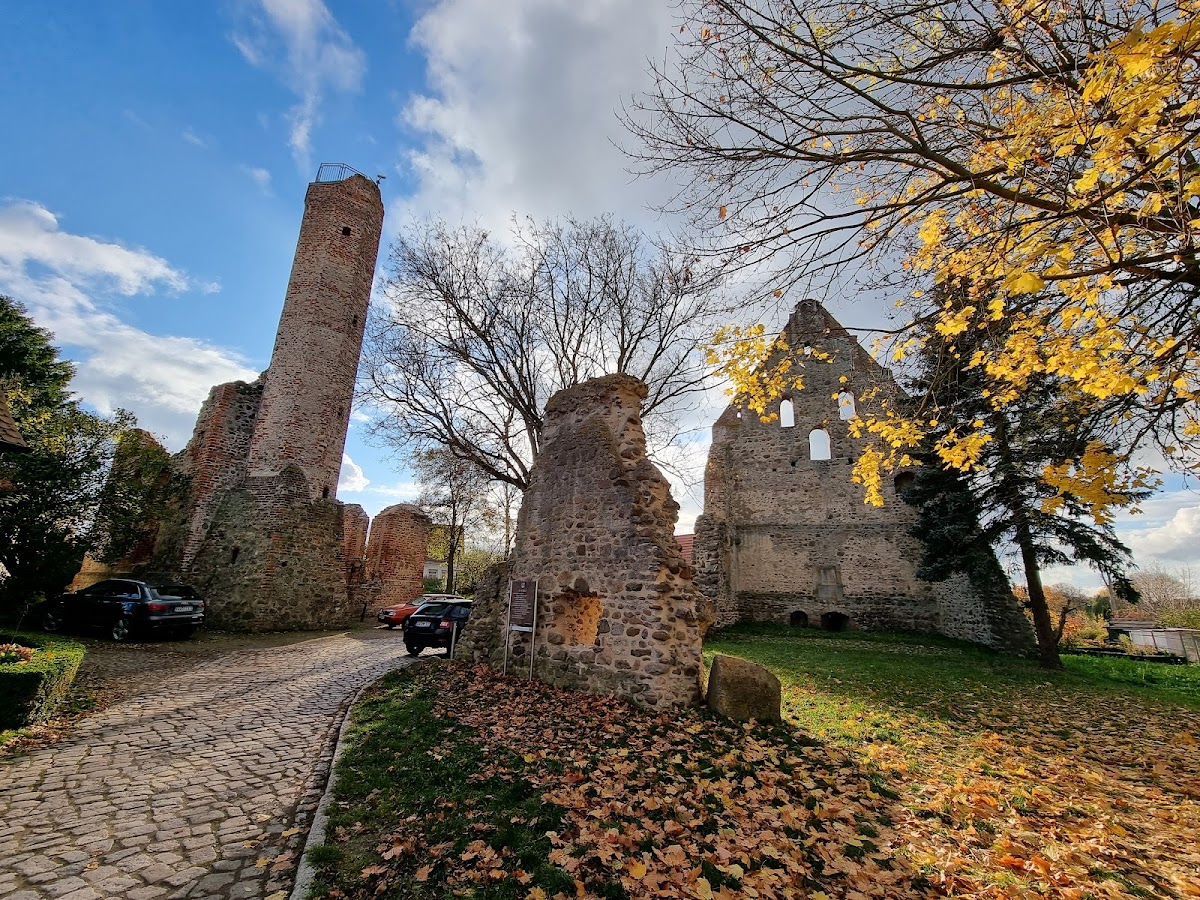
The surviving fabric consists of a ruin with parts of the chapel, the gate, and the residential building. These fragmentary structures remain within the former fortified area, whose wider defensive landscape was defined by the moats, outer baileys, and earthworks.